23-09-2026
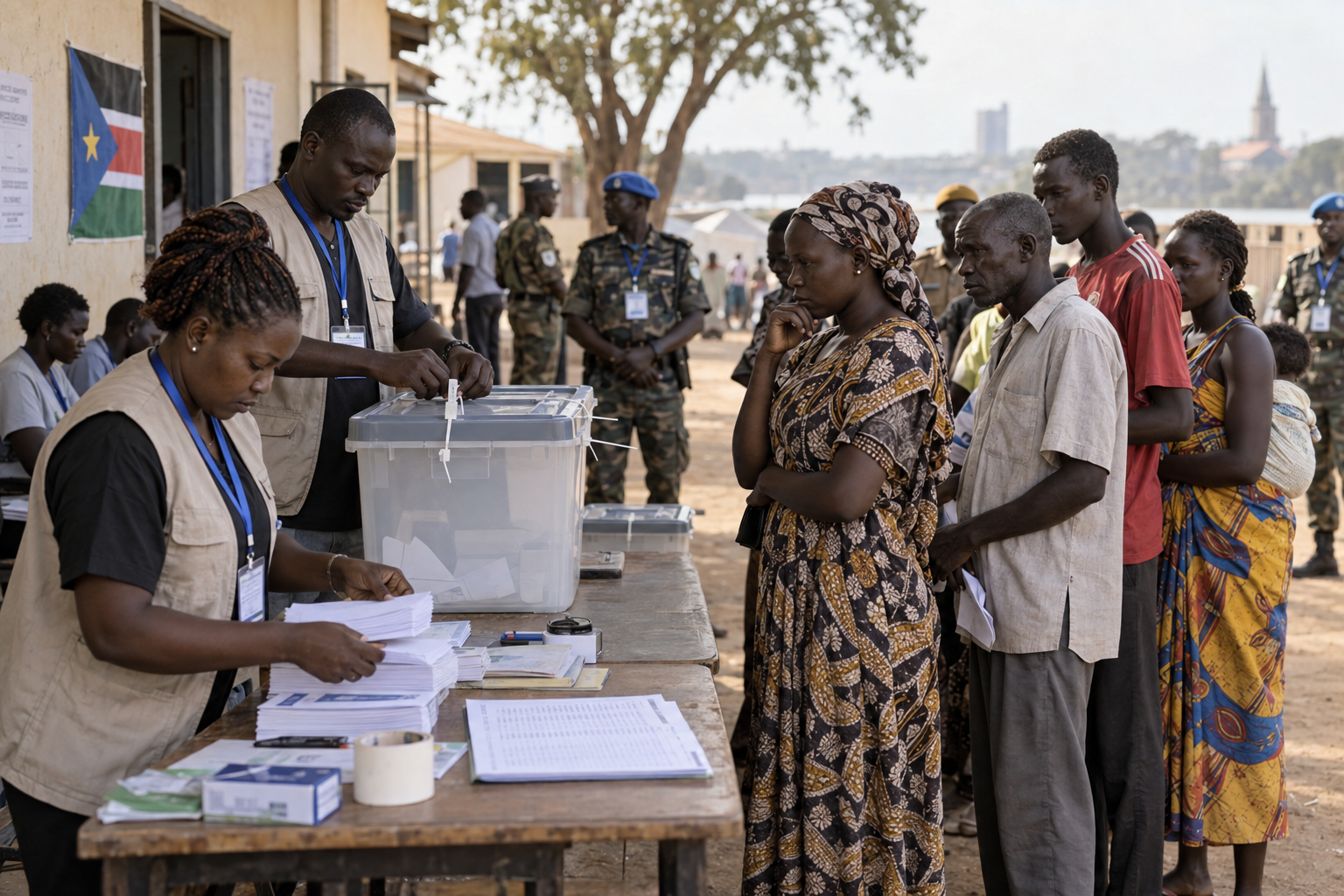
South Sudan’s National Elections Commission has urged politicians, political parties and citizens to help ensure that the country’s planned general election is peaceful. Commission chairperson Gabriel Bol Deng Majok called on political actors to express their ideas through ballots rather than violence, stressing that responsibility for a peaceful poll rests with the entire public. The appeal came as the country prepared for its first elections since gaining independence in 2011, scheduled for 22 December. On the same day, President Salva Kiir dissolved the transitional government, a move described in the article as clearing the way for the election. The Commission said preparations were underway and that voter registration was expected to begin after it approved registration forms and assessed centres around the country. It also presented voting cards at a Tuesday briefing. Majok described the Commission’s role as creating a level playing field and establishing rules to govern the electoral process. South Sudan’s transitional arrangements were established under a 2018 peace deal after years of conflict. However, repeated delays in meeting key benchmarks have postponed elections, making the forthcoming poll a significant step in the country’s political transition. The article reports the Commission’s preparations and appeal but does not detail the causes of previous delays or provide further information about the dissolution of the transitional government.
Entities: South Sudan, National Elections Commission, Gabriel Bol Deng Majok, Salva Kiir, general election • Tone: neutral • Sentiment: neutral • Intent: inform
23-09-2026
South Sudanese President Salva Kiir has dissolved the transitional unity government and appointed a caretaker administration as the country prepares for its first national elections, scheduled for December 22. The decree removes vice-presidents, ministers and local administrators, and dissolves national and state assemblies. Kiir will remain president during the election period until an elected successor takes office; the judiciary and security institutions remain in place.
The move follows parliamentary changes to the National Elections Act that allow Kiir to remain in power during the election period and remove the vice-presidents appointed under the 2018 peace deal. The changes enable the country to proceed toward elections without first completing a permanent constitution or census. The main opposition alliance has rejected them. Elections, initially expected in 2022, have been postponed twice, and key provisions of the peace deal—including voter registration and unifying rival forces—remain unfinished.
The 2018 agreement ended five years of civil war, which the United Nations says killed about 400,000 people and displaced millions. Amnesty International described the decree as a decisive step toward elections, but urged authorities to ensure people can safely vote and run for office. Analysts raised concerns that the legal changes could concentrate power in Kiir’s hands and leave uncertainty about whether the elections will occur as scheduled. One analyst said the law could allow Kiir to delay the vote.
The political changes come as opposition leader Riek Machar remains under house arrest and stands trial on charges including treason and murder, which he denies. Kiir has also replaced the head of the elections commission. Preparations are unfolding amid heightened security in Juba, including reported checkpoints and road closures around the government complex.
Entities: Salva Kiir, Riek Machar, South Sudan, Juba, Sudan People’s Liberation Movement-in-Opposition (SPLM-IO) • Tone: analytical • Sentiment: negative • Intent: inform
23-09-2026
South Sudanese President Salva Kiir has dissolved the transitional government three months before the country’s first national election since independence in 2011. Under an amended law signed on Monday, Kiir removed the five vice-presidents and dissolved parliament, along with national and state governments. He will retain full constitutional powers until an elected president takes office, while some ministers and governors have been reappointed in caretaker roles ahead of the vote scheduled for 22 December.
Kiir is running as the candidate of the Sudan People’s Liberation Movement (SPLM), and no prominent challenger has declared a candidacy. His main rival, Riek Machar, was dismissed as vice-president last year, charged with treason and placed under house arrest. Machar had been appointed vice-president under a 2018 peace agreement intended to end a five-year civil war between forces loyal to him and Kiir.
The announcement came amid heightened security in the capital, Juba. Soldiers blocked access to government ministries and patrolled parts of the city. A senior official said staff were turned away from work, while UN agencies asked employees to work remotely as the situation was monitored.
The article notes other concerns about preparations for the election. Kiir recently replaced the chairman of the national elections commission, who had said it needed $250 million to run the poll but had received only $21 million. The main opposition group, the Sudan People’s Liberation Movement in Opposition (SPLM-IO), has warned people against participating in preparations in areas it controls, with its acting chairperson threatening that those involved could be treated as prisoners of war.
The body monitoring implementation of the 2018 peace agreement says South Sudan has entered a “critical phase.” It has urged the parties to resolve outstanding issues and agree on a credible election process and a peaceful end to the transitional period. Elections have already been postponed twice, and the transition has been extended several times; its latest 24-month extension was due to end on 22 February 2027.
Entities: Salva Kiir, Riek Machar, South Sudan, Juba, Sudan People's Liberation Movement (SPLM) • Tone: analytical • Sentiment: negative • Intent: inform