23-09-2026
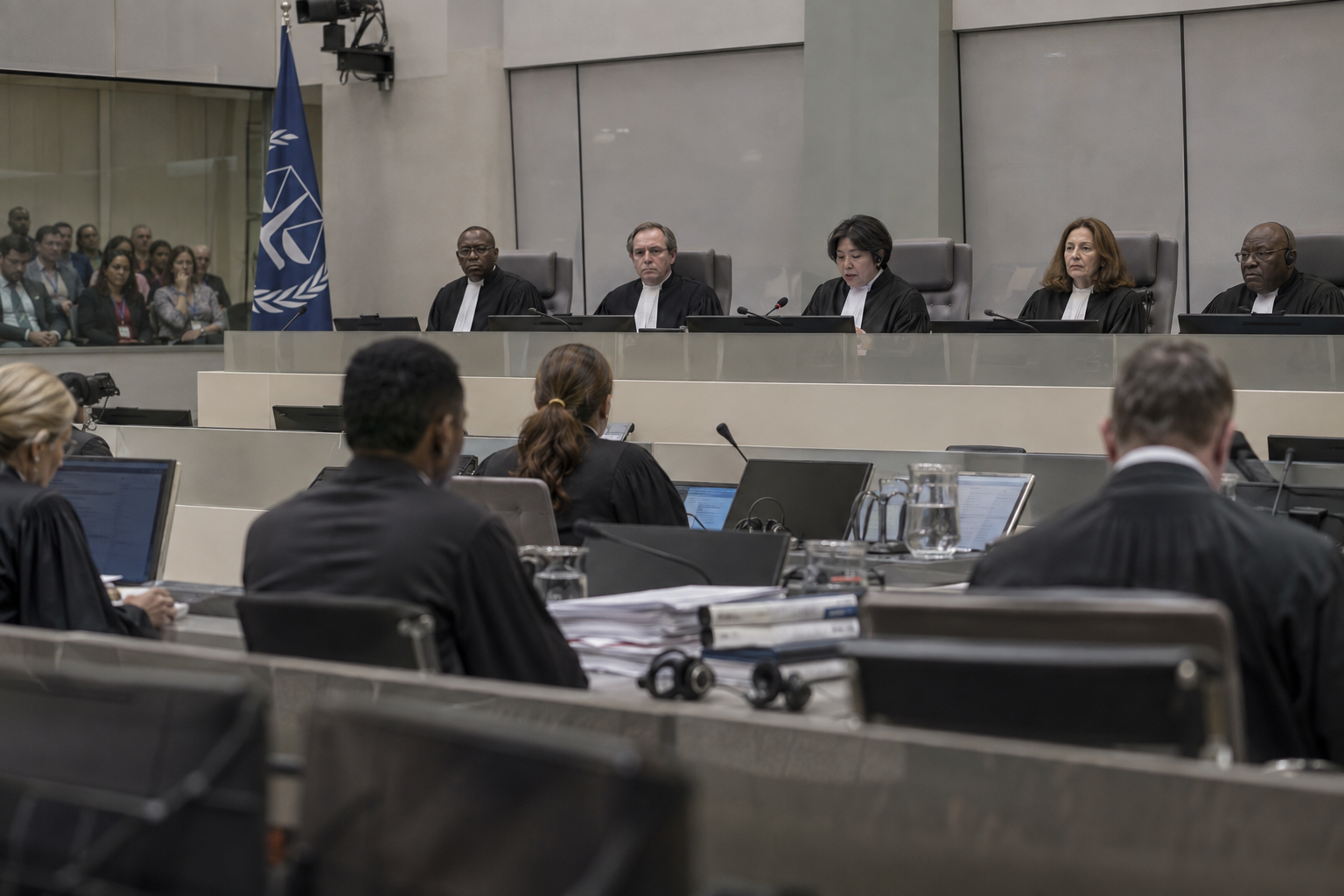
The International Criminal Court (ICC) has convicted former Central African Republic (CAR) rebel commander Mahamat Said Abdel Kani of crimes against humanity for abuses and torture committed at a detention facility in Bangui. Presiding Judge Miatta Maria Samba recounted testimony describing overcrowded cells marked by bullet holes and blood, prisoners whipped until they soiled themselves, and detainees held in a windowless room beneath Said’s office. The crimes arose amid conflict between the predominantly Muslim Seleka rebels, who took power from President François Bozizé, and the mainly Christian anti-Balaka militia.
Survivor Marius Olivier Trésor Poussinga welcomed the verdict as international recognition of his suffering. CAR Justice Minister Arnaud Djoubaye Abazène also praised the decision, while Human Rights Watch’s Lewis Mudge called it an important step against impunity and warned that ongoing abuses and weak accountability continue to fuel violence.
The ruling may be the final ICC justice outcome for CAR victims: former chief prosecutor Karim Khan announced in 2022 that the court was ending its 15-year investigation because of limited resources. Other cases have included convictions of two anti-Balaka leaders in 2025, the acquittal of former Congolese vice president Jean-Pierre Bemba in 2018, and the dropping of charges against a former CAR minister in 2023.
The country’s Special Criminal Court, established to prosecute crimes committed during coups and violence since 2003, remains central to domestic accountability efforts. It has indicted more than 30 people and is trying former President François Bozizé in absentia; another case involving Edmond Beina is ongoing. However, the court faces possible closure after the United States withdrew funding. Amnesty International warned that shutting it down would be catastrophic, as national courts lack the resources to take over its work. Supporters are urging the UN and EU to sustain the court. Said, who pleaded not guilty at the start of his 2021 proceedings, faces a sentence of up to life in prison, to be determined later.
Entities: Mahamat Said Abdel Kani, International Criminal Court (ICC), Central African Republic, Bangui, Miatta Maria Samba • Tone: analytical • Sentiment: negative • Intent: inform
23-09-2026
The International Criminal Court has convicted Mahamat Said Abdel Kani, a former commander in the Central African Republic’s Seleka rebel coalition, of crimes against humanity for his role in operating a detention facility in Bangui during the country’s 2013 civil war. Judges in The Hague found that supporters of then-President Francois Bozize were detained and tortured at the facility, the Central Office for the Repression of Banditry. Judge Miatta Maria Samba described detainees being whipped, waterboarded and tied in a painful position known as “Arbatacher.” Some prisoners were held in underground cells without bathrooms or showers, where the floors were covered in waste. A victim told the court that the mistreatment had destroyed his life.
Said, 56, denied the charges. The judges acquitted him of three war crimes charges, ruling that the armed conflict had ended by the time some alleged crimes took place. His sentence will be decided at a separate hearing. Said is the first Seleka member convicted by the ICC.
The Seleka coalition ousted Bozize in 2013, triggering a conflict that killed thousands. Bozize’s response included arming the anti-Balaka militia, which contributed to further bloodshed. French troops helped secure the country in 2014 under a United Nations mandate. The ICC has investigated violence in the Central African Republic since 2014 and has previously convicted two anti-Balaka leaders: former Sports Minister Patrice-Edouard Ngaissona, sentenced to 12 years, and former MP Alfred Yekatom, sentenced to 15 years. The country has experienced relative stability since a 2019 peace agreement.
Entities: Mahamat Said Abdel Kani, International Criminal Court (ICC), Central African Republic, Seleka, Bangui • Tone: neutral • Sentiment: negative • Intent: inform
23-09-2026
The International Criminal Court (ICC) has convicted Mahamat Said Abdel Kani, a former commander in the Central African Republic’s Seleka rebel group, on four counts of crimes against humanity. The charges concern his role in a detention center in Bangui between April and August 2013, during a period of civil war and sectarian violence. The court found that Said oversaw beatings and other mistreatment of prisoners. He was acquitted of three separate war-crimes charges and had pleaded not guilty to all charges. A sentence, potentially including life imprisonment, will be announced later.
Said was a senior figure in the mainly Muslim Seleka group, which ousted President Francois Bozize in 2013. He was placed in charge of the Central Office for the Repression of Banditry, a prison unit in the capital. Prosecutors said detainees suspected of supporting Bozize were tortured, including through whipping and mutilation. The court also described inmates being deprived of food and water, and a particularly harsh cell known as “the hole,” which was located beneath Said’s office. The court found that Said oversaw the abuses and personally took part in beating at least one prisoner.
Central African authorities extradited Said to the ICC in 2021, and his trial began in September 2022. The case is the first ICC trial of a member of the Seleka group. The article says the verdict addresses alleged abuses committed in the context of the country’s 2013 conflict, while noting that the final sentence has yet to be determined.
Entities: Mahamat Said Abdel Kani, International Criminal Court (ICC), Central African Republic, Bangui, Seleka • Tone: analytical • Sentiment: negative • Intent: inform