22-07-2026
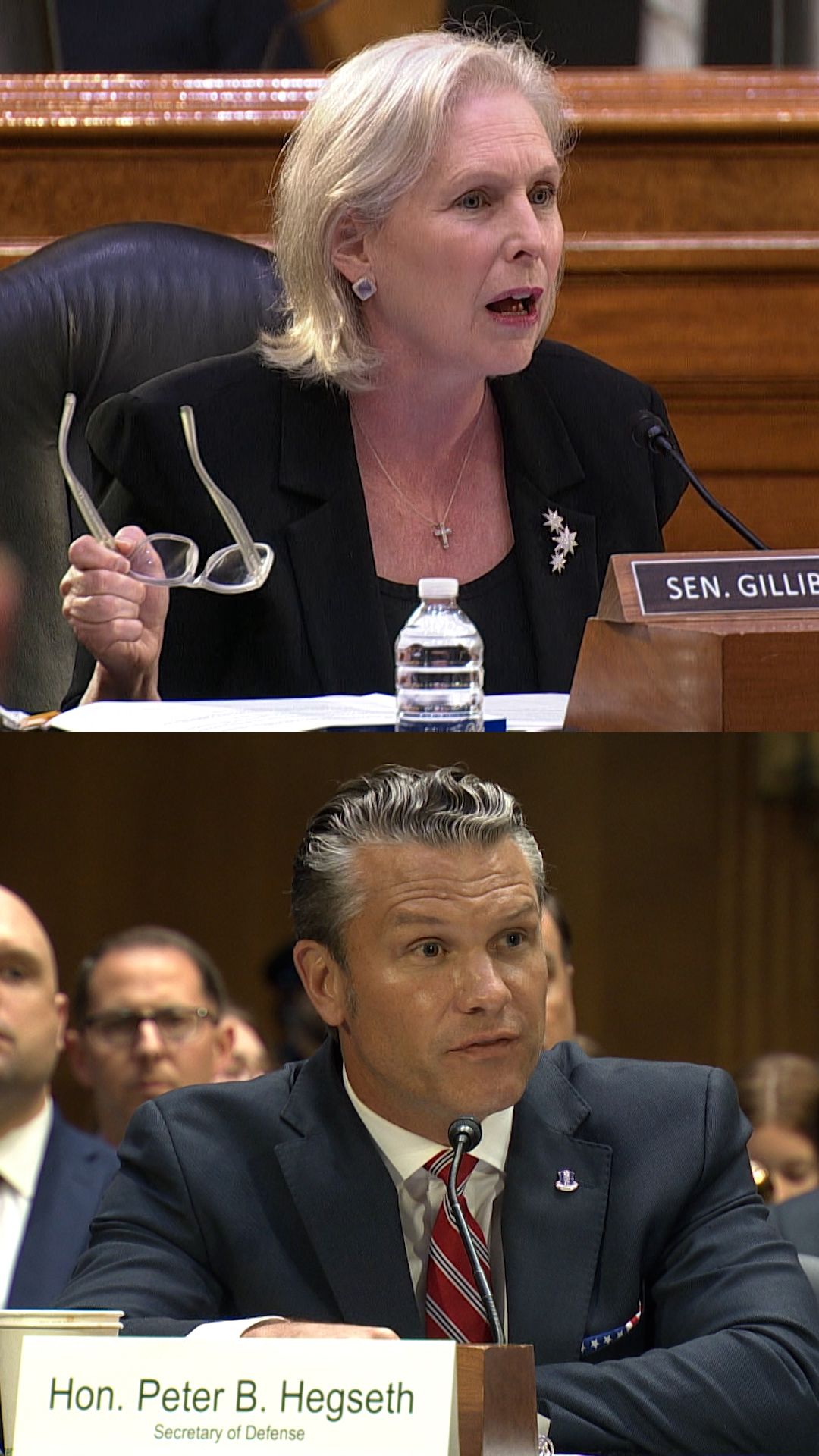
Defense Secretary Pete Hegseth told the Senate Appropriations Committee that the U.S. war with Iran has cost about $37.5 billion so far, nearly $8 billion more than a May estimate, and warned that the Pentagon urgently needs another $87 billion in congressional funding. Of that request, $67 billion would go toward operations in the Middle East. Hegseth argued the money is needed to pay service members, replenish weapons and munitions, and sustain operations without disruption, framing the request as essential to maintaining U.S. military strength. The hearing was repeatedly interrupted by anti-war protesters and ended in a heated exchange between Hegseth and Democratic Senator Gary Peters, whom Hegseth accused of showing “Trump derangement syndrome.”
The article places the funding request in the context of renewed hostilities between the U.S. and Iran, which resumed after a ceasefire collapsed. The Pentagon says American forces have been striking Iran for 11 straight days, while Iran has retaliated against U.S. and allied targets in the Middle East. The piece also notes mounting political resistance in Congress: Democrats largely oppose the supplemental request, and some Republicans want offsetting spending cuts. It further reports that the actual cost may be higher than Hegseth’s figure, according to sources familiar with the matter, because it may exclude expenses such as rebuilding damaged American bases. The story closes by noting that several U.S. soldiers have recently been killed in the region, adding urgency and political sensitivity to the funding debate.
Entities: Pete Hegseth, Senate Appropriations Committee, Pentagon, Iran, United States • Tone: analytical • Sentiment: negative • Intent: inform
22-07-2026
The article reports a sharp escalation in US-Iran hostilities, with the United States carrying out strikes on Iran for the 11th consecutive night. According to US Central Command, the attacks are aimed at degrading Iran’s ability to threaten commercial shipping in the Strait of Hormuz, a critical global oil chokepoint. Iranian state media said air defenses were activated in Tehran and explosions were reported in several cities, while Iran warned of reprisals if the US attacks nuclear facilities.
The tension increased after Donald Trump said the US could soon strike Pickaxe Mountain, an underground nuclear site near Natanz suspected of housing an undeclared enrichment facility. Trump framed the threat as imminent and overwhelming, while Iranian military leaders warned that any such strike would be treated as an expansion of the war and would trigger attacks on US interests and allies. The article also notes that Iran-backed Houthi rebels threatened to blockade Saudi ports and close the Bab al-Mandab Strait, prompting further concern over regional shipping routes.
The piece places the confrontation in the context of a broader regional conflict affecting maritime traffic, fuel prices, and military spending. Centcom accused Iran of endangering commercial vessels, while multiple Gulf states said they intercepted drone and missile attacks. The article concludes by noting that the war has already cost the US an estimated $37.5 billion and that Defense Secretary Pete Hegseth warned of cuts to military training unless Congress approves additional funding.
Entities: United States, Iran, Donald Trump, US Central Command (Centcom), Strait of Hormuz • Tone: urgent • Sentiment: negative • Intent: inform
22-07-2026
The article reports that Iranian missiles and drones have repeatedly penetrated U.S. and partner air defenses in the Middle East, culminating in a deadly strike on an air base in Jordan that killed two American soldiers and wounded dozens more. It challenges the idea that the incident was merely a single “leaker,” arguing instead that multiple successful Iranian strikes indicate a broader defensive failure. The piece explains that the Muwaffaq Salti Air Base in Jordan was hit twice in the 48 hours before the fatal attack, and that U.S. Central Command acknowledged multiple Iranian missiles and drones had gotten through even as many others were intercepted. President Trump suggested that “other operators” at the base may have contributed to the failure, though he gave no details.
The article places the attacks in the wider context of escalating Iranian strikes across the Middle East, noting that nearly 100 U.S. service members have been injured this month alone, and that the U.S. and its partners have intercepted many launches but not all. A regional military analyst argues that Iran has improved its missile technology and tactics, using simpler missiles to overwhelm radar before firing more advanced weapons that alter course near their targets. The article also compares Jordan’s less heavily fortified U.S. presence with more robust American bases in Kuwait and Bahrain, suggesting that weaker defenses may have made the Jordanian site more vulnerable. It closes by identifying the two soldiers killed in the strike and emphasizing the growing toll of the conflict.
Entities: Iran, United States, Jordan, Muwaffaq Salti Air Base, Marco Rubio • Tone: analytical • Sentiment: negative • Intent: analyze
22-07-2026
CNN’s live coverage describes the 11th consecutive night of US strikes on Iranian targets amid escalating conflict and growing concern about the war’s cost, scope, and regional fallout. Secretary of State Marco Rubio said Tehran was “not serious about talks,” while US officials continued to frame military pressure as part of a broader strategy even as Iran launched counterattacks. The article highlights a Senate hearing in which Defense Secretary Pete Hegseth said the war has cost $37.5 billion so far and sought additional funding, drawing criticism that the administration has not clearly explained its objectives, metrics for success, or an exit strategy. The live updates also report new strikes in several Iranian cities, including areas near the Strait of Hormuz, and note CNN-verified video showing fire and smoke near Behbahan Northwest Airport after an attack. Beyond the battlefield, the story tracks broader regional and diplomatic implications: President Trump’s warning that the US may soon strike Pickaxe Mountain, Iran’s threat to expand the war if its nuclear sites are attacked, reported Houthi threats affecting tankers in the Red Sea, and an emerging Saudi civilian nuclear deal that could provoke controversy. The piece also includes human-cost reporting on US service member Lt. Tyler James Feehan, who was killed by Iranian strikes in Jordan and is to receive a dignified transfer. Overall, the article presents a fast-developing conflict with military, political, financial, and geopolitical dimensions, emphasizing uncertainty and escalation.
Entities: United States, Iran, Marco Rubio, Pete Hegseth, Donald Trump • Tone: urgent • Sentiment: negative • Intent: inform
22-07-2026
CNN analysis argues that the Trump administration is asking Congress for tens of billions of dollars to continue its war with Iran while offering little clarity about its objectives, costs, or endgame. In a Senate hearing, Defense Secretary Pete Hegseth and Gen. Dan Caine testified about an $87.6 billion supplemental request, including more than $67 billion tied to the war and other Pentagon spending, even as the conflict’s cost had already reached $37.5 billion. Democratic senators pressed Hegseth on whether the administration’s earlier claims that Iran’s military had been “destroyed” were truthful and whether there is any realistic definition of victory. Hegseth largely avoided direct answers, instead saying the goal was to ensure Iran never acquires a nuclear weapon and to reduce Iran’s ability to operate in the Strait of Hormuz.
The article argues that the administration’s war aims have narrowed from earlier talk of regime change and broader regional transformation to a more open-ended strategy of containment and repeated military pressure. It warns that this could mean a prolonged U.S. military commitment, especially if attacks on Iranian nuclear and missile capabilities must be sustained indefinitely. The piece also highlights political risks for Republicans, since public opinion opposes the war and the conflict may worsen inflationary pressures by pushing up gas prices and economic uncertainty. Democrats, especially Sens. Jon Ossoff and Kirsten Gillibrand, used the hearing to tie the war to affordability concerns, framing it as a costly and unpopular conflict that diverts attention from domestic needs. Overall, the article portrays the administration as evasive, the war as increasingly open-ended, and the political outlook as dangerous for Republicans heading into the 2026 midterms.
Entities: Pete Hegseth, Donald Trump, Jon Ossoff, Kirsten Gillibrand, John Kennedy • Tone: analytical • Sentiment: negative • Intent: analyze
22-07-2026
The article centers on a disruptive moment during Defense Secretary Pete Hegseth’s testimony before the Senate Appropriations Committee, where protesters repeatedly interrupted proceedings as lawmakers questioned the Pentagon’s request for additional funding tied to the war in Iran. The piece frames the hearing as part of a broader political fight over the Trump administration’s justification for the conflict and the costs associated with it. Alongside the protest interruptions, the article highlights Senate scrutiny of Hegseth, including criticism from Sen. Kirsten Gillibrand, who challenged the administration’s past claims about Iran’s nuclear capabilities and pressed Hegseth on the rationale for seeking more war funding. The surrounding CNN video package also points to related national-security and political developments, including Trump’s statements about striking a new nuclear site in Iran and broader tensions over U.S. policy in the region. Overall, the article presents a contentious and politically charged scene on Capitol Hill, emphasizing both public disruption and legislative opposition to the administration’s war-related agenda.
Entities: Pete Hegseth, Senate Appropriations Committee, Pentagon, Iran, War in Iran • Tone: neutral • Sentiment: neutral • Intent: inform
22-07-2026
The article argues that Congress should urgently approve supplemental defense funding and a full military budget before recess, warning that the Pentagon is running low on cash while the United States remains engaged in war. The piece says Democrats have blocked a bipartisan defense appropriations bill and that delays could force the Navy and Air Force to run short of money for Middle East operations within days. It frames the situation as a matter of national security and moral responsibility, insisting that troops must be paid, equipped, and supported even amid partisan disagreement over the war and President Donald Trump.
The author emphasizes that failure to act would weaken U.S. deterrence, harm operations in the Middle East, and potentially hand a victory to Iran. It cites warnings from Defense Secretary Pete Hegseth and Joint Chiefs Chairman Gen. Dan Caine about the need for resources to replace weapons, munitions, and modernize the force. The article also argues that defense funding is necessary to maintain readiness, limit operational disruption, and stay ahead of adversaries such as Russia and China. Overall, it is a forceful call for immediate congressional action to keep the military funded and functioning during wartime.
Entities: Congress, Pentagon, Navy, Air Force, Middle East • Tone: urgent • Sentiment: negative • Intent: persuade
22-07-2026
The article reports that President Trump is signaling a willingness to further escalate the war with Iran, potentially by launching another bunker-busting strike on Pickaxe Mountain, a suspected but incomplete underground nuclear-related site. Although intelligence and expert assessments suggest the site does not yet contain active uranium enrichment facilities, Trump appears focused on demonstrating resolve and warning Iran that U.S. military escalation could continue. The piece places these threats in the context of an expanding regional conflict that already includes attacks on Iranian-linked targets and threats against the Houthis, who have warned about blocking Saudi shipping in the Red Sea.
The article also highlights tensions during Defense Secretary Pete Hegseth’s testimony before Congress, where he defended the administration’s strategy and argued for a massive increase in the Pentagon budget. Hegseth blamed the Biden administration for military neglect and suggested Iran remains dangerous despite setbacks. Senators from both parties challenged his claims, including the cost of the war, the effectiveness of prior strikes, and the contradiction between saying Iran’s missile arsenal was mostly destroyed and ongoing attacks across the region. Overall, the article portrays a White House pushing an aggressive military posture without clearly explaining how the strategy will force Iranian concessions, while critics question both its logic and its long-term consequences.
Entities: Donald Trump, Pete Hegseth, Iran, Pickaxe Mountain, Operation Midnight Hammer • Tone: analytical • Sentiment: negative • Intent: analyze
22-07-2026
US Secretary of State Marco Rubio said the United States remains open to negotiating with Iran, but he cast doubt on Tehran’s willingness to engage seriously as the conflict in the Middle East widened and disrupted major shipping lanes. Speaking in Manila at a meeting with South-east Asian foreign ministers, Rubio warned that Iran and its allies were threatening vital waterways, including the Strait of Hormuz and the Red Sea, which are central to global oil transport. His remarks came after three oil tankers carrying Saudi crude to Asia reversed course in the Red Sea following Houthi threats against Saudi shipping.
The article describes a broader escalation in the US-Iran confrontation: the Houthis announced a naval blockade on Saudi Arabia, Iran continued to threaten shipping, and the US military carried out strikes on Iran for an 11th straight night. Explosions were reported in several Iranian cities, while Iran retaliated against US military sites in Bahrain, Kuwait, and Jordan. The conflict has already caused casualties, with US President Donald Trump saying 18 US service members had been killed and Iranian officials reporting civilian deaths and injuries from US strikes.
The article also emphasizes the economic consequences of the violence. Oil prices rose above US$91 a barrel, gasoline prices climbed, and shippers rerouted vessels away from the Red Sea and Bab el-Mandeb Strait. Rubio framed the issue as a dangerous precedent for international waterways, warning that allowing a state to control a key shipping lane could encourage similar behavior elsewhere, including in South-east Asia. Although diplomacy remains active through mediators such as Pakistan, there has been no breakthrough, and the risk of a wider regional conflict remains high.
Entities: Marco Rubio, Iran, United States, Houthis, Red Sea • Tone: analytical • Sentiment: negative • Intent: inform
22-07-2026
U.S. Secretary of State Marco Rubio accused Iran of failing to honor commitments tied to the Strait of Hormuz while reaffirming that the United States remains open to diplomacy in the Middle East. His remarks came amid an ongoing U.S. military campaign, with U.S. Central Command striking Iranian targets for an 11th consecutive night in an effort to reduce Iran’s ability to threaten commercial shipping through the strategic waterway. Rubio argued that Iran is seeking a right it does not have under international law: controlling traffic in the Strait, charging tolls, and potentially using force against ships that do not comply. He framed this as a dangerous precedent for global freedom of navigation and drew a subtle comparison to maritime disputes in the South China Sea.
The article explains that the dispute stems from a June 17 interim memorandum of understanding between the U.S. and Iran, which paused military operations, reopened Hormuz, and created a 60-day window to negotiate a broader agreement, including Iran’s nuclear program. However, the future management of the Strait of Hormuz was left unresolved. Iran and Oman later issued a joint statement emphasizing that arrangements for the strait must respect the sovereignty of the two coastal states. The U.S. interpretation remains that the waterway must stay open without Iranian fees or restrictions. Rubio described the strikes on Iran as consequences for Tehran’s failure to keep its word, warning that without such consequences, much of the region’s energy supply—and about 20% of global energy supply—could be at risk of being held hostage.
Entities: Marco Rubio, Iran, Tehran, Strait of Hormuz, U.S. Central Command • Tone: analytical • Sentiment: negative • Intent: inform