22-07-2026
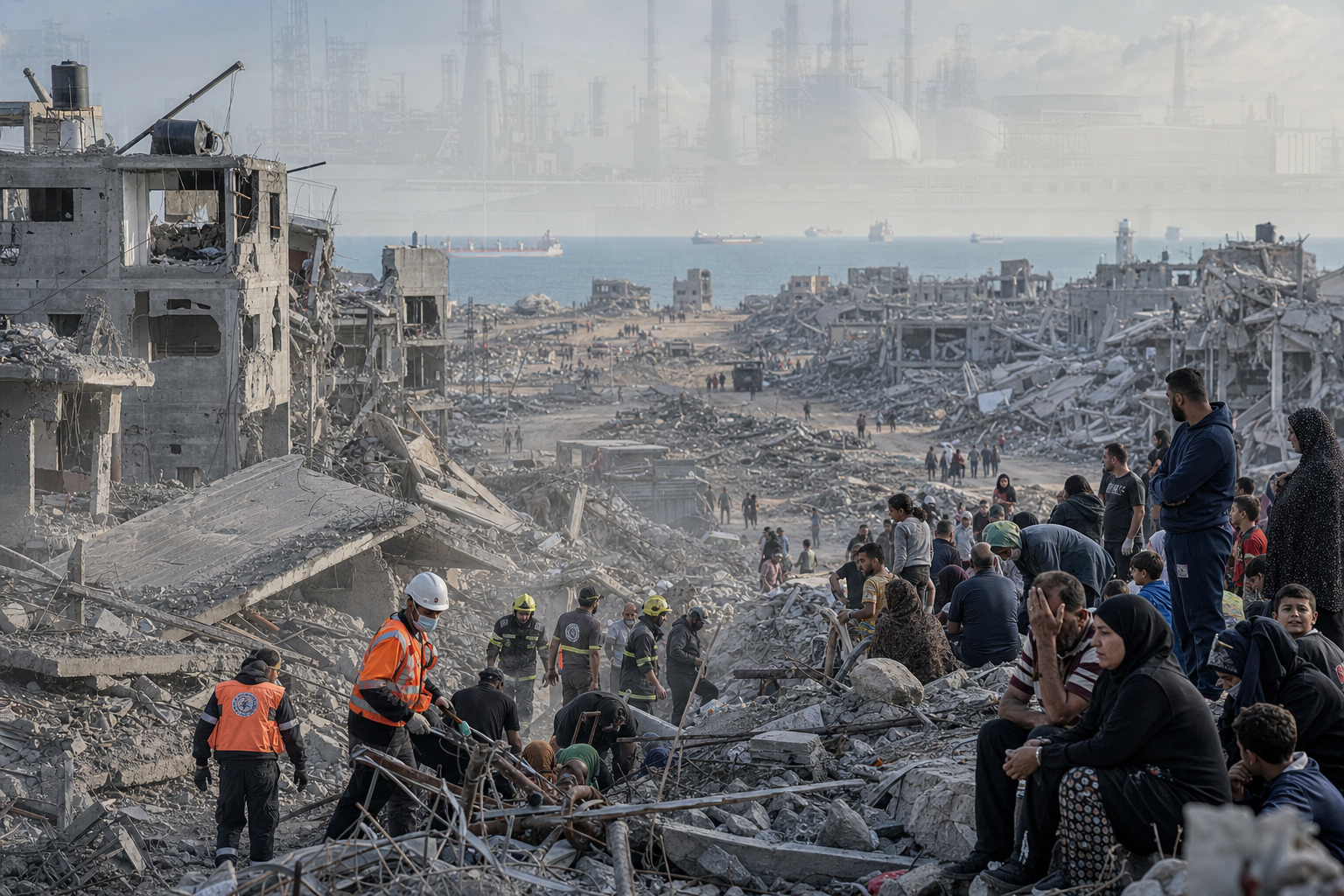
At least 12 Palestinians were killed in a series of Israeli strikes across the Gaza Strip, according to local medics, including six members of one family who died when their apartment in Gaza City’s western al-Sabra neighborhood was hit and set ablaze overnight. BBC reporting, based on a relative’s account, said Firas al-Masri, his wife Salsabeel, and their children Faryal, Salma, Amira, and Naim were among the dead. The Israeli military said the strike was aimed at a Hamas operative and that it was still assessing the outcome.
Two additional attacks were reported later on Tuesday: one air strike on a home in central Gaza City’s al-Samar area that killed four people, and another drone strike on a vehicle in the al-Zahra area south of the city that killed two more. The Israeli military had not yet commented on those latter strikes.
The article places these killings in the wider context of the ongoing conflict and the ceasefire that began last October. Gaza’s Hamas-run health ministry says more than 1,168 Palestinians and four Israeli soldiers have been killed since the ceasefire took effect. The UN human rights office condemned the recent escalation, saying civilians continue to be killed in residential and crowded areas and warning of possible violations of international humanitarian law and war crimes. The piece also recalls the broader war that began after Hamas’s 7 October 2023 attack on Israel, which killed about 1,200 people and led to Israeli retaliation in Gaza, where more than 73,290 people have reportedly been killed.
Entities: Gaza Strip, Gaza City, al-Sabra, al-Samar, al-Zahra • Tone: analytical • Sentiment: negative • Intent: inform
22-07-2026
The article reports that the Trump administration plans to announce a broad nuclear cooperation agreement with Saudi Arabia that could eventually allow the kingdom to enrich uranium or reprocess plutonium on its own soil. The deal is part of a broader effort to deepen U.S.-Saudi ties amid regional instability and the Iran war, and it is expected to benefit the U.S. nuclear industry, especially Westinghouse. However, the agreement is politically sensitive because it may weaken long-standing nonproliferation safeguards and raise fears that Saudi Arabia could one day move toward a nuclear weapons capability.
The article explains that the arrangement is a so-called 123 Agreement, the legally required framework for U.S. nuclear cooperation with foreign governments. Unlike the U.A.E.’s earlier “gold standard” deal, which barred domestic fuel production and imposed stricter inspections, the Saudi deal appears to include fewer restrictions and secret side letters that may limit transparency. Congressional review is required, but the deal is likely to survive unless opponents can assemble a veto-proof majority.
The piece also places the agreement in a wider geopolitical context. Earlier discussions under the Biden administration tied civilian nuclear cooperation to Saudi recognition of Israel, but President Trump separated the nuclear deal from that condition. The agreement is presented as one part of a broader, still-incomplete U.S.-Saudi understanding that could also involve defense cooperation and F-35 sales. The article closes by showing how the Saudi position is shaped by both threats from Iran and unease over America’s own Middle East policy, even as Riyadh explores dialogue with Tehran.
Entities: Donald Trump, Saudi Arabia, Crown Prince Mohammed bin Salman, Iran, Israel • Tone: analytical • Sentiment: neutral • Intent: inform
22-07-2026
A large cargo ship bound for Saudi Arabia turned back in the Red Sea region after Houthi rebels in Yemen began enforcing a newly announced blockade, signaling the first visible impact of the group’s threat to disrupt maritime traffic. According to ship-tracking data and Lloyd’s List analysis, at least six vessels reversed course, including the Chinese-owned Liu Jiang Kou, which had been headed for Jeddah before changing direction after receiving a warning that continued transit could expose it to targeting anywhere within the Houthis’ operational reach. The article says several other vessels still passed through the Bab el-Mandeb Strait on Tuesday, suggesting the blockade’s scope and effectiveness remained uncertain.
The report places the episode in the broader context of rising regional instability and economic risk tied to disruptions in key shipping lanes. It notes that ongoing turmoil in the Strait of Hormuz has already interrupted a significant share of global oil shipments, and warns that a Houthi blockade in the Red Sea could add another major choke point to global energy and trade flows. Maritime intelligence firms cited in the article, including Windward, said the situation had pushed risk westward from the Hormuz corridor into the Red Sea.
Multiple ships altered course, including Hong Kong-flagged tankers, an Indian tanker, another Cosco-operated vessel, and a Greek-owned tanker, some of which changed destinations or turned toward the Suez Canal. The article emphasizes that while no attacks on commercial vessels had yet been reported after the blockade announcement, the movement changes suggest shipping companies are taking the threat seriously and adjusting routes preemptively.
Entities: Houthi rebels, Yemen, Saudi Arabia, Red Sea blockade, Bab el-Mandeb Strait • Tone: analytical • Sentiment: negative • Intent: inform