22-07-2026
Nearly 100 U.S. service members have been injured in a series of Iranian airstrikes on U.S. bases and allied facilities in the Middle East this month, according to Pentagon officials. Chief Pentagon spokesman Sean Parnell said that almost 100 personnel had some degree of injury since July 7, 2026, and that 96% have already returned to duty. He described most of the injuries as minor concussions, suggesting the incidents were serious but largely nonfatal and not permanently disabling.
The article places the injuries in the context of escalating U.S.-Iran hostilities after a months-long ceasefire broke down. The U.S. military has been conducting nightly strikes on Iranian targets for more than a week, saying it is trying to stop Iran from attacking commercial ships. Iran has retaliated by striking U.S. assets in Jordan, Kuwait, Bahrain, and other allied countries. CBS News also notes that several service members were injured on Jordanian bases last week, and that two American soldiers were killed in Jordan over the weekend, while another service member died in Iraq during the detonation of unexploded ordnance from a downed Iranian drone.
The Pentagon has not released a precise injury count from the latest attacks or detailed damage assessments. Existing military casualty databases show hundreds of U.S. wounded and 14 deaths since the conflict began, though those figures do not fully capture the most recent injuries. President Trump has publicly vowed retaliation, warning that Iran will "pay" for each American soldier killed, and the White House said he would attend the dignified transfer of the fallen service members. Overall, the article reports on an intensifying military confrontation, the human cost for U.S. forces, and the U.S. government’s vow to respond forcefully.
Entities: Iran, United States, U.S. service members, Pentagon, Sean Parnell • Tone: urgent • Sentiment: negative • Intent: inform
22-07-2026
A 30-year-old U.S. Army soldier, Sgt. Michael Emmanuel Swinton of Fayetteville, North Carolina, was killed in Iraq during a controlled detonation of a downed attack drone, according to the Pentagon and U.S. Central Command. The military said the incident happened at Erbil Air Base in northern Iraq and remains under investigation. CENTCOM described the drone as an Iranian one-way attack drone, while Secretary of State Marco Rubio said the soldiers were decommissioning ammunition when an accident occurred. A second service member was wounded with a minor injury.
Swinton served in D Battery, 2nd Battalion, 55th Air Defense Artillery Regiment, 108th Air Defense Artillery Brigade, based at Fort Bragg. He joined the Army in 2017 as an air defense early warning operator. The U.S. Army Space and Missile Defense Command said he was posthumously promoted to staff sergeant and will receive the Bronze Star, Purple Heart, and Combat Action Badge.
The article also places Swinton’s death in the broader context of escalating U.S.-Iran tensions. It notes that the Pentagon recently identified other U.S. soldiers killed in Iranian attacks in Jordan and reported nearly 100 service members injured in multiple attacks across the Middle East. U.S. officials say most injuries were minor concussions and that 96% of those injured have returned to duty. The reporting describes a wider pattern of renewed hostilities after a collapsed ceasefire, with U.S. strikes on Iranian targets and Iranian retaliation against U.S. forces and allied assets in the region.
Entities: Sgt. Michael Emmanuel Swinton, Erbil Air Base, Iraq, U.S. Army, U.S. Central Command (CENTCOM) • Tone: analytical • Sentiment: negative • Intent: inform
22-07-2026
The article reports that the Pentagon has identified Sgt. Angel S. Rampersad, a 28-year-old from Ozone Park, New York, as the fourth American soldier believed to have been killed in recent attacks linked to Iran. Rampersad was said to have been killed on July 17, 2026, during an enemy attack on Muwaffaq Salti Air Base in Jordan, and her death remains under investigation. She had been assigned to a Germany-based air defense unit. The story also notes that three other U.S. service members had already been identified as killed in the conflict: First Lt. Tyler James Feehan of Hawaii, Pfc. Isabella Gonzales of Texas, and Sgt. Michael Emmanuel Swinton of North Carolina. The article places Rampersad’s death within the broader escalation between the U.S. and Iran, as CENTCOM announced American forces were carrying out strikes on Iran for the 11th consecutive night. Those strikes, according to CENTCOM, targeted military operations centers, maritime capabilities, aircraft hangars, drone storage facilities, and logistics infrastructure to reduce Iran’s ability to threaten commercial shipping in the Strait of Hormuz. CENTCOM also said Iran had carried out attacks on more than 30 commercial vessels, while U.S. forces had helped facilitate hundreds of commercial transits through the strait since early May. The article includes local reaction from New York officials, who expressed condolences and praised Rampersad’s service, underscoring the human toll of the ongoing conflict.
Entities: Sgt. Angel S. Rampersad, Ozone Park, New York, Pentagon, Department of War, US Central Command (CENTCOM) • Tone: analytical • Sentiment: negative • Intent: inform
22-07-2026
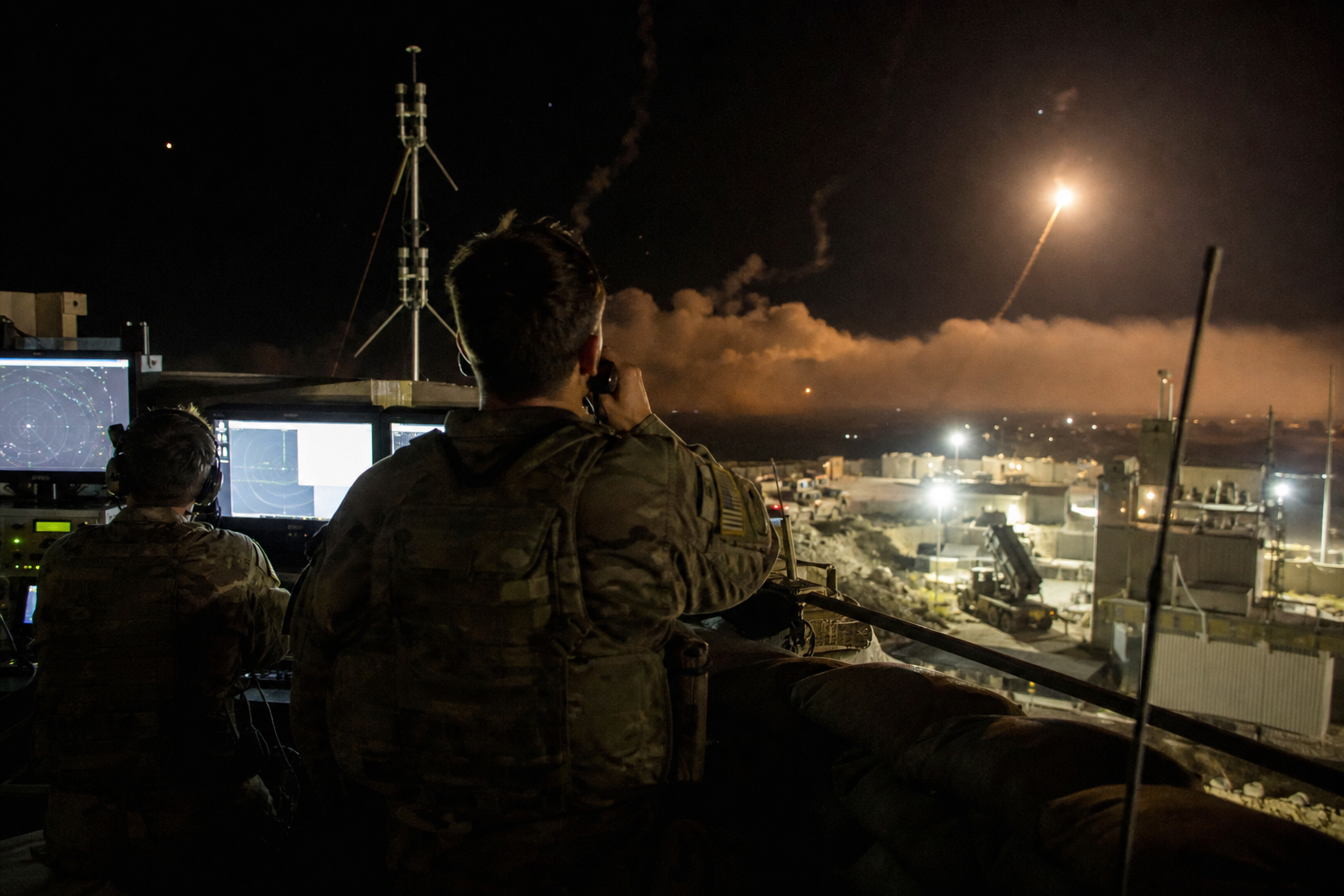
The article explains that the four U.S. soldiers killed in the latest round of hostilities with Iran were not randomly exposed to danger; rather, they were members of air defense units whose mission required them to remain on vulnerable bases and defend them from incoming ballistic missile and drone attacks. Their role placed them in a position of heightened risk because air defense personnel are tasked with protecting other troops and facilities even when those bases are under direct threat. The piece underscores the asymmetric nature of the conflict, in which U.S. forces in the region face repeated missile and drone attacks from Iran while trying to maintain defensive coverage. By highlighting the soldiers’ assignments, the article shifts attention from the deaths themselves to the operational reality of modern base defense and the inherent dangers faced by service members who stay behind to shield others. The article also appears within a broader news context of escalating U.S.-Iran tensions and ongoing reporting about attacks, troop vulnerability, and the strategic importance of bases in the region, especially around the Strait of Hormuz. Overall, it frames the deaths as part of a wider military and geopolitical struggle rather than isolated incidents.
Entities: U.S. soldiers, Iran, air defense units, ballistic missile attacks, drone attacks • Tone: analytical • Sentiment: negative • Intent: inform