22-07-2026
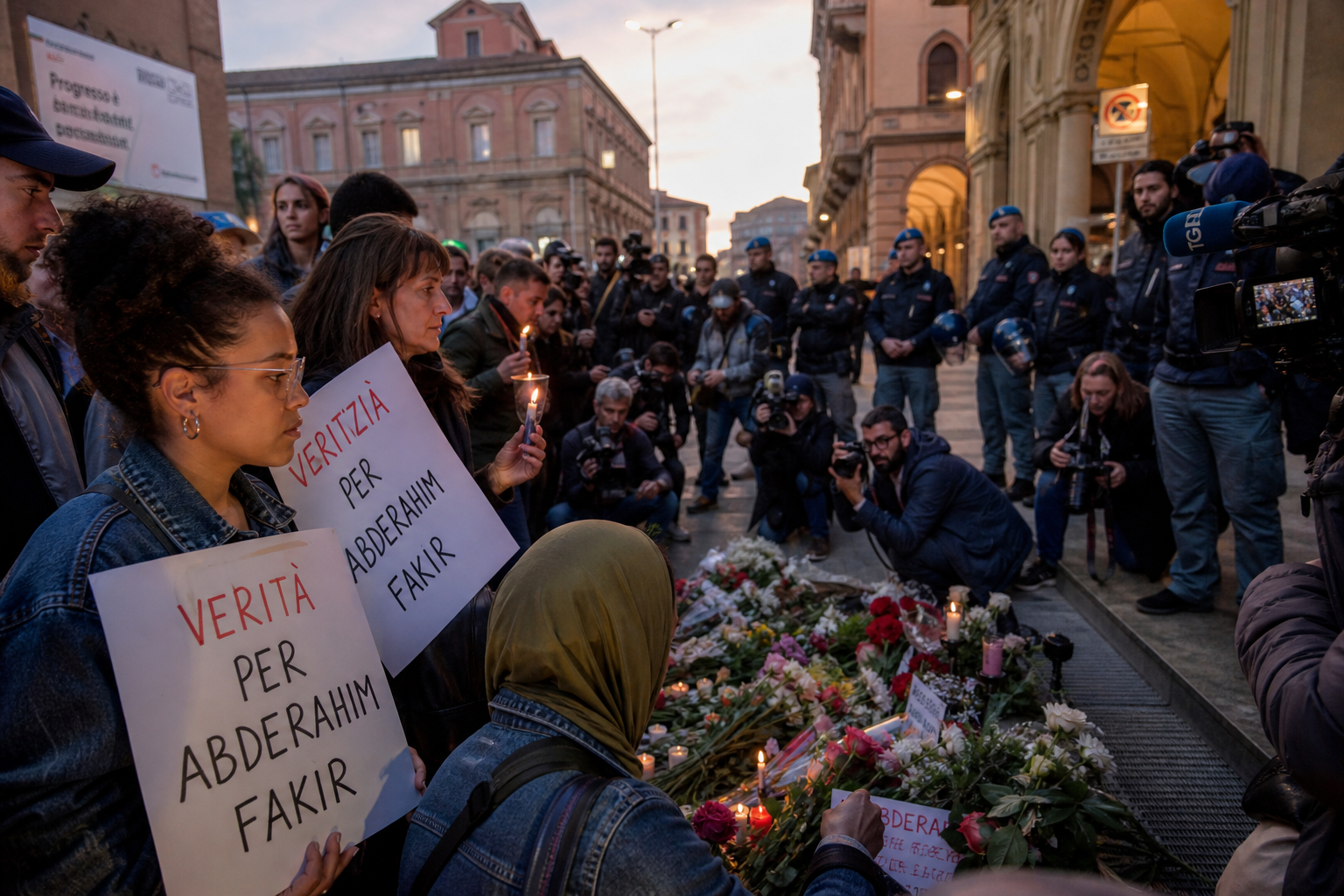
Protests erupted in Bologna after the death of Abderrahim Fakir, a Moroccan-born man who died while being restrained by police after officers responded to reports that he was acting erratically in a working-class neighborhood. Videos circulating in Italian media showed police pinning Fakir face down, using pepper spray, and continuing the restraint as he stopped struggling. Prosecutors have opened manslaughter investigations into the officers and medical workers present at the scene. The incident drew thousands into the streets on Monday night to demand justice for Fakir, while a smaller group clashed with police, injured officers, and set cars on fire.
The death quickly became a political flashpoint. Bologna’s mayor, Matteo Lepore, called the footage shocking and urged peaceful protest, while Prime Minister Giorgia Meloni said the death must be thoroughly investigated but condemned violence against police. The police union defended the officers’ actions and criticized the mayor for helping spur a protest that turned disorderly. Fakir’s relatives, supporters, and some opposition politicians argued that he had been treated without dignity and that the authorities must answer for how he died. The case has also been linked by protesters to previous controversial deaths in police custody, including Stefano Cucchi, underscoring broader tensions in Italy over police conduct, accountability, and public trust.
Entities: Abderrahim Fakir, Bologna, Pilastro, Giorgia Meloni, Matteo Lepore • Tone: analytical • Sentiment: negative • Intent: inform
22-07-2026
A video of the death of 42-year-old Moroccan-born man Abderrahim Fakir during a police detention in Bologna has triggered public outrage, political debate, and a formal investigation in Italy. According to police, officers responded to reports that Fakir was behaving erratically and damaging parked cars, and said he resisted arrest and was subdued with pepper spray. Witness videos, however, show Fakir being restrained face down on the ground by two officers and a third man after he had been handcuffed, while he repeatedly called for help and then became unresponsive. Emergency medical personnel were present, and after Fakir stopped moving, his body was turned over and checked. The Bologna prosecutor’s office has ordered an autopsy and opened an inquiry to determine the cause of death and whether the restraint contributed or whether other factors such as a medical emergency or drug intoxication played a role. The case has fueled broader concerns about police use of force, especially prolonged prone restraint, and revived memories of previous Italian police-custody deaths that led to scrutiny and reforms. Politicians, civil rights advocates, the victim’s family, and his lawyer have all demanded transparency and justice, while police unions caution against drawing conclusions before the investigation is complete.
Entities: Abderrahim Fakir, Bologna, Italy, Italian police, Bologna prosecutor's office • Tone: analytical • Sentiment: negative • Intent: inform
22-07-2026
Italian authorities faced unrest in Bologna after the death of a Moroccan-born man while in police custody sparked anger, protests, and violent clashes. According to the article, the incident quickly became politically charged, with Italy’s far-left seizing on it as a symbol of police brutality and drawing comparisons to the death of George Floyd in the United States. The government scrambled to respond as public outrage spread and confrontations escalated in the northern city.
The article frames the case as both a law-enforcement controversy and a broader flashpoint in Italy’s political and racial tensions. The death, occurring in custody, prompted immediate scrutiny of police conduct and fueled accusations from critics who saw the incident as emblematic of abusive state power. In turn, the protests and violence in Bologna illustrated how a single fatal custody incident can become a national political rallying point, especially when it resonates with wider debates about policing, race, and accountability.
Beyond the immediate events, the piece suggests that the death has intensified Italy’s already fraught debates over immigration, racial justice, and police accountability. By invoking George Floyd, opponents of the authorities are placing the episode within a global narrative of protest against police violence. The article’s focus is on the unrest that followed the death, the government’s urgent response, and the political symbolism the incident has acquired.
Entities: Italy, Bologna, Moroccan-born man, Italian authorities, police custody • Tone: urgent • Sentiment: negative • Intent: inform