22-07-2026
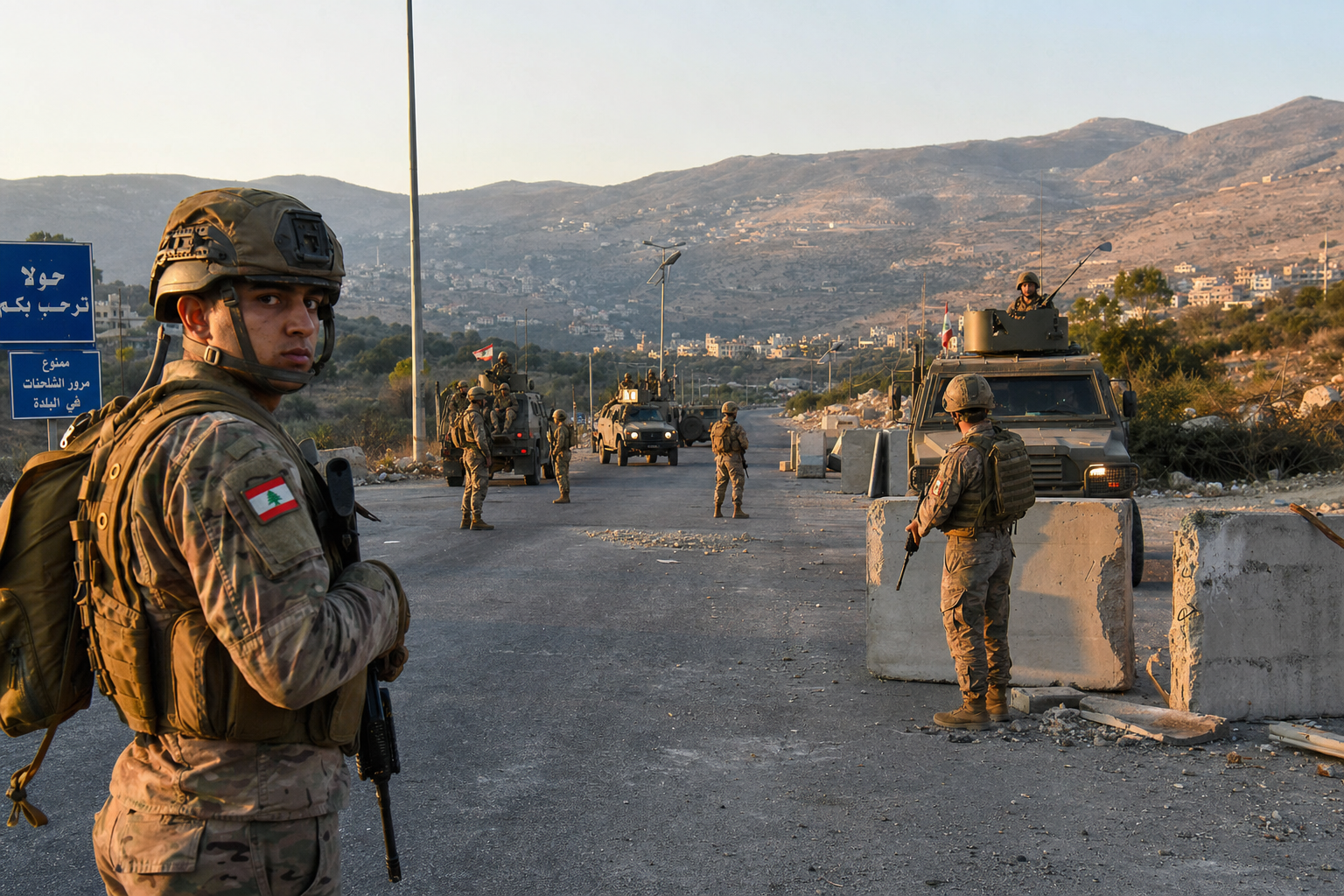
Lebanon’s army said its troops began deploying to a newly designated “pilot zone” in the south of the country after the withdrawal of Israeli forces from part of the area under a US-brokered framework agreed last month. The deployment began in villages including Zawtar al-Gharbiyeh, Froun and Srifa, and was presented by the United States as a milestone in implementing the trilateral arrangement among Israel, Lebanon and the US. The plan is tied to the broader objective of extending Lebanese state control in the south and disarming Hezbollah, which Israel and the US characterize as a security threat.
The article highlights renewed friction despite the agreement. Lebanon said Israeli troops fired near Lebanese engineering units as they entered the village, while the Israeli military said it fired warning shots after Lebanese troops and a vehicle crossed into the Israeli-declared security zone and breached barriers. No injuries were reported, but the Lebanese army said the incident could hinder deployment in the pilot zones. The IDF said it would adjust its posture in one pilot area while retaining the right to self-defense and insisting it would remain in the security zone as long as needed.
The piece places the deployment in the context of President Joseph Aoun’s visit to Washington, where he sought US political backing and support for the Lebanese Armed Forces. President Donald Trump said the US would help Lebanon, though he gave no specifics. The article also notes that Hezbollah rejects the deal’s link between Israeli withdrawal and its disarmament, while Israel says it will not fully withdraw until Hezbollah is disarmed. It ends by describing the wider war’s heavy toll in Lebanon and on the Israeli side.
Entities: Lebanese army, Israel Defense Forces (IDF), Hezbollah, Donald Trump, Joseph Aoun • Tone: analytical • Sentiment: neutral • Intent: inform
22-07-2026
President Trump announced that his administration would lift the long-standing ban on direct flights from the United States to Lebanon, a restriction in place since 1985 after Hezbollah’s hijacking of TWA Flight 847. Trump made the announcement on his social media platform shortly after meeting with Lebanese President Joseph Aoun, presenting the change as a way for Americans to visit Lebanon more easily. The article notes that it was still unclear when the ban would be formally rescinded or whether U.S. airlines would immediately begin service to Beirut.
The decision comes amid a volatile regional security environment. The U.S.-backed effort to negotiate an Israeli withdrawal from parts of Lebanon is unfolding alongside a broader war involving Iran, while Hezbollah remains deeply embedded in Lebanese politics and has rejected disarmament under the peace framework. The State Department said withdrawal operations had begun in several pilot zones, though gunfire reportedly resumed soon after. The article suggests Trump’s move could increase the American presence in Beirut at a moment of uncertainty, and it underscores the continuing link between the Lebanon-Israel conflict and the wider confrontation involving Iran and Hezbollah. Trump also said he would be willing to speak with Hezbollah if that would help advance a resolution, reinforcing his willingness to engage with actors many officials might avoid.
Entities: Donald Trump, Joseph Aoun, Lebanon, Hezbollah, Federal Aviation Administration (F.A.A.) • Tone: analytical • Sentiment: neutral • Intent: inform
22-07-2026
US President Donald Trump pledged strong support for Lebanon during a July 21 White House meeting with Lebanese President Joseph Aoun, who is seeking U.S. backing for a fragile plan to disarm Hezbollah and move Lebanon toward peace with Israel. Aoun, the first Lebanese president to visit Washington since 2009, asked for continued support for the Lebanese Armed Forces and political backing for efforts to extend state authority in the south. Trump said the United States would help Lebanon “a lot” and announced that U.S. airlines could resume direct flights to Beirut, suspended for more than 40 years after a 1985 hijacking. Lebanese Prime Minister Nawaf Salam welcomed the move as beneficial for travel, connectivity, and the economy.
The talks came amid a delicate security arrangement in southern Lebanon, where the Lebanese army has begun deploying in “pilot zones” under a U.S.-backed framework with Israel. That deployment was complicated by an exchange of accusations after the Lebanese army said Israeli troops fired near its soldiers, while the Israeli military said it fired warning shots after Lebanese troops entered an area outside the designated pilot zone. The broader agreement is intended to demonstrate that Beirut can assert sovereignty and eventually disarm Hezbollah, which Israel and Washington view as essential for lasting peace.
Aoun used the visit to sharply criticize Hezbollah’s weapons and to insist on a full Israeli withdrawal from Lebanese territory. U.S. officials, including Secretary of State Marco Rubio, reinforced that peace will remain impossible while Hezbollah stays armed. The article underscores both the diplomatic possibility opened by the Washington meeting and the fragility of the southern Lebanon arrangement, which remains vulnerable to military miscalculation and political deadlock.
Entities: Donald Trump, Joseph Aoun, Hezbollah, Lebanese Armed Forces (LAF), Israel • Tone: analytical • Sentiment: neutral • Intent: inform