20-10-2026
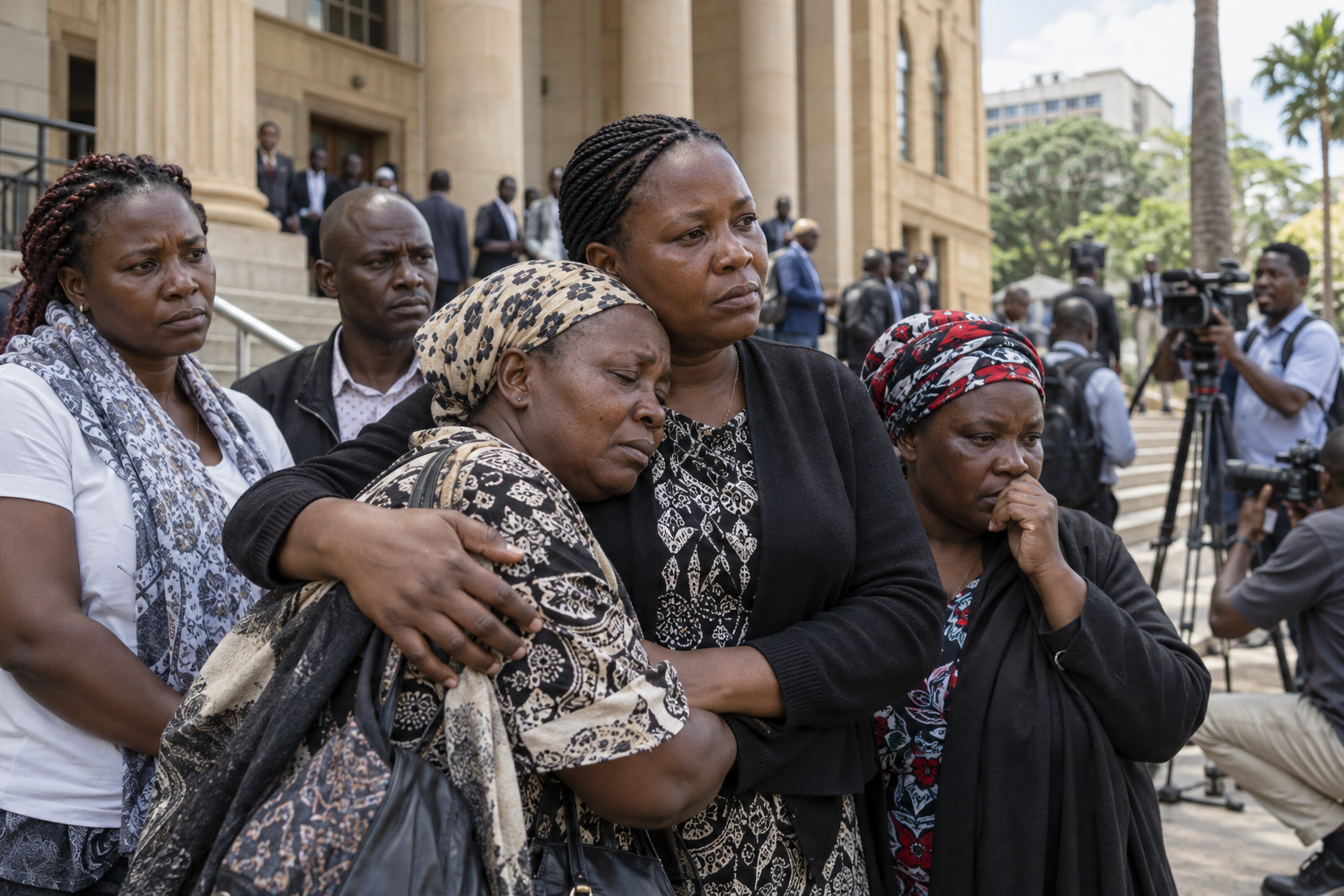
Families of victims have welcomed the conviction of preacher Paul Mackenzie and 28 others in connection with the deaths of 191 people, including 190 children, in Kenya’s Shakahola cult case. A court in Mombasa issued the verdict on Monday, concluding that Mackenzie and his associates took part in an organised system of religious radicalisation and enforced fasting that led to the deaths. The judge rejected the defence’s claim that victims had chosen to fast to death. Prosecutors said followers were told to starve themselves to “meet Jesus,” and that children were expected to die first.
Francis Wanje, who lost eight relatives, said the ruling gave him a measure of justice after a long wait and restored some belief that justice was possible. Kenya’s Director of Public Prosecutions, Renson Ingonga, called the convictions a significant achievement given the case’s 191 counts, numerous accused people and witnesses. Mackenzie’s lawyer, Lawrence Obonyo, said the defendants were surprised and disappointed and would appeal, asserting confidence that the verdict would be overturned.
The case emerged in April 2023, when authorities began finding shallow mass graves in Shakahola Forest. More than 400 bodies have since been recovered, though many victims remain unidentified. Monday’s judgment addressed 191 murder counts; other deaths are being handled in separate proceedings. The massacre triggered criticism of the authorities’ oversight of religious groups, particularly because Mackenzie had previously been arrested and released. The convicted defendants are expected to be sentenced on November 6. For grieving families, the verdict is an important legal milestone, but it cannot undo their losses.
Entities: Paul Mackenzie, Francis Wanje, Renson Ingonga, Lawrence Obonyo, Shakahola Forest • Tone: neutral • Sentiment: negative • Intent: inform
20-10-2026
Robert Kabera, a 50-year-old former Rwandan army sergeant major and outspoken critic of President Paul Kagame, was found beheaded on the outskirts of Kampala, Uganda. Ugandan police said Monday that his head had not yet been recovered. His death has prompted renewed concern about the safety of Rwandan opposition figures living abroad, though authorities have not established a motive in this case.
Kabera had fled Rwanda after facing sexual assault allegations, which he denied, and later sought asylum in Uganda, saying he was politically persecuted. According to his family, he had travelled to inspect a construction site about 45 kilometres from Kampala before he died. Alongside his past military service, Kabera was a musician and YouTuber whose channel had more than 144,000 subscribers. He regularly posted videos criticizing Kagame’s government.
Kabera’s widow, Jeanne d’Arc Rwigema Uwizeye, said she feared for the safety of her family. The opposition Rwanda National Congress (RNC) called for a full investigation and said the killing had heightened fears among Rwandans living abroad.
The article places the case in the context of earlier killings of Rwandan dissidents outside the country. It cites the 2014 death of former Rwandan intelligence chief Patrick Karegeya, who was found dead in a South African hotel after becoming an outspoken critic of the government. It also notes that several Rwandan dissidents have been killed abroad over the years, without asserting that those cases share a proven motive. Rwanda’s government had not publicly commented on Kabera’s death at the time of publication, and Ugandan police were continuing their investigation.
Entities: Robert Kabera, Paul Kagame, Jeanne d'Arc Rwigema Uwizeye, Patrick Karegeya, Rwanda National Congress (RNC) • Tone: analytical • Sentiment: negative • Intent: inform
20-10-2026
Dan Mackenzie, the 27-year-old eldest son of Kenyan cult leader Paul Mackenzie, says he recently alerted police after learning that his younger siblings were being made to fast at their grandmother’s home. Police rescued eight children, including Dan’s five siblings, and took them to a rescue centre. Dan said the children had been denied food for almost three days. He explained that he initially struggled to accept the allegations against his father, but came to understand the extent of the tragedy during court proceedings. As a child, Dan himself was forced to fast for nearly a week and was beaten by church members to make him attend services. He says he reported relatives who continued to follow his father’s teachings to protect his siblings.
Paul Mackenzie was found guilty of murdering 190 children and one adult who starved to death in Shakahola forest, near Kenya’s coast. He had instructed followers of his doomsday cult to starve themselves and their children in order to “meet Jesus.” Twenty-eight other cult leaders were also convicted. The court heard that followers viewed Mackenzie as “Jesus’s mouthpiece,” and that those who resisted fasting were to be forced to heaven “through kicks and blows.” The judge described the cult’s burials as being presented as weddings with Jesus.
Dan, who left school at seven because the cult forbade education and condemned modern medicine, now works as a motorcycle taxi driver in Malindi and supports himself and his younger siblings. He hopes the verdict offers comfort to bereaved families. Stephen Mwiti, who lost all six of his children to the cult, also welcomed the convictions; his former wife was among those convicted alongside Mackenzie.
The verdict is the first ruling on the most serious charges against Mackenzie, who was arrested in 2023 after more than 400 bodies were discovered in shallow graves in Shakahola forest. He and other leaders face separate cases involving terrorism, radicalisation and denying children an education. Mackenzie is due to be sentenced on 6 November.
Entities: Paul Mackenzie, Dan Mackenzie, Stephen Mwiti, Justice Diana Mochache, Shakahola forest • Tone: analytical • Sentiment: negative • Intent: inform
20-10-2026
France 24 reports that Robert Kabera, a former Rwandan soldier who was living in Uganda and had become a vocal critic of the Rwandan government, was found decapitated near Kampala. The report identifies him as an exiled critic of President Paul Kagame and says his murder is being investigated in Uganda. It also notes that Rwandan authorities have previously been accused of assassinating opponents of Kagame, placing Kabera’s killing within a broader context of concerns about the safety of government critics abroad. The article does not provide details about when or how Kabera disappeared, who discovered his body, the progress or findings of the Ugandan investigation, or whether authorities have identified suspects. It likewise does not establish that the Rwandan government was responsible for his death; the allegation is presented as background, not as a finding in the case. The item is a short video report, presented by France 24 journalist Aurore Bayoud from Kigali, Rwanda, and dated October 20, 2026. Its available text offers only a brief account and does not include further statements from police, the Rwandan government, Kabera’s family, or other witnesses. The central reported facts are therefore Kabera’s identity and political background, the discovery of his decapitated body near Kampala, and the ongoing Ugandan investigation. The report’s framing highlights the danger faced by exiled critics while distinguishing accusations against Rwandan authorities from confirmed responsibility for this particular killing.
Entities: Robert Kabera, Paul Kagame, Aurore Bayoud, France 24, Rwanda • Tone: analytical • Sentiment: negative • Intent: inform
20-10-2026
France 24’s “Eye on Africa” programme rundown highlights three stories. The lead item reports that Kenyan cult leader Paul Mackenzie was convicted of 191 murders, 190 of them involving children. The brief description does not provide further details about the trial, the victims, or the circumstances of the murders. The programme also reports that Robert Kabera, described as a former Rwandan soldier and outspoken critic of the Rwandan government, was found decapitated in Uganda. No additional information about the discovery or investigation is included in the supplied text. The final item takes a less sombre turn: it introduces a young Ivorian music lover who travels around the country seeking out old-school music and sounds in need of care. The supplied page identifies Georja Calvin-Smith and Hélène Daouphars in the byline area and gives the programme’s issue date as 20 October 2026. It is a short programme preview rather than a full report: its descriptions introduce the subjects but offer little context or detail beyond the basic claims. Overall, the rundown combines accounts of grave crimes and a killing with a cultural feature about music preservation, presenting them in a concise, factual broadcast-news style.
Entities: Paul Mackenzie, Robert Kabera, Kenya, Uganda, Rwanda • Tone: neutral • Sentiment: negative • Intent: inform