20-10-2026
Albania’s antigovernment protests have grown from a May environmental campaign into a major challenge to Prime Minister Edi Rama. Demonstrations in Tirana intensified after high school and university students joined, citing rising tuition, poor dormitory conditions and deteriorating public infrastructure. Police have used tear gas and other force against protesters, and clashes have included attempts to breach barricades and government buildings.
The movement is described by analysts as decentralised and youth-led, with coordination taking place through platforms such as WhatsApp, Telegram and Snapchat rather than established political organisations. Its early focus was opposition to luxury developments in protected coastal areas, including a resort planned for Sazan Island by a firm associated with Jared Kushner. The flamingo became a symbol of resistance to the perceived sale of public land. The protests have since come to express broader anger about corruption, nepotism, inequality, unemployment, economic stagnation and the loss of young people abroad.
Protesters also reject both the governing Socialist Party and the traditional opposition, arguing that the political class does not represent their concerns. Some opposition figures who tried to address demonstrators were rebuffed. Protesters are demanding Rama’s resignation and a technical government, while refusing dialogue with officials because of distrust in state institutions. Claims circulating among some protesters that Rama serves private or foreign interests have not been proven; Rama has dismissed allegations as conspiracy theories and disinformation.
The movement’s lack of central leadership presents a challenge for the government, which has no single representative with whom to negotiate. Authorities have increasingly relied on security forces. Police have been accused of using tear gas, water cannons and rubber bullets, and the article reports that at least 167 people had been arrested by the time of publication. The supplied article ends mid-sentence, so it does not provide further details about the arrests or the protests’ outcome.
Entities: Edi Rama, Albania, Tirana, Flamingo Revolution, Fatos Hakorja • Tone: analytical • Sentiment: negative • Intent: analyze
20-10-2026
Albania has seen seven consecutive days of violent clashes between protesters and riot police, with demonstrations driven by demands for improved university conditions, anger over corruption and calls for Prime Minister Edi Rama to resign. Official figures recorded 295 people injured before Monday’s violence, including 186 police officers. Police stations and government buildings in Tirana have been attacked. Rama condemned negotiating with the protesters and described the unrest as a coordinated attack involving young people allegedly radicalised by forces in Europe and the United States.
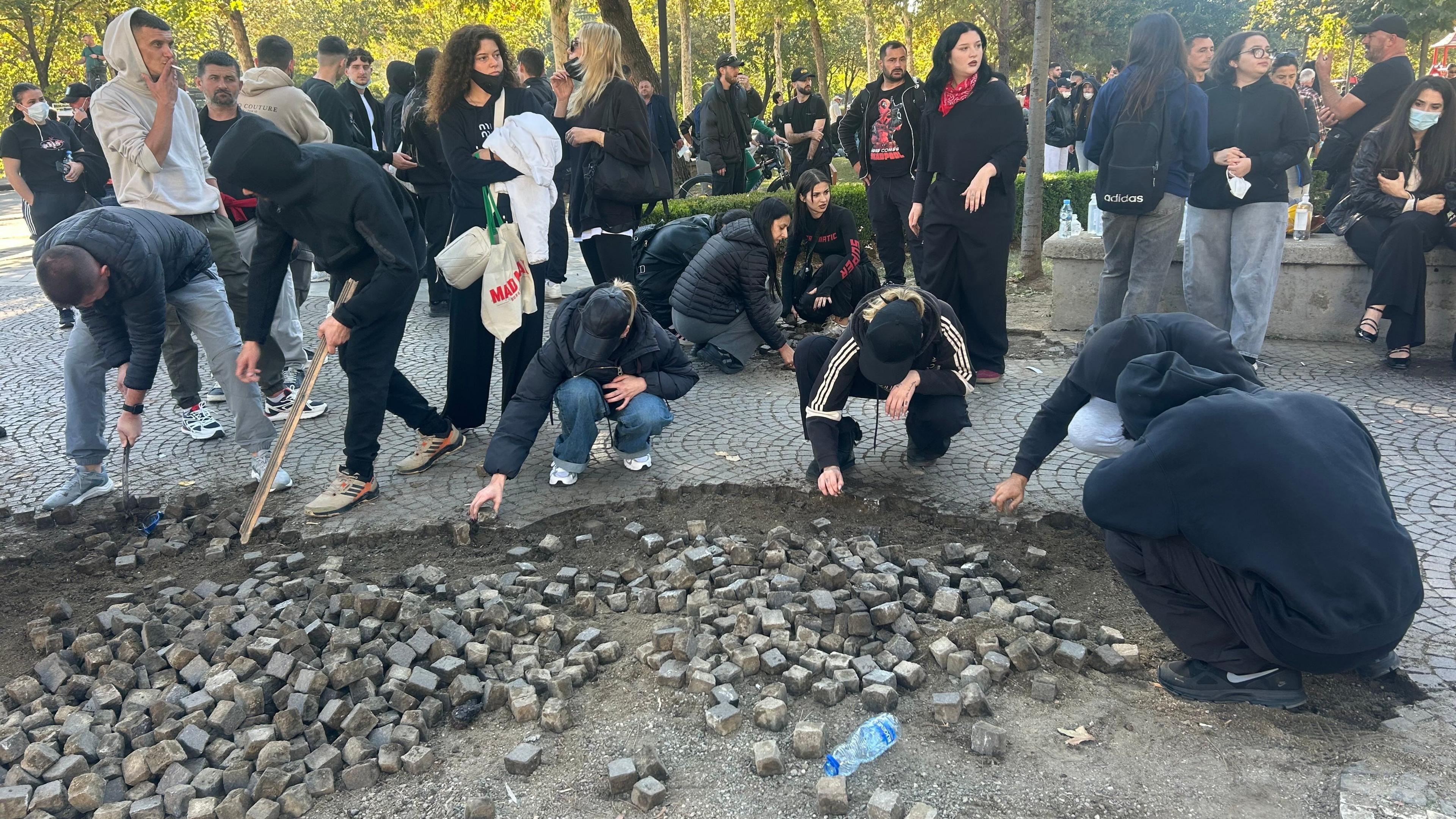
The report describes confrontations in Tirana’s Rinia Park, where people loosened cobblestones to use against police. Armoured police vehicles fired water cannon and tear gas as officers pursued mostly student protesters through the park. Some protesters took shelter in a cafe, while volunteers helped people affected by tear gas. The article also recounts an apparent point-blank use of pepper spray by an officer against a young man.
Human rights lawyer Gentian Sejrani, who represents more than 100 people arrested during the protests, says police actions are often chaotic and that officers rarely present evidence in court. He argues that people throwing objects at police are difficult to catch, while some arrests involve people unconnected to demonstrations. The resulting violence reflects anger among both protesters and police.
Activist and student Sidorela Vatnikaj describes a leaderless movement that coordinates protest locations, legal support and first aid. Although she is uncomfortable with attacks on authorities, she says protesters’ anger is understandable and blames police for provoking and escalating violence. Vatnikaj connects the protests to frustration over emigration, alleged corruption and the failure to achieve the democratic society previous generations hoped for. She calls for a one-year technocratic government to prepare genuine democratic elections and accuses Rama of election-rigging and ties to powerful business and criminal interests. Rama, in power for 13 years, has promised Albania will join the EU by 2030 and says only he can deliver that goal.
Entities: Edi Rama, Sidorela Vatnikaj, Gentian Sejrani, Albania, Tirana • Tone: analytical • Sentiment: negative • Intent: inform
20-10-2026
Albanian Prime Minister Edi Rama has blamed what he calls a “hybrid war” for intensifying unrest, following a week of violent anti-government demonstrations in Tirana. The protests began over a controversial resort development in an ecologically protected area linked to the family of US President Donald Trump, but have broadened to include demands for improved university conditions, anger over corruption, and calls for Rama to resign. Cost-of-living pressures, housing affordability and concerns about the future are also among the grievances Rama acknowledged.
Thousands have taken part in demonstrations. Protesters have targeted government buildings and damaged shops, while police have used water cannon, tear gas and rubber bullets to disperse crowds. Protesters have thrown stones, petrol bombs and fireworks at police. Authorities report about 300 people injured, more than half of them police. Several government buildings, including the Education Ministry, have sustained significant damage.
Rama repeated his claim that foreign actors are responsible for encouraging violence, having previously accused Russia and Iran of spreading online misinformation. He said the phenomenon is recognised as a growing issue across Europe and described the unrest as a hybrid war that gains traction because it exploits genuine grievances. He also raised the possibility of restricting social media use for children under 16 and changing the age of criminal responsibility.
Students have participated alongside university demonstrators, prompting authorities to condemn minors’ involvement in violence. On Tuesday, hundreds of university professors marched in solidarity with protesters, condemning police violence against students and calling for Rama to resign. The demonstrations therefore combine immediate disputes over education and the resort project with wider opposition to corruption and the government.
Entities: Edi Rama, Tirana, Albania, Donald Trump, Russia • Tone: analytical • Sentiment: negative • Intent: inform
20-10-2026
Anti-government demonstrations in Tirana, Albania, escalated into violent clashes on Monday, 19 October, according to the article published the following day. Protesters threw petrol bombs, Molotov cocktails, fireworks and stones at police. Demonstrators also set rubbish bins on fire as riot police moved through the streets. Police responded with water cannon, tear gas and rubber bullets. The article describes the unrest as part of months of protests driven by anger over corruption, demands for improved university conditions and calls for Prime Minister Edi Rama to resign. Rama said that although protest is a right, violence is a crime, and accused demonstrators of crossing a “red line.” Authorities reported around 300 people injured in the clashes, with more than half of those injured being police officers. The report focuses on the escalation and the opposing actions of demonstrators and police, while also giving the wider political context and the government’s response. It does not provide further details about the specific events that triggered Monday’s clashes, the identities of those injured, or any arrests. The article’s central themes are political unrest, public anger over corruption and university conditions, and the use of force during confrontations between protesters and riot police.
Entities: Tirana, Albania, Edi Rama, Anti-government demonstrations, Political corruption • Tone: neutral • Sentiment: negative • Intent: inform
20-10-2026
Albanian Prime Minister Edi Rama said protesters had crossed a “red line” after a police station was set ablaze during anti-government demonstrations. He distinguished the right to protest from criminal violence and said he remained willing to engage in dialogue, but not with people who commit violence or political parties that do not distance themselves from it. The unrest has grown over recent months, with demonstrations driven by demands for improved university conditions, anger over corruption, and renewed calls for Rama to resign. Clashes with police have taken place since the previous Tuesday. On Monday, hundreds of demonstrators gathered near the education ministry, where some threw stones at riot police. Police responded with tear gas, dispersing the crowd after a brief confrontation. Student Leka Sina, 22, said protesters would continue until Rama resigned and described their aims as social peace and better living conditions. He also said violence was not a solution, while arguing that the government should reflect on the reasons behind the revolt. Police have regularly used water cannons, tear gas and rubber bullets during the demonstrations. Crowds have targeted government buildings, and stores have been smashed in several parts of the city. Authorities reported that about 300 people had been injured in the clashes, more than half of them police officers. The article presents the government’s rejection of violence alongside protesters’ demands and accounts of confrontations, without endorsing either side.
Entities: Edi Rama, Albania, Leka Sina, Tirana, Albanian government • Tone: neutral • Sentiment: neutral • Intent: inform