17-09-2026
This brief Al Jazeera Newsfeed report describes a new flooding event affecting Valencia, Spain, on 17 September 2026. Torrential rain has caused flooding in the region, prompting rescue operations and producing major disruptions to travel. The report does not provide detailed figures on injuries, deaths, property damage, or the number of people rescued, but it emphasizes the seriousness of the situation through its reference to emergency rescues and widespread transport problems.
The flooding is particularly significant because it occurred almost two years after the catastrophic floods that struck Valencia province in October 2024. That earlier disaster killed more than 220 people and remains a powerful reference point for residents and authorities in the region. By highlighting the earlier tragedy in the headline and description, the report places the latest rainfall within a broader context of heightened public concern and vulnerability.
The article is presented as a short video news item rather than a detailed written investigation. Its focus is on the immediate effects of the rain—flooding, rescue activity, and travel disruption—while also reminding viewers of the human cost of the 2024 disaster. It does not identify specific municipalities, explain the cause of the torrential rainfall, or report whether the current flooding has produced fatalities. Likewise, it offers no detailed forecast or information about the duration of the event. Overall, the report informs audiences about a developing weather emergency in Valencia and underscores why the latest floods are especially alarming for a community still remembering the deaths and devastation of 2024.
Entities: Valencia, Spain, Al Jazeera, Valencia province, Torrential rain • Tone: urgent • Sentiment: negative • Intent: inform
17-09-2026
Torrential rain and flash floods have struck north-eastern Spain, killing one person and causing extensive disruption in Catalonia and Valencia. The dead man was recovered in Olivella, about 40km west of Barcelona, after his car was swept away by a stream. Catalan firefighters initially reported that the missing person was a woman but later corrected the information.
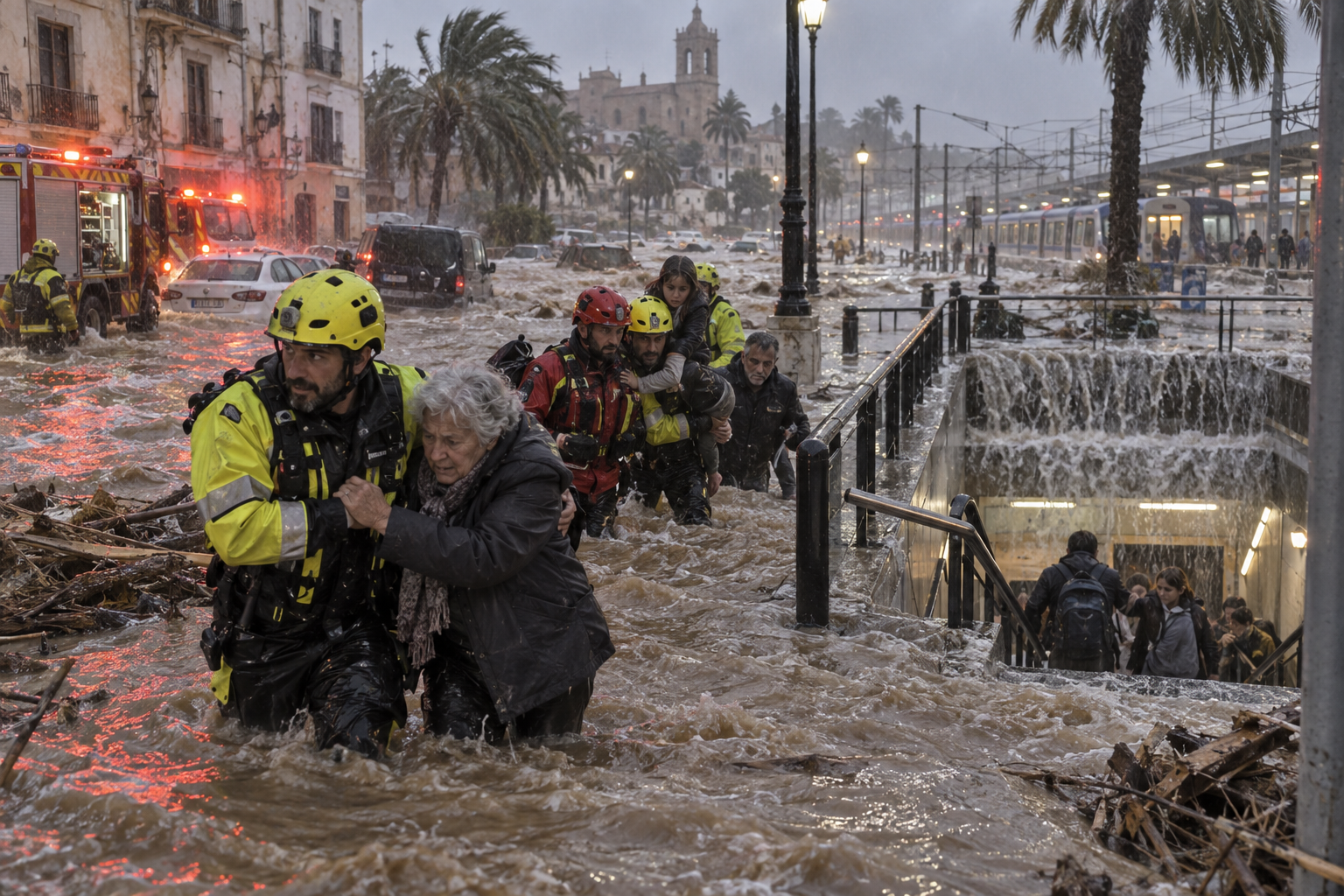
Spain’s national weather agency, AEMET, issued heavy-rain warnings for eastern regions, including a red alert along Barcelona’s coastline. Emergency services in Catalonia received more than 850 weather-related calls and recorded over 500 incidents. Flooding submerged roads, trapped vehicles, disrupted rail and bus services, closed metro stations and delayed or cancelled flights at Barcelona-El Prat airport. Authorities urged people to avoid unnecessary travel, while Prime Minister Pedro Sánchez warned of “very complicated situations”.
The neighbouring Valencia region also experienced extreme rainfall, with more than 70mm falling in 30 minutes in several municipalities. AVAMET described the accumulation as exceptionally rare. Valencia province recorded 478 incidents, largely involving property damage, leaks and traffic disruption. The regional capital suspended all metro services and temporarily closed its airport, while a football match was postponed after the pitch and players’ tunnel flooded.
The flooding follows Spain’s hottest summer on record and an unusually warm start to September. Scientists say human-driven climate change is making the Mediterranean storms that commonly affect eastern Spain in autumn more intense. Warmer sea temperatures increase evaporation, contributing to heavier rainfall. The event also comes less than two years after catastrophic flooding in Valencia killed more than 230 people.
Entities: North-eastern Spain, Barcelona, Catalonia, Valencia, Olivella • Tone: urgent • Sentiment: negative • Intent: inform
17-09-2026
Torrential rain caused widespread flooding and severe disruption across Spain’s Valencia region and Catalonia on 17 September 2026. The storms brought intense downpours, submerged cars, flooded streets and transport interruptions, while emergency crews responded to hundreds of incidents involving property damage, leaks and dangerous road conditions.
In Valencia province, the monitoring agency Avamet recorded more than 70 millimetres of rain in only 30 minutes in several municipalities. Officials described the rainfall accumulations as exceptionally rare. Emergency services logged 478 incidents, and civil protection crews pumped water from a flooded supermarket in Moncada, near Valencia. Firefighters handled hundreds of additional calls. Valencia’s metro network was suspended, and the city’s airport closed for several hours. Twelve flights were diverted before the airport reopened.
Catalonia also experienced serious flooding, with authorities receiving more than 850 storm-related calls and recording over 500 incidents. Flooded underpasses, submerged vehicles and water entering buildings were reported across the region. Near Olivella, approximately 40 kilometres west of Barcelona, rescuers recovered the body of a man after his vehicle was swept away by a swollen stream. Catalan firefighters and the Mossos d’Esquadra confirmed that the victim was the driver, correcting earlier reports that a woman was missing.
Spain’s national weather agency, AEMET, issued warnings for heavy rain, including a brief red alert along the Barcelona coast. Catalonia’s meteorological service warned of locally torrential showers. Authorities urged residents to avoid unnecessary travel and stay away from streams and ravines while emergency teams continued their response. The storms followed Spain’s hottest summer on record, highlighting the country’s recent exposure to extreme weather.
Entities: Valencia, Catalonia, Spain, Olivella, Barcelona • Tone: urgent • Sentiment: negative • Intent: inform