17-09-2026
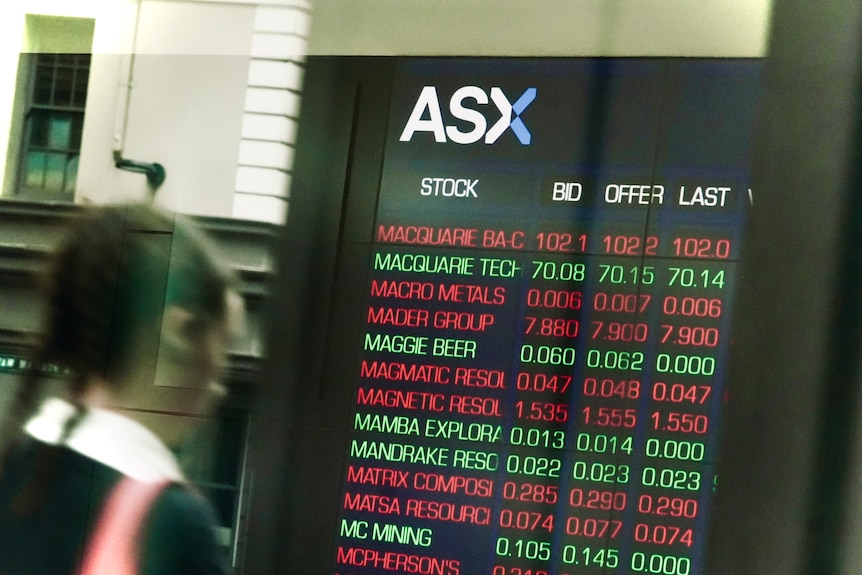
The article examines whether the Reserve Bank of Australia (RBA) will raise its cash rate at its September 29 meeting, amid a worldwide shift toward higher interest rates. Financial markets have moved strongly toward pricing in a hike, assigning it an 87 per cent probability, while economists remain divided. Among the major banks, NAB expects a September increase, while the others see November as their base case but acknowledge that September remains possible.
The case for an immediate hike rests primarily on inflation and economic activity. Australian headline inflation eased from 3.8 per cent to 3.5 per cent in July, but exceeded forecasts, while trimmed-mean inflation remained at 3.6 per cent. Persistent services inflation suggests domestic price pressures rather than solely imported inflation. Economic growth also reached 2.1 per cent over the year to June, slightly above expectations and around the RBA’s estimate of Australia’s current growth speed limit. Strong business investment, particularly in artificial-intelligence infrastructure and data centres, is contributing to construction-cost pressures. Rate increases by the United States, European Central Bank and potentially Bank of Japan are also putting pressure on the RBA to support the Australian dollar and contain imported inflation.
However, Australia differs from the United States. The RBA has already raised rates three times this year, while Australia’s unemployment rate has risen from 4.1 per cent to 4.5 per cent. Variable-rate mortgages mean households are especially exposed, and recent rate rises and tax changes have already pushed the housing market into a sharp downturn. Further increases could reduce house prices, consumer spending, housing construction, property-transfer activity and state stamp-duty revenue.
The RBA must also judge whether the July monthly inflation data reflect a lasting trend or temporary post-financial-year price adjustments. Waiting until November would provide more reliable quarterly inflation data. Finally, policymakers must consider how high rates can go before mortgage stress causes broader economic damage. The author therefore believes the RBA may be able to resist global pressure and wait, despite strong market expectations of a September hike.
Entities: Reserve Bank of Australia (RBA), Michael Janda, David Taylor, LSEG, NAB • Tone: analytical • Sentiment: neutral • Intent: analyze
17-09-2026
The UAE’s lower interest rates have not translated into broadly easier access to borrowing. The UAE Central Bank cut its base rate by 75 basis points during 2025, but raised rates by 25 basis points on September 16, 2026, in line with the US Federal Reserve’s first increase since 2023. Despite the earlier cuts, the Central Bank’s first-quarter Credit Sentiment Survey showed that banks’ overall lending appetite declined to minus 3.2 percentage points. Lenders cited lower risk tolerance, a weaker economic outlook and concerns about borrower creditworthiness, with small and medium-sized enterprises facing particularly limited access.
Mortgage finance remains the most accessible form of borrowing. Fixed three-year mortgage rates are broadly unchanged, ranging from about 3.89 per cent to 4.24 per cent, compared with roughly 3.99 per cent a year earlier. Banks have also streamlined applications for strong borrowers, with some salaried employees qualifying after three salary credits and self-employed applicants being considered after one year of trading instead of two years of audited accounts. However, the best terms remain available mainly to salaried employees at established companies with clean credit histories and low debt levels.
Access is more difficult for personal loans and credit cards because these unsecured products require established credit histories and assessments of both income and employer stability. Employees in aviation, hospitality, real estate, travel and tourism, oil and gas, construction and contracting may face additional scrutiny because of regional conflict-related risks.
Self-employed people, newer residents, heavily indebted borrowers and some women returning from career breaks can also encounter greater procedural and documentation barriers. SME owners face the most demanding conditions, including personal guarantees, security, extensive paperwork and slow processing. As a result, many small businesses rely on self-funding or cash flow rather than bank finance. The article concludes that borrowing may be cheaper in some areas, but the approval threshold has not fallen and may have increased as banks focus more closely on affordability, income stability and existing debt.
Entities: United Arab Emirates (UAE), UAE Central Bank, US Federal Reserve, Carol Glynn, Manish Bhaggnari • Tone: analytical • Sentiment: neutral • Intent: analyze
17-09-2026
The Bank of England kept its Bank Rate unchanged at 3.75%, even as UK inflation rose further above the central bank’s 2% target. The Monetary Policy Committee voted 6-3 to hold rates, while three members—Catherine L Mann, Megan Greene and Huw Pill—supported a 25-basis-point increase to 4%. Markets had largely expected the hold, but investors widely anticipate a hike at the Bank’s November meeting.
The decision contrasts with recent moves by other major central banks. The U.S. Federal Reserve raised rates by a quarter point, the European Central Bank delivered its second hike of the year, and the Bank of Japan was expected to tighten policy. Bank of England Governor Andrew Bailey said higher global energy costs had so far produced limited effects on UK prices and wages, but warned that prolonged volatility could make a rate increase necessary to return inflation to target.
UK consumer-price inflation reached 3.1% in August, its first reading above 3% since March. The increase was largely driven by motor fuel prices, which rose 23% year on year. The UK’s dependence on imported energy leaves it vulnerable to external shocks, while households continue to face the effects of the post-pandemic cost-of-living crisis and disruptions linked to the Russia-Ukraine war.
The dissenting MPC members cited risks from the Iran war, energy prices, possible second-round inflation effects, AI-related supply constraints and the El Niño climate event. They argued that raising rates sooner could prevent inflation from becoming embedded and requiring more aggressive tightening later.
The decision initially pushed UK government bond yields lower, although Britain continues to have the highest borrowing costs in the G7. Analysts said the Bank was waiting for clearer evidence, with a weakening labor market and relatively resilient core and services inflation complicating the policy outlook.
Entities: Bank of England, Bank of England Monetary Policy Committee, Andrew Bailey, U.S. Federal Reserve, European Central Bank • Tone: analytical • Sentiment: neutral • Intent: inform