17-09-2026
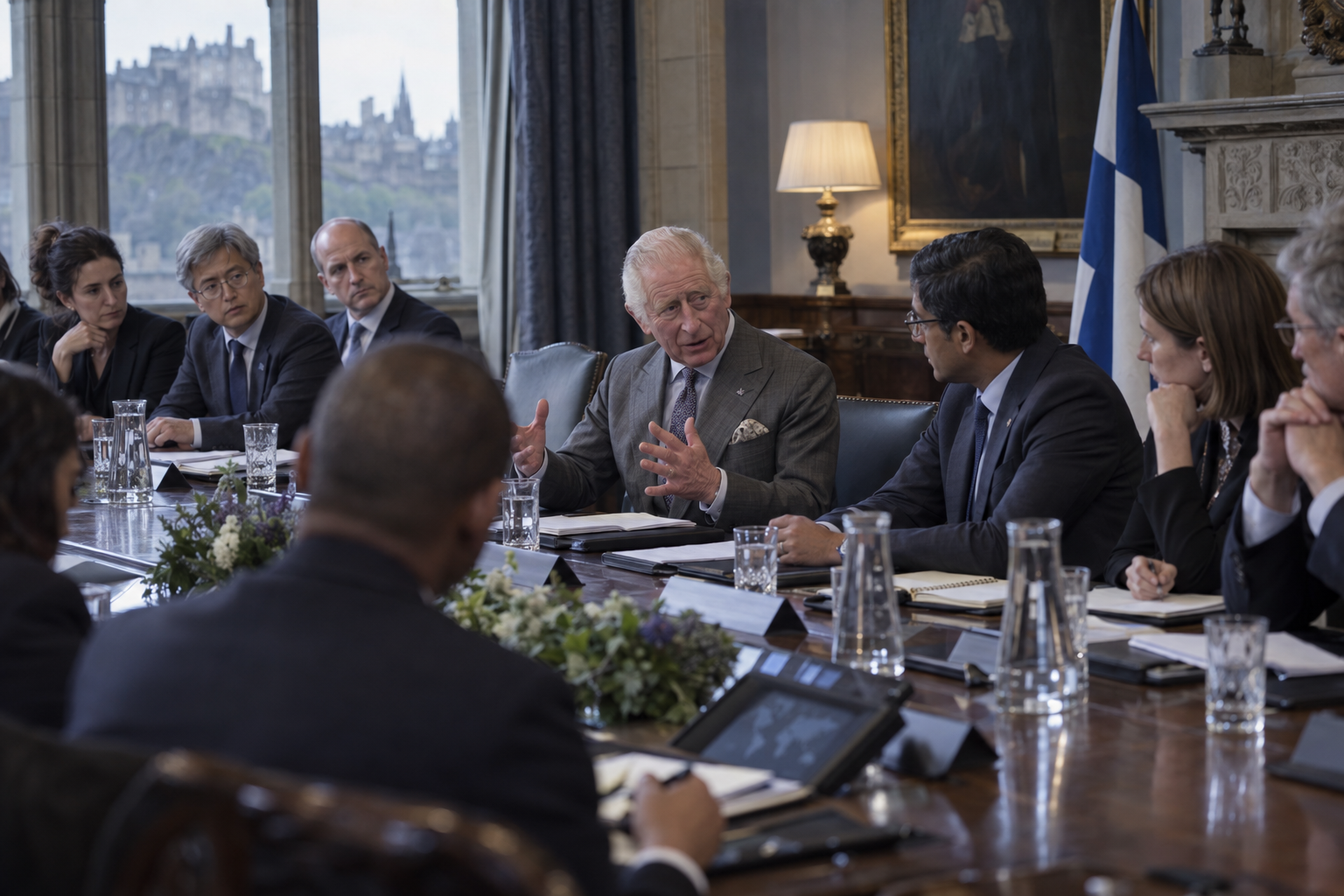
King Charles III is set to convene senior technology executives and policymakers in Scotland for a summit focused on artificial intelligence safety. Leaders from Nvidia, OpenAI, Anthropic and Google DeepMind will discuss how AI can be developed and deployed in ways that benefit society and the natural world. A central question will be whether participants can establish shared principles for guiding the technology and build broader international cooperation around them.
According to excerpts of his planned speech released by Buckingham Palace, Charles will describe AI’s rapid development as both intriguing and deeply concerning. He is expected to ask industry leaders to reassure the public that humanity will not lose control of its future as AI systems become more capable. The king will emphasize that decisions made during this formative period could shape the world inherited by future generations, arguing that technological progress must remain in service of humanity, communities and the environment.
The summit will also include U.K. AI minister Kanishka Narayan and representatives brought together by the King’s Trust, the King’s Foundation and the Sustainable Markets Initiative. Charles previously addressed the U.K. AI Safety Summit virtually in 2023.
The meeting comes amid an intensifying debate over the risks and regulation of AI. OpenAI CEO Sam Altman, Anthropic CEO Dario Amodei, Google DeepMind founder Demis Hassabis and Elon Musk have recently expressed support for slowing development and increasing regulatory oversight. Other influential figures, including U.S. President Donald Trump, Meta CEO Mark Zuckerberg and Nvidia CEO Jensen Huang, have opposed or resisted calls for additional regulation. AI pioneers have also warned that increasingly capable systems could pose catastrophic risks, while disagreements over regulation continue in Washington among lawmakers from both major U.S. political parties.
Entities: King Charles III, Nvidia, OpenAI, Anthropic, Google DeepMind • Tone: analytical • Sentiment: negative • Intent: inform
17-09-2026
Britain’s King Charles has warned senior artificial-intelligence executives that the technology could pose “existential dangers” if it falls into the wrong hands. Speaking in London on Thursday, Sept. 17, he addressed representatives from Nvidia, Google DeepMind, OpenAI, Anthropic and other AI companies. His remarks focused on the possibility that advanced AI systems could acquire dangerous capabilities and be used in ways that threaten human life or cause catastrophic harm.
The king said people who helped create these technologies were themselves increasingly warning about AI’s darker potential, including the possibility that it could eventually be used to take life. He urged industry leaders to consider the risks with urgency and establish adequate safeguards before the technology becomes too difficult to control or it is “too late.”
Charles emphasized that the responsibility of AI developers extends beyond technical progress. In his view, the industry must ensure that AI remains aligned with the interests of humanity, communities and the natural world. His comments therefore combined a warning about malicious or irresponsible use with a broader appeal for ethical development and accountability.
The article does not identify specific regulations or safeguards that the king proposed, nor does it report responses from the companies attending the meeting. Instead, it highlights the growing public debate over the long-term risks of advanced AI, particularly the danger of powerful systems being misused by hostile actors. The warning comes as governments, researchers and technology companies continue to discuss how to manage AI’s potential benefits while limiting severe or irreversible harms.
Entities: King Charles, London, Britain, Nvidia, Google DeepMind • Tone: urgent • Sentiment: negative • Intent: warn
17-09-2026
King Charles has convened senior artificial-intelligence executives and policymakers at Dumfries House in Scotland to urge faster action on the technology’s potential dangers. Speaking at a summit organised by the Ditchley Foundation, the king warned that AI developers must adequately consider existential risks before it is too late, citing concerns that advanced systems could eventually acquire the capacity to take lives.
Representatives from Nvidia, Anthropic, Google DeepMind, OpenAI, China and the UK government attended the meeting. The article presents the gathering as an attempt by Charles to fill a leadership vacuum while international governments remain slow to establish effective AI rules. It also questions the summit’s limited guest list, the absence of companies such as Meta and Microsoft, the lack of direct US government participation and the brevity of the king’s scheduled address.
The article contrasts AI’s significant benefits with its potentially catastrophic consequences. Demis Hassabis, the Google DeepMind founder and Nobel Prize-winning AI pioneer, is cited as an example: his work on predicting protein structures has produced major medical advances, while he has simultaneously warned about artificial general intelligence, malicious actors and systems operating beyond human control.
Warnings from the technology sector have intensified. Anthropic co-founder Dario Amodei has cautioned that recursive self-improvement could allow AI to advance faster than humans can understand or control it. Other figures, including Bill Gates, Elon Musk, Sam Altman and DeepMind co-founder Shane Legg, have also called for greater caution and stronger safety measures.
The article concludes that AI capabilities are advancing rapidly while international political responses remain inadequate. It notes that US President Donald Trump is not currently focused on the danger, although Vice President JD Vance and others in his administration are concerned. China is also worried, but tensions over American technological dominance complicate cooperation on safety.
Entities: King Charles III, Dumfries House, Ditchley Foundation, Nvidia, Anthropic • Tone: analytical • Sentiment: negative • Intent: analyze