17-09-2026
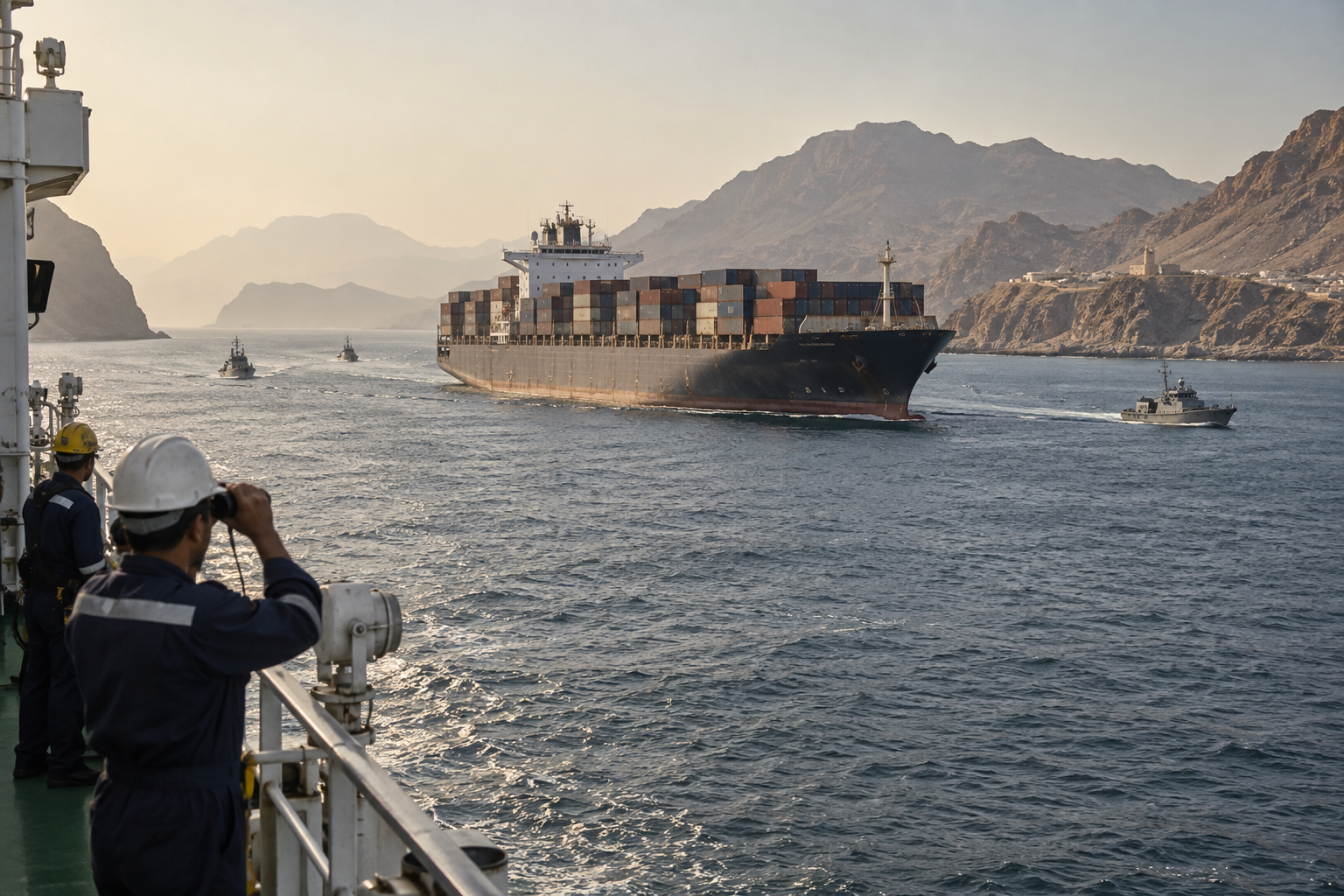
The article reports that Yemen’s Houthi movement has allegedly reached a secret understanding with the United States concerning shipping access in the Red Sea. According to unnamed US reports cited by Al Jazeera, the Houthis would permit US commercial and other shipping to travel through the Red Sea without interference. In exchange, Washington would refrain from becoming directly involved in the Saudi-led war in Yemen. The reported arrangement comes as the Houthis conduct an offensive along Yemen’s Red Sea coast, adding to the strategic significance of the alleged deal.
The report presents the agreement as an informal or undisclosed arrangement rather than a publicly confirmed treaty. It does not identify the specific US sources, explain whether the deal has been formally acknowledged by either Washington or the Houthis, or provide details about its duration, enforcement mechanisms, or effect on other countries’ vessels. It also does not clarify how the arrangement relates to the broader Saudi-led military intervention or to the Houthis’ ongoing military operations in Yemen.
The central issue is the apparent trade-off between maritime access and limited US military involvement. If accurate, the deal could reduce the risk of direct US-Houthi confrontation in the Red Sea while allowing the Houthis to maintain their military campaign along Yemen’s coast. However, the report offers no independent verification and provides only a brief account of the alleged agreement. The article’s framing emphasizes the secrecy of the arrangement, the conflict’s continuing violence, and the strategic importance of Red Sea shipping routes.
Entities: United States, Yemen, Houthi movement, Red Sea, Saudi-led war in Yemen • Tone: neutral • Sentiment: negative • Intent: inform
17-09-2026
Fighting intensified in Yemen between the Saudi-led coalition and Houthi forces as the United States reiterated its support for Yemen’s internationally recognised government while indicating that it was not taking a direct combat role. Yemeni government forces said Saudi-led coalition aircraft struck Houthi positions and equipment near the southwestern port city of Mocha, while government forces carried out drone attacks against Houthi fighters in northern Marib. The Houthis claimed that they had shot down a Saudi F-15 fighter jet over Marib using a locally made surface-to-air missile, a claim that could not be independently verified.
Houthi military spokesman Yahya Saree said Saudi warplanes had conducted 40 air strikes over 24 hours in Taiz, Marib and Hodeidah. The Houthis said they retaliated by targeting the Khamis Mushait airbase and an oil facility in Yanbu, a Saudi Red Sea port city.
Saudi Arabia is reportedly running short of missile interceptors and has asked France, Pakistan, Egypt and the United Kingdom for air-defence assistance. The United States, Saudi Arabia’s main ally and arms supplier, is also said to have depleted some of its interceptor stock during its war with Iran. A US Central Command spokesman said Washington was closely monitoring the conflict and maintained a longstanding military relationship with Saudi Arabia.
At the same time, US officials reportedly held direct talks with Houthi representatives in Oman. According to Reuters sources, the Houthis said they did not intend to attack US vessels and remained committed to a 2025 ceasefire with the United States. Washington’s Yemen envoy also reaffirmed strong US support for Yemen’s internationally recognised government and condemned what the embassy described as Iran-backed Houthi aggression. Al Jazeera’s Yemen correspondent said the reported downing of a Saudi fighter could affect the balance of power because Saudi Arabia relies heavily on air strikes against Houthi positions.
Entities: Houthis, Yemen’s internationally recognised government, Saudi-led coalition, United States, Saudi Arabia • Tone: analytical • Sentiment: negative • Intent: inform
17-09-2026
The CBS News live update covers the continuing U.S.-Iran war and its expanding military, political and economic consequences. House Speaker Mike Johnson said the issue of Iran obtaining a nuclear weapon was “taken care of,” while arguing that the next priority should be reducing gasoline prices. He blamed Democrats and former President Biden for the increase, even as regular gasoline averaged $4.37 per gallon, compared with $3.19 a year earlier. The war has already cost the United States an estimated $33.4 billion through mid-June, according to the military inspector general, and the Congressional Budget Office projected an additional cost of roughly $2 billion per month.
The update also describes escalating fighting involving Iran-backed Houthis and Saudi Arabia. Houthi media reported Saudi strikes in Yemen that killed one person and damaged telecommunications towers. Saudi Arabia had accused the Houthis of targeting Mecca with a drone, but the Houthis denied the allegation. The conflict has strengthened Iran and its allies’ influence around the Bab al-Mandeb Strait and other waterways vital to Gulf oil shipments, while forcing more than 100,000 people from their homes.
In Lebanon, the leaders of Lebanon, France and Jordan planned talks in Paris focused on supporting the struggling Lebanese military, preparing a donor conference and addressing southern Lebanon after the expected end of the UNIFIL peacekeeping mandate. Hezbollah’s refusal to surrender its weapons and Israel’s presence in southern Lebanon have complicated the situation and raised fears of civil war.
President Trump said Iran wants a deal and suggested the war may be nearing its end, although previous negotiations have not produced a durable agreement. Rising fuel prices and the war are creating political pressure ahead of the U.S. midterm elections. The report also warns that adversaries are using artificial intelligence to identify U.S. military positions, and notes that Brent crude prices fell as concerns about a Saudi pipeline eased.
Entities: Iran war, Mike Johnson, Donald Trump, Iran, United States • Tone: analytical • Sentiment: negative • Intent: inform
17-09-2026
According to reports, Yemen’s Iran-backed Houthi movement told US officials during a secret, Oman-brokered summit in Muscat that it would limit attacks to Saudi Arabian ships and allow other commercial traffic to continue through the Red Sea. The reported understanding came as the Houthis made a rapid advance along Yemen’s western coast, capturing towns and offshore islands near the Bab al-Mandab Strait from Saudi-aligned forces and bombing a major east-west oil pipeline inside Saudi Arabia.
The Houthi advance caused global oil prices to rise because of fears that the Red Sea’s approach to the Suez Canal could be closed to international shipping, creating a disruption comparable to one involving the Strait of Hormuz. The group’s reported promise to avoid non-Saudi shipping may explain why the United States has not directly intervened against the advancing forces, despite Washington’s longstanding support for Riyadh and its efforts to restore Yemen’s internationally recognized government.
The Houthis and the Trump administration have maintained an Oman-brokered truce since May. Although the administration designated the group as a terrorist organization in March, the Houthis have not directly joined Iran in its conflict with the United States and have continued observing the truce.
The article places the latest developments within Yemen’s broader political and military turmoil. The conflict intensified after longtime US ally Ali Abdullah Saleh was removed during the 2012 Arab Spring protests, helping the Houthis rise to power. More recently, the UAE-backed Southern Transitional Council seized much of historic South Yemen and sought to restore an independent, Aden-based state. A Saudi offensive defeated the separatists, prompting the UAE to withdraw from the anti-Houthi coalition.
Entities: Houthi movement, United States and Trump administration, Iran, Saudi Arabia, Oman and Muscat • Tone: urgent • Sentiment: negative • Intent: inform
17-09-2026
Yemeni sources told The National that Houthi rebels have assured the United States they will not attack American ships near the Bab Al Mandeb Strait, despite taking control of Yemen’s western coast. The communications have reportedly been indirect, conducted through Oman, and are linked to an existing understanding under which the Houthis agreed to stop targeting US vessels in exchange for an end to American strikes on Houthi positions.
The report follows remarks by US Vice President JD Vance that Washington has been engaged in direct conversations with the Houthis. However, sources in Sanaa said there has been no direct contact between the two sides, with messages passed exclusively through Omani mediators. A separate Reuters report said the Houthis had also pledged not to attack Israeli or other commercial ships, except Saudi vessels, although The National could not independently confirm that claim.
The article says the Houthi seizure of the western coast could give the group greater control over access to the Red Sea and the Bab Al Mandeb, strengthen connections with armed groups in the Horn of Africa, and expand smuggling networks. Although the Houthis present their maritime attacks as support for Palestinians in Gaza, sources in Tehran, Aden, and Cairo said Iran may be using the Yemen conflict as a pressure point in its confrontation with Washington. The developments potentially link the Bab Al Mandeb with the Strait of Hormuz, two strategically important maritime chokepoints.
The report also highlights Houthi experimentation with advanced weaponry, including loitering torpedoes, drones, and anti-tank systems. US officials described freedom of navigation in the Red Sea as a red line and said Washington remained in communication with regional partners regarding Yemen and counterterrorism efforts.
Entities: Houthi rebels, United States, Bab Al Mandeb Strait, Yemen, Oman and Omani mediation • Tone: analytical • Sentiment: negative • Intent: inform
17-09-2026
The article reports that Houthi rebels in Yemen are experimenting with advanced weapons that, according to Conflict Armament Research (CAR), have not been documented in the possession of any other armed group. These include components that may be used to build “loitering torpedoes” — underwater weapons that could significantly expand the Houthis’ ability to attack maritime targets. The group is also reportedly exploring hydrogen power to extend the range of uncrewed systems.
Iran remains central to the Houthis’ military expansion. Arms experts say Iran supplies complete weapons and disassembled kits, while also helping the group develop the capacity to manufacture some systems locally in Yemen. The Houthis have expanded from using archaic Soviet-era missiles in 2014 to possessing at least 10 missile types, alongside drones, artillery rockets, loitering munitions, anti-tank guided missiles and other close-range systems.
The developments come as the Houthis conduct a major offensive in Yemen. The group claims to have seized 5,400 square kilometres, including the country’s entire Red Sea coastline, while the fighting has displaced more than 125,000 people. The rebels have also attacked targets in Saudi Arabia, including a failed drone launch towards Makkah, and have previously attacked commercial shipping in solidarity with Palestinians and Iran.
CAR analysts said the Houthis are improving not only their weapons but also their military tactics, including the use of time-sensitive ballistic-missile launches following surveillance-drone flights. The article says Iran-linked supply networks have been targeted by the US, UK and Yemeni pro-government forces, but the conflict continues. Meanwhile, reports of US-Houthi talks in Oman have emerged, although Washington declined to confirm them and said it remained focused on counter-terrorism cooperation with regional partners.
Entities: Houthi rebels, Iran, Yemen, Conflict Armament Research (CAR), Fabian Hinz • Tone: analytical • Sentiment: negative • Intent: inform