17-08-2026
Moroccan security forces have arrested hundreds of migrants attempting to reach the Spanish exclave of Ceuta by land and sea, as Morocco and Spain intensify security following calls for another mass crossing. Morocco’s state broadcaster Medi 1 TV reported that 294 migrants from sub-Saharan Africa were detained on Saturday, along with 61 Moroccans accused of facilitating the attempts.
The crackdown follows a mass movement two weeks earlier, when more than 72,000 would-be migrants reportedly rushed toward Ceuta. The movement was fueled by poverty, misinformation and social media posts urging people to travel to the Spanish city on Morocco’s northern coast. At least 90 people died on both sides of the border, according to official figures, although human rights groups reported higher numbers.
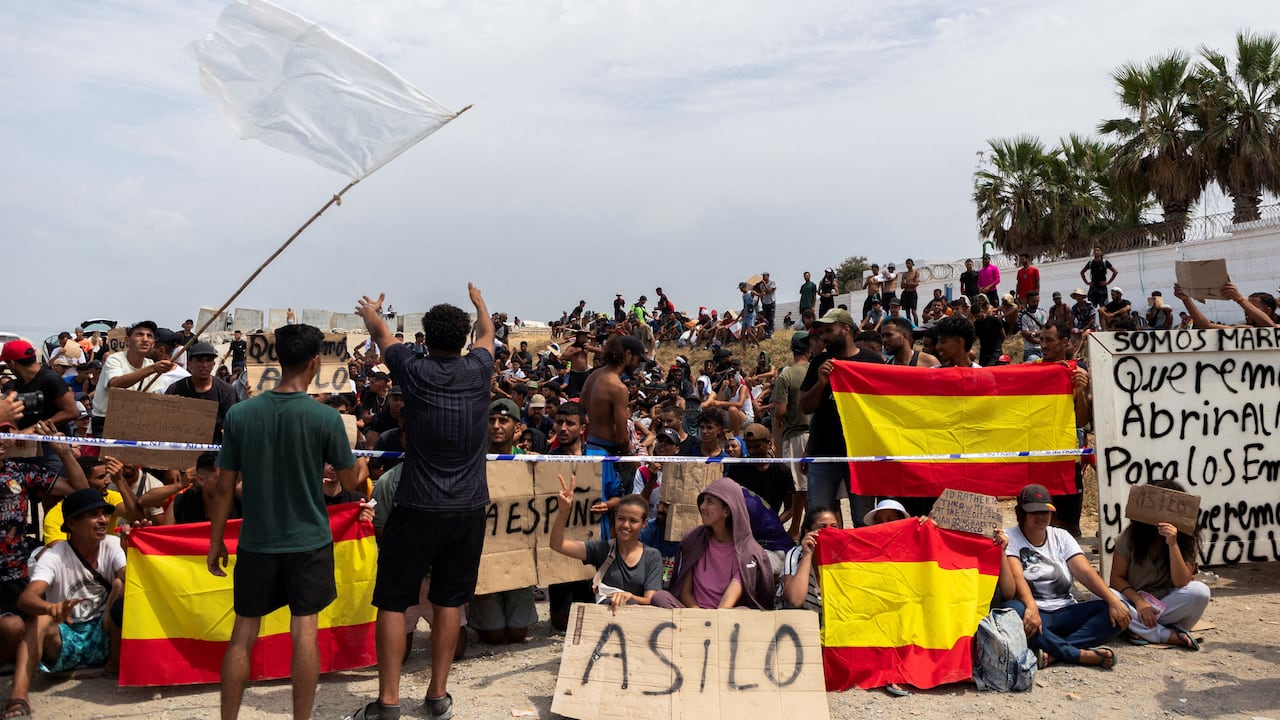
Hundreds of migrants who remained in Ceuta after the earlier crossing staged a protest on a city beach, asking Spain to grant them asylum rather than return them to Morocco. Between 5,000 and 8,000 people are estimated to remain in the enclave, many living in precarious conditions on Trampolin beach or on the outskirts while waiting for opportunities to travel onward to mainland Europe. Protesters carried Spanish flags and signs reading “We don’t want to go back to Morocco” and “We are also human.”
Spain’s interior minister, Fernando Grande-Marlaska, said migrants who entered irregularly would generally not be allowed to remain in Ceuta, travel to mainland Spain or obtain legal status, except in rare cases involving extreme vulnerability. A Moroccan diplomat said more than 20,000 Moroccan security personnel are deployed along the border each day. The article places the events within a broader migration pattern in which people fleeing conflict, poverty and instability attempt to enter Europe through Ceuta or Melilla, another Spanish enclave in northern Morocco.
Entities: Ceuta, Morocco, Spain, Moroccan security forces, Medi 1 TV • Tone: urgent • Sentiment: negative • Intent: inform
17-08-2026
Moroccan authorities have detained more than 100 migrants who were reportedly attempting to reach the Spanish North African exclave of Ceuta from the town of Fnideq, near the border. Moroccan security sources cited by Spanish media and Reuters said 111 people were detained in or around Fnideq, also known by its Spanish name, Castillejos. Most of those detained were from sub-Saharan Africa. Moroccan police, including officers in riot gear, reportedly used tear gas to disperse groups gathered on nearby hills.
The operation followed warnings of another mass crossing attempt, reportedly encouraged by social-media posts calling on migrants to approach the border. Morocco said it was monitoring messages of unknown origin and warned that organizers and participants could face prosecution. Security was significantly increased on both sides of the border. Morocco deployed army officers, navy speedboats and drones, while Spain sent more than 1,500 security personnel to patrol the area. Spain has also installed a metal fence and floating barrier after a major influx the previous month.
The earlier crisis saw approximately 78,000 migrants reach Ceuta by sea within hours, according to the report. Ceuta’s mayor said around 100 people died, while most arrivals subsequently returned to Morocco. The influx created tensions among European Union countries that share open borders. Italy introduced checks on arrivals from Spain and suspended participation in the Schengen free-movement arrangement with Spain, with Finland and Denmark supporting the move. The Czech Republic called for Spain’s temporary suspension from the arrangement.
Spanish Prime Minister Pedro Sánchez rejected the criticism, arguing that Ceuta is outside the Schengen area and that migrants arriving there had not reached mainland Spain or gained access to other European countries. Italy’s Foreign Minister Antonio Tajani defended the controls, saying Italy feared another wave of arrivals and that the source of the problem was Morocco rather than Italy’s border measures.
Entities: Morocco, Ceuta, Fnideq (Castillejos), Spain, Sub-Saharan African migrants • Tone: neutral • Sentiment: negative • Intent: inform
17-08-2026
Moroccan police arrested at least 111 people on Aug. 15 as they attempted to reach Ceuta, Spain’s North African enclave, following online calls for another mass migrant crossing. The detainees reportedly included 109 migrants from sub-Saharan Africa and two Moroccan citizens, most of them arrested in or near Fnideq, the Moroccan city opposite Ceuta. Spanish media reported that Moroccan police used tear gas to disperse groups gathered in nearby hills, while Reuters observed hundreds of officers, including riot police, returning from the area.
The attempted crossing occurred roughly two weeks after a large influx of migrants into Ceuta, in which the article reports that at least 96 people died. The earlier arrival of tens of thousands of migrants created political tensions in the European Union, intensified anti-immigration rhetoric and left thousands stranded in the enclave. Spain and Morocco responded by reinforcing the border, increasing patrols and deploying additional police and soldiers. Spain also installed a maritime barrier and sent more than 500 officers from the mainland, bringing the total security presence in Ceuta to over 1,600.
Spanish Interior Minister Fernando Grande-Marlaska said migrants who entered irregularly would generally not be permitted to remain in Ceuta, travel to mainland Spain or obtain legal status. Those without a legal right to stay would be returned to Morocco, except in cases involving extreme vulnerability. Moroccan authorities also monitored social media messages promoting a new crossing and warned that organizers and participants could face prosecution. Security measures extended beyond the border, with authorities restricting travel toward northern Morocco and reportedly converting schools in Fnideq into accommodation for deployed forces.
Several migrants who had already reached Ceuta urged others not to attempt the journey, citing suffering and the lack of viable opportunities. Nevertheless, some migrants continued using mountain routes to bypass checkpoints, reflecting the desperation underlying the continuing movement.
Entities: Morocco, Spain, Ceuta, Fnideq, Melilla • Tone: urgent • Sentiment: negative • Intent: inform
17-08-2026
Spain and Morocco have increased security around Ceuta, Spain’s North African enclave, after social-media messages urged Moroccan migrants to attempt another mass crossing into Ceuta and the neighboring enclave of Melilla. The warnings followed a large migration event on July 30, 2026, when more than 70,000—and according to later figures, over 72,000—people entered Ceuta from Morocco by land and sea, overwhelming local police and border infrastructure.
Spanish soldiers were deployed around commercial and government buildings, while police increased patrols on Ceuta’s main avenues. On the Moroccan side, security personnel monitored beaches near Fnideq, a major departure point for migrants who crossed by swimming or on foot. Morocco’s Interior Ministry said anonymous social-media posts were encouraging collective and illegal border crossings, which it described as dangerous and criminally punishable. Moroccan authorities arrested several people accused of circulating the messages and asked Spain to continue returning Moroccan migrants who remained in Ceuta.
Most of those who entered have reportedly returned to Morocco, but approximately 5,000 remained in Ceuta, according to Spanish Interior Minister Fernando Grande-Marlaska. Spanish officials had processed about 500 asylum applications and rejected most of them. Spain also installed floating barriers in the waters used during earlier crossings, while the Moroccan navy patrolled nearby.
The migration surge caused significant loss of life, with at least 96 people reported dead. The article presents the heightened security as a response to fears of another organized rush and highlights the political, legal, and humanitarian consequences of the earlier event. Fox News said it contacted the governments of Spain, Morocco, and Ceuta for comment, and identified Reuters as a contributing source.
Entities: Ceuta, Melilla, Spain, Morocco, Fnideq • Tone: urgent • Sentiment: negative • Intent: inform
17-08-2026
Hundreds of migrants who entered Spain’s North African enclave of Ceuta during a mass border crossing protested on an urban beach, calling on Spanish authorities to grant them asylum rather than return them to Morocco. Between 5,000 and 8,000 migrants reportedly remained in Ceuta after more than 72,000 people crossed into the territory two weeks earlier; most others returned voluntarily. The crossing overwhelmed the enclave’s limited resources, leaving many migrants living in precarious conditions on El Trampolin beach or on the outskirts while hoping to reach mainland Europe.
Protesters displayed Spanish flags and signs reading “We don’t want to go back to Morocco” and “We are also human.” Several said they were suffering from cold, poor sanitation and restrictions on entering the city centre. Spain’s interior minister, Fernando Grande-Marlaska, said people who entered irregularly would generally not be allowed to remain in Ceuta, travel to mainland Spain or obtain legal status, except in cases of extreme vulnerability.
Local health officials said medical services were exhausted and reported outbreaks of infectious diarrhea and scabies, along with increasing injuries linked to violence. Health Minister Monica Garcia rejected claims that services had collapsed, but acknowledged pressure on the system and said there was a moderate risk of epidemics among migrants and a low risk to residents. She also criticized attempts to associate migration with illness as unjust and xenophobic.
Migrants interviewed by Reuters described poor working conditions and low wages in Morocco as major reasons for leaving. Others recounted dangerous journeys from Nigeria, Bangladesh and Senegal, including migration prompted by conflict, threats to children or persecution based on sexual orientation. The protests occurred as Spain and Morocco reinforced their border following the deadly mass crossing, in which at least 57 people died.
Entities: Ceuta, Spain, Morocco, El Trampolin beach, Spanish authorities and Interior Minister Fernando Grande-Marlaska, Health Minister Monica Garcia • Tone: analytical • Sentiment: negative • Intent: inform