16-08-2026
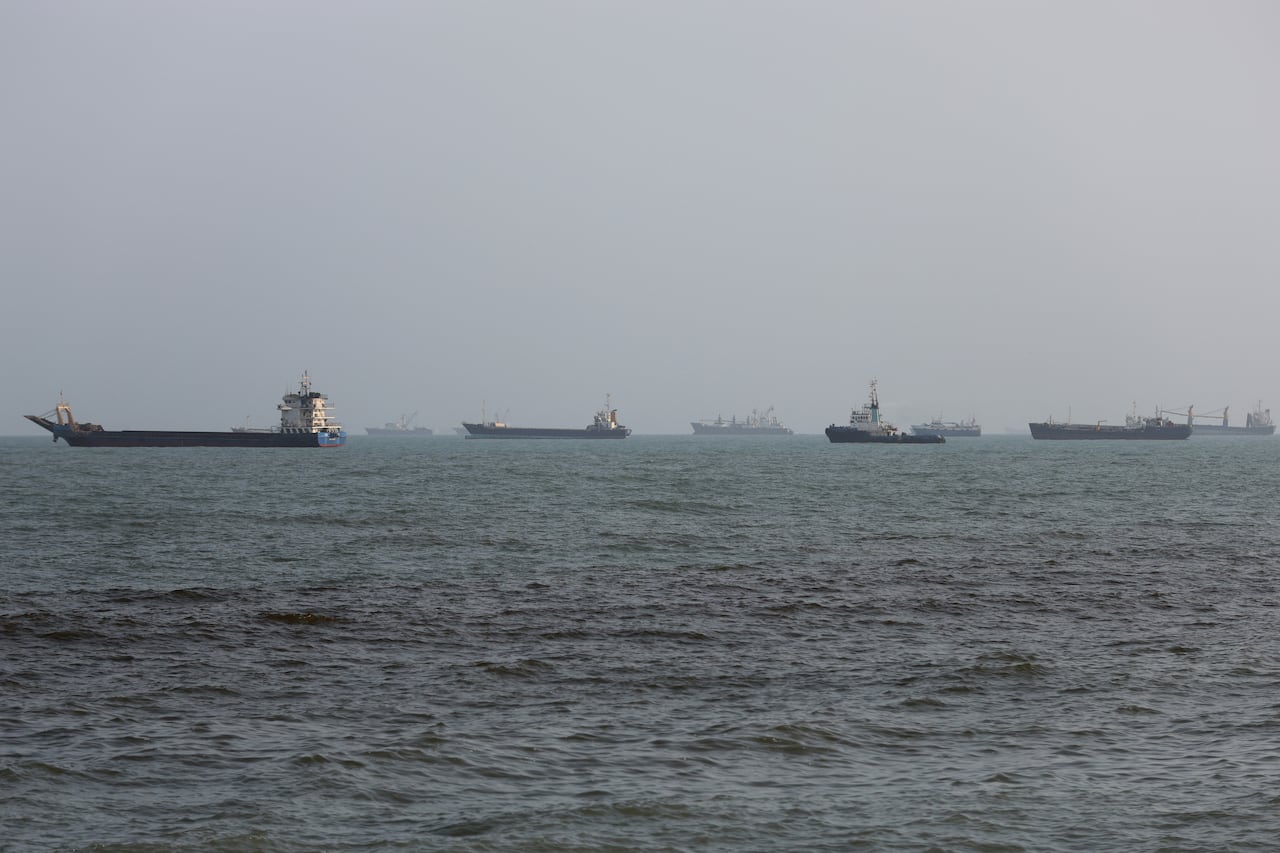
The liveblog reports continuing diplomatic and military developments surrounding the US-Israel war on Iran and its wider regional consequences. Iran’s Foreign Minister Abbas Araghchi says negotiations with Oman on establishing temporary and possibly permanent shipping routes through the Strait of Hormuz are progressing, but stresses that technical talks over a route are separate from any decision to reopen the waterway. Iran says reopening depends on the United States meeting conditions linked to a June memorandum of understanding, including lifting sanctions and releasing Iranian assets. Tehran also says there has been no decision on resuming direct talks with Washington, while Qatar and Pakistan are exchanging messages between the two sides. US officials say Washington could maintain its naval blockade of Iranian ports indefinitely and impose further economic pressure, while President Donald Trump has threatened to claim the strait as US territory after what he called Iran’s defeat. Iran rejects that claim and says the waterway remains Iranian.
The liveblog also documents escalating Israeli actions in Lebanon and southern Syria. An Israeli strike on a home in Ansar, southern Lebanon, killed at least seven people, including children, while a broader series of attacks reportedly killed 11 people. Analyst Ziad Abu Rish argues that the US-brokered truce has effectively allowed Israel to attack Hezbollah and Lebanese civilians without consequences, with extensive damage to homes, hospitals, schools, agricultural land and other infrastructure. In Syria’s Quneitra region, Israeli flares reportedly caused a fire near Al-Rafid after an incursion and searches of homes; no injuries were reported.
Elsewhere, a Hamas delegation is traveling to Cairo to discuss consolidating the Gaza ceasefire, following Israeli Prime Minister Benjamin Netanyahu’s rejection of a proposed arrangement involving an Israeli withdrawal, Hamas disarmament and an international security force. US-linked officials are expected to hold further talks in Jerusalem and Cairo. In Yemen, authorities in government-held Marib accuse the Iran-aligned Houthis of launching a sixth ballistic missile, threatening civilians and displaced-person camps. The liveblog also highlights reports of severe conditions and a mental-health crisis aboard the USS Abraham Lincoln, a US naval asset involved in the war.
Entities: Iran, Israel, United States, Strait of Hormuz, Oman • Tone: urgent • Sentiment: negative • Intent: inform
16-08-2026
Qatar has categorically denied Iranian claims that it is secretly detaining three pilots who allegedly survived the crash of Iranian Su-24 bombers during hostilities in March. Qatar’s Foreign Ministry spokesman, Majed al-Ansari, called the allegations misleading and said they were particularly unhelpful while diplomatic initiatives seek to reduce regional tensions. He reaffirmed that Qatari forces are not holding any surviving Iranian aircrew.
The accusations came from General Mohammad Bagherzadeh of Iran’s armed forces, who told the International Committee of the Red Cross that three pilots—Javad Salehi, Abdolmajid Dashtian and Omran Behraveshian—had been captured alive and held incommunicado for six months. Iran requested humanitarian intervention and access to the men’s families and diplomatic representatives. Tehran had previously said one pilot was killed and two were missing.
Qatar said its air-defence forces engaged the aircraft after they entered Qatari airspace without authorisation and failed to respond to warnings. Search-and-rescue teams recovered the remains of one pilot, Majid Kazemi, and coordinated with Iran to return his body. Doha also said it invited an Iranian team to inspect the search-and-rescue operation, but that invitation had not been accepted.
The incident occurred amid an Iranian attack on Al Udeid airbase, a major US military installation hosting US Central Command personnel. Qatar reported shooting down two Iranian Su-24 bombers, the first such incident involving a Gulf country during the conflict. The confrontation is part of a wider escalation that has included retaliatory strikes, a failed ceasefire process, clashes near the Strait of Hormuz and disruptions to regional shipping.
Despite the dispute, Qatar continues to mediate between Iran and the United States. Peace efforts face a deadline as a 60-day negotiating period expires, while maritime traffic through the Strait of Hormuz remains severely restricted. US President Donald Trump and Iranian Deputy Foreign Minister Kazem Gharibabadi exchanged sharply opposing statements over control of the waterway, underscoring the continuing diplomatic and military tensions.
Entities: Qatar, Iran, Qatar’s Ministry of Foreign Affairs, Majed al-Ansari, Mohammad Bagherzadeh • Tone: analytical • Sentiment: negative • Intent: inform
16-08-2026
Iran has called for the release of three pilots it says were captured by Qatar after two Iranian Su-24 fighter jets were hit by Qatari air defences during a military operation on 2 March 2026, the third day of the US-Iran war. The pilots were identified as Javad Salehi, Abdul Majid Dashtian and Imran Behroshian. Iran’s Brig Gen Mohammad Bagherzadeh said they had been held for six months and accused Qatar of violating their rights by preventing them from meeting or communicating with their families.
In a letter to International Committee of the Red Cross (ICRC) President Mirjana Spoljaric, Bagherzadeh also said that a fourth pilot, Majid Kazemi, had been killed in the operation and that his body had been returned to Iran. He asked the ICRC to intervene over the alleged detention of the three surviving pilots.
Qatar categorically rejected Iran’s account, describing the claims as misleading. Qatar’s foreign affairs spokesperson, Majed Mohammed Al Ansari, said the country had made contact with the pilots after they violated Qatari airspace but had received no response. He said Qatar’s military action was necessary to defend its territory and was conducted in accordance with international law.
Al Ansari further said Qatari search-and-rescue teams had made extensive efforts to locate the pilots’ remains. Qatar also said it contacted Iran to coordinate the handover of one recovered body, but that Tehran had not responded to an invitation to examine details of the search-and-rescue operation. The competing accounts leave unresolved whether the three pilots survived and were detained by Qatar, as Iran claims, or whether Qatar recovered only remains from the incident.
Entities: Qatar, Iran, Javad Salehi, Abdul Majid Dashtian, Imran Behroshian • Tone: analytical • Sentiment: negative • Intent: inform
16-08-2026
U.S. President Donald Trump said in a speech in Garden City, N.Y., that Americans should accept somewhat higher gasoline prices as the cost of preventing Iran from acquiring a nuclear weapon. He also said that, after defeating Iran, he would soon declare the Strait of Hormuz a U.S. territory. The article notes that it is unclear whether Trump intended the territorial statement literally or whether it represents a formal change in U.S. policy.
Trump described the military action against Iran as a service to the world and said he would not apologize for attacking the country. His comments come as disruptions involving the Strait of Hormuz create economic and political risks. About 20 per cent of global oil and liquefied natural gas shipments normally pass through the waterway, and concerns about prolonged disruption have pushed energy prices higher. Brent crude was approaching $90 US per barrel, while U.S. gasoline prices had risen to approximately $4 US per gallon.
The higher fuel costs create a political problem for Trump because they conflict with his campaign promise to reduce energy prices. Democrats are already seeking to make the economic consequences of the conflict a central issue in the November midterm elections.
Iranian Deputy Foreign Minister Kazem Gharibabadi rejected Trump’s remarks in a post on X. He said the strait could not be seized by a social-media post, an aircraft carrier, an order, or an election speech, and asserted that it could only be opened or closed under Iran’s command. The exchange underscores the Strait of Hormuz’s importance as a strategic and economic pressure point while highlighting the uncertainty and escalation surrounding Trump’s rhetoric.
Entities: Donald Trump, Strait of Hormuz, Iran, United States, Garden City, New York • Tone: analytical • Sentiment: negative • Intent: inform
16-08-2026
The United States says it can maintain its naval blockade of Iran indefinitely and plans to intensify economic pressure as ceasefire negotiations stall and regional tensions worsen. U.S. Secretary of War Pete Hegseth said the U.S. Navy could rotate ships in and out of the Gulf to enforce the blockade for as long as necessary. Treasury Secretary Scott Bessent separately warned that Washington would soon announce financial measures intended to cause unprecedented damage to Iran’s economy.
The blockade has cut off a major source of Iran’s hard currency and compounded the effects of wartime attacks on its energy infrastructure. Iran has attempted to retaliate by restricting traffic through the Strait of Hormuz, a strategic waterway that carried roughly one-fifth of global oil and liquefied natural gas supplies before the war. The United Arab Emirates accused Iran of attacking two vessels operated by the state-owned Abu Dhabi National Oil Company while they were transiting the strait. Shipping traffic has fallen sharply, from roughly 130–140 vessels before the war to eight on one recent day.
U.S. President Donald Trump has claimed the United States has “total control” of the strait, while Iran says it will not permit the waterway to reopen until sanctions are removed and frozen Iranian assets are released. Although Trump has threatened further military strikes, he has recently indicated that economic pressure may be preferred to a wider military escalation. Existing sanctions have not persuaded Tehran to return to negotiations.
The conflict is also increasing pressure on the global economy. The International Energy Agency has lowered its forecast for global oil supply, while economists warn that prolonged fighting could sharply reduce economic growth and contribute to recession in some regions. Oil prices declined on Thursday amid concerns about weak demand and rising U.S. inventories, but reports of Houthi attacks on Saudi energy infrastructure renewed fears of a broader regional war. Hegseth defended the administration’s approach, saying its objective remained preventing Iran from obtaining a nuclear weapon.
Entities: United States, Iran, Pete Hegseth, Scott Bessent, Donald Trump • Tone: analytical • Sentiment: negative • Intent: inform
16-08-2026
The CBS News live update reports escalating military, humanitarian, environmental and diplomatic developments connected to the Iran war and the wider Middle East conflict. The United Arab Emirates said Iran struck an oil tanker operated by Abu Dhabi National Oil Company in the Strait of Hormuz. The vessel was hit in its hull, and no injuries were reported.
In southern Lebanon, two Israeli airstrikes killed 11 people, among the deadliest attacks since a fragile truce between Israel and Iran-backed Hezbollah was reached. Israel said it targeted legitimate Hezbollah positions and accused the group of using human shields.
Adm. Brad Cooper, commander of U.S. Central Command, visited roughly 5,000 sailors and Marines aboard the USS Abraham Lincoln. The aircraft carrier has been deployed since November 2025—well beyond the typical six-month deployment—and families have raised concerns about service members’ mental health and the condition of the aging vessel. The USS George Washington is expected to replace it. Senate Democrats have asked Defense Secretary Pete Hegseth for information about the deployment, while President Trump said the carrier’s deployment was “not nearly long enough.”
The updates also describe diplomatic efforts involving Hamas, Egypt and the Trump administration. Hamas political chief Khalil al-Hayya was scheduled to meet Egyptian officials in Cairo before Jared Kushner’s planned regional visit. Kushner and Nickolay Mladenov hope to revive a Gaza framework involving Hamas disarmament and a phased Israeli withdrawal, but Israeli Prime Minister Benjamin Netanyahu has rejected key elements of the proposal.
An oil leak from the abandoned Russian tanker Caroline Bezengi has spread along approximately 7.5 miles of Oman’s Ras Madrakah coastline and may have released hundreds of thousands of gallons, with the vessel potentially carrying up to 40 million gallons. Omani authorities said the slick is also moving offshore. Separately, House Speaker Mike Johnson said the war with Iran would be settled soon, although the supplied article ends mid-quote.
Entities: Iran war, Strait of Hormuz, United Arab Emirates, Abu Dhabi National Oil Company (ADNOC), Israel–Hezbollah conflict • Tone: urgent • Sentiment: negative • Intent: inform
16-08-2026
Iran has rejected US President Donald Trump’s suggestion that he could declare the Strait of Hormuz US territory, insisting that the strategically important waterway will remain under Iranian control. Speaking in New York, Trump said that after the US finished defeating Iran, he would “pretty soon” declare the strait a US territory. He also claimed that the US blockade meant no ships could pass unless Washington allowed them to. Although it was unclear whether Trump was speaking seriously, his remarks prompted a strong response from Tehran.
Iranian Deputy Foreign Minister for legal and international affairs Kazem Gharibabadi said on X that the Strait of Hormuz “has been Iranian, is Iranian, and will remain Iranian.” He added that Iran would decide when the waterway was opened or closed and would continue enforcing its blockade until the US accepted what he described as its defeat.
The strait links the Persian Gulf with the Gulf of Oman and the Arabian Sea and normally carries approximately one-quarter of the world’s seaborne oil trade. Control of the passage has been a central dispute in negotiations between Washington and Tehran. Iran effectively closed it after the Iran war began in late February, despite a provisional memorandum of understanding agreed in June.
Under that agreement, Iran was supposed to reopen the waterway and reaffirm that it would not acquire or develop nuclear weapons. The US, in return, was to remove its naval blockade and lift sanctions against Iran, with both sides given 60 days to negotiate a permanent settlement. However, Iranian attacks on shipping in July led to renewed US strikes and another blockade of Iranian ports, further undermining the peace process and increasing tensions around the strategic waterway.
Entities: Donald Trump, Kazem Gharibabadi, Iran, Tehran, United States • Tone: analytical • Sentiment: negative • Intent: inform
16-08-2026
National security analysts warn that Iran could launch military strikes as early as this fall in response to intensified U.S. economic sanctions and pressure on its oil revenues. The potential targets could include commercial shipping, U.S. military bases, and Arab energy and infrastructure facilities across the Persian Gulf. Behnam Ben Taleblu of the Foundation for Defense of Democracies said Tehran may use “kinetic” or guerrilla-style attacks to disrupt the economic containment campaign and force Washington to reconsider its approach.
The warning follows a report from the United Arab Emirates’ state-run WAM news agency that two vessels operated by the Abu Dhabi National Oil Company were struck while transiting the Strait of Hormuz. ADNOC said there were no injuries and that the situation was under control, while the UAE foreign ministry condemned what it described as Iranian attacks.
Treasury Secretary Scott Bessent separately said the United States was preparing unprecedented economic measures against Iran. Analysts believe shrinking oil revenues, a possible U.S. naval blockade, and a buildup of American troops in the Gulf could encourage Tehran to broaden its target list and escalate incrementally, depending on the economic and political impact of each attack.
The warnings come as diplomatic efforts between Washington and Tehran remain stalled. An interim June memorandum called for the immediate and permanent end of military operations and provided a 60-day period for negotiating a broader agreement addressing Iran’s nuclear program and other security issues. The arrangement later collapsed after President Donald Trump declared it over on July 7. No agreement has been reached to extend the ceasefire, and the Aug. 17 deadline remains significant.
Control of the Strait of Hormuz is a central dispute. Iranian official Hossein Taeb said the waterway remains under Iran’s control, contradicting Trump’s claim that the United States has “total control” over the strategic passage. The article presents the situation as a growing risk of military escalation driven by economic pressure, stalled negotiations, and competing claims over the Gulf’s most important maritime chokepoint.
Entities: Iran, United States, Strait of Hormuz, Persian Gulf and Gulf of Oman, Abu Dhabi National Oil Company (ADNOC) • Tone: urgent • Sentiment: negative • Intent: warn
16-08-2026
The article reports escalating tensions between the United States and Iran over the Strait of Hormuz amid an ongoing war launched by the U.S. and Israel on February 28. Oil tanker traffic and progress toward peace talks remain suspended, while both governments have intensified their rhetoric.
Iranian Deputy Foreign Minister Kazem Gharibabadi said the strait would be opened or closed only under Iran’s authority and accused Washington of refusing to accept defeat. Foreign Minister Abbas Araqchi said Iran had not decided whether to resume negotiations with the United States and indicated that Washington would need to meet Iranian conditions before shipping could resume through the waterway. The strait handled approximately one-fifth of the world’s oil before the conflict.
U.S. President Donald Trump urged Americans to tolerate higher gasoline prices while the war continues. Speaking at a rally in New York, he argued that increased fuel costs were justified if they prevented Iran from obtaining a nuclear weapon. Trump also said that, after Iran was defeated, he would soon declare the Strait of Hormuz a U.S. territory—a claim that Iran immediately rejected.
The conflict is already affecting energy markets and U.S. consumers. The average U.S. gasoline price reached about US$4.08 per gallon, 29 per cent higher than a year earlier, according to the American Automobile Association. Crude oil prices also rose, with Brent futures on track for a 6.0-per-cent weekly increase and West Texas Intermediate futures for a 5.4-per-cent rise. The economic fallout could become a political issue for Republicans and Democrats ahead of November’s congressional elections, particularly because Trump campaigned on reducing energy costs. The article concludes with Tehran further escalating its rhetoric as efforts to end the war appear deadlocked.
Entities: Donald Trump, Iran, United States, Strait of Hormuz, Kazem Gharibabadi • Tone: urgent • Sentiment: negative • Intent: inform
16-08-2026
The UAE has pledged to defend its freedom of navigation and sovereignty in the Strait of Hormuz after an Adnoc vessel was attacked while transiting the waterway on August 14, 2026. No injuries were reported, and the situation was brought under control, according to the UAE state news agency Wam. The incident is the latest in a series of attacks involving Adnoc-linked ships since the beginning of the Iran war.
Dr Anwar Gargash, diplomatic adviser to President Sheikh Mohamed, said the UAE would respond through a policy combining deterrence, diplomacy and adherence to international law. He described this approach as “balanced and rational,” emphasizing that repeated attacks would not prevent the UAE from protecting its sovereignty, interests and right to use the strait. At the same time, he said the country would continue dialogue and prioritize diplomatic options.
The UAE Ministry of Foreign Affairs condemned the attack as a flagrant violation of UN Security Council Resolution 2817, which affirms the importance of freedom of navigation. It also denounced attacks on commercial vessels and the obstruction of international maritime routes. The ministry called on Iran to stop what it described as unprovoked attacks and to ensure the complete and unconditional reopening of the Strait of Hormuz.
Dr Gargash also called for greater unity among Gulf states, saying the UAE would work to strengthen a common regional position. He presented this coordination as essential to protecting regional security and the interests of Gulf countries during the ongoing crisis. The article frames the incident as both a security threat to commercial shipping and a diplomatic challenge for the UAE and its regional partners.
Entities: United Arab Emirates (UAE), Strait of Hormuz, Adnoc, Dr Anwar Gargash, President Sheikh Mohamed • Tone: analytical • Sentiment: negative • Intent: inform
16-08-2026
Qatar has categorically denied Iranian claims that its forces captured and detained three Iranian military pilots after their fighter jets were shot down during a March operation. Qatari Foreign Ministry spokesperson Majed Mohammed Al-Ansari said Qatari authorities attempted to contact the pilots after they allegedly entered and violated Qatari airspace, but received no response. Qatar then acted under its rules of engagement and international law to defend its territory.
Al-Ansari said Qatari search-and-rescue teams later searched for the pilots and coordinated with Iran to transfer the remains of one pilot who was found. Qatar also said it invited an Iranian team in April to review the search-and-rescue operation, but Tehran had not responded.
The denial followed reports by Iranian media alleging that three pilots—Javad Salehi, Abdol-Majid Dashtian and Emran Behrushian—were captured alive after ejecting from two Su-24 fighter jets during an Iranian mission targeting the US military facility at Al Udeid Air Base in Qatar. Iranian officials reportedly claimed the pilots had been held for six months and called for access by the International Committee of the Red Cross. Iran had previously described some pilots involved in the incident as missing, while its army said it recovered the body of another pilot, Majid Kazemi, who was killed in an attack on Al Udeid in early March.
The dispute is part of a broader regional conflict that began after US and Israeli strikes against Iran on February 28, followed by Iranian attacks on Israel and US military facilities across the Gulf. The competing accounts over the pilots’ fate represent a significant escalation in the dispute. They also come amid fragile diplomatic efforts, including an April ceasefire and stalled peace talks. Fighting has remained at a lull since late July.
Entities: Qatar, Iran, Majed Mohammed Al-Ansari, Javad Salehi, Abdol-Majid Dashtian • Tone: analytical • Sentiment: neutral • Intent: inform
16-08-2026
The Straits Times’ Aug 16, 2026, “While You Were Sleeping” roundup highlights five international developments. The first concerns conflicting accounts over three Iranian pilots. Iranian state media reported that the pilots had been captured alive by Qatari forces after ejecting from fighter jets during a mission against a military base in Qatar. Qatar denied holding the pilots, saying they had entered Qatari airspace in March and failed to respond to contact attempts. A Qatari Foreign Ministry spokesperson said search-and-rescue teams later found one pilot’s remains and that Iran had not responded to an invitation to review the operational details.
The second story reports that hopes of finding survivors were fading five days after a magnitude-7.4 earthquake struck western Colombia. The quake caused widespread destruction from Buenaventura to the country’s coffee-growing region. Colombia’s disaster management unit estimated that at least 294 people had died, 320 were missing and nearly 4,000 had been injured.
The third story covers Hurricane Lala, which brought heavy rain and strong winds to Hawaii’s Big Island after strengthening into a Category 1 storm. Authorities issued a hurricane warning for Hawaii County and tropical-storm warnings for the state’s other major islands, amid concerns about dangerous flooding.
The fourth reports the death of a 56-year-old worker in Malaysia after her headscarf became caught in a water-gate roller at a hotel in Sabak Bernam. Emergency responders found her unconscious at the scene.
The final story describes Novak Djokovic’s defeat by Argentina’s Thiago Tirante in the opening round of the Cincinnati Masters. Djokovic struggled in the heat and humidity but fought through a lengthy second-set game before losing 2-6, 6-4, 6-4.
Entities: Qatar, Iran, Iranian pilots, Qatari Foreign Ministry, Middle East war • Tone: neutral • Sentiment: negative • Intent: inform
16-08-2026
Qatar has rejected Iranian claims that it is detaining three Iranian fighter pilots who disappeared after their aircraft were reportedly shot down during the conflict between Iran and the United States and Israel. Qatari Foreign Ministry spokesman Majed Al Ansari described the allegations as misleading and said Qatar categorically denied holding the pilots.
Al Ansari stated that Qatar had recovered the remains of one pilot and contacted Iranian authorities to coordinate their transfer. According to the spokesman, Tehran had not responded to Qatar’s invitation to arrange the handover. Qatar’s account directly contradicts statements published by Iranian media from General Mohammad Bagherzadeh, head of the Committee for Missing Persons at the General Staff of the Iranian Armed Forces.
Bagherzadeh identified the missing personnel as Javad Salehi, Abdolmajid Dashtian, and Omran Behraveshian. He claimed that the three men had been captured alive by Qatari forces and held for six months after their fighter jets crashed during a mission targeting a military base in Qatar. He further alleged that Qatar had prevented the pilots from contacting their families or Iranian officials. The Iranian official appealed to the International Committee of the Red Cross to investigate and help determine their fate.
The dispute follows a wider escalation in the Gulf. After US-Israeli attacks in late February, Iran launched retaliatory strikes against targets across the region, including US military facilities. Qatar said its forces shot down two Iranian Sukhoi Su-24 bombers on March 2, but it remains unclear whether those aircraft were flown by the pilots named by Iran. Qatar condemned the Iranian attack on its territory as reckless and irresponsible. The competing accounts leave the pilots’ status unresolved.
Entities: Qatar, Iran, Majed Al Ansari, Javad Salehi, Abdolmajid Dashtian • Tone: analytical • Sentiment: negative • Intent: inform