16-08-2026
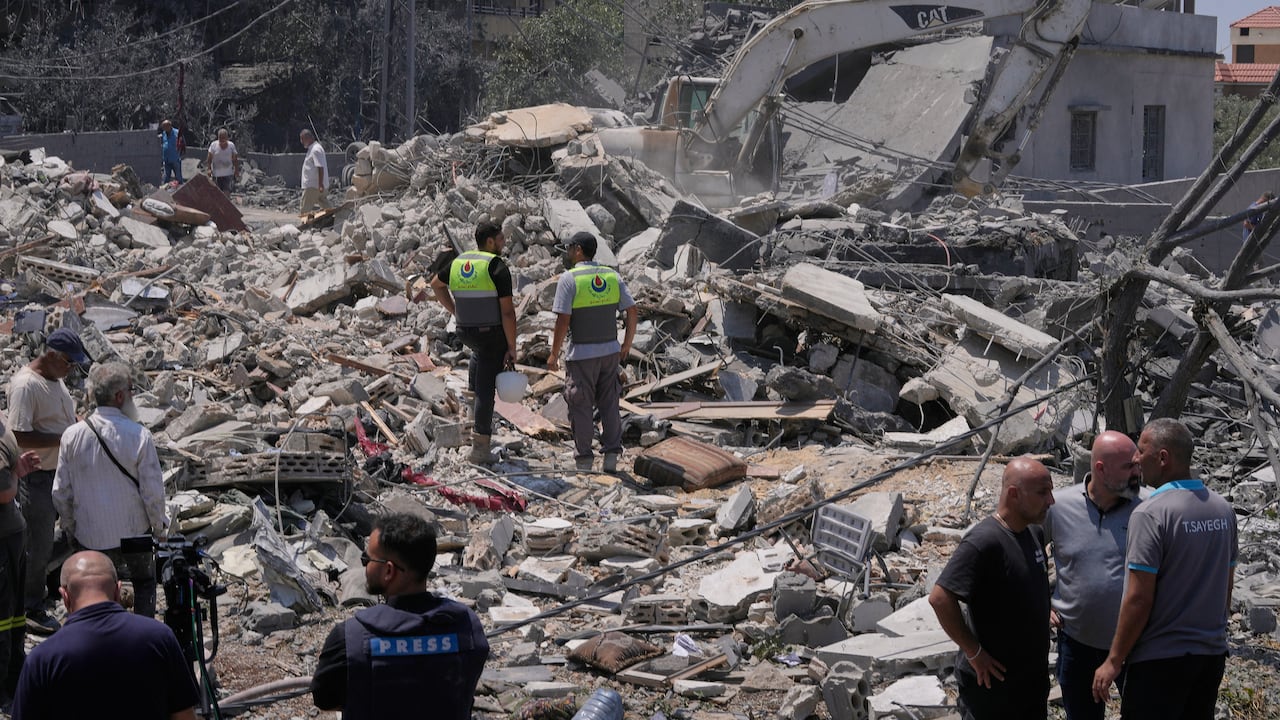
Eleven people have been killed in Israeli strikes in southern Lebanon, according to Lebanese authorities, in one of the deadliest days of attacks since a June agreement intended to reduce hostilities. Seven people, including three children and two women, died when a house on the outskirts of Ansar was struck at about 04:30 local time, Lebanon’s prime minister and state media said. The area was reportedly sheltering displaced families.
Later, four people were killed and five wounded in strikes on Deir al-Zahrani, the Lebanese health ministry said. Prime Minister Nawaf Salam condemned the Ansar attack, describing the victims as civilians and calling on Israel to stop the escalation. President Joseph Aoun also accused Israel of repeatedly violating the June ceasefire framework.
Israel’s Defense Forces said the Ansar strike targeted Ali Samir al-Haj Hassan, whom it identified as a Hezbollah battalion commander in the Radwan Force. The IDF said Hassan was involved in planning attacks against Israeli soldiers and was a lawful military target. It claimed that his family members were present in a Hezbollah military headquarters and had been used as human shields. The Israeli prime minister’s office said the strike followed a Hezbollah attack that seriously injured three Israeli soldiers.
Hezbollah rejected the Israeli account, accusing Israel of deliberately targeting civilians in their homes and then portraying the locations as military sites.
The violence comes amid an uneasy ceasefire framework requiring Hezbollah to disarm, Israeli forces to withdraw gradually from southern Lebanon, and the Lebanese army to deploy in the region. Israel continues to occupy roughly 5% of Lebanese territory, including a 10km-deep security zone. Although fighting has declined since the June agreement, Israeli strikes and demolitions have continued. Lebanese and Israeli negotiators are expected to hold an eighth round of talks in September, though no date has been set.
Entities: Southern Lebanon, Ansar, Deir al-Zahrani, Beirut, Israel Defense Forces (IDF) • Tone: analytical • Sentiment: negative • Intent: inform
16-08-2026
Israeli airstrikes in southern Lebanon killed at least 11 people on Saturday, including three children, according to Lebanon’s Health Ministry and the state news agency. An attack on a home near the village of Ansar killed seven people and wounded two, while a strike in Deir al-Zahrani killed four and injured 17. The attacks were described as the deadliest since a fragile truce between Israel and Hezbollah took effect in June.
The truce followed a June 26 framework agreement between Israel and the Lebanese government. The agreement outlines an Israeli withdrawal from southern Lebanon, the disarmament of Iran-backed Hezbollah and steps toward a future peace agreement. Hezbollah has rejected direct negotiations and was not a party to the agreement. Israel has nevertheless continued near-daily strikes in southern Lebanon, including areas north of the Litani River, while maintaining control over large areas farther south.
Lebanese Prime Minister Nawaf Salam condemned the attacks, arguing that the victims in Ansar were civilians rather than military targets and saying the strikes undermine efforts to stabilize the region. President Joseph Aoun characterized the airstrikes as a message aimed at the negotiation process and U.S. efforts to implement the agreement.
Israel’s military said it struck Hezbollah infrastructure in the Ali Taher and Ansar areas in response to an attack on Israeli soldiers. It said it would continue operations to eliminate threats to Israeli civilians and troops. Hezbollah did not immediately confirm responsibility for the reported attack but later called on the Lebanese state to stop what it described as Israeli aggression. The group also rejected U.S.-sponsored direct talks and warned that Israel’s actions would receive an appropriate response.
The violence comes after two Israeli soldiers were killed earlier in August in an explosion in southern Lebanon. Seven rounds of talks have been held between Lebanon and Israel, with the latest taking place in Rome. The article reports that more than 4,000 people have been killed by Israeli strikes in Lebanon since the latest war began, while approximately 40 Israeli soldiers and three civilians have died on the Israeli side.
Entities: Israeli airstrikes, Southern Lebanon, Israel, Hezbollah, Lebanon’s Health Ministry • Tone: urgent • Sentiment: negative • Intent: inform
16-08-2026
Lebanese President Joseph Aoun said deadly Israeli strikes in southern Lebanon had sent a “clear message” about the state of peace negotiations and US efforts to implement a framework agreement between Israel and Lebanon. Lebanese state media reported that at least 11 people, including three children and two women, were killed in strikes on the towns of Ansar and Deir al-Zahrani on Saturday. Aoun’s office said an entire family from Ansar was among those killed and described the attacks as violations of the June agreement.
The Israeli military said it carried out the strikes in response to an attack by Hezbollah on Israeli Defense Forces troops at the Ali al-Taher Ridge, located within an Israeli-designated security zone. The article places the escalation within a broader conflict involving Israel, the United States and Iran that began in late February. Hezbollah had launched rocket attacks on Israel following the killing of former Iranian Supreme Leader Ali Khamenei, prompting Israeli strikes and a ground invasion of southern Lebanon. Israel said its military operations were intended to destroy Hezbollah’s “terror infrastructure.”
Hezbollah later warned that the attacks would receive an “appropriate response,” accusing Israel of aggression and attempts to impose a fait accompli. The group also urged Lebanese authorities to stop pursuing US-led negotiations.
Under the June framework, Israeli forces were expected to gradually withdraw from Lebanon, subject to verified disarmament of non-state armed groups and the dismantling of related infrastructure. Israeli and Lebanese officials are scheduled to hold another round of US-sponsored negotiations in Rome next month. The latest strikes and retaliatory statements threaten to further complicate those talks and undermine efforts to reduce hostilities.
Entities: Joseph Aoun, Hezbollah, Israel, Lebanon, Ansar • Tone: neutral • Sentiment: negative • Intent: inform
16-08-2026
Israeli strikes across southern Lebanon killed 11 people, including three children, on August 15, 2026, according to Lebanon’s Health Ministry. Seven people died and three were injured in the village of Ansar, while four others were killed and nine wounded in nearby Deir Al Zahrani, about 18 kilometers away. The attacks prompted some residents to leave the area and were described as among the deadliest Israeli strikes on Lebanon since a truce reached in June.
Lebanese Prime Minister Nawaf Salam strongly condemned the strikes and rejected Israel’s characterization of the victims as military targets. He said that responsibility for addressing any military infrastructure on Lebanese territory rests exclusively with the Lebanese state. His comments came as the Lebanese government seeks to bring all weapons under state control, including those held by Iran-backed Hezbollah, as part of efforts to reinforce state authority and end hostilities with Israel.
Lebanese President Joseph Aoun said the strikes sent a “clear message” about the negotiating process and US efforts to implement a proposed agreement. Lebanon and Israel have been engaged in US-brokered talks intended to end hostilities and secure an Israeli withdrawal from Lebanese territory. However, the latest round in Rome ended on August 6 without an agreement, with the two sides divided over the terms and timing of Israel’s withdrawal from southern Lebanon.
Israel’s military said it conducted overnight strikes against Hezbollah infrastructure across southern Lebanon. It also targeted the Ali Al Taher ridge, a strategic hilltop area southeast of Nabatieh that has been a focus of Israeli military operations. The latest attacks have increased pressure on the stalled diplomatic process and highlighted the continuing volatility along the Lebanon-Israel border despite the June truce.
Entities: Israel, Lebanon, Ansar, Deir Al Zahrani, Nabatieh region • Tone: analytical • Sentiment: negative • Intent: inform