16-08-2026
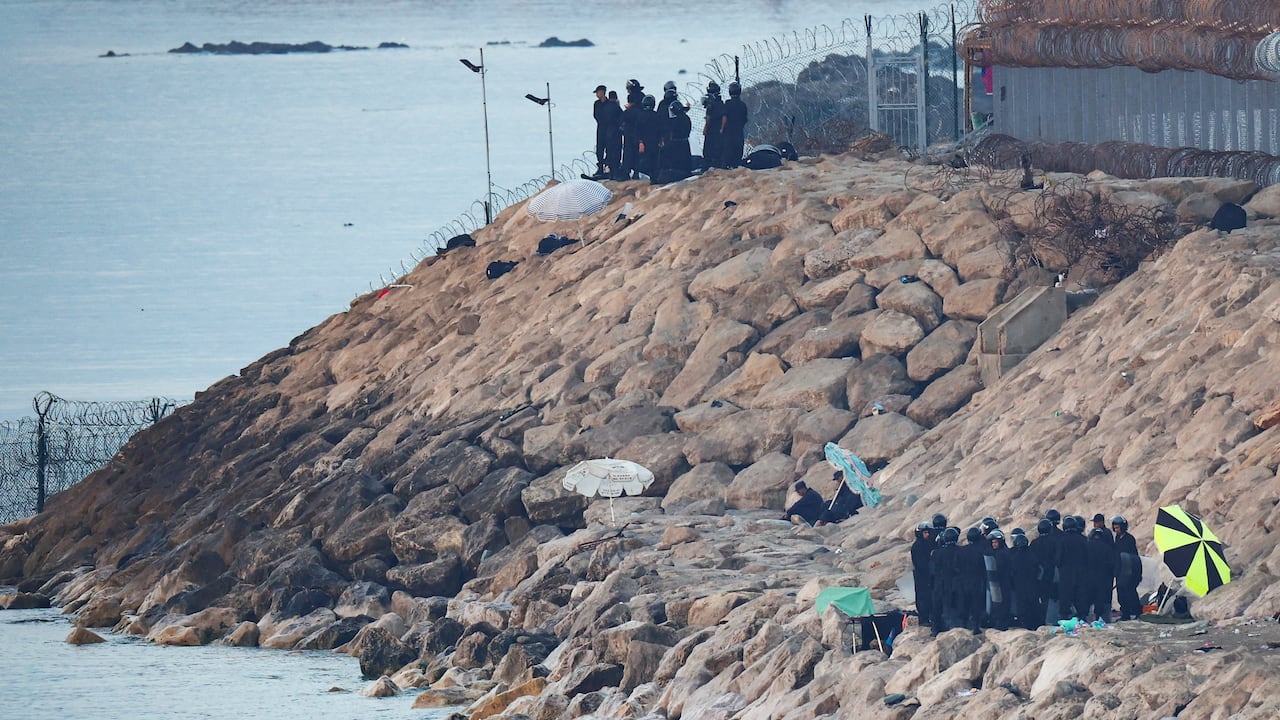
Moroccan authorities have detained more than 100 migrants near the northern town of Fnideq, close to the border with Spain’s North African exclave of Ceuta, according to Moroccan security sources cited by Spanish media and Reuters. The reported detentions took place amid heightened security and concerns about a possible new mass crossing attempt promoted through social media. Moroccan officials said 111 people, most of them from sub-Saharan Africa, were detained in or around Fnideq, also known as Castillejos in Spanish. Police, including officers in riot gear, reportedly used tear gas to disperse migrant groups gathered on nearby hills.
The operation follows a major influx into Ceuta roughly two weeks earlier, when about 78,000 migrants reportedly arrived by sea within hours. Ceuta’s mayor said approximately 100 people died during the episode, although most arrivals were later returned to Morocco. Morocco has since deployed army personnel, navy speedboats and drones, while Spain has sent more than 1,500 security officers to patrol the area. Spain has also strengthened physical defenses by installing a metal fence and a floating barrier.
The earlier influx created tensions among European Union countries over migration and border controls. Italy suspended the Schengen free-movement arrangement with Spain and introduced checks on people arriving from Spain, with support from Finland and Denmark. The Czech Republic called for Spain’s temporary suspension from the arrangement. Spanish Prime Minister Pedro Sánchez rejected the criticism, arguing that Ceuta is outside the Schengen area and that migrants had not reached mainland Spain. Spain later introduced its own controls after Italy refused to remove its measures. Italian Foreign Minister Antonio Tajani said Italy was responding to fears of another wave of arrivals and argued that Spain should focus on Morocco rather than criticize Italian checks.
Entities: Morocco, Ceuta, Fnideq (Castillejos), Spain, Moroccan security forces • Tone: analytical • Sentiment: negative • Intent: inform
16-08-2026
Moroccan police arrested at least 111 people on Saturday as they attempted to reach Ceuta, Spain’s North African enclave, following social media calls for another mass crossing. Those detained reportedly included 109 migrants from sub-Saharan Africa and two Moroccan citizens. Moroccan authorities increased security around Fnideq, the city opposite Ceuta, and reportedly used tear gas to disperse groups gathered near the border. Security forces also restricted travel toward northern Morocco and monitored mountain routes used by migrants to bypass checkpoints.
The crackdown followed a deadly mass crossing attempt on July 30, when tens of thousands of migrants entered Ceuta or tried to do so. The article says more than 72,000 migrants surged into the enclave and that at least 96 people died, while approximately 5,000 migrants remained in Ceuta afterward. Spain reinforced the border fence, installed a maritime barrier and deployed more than 500 additional police officers, bringing the enclave’s total police presence to over 1,600. Spanish soldiers and police also increased patrols, while authorities said migrants who entered irregularly would generally be returned to Morocco and would not be permitted to travel to mainland Spain or obtain legal status.
Morocco warned that it would prosecute organizers and participants in any new mass crossing. Journalists from Reuters, EFE and Spanish state broadcaster TVE were reportedly ordered to leave Fnideq. Despite the measures, some migrants continued traveling toward the border by mountain routes. Migrants already in Ceuta described hunger, uncertainty and a lack of prospects, while some urged others not to attempt the journey. The situation has created a continuing humanitarian challenge and intensified political tensions surrounding migration in Europe.
Entities: Morocco, Spain, Ceuta, Fnideq, Melilla • Tone: analytical • Sentiment: negative • Intent: inform
16-08-2026
Moroccan authorities detained dozens of migrants near Fnideq, a city across the border from Spain’s North African exclave of Ceuta, after they allegedly attempted to cross into the territory. The operation took place roughly two weeks after an estimated 72,000 migrants entered Ceuta during a major border surge. Most of those migrants have since been returned to Morocco, while around 100 people reportedly died during the incident.
Accounts differed over the number detained in the latest operation. A security source cited by Reuters said more than 100 people, mostly from sub-Saharan Africa, were stopped in or around Fnideq, while Morocco’s Le360 reported that 294 people had been detained. A Moroccan official described the action as a routine effort to prevent irregular migration.
The operation followed warnings from Rabat about social-media posts calling for another mass crossing on August 15. Moroccan authorities said they were monitoring messages of unknown origin and warned that organizers and participants could face prosecution. Witnesses reported a heavy security presence around Ceuta and Melilla, including checkpoints, patrol boats and water cannons.
The situation also raised concerns about press freedom. Journalists from Spain’s EFE news agency and public broadcaster RTVE were ordered by a Moroccan Interior Ministry representative to leave Fnideq without explanation. Leaders of both organizations condemned the move and demanded that their journalists be allowed to work freely in the border region.
Spain has strengthened security in Ceuta since the earlier surge, installing a maritime barrier and deploying more than 500 additional police officers from mainland Spain. Interior Minister Fernando Grande-Marlaska said the reinforcements would remain as long as necessary to restore normality and prevent another incident.
Entities: Morocco, Ceuta, Fnideq (Castillejos), Melilla, Spain • Tone: neutral • Sentiment: negative • Intent: inform
16-08-2026
Spain and Morocco have increased security around Ceuta, Spain’s North African enclave, amid social-media calls for another mass border crossing by Moroccan migrants. The warnings follow a large migration event on July 30, when more than 70,000 people reportedly entered Ceuta from Morocco by swimming and crossing on foot, overwhelming local police and security barriers. Spanish soldiers patrolled commercial and government buildings, while police presence increased on major streets. On the Moroccan side, security personnel monitored beaches near Fnideq, a key departure point for migrants attempting to reach Ceuta.
Morocco’s Interior Ministry said it had detected anonymous online messages encouraging collective and illegal crossings into Ceuta and Melilla. The ministry described the messages as dangerous and criminalized attempts to exploit migration issues for incitement. Moroccan authorities arrested several people accused of circulating the statements and urged Spain to continue returning Moroccan migrants who remained in Ceuta.
Spanish and Ceuta officials said most of the migrants from the earlier influx had returned to Morocco, but approximately 5,000 remained. Spain has been screening those migrants and had processed around 500 asylum applications, rejecting most of them. Spanish authorities also installed floating barriers in waters used by migrants to swim into the enclave, while the Royal Moroccan Navy patrolled the Moroccan side.
The mass crossing has created significant political and humanitarian tensions. At least 96 people died during the migration event, according to the report. The article presents the heightened security measures as an effort by both countries to deter another crossing and manage the remaining migrants, while emphasizing the role of social media in organizing or encouraging future attempts.
Entities: Ceuta, Morocco, Spain, Melilla, Fnideq • Tone: urgent • Sentiment: negative • Intent: inform