16-08-2026
Former Ukrainian Defense Minister Mykhailo Fedorov told CBS News that Ukraine is engaged in a “technological war” with Russia, in which victory depends on rapidly developing and deploying new weapons. Fedorov said Ukraine must outperform Russia in every technological cycle and make decisions continuously because both sides are innovating quickly. His strategy emphasized drones, robots, and domestically produced weapons as ways to counter Russia’s larger military force.
Fedorov was dismissed by President Volodymyr Zelenskyy in mid-July, reportedly because of an unresolved dispute with Ukraine’s top general at the time, Oleksandr Syrskyi. The dismissal prompted protests involving thousands of people. Zelenskyy removed Syrskyi about a week later. Fedorov declined to discuss the reason for his own firing with American audiences, but said the country would continue fighting regardless.
The former minister was credited with expanding Ukraine’s deep strikes inside Russia tenfold and strengthening its domestic defense industry. Zelenskyy said Ukraine recently used newly produced Flamingo missiles to strike a Russian space-agency facility in Samara, approximately 560 miles from Ukraine’s border. A Ukrainian defense technology company also tested a ballistic missile in June. Fedorov estimated that a Ukrainian-made ballistic missile could be used against a target inside Russia within three to six months.
Ukraine remains vulnerable to Russia’s ballistic-missile attacks, most of which reportedly reach their targets, increasing pressure on Kyiv to develop improved air defenses. Fedorov said Ukraine has little time to consider the challenge but that achieving it is possible. He described the protests over his removal as evidence that Ukrainians support democratic values and are fighting for freedom. Although he did not say whether he would return to government, he said his future work would focus on ending the war and rebuilding Ukraine.
Entities: Mykhailo Fedorov, Volodymyr Zelenskyy, Oleksandr Syrskyi, Ukraine, Russia • Tone: analytical • Sentiment: negative • Intent: inform
16-08-2026
Ukrainian President Volodymyr Zelenskyy said on 15 August that Ukrainian forces had struck Russia’s Progress Rocket and Space Centre in the Samara region using FP-5 Flamingo cruise missiles. Zelenskyy described the facility as a key enterprise of Russia’s Roscosmos space agency and said it was involved in electronics production. Ukraine’s General Staff later confirmed hits at the Progress centre and reported that a fire broke out on the site. It said the centre produces launch vehicles used to place Russian military, reconnaissance and communications satellites into orbit.
Zelenskyy also reported strikes on Savasleyka air base in the Nizhny Novgorod region and an oil facility in Ust-Luga, near Estonia. Ukraine said the air base operates MiG-31K fighter jets equipped to carry Kh-47M2 Kinzhal ballistic missiles. Video shared by Zelenskyy appeared to show flames and heavy black smoke, although the article does not provide independent verification of the footage or details of damage from Russian authorities.
The attacks form part of what Zelenskyy called Ukraine’s campaign of “long-range sanctions” against Russia. Kyiv has increasingly targeted military infrastructure and energy facilities deep inside Russia, including oil refineries, terminals and depots, in an effort to reduce Moscow’s military capacity and pressure its economy. The article says these attacks have contributed to fuel shortages in parts of Russia and Russian-occupied territories.
The report also details continued Russian attacks on Ukraine. Ukraine’s air force said Russia launched 152 drones and loitering munitions overnight, of which 124 were reportedly shot down or neutralised. Russian strikes injured civilians across Kherson, Dnipropetrovsk, Sumy, Donetsk, Zaporizhzhia and Kharkiv regions. One child was killed, another was among the injured, and dozens of other people were reportedly wounded.
Entities: Ukraine, Russia, Volodymyr Zelenskyy, Progress Rocket and Space Centre, Samara region • Tone: analytical • Sentiment: negative • Intent: inform
16-08-2026
The article reports that Ukrainian officials agreed not to attack Caspian Pipeline Consortium (CPC) infrastructure or non-Russian vessels after a request from U.S. Vice President JD Vance in late July, according to the Financial Times. The reported understanding would apply provided the infrastructure or vessels were not under Ukrainian sanctions and were not transporting Russian oil or other cargo. Ukraine’s presidency did not respond to a request for comment.
The report comes as Ukraine carried out a major drone and missile attack on Novorossiysk, a Russian Black Sea port. Russian and Ukrainian officials said the strike hit naval facilities and forced two grain terminals to suspend operations. Regional Governor Veniamin Kondratyev said at least two people, including an eight-year-old child, were killed. Ukraine’s SBU security service described the attack as strategically significant, while President Volodymyr Zelenskyy said several Russian naval vessels, including two frigates and a large landing ship, were hit.
The attack raised concerns about global food supplies because Russia is the world’s largest wheat exporter. Chicago wheat futures rose approximately 3% after the strike, and Russia’s agriculture ministry said it was seeking alternative export routes. A Russian grain lobby group warned that continued attacks could disrupt Black Sea exports and increase prices, potentially worsening hunger in Africa and the Middle East. The article also notes that Russian strikes have sharply reduced Ukrainian grain shipments, which fell 76% during the first two weeks of August compared with the same period a year earlier.
Novorossiysk authorities reported damage to businesses, homes and educational facilities and declared an emergency. Ukraine and Moldova separately agreed to route Ukrainian grain through Moldova by rail. The article concludes by noting further drone activity over Russian-occupied Crimea, while placing the developments within the broader escalation of the Russia-Ukraine war.
Entities: JD Vance, Ukraine, Russia, Caspian Pipeline Consortium (CPC), Novorossiysk • Tone: analytical • Sentiment: negative • Intent: inform
16-08-2026
The article reports that Russia sustained approximately 42,860 battlefield casualties—killed and wounded—in July, according to Ukraine’s Defense Ministry. It describes the figure as Russia’s highest monthly loss since January 2025 and the fourth-deadliest month for Moscow since the full-scale invasion began in 2022. Ukrainian officials claim that Russia’s total casualties are approaching 1.5 million, creating growing recruitment difficulties for President Vladimir Putin. The article suggests that manpower shortages could eventually pressure Putin to consider peace talks, although this is presented as an assessment by unnamed experts rather than a confirmed development.
The report says Russia has attempted to attract additional recruits through allegedly misleading promises of “quiet service” and has sought foreign assistance, including from North Korea. Ukraine estimates that between 30,000 and 50,000 North Korean troops may be preparing for deployment in Russia, following the reported dispatch of 15,000 North Korean soldiers in 2024.
At the same time, Ukraine claims significant gains along the southern front, including the recapture of nearly 300 square miles and 26 settlements. Ukrainian forces reportedly pushed Russian troops back more than seven miles near the meeting point of the Dnipro, Donetsk and Zaporizhzhia regions.
The article also focuses on Ukraine’s long-range strikes inside Russia. Ukrainian officials said Flamingo cruise missiles damaged the Savasleyka airbase, the Progress Rocket Space Center in Samara and an oil facility in Ust-Luga. The Savasleyka base houses MiG-31 aircraft capable of carrying ballistic missiles, while the Progress center is associated with Russia’s state aerospace corporation Roscosmos. Ukraine described the attacks as an effort to reduce Russia’s war-making capacity. Russia reportedly responded by launching 152 Shahed drones at Ukraine, killing a three-month-old child in Dnipro and injuring 49 people.
Entities: Vladimir Putin, Volodymyr Zelenskyy, Russia, Ukraine, Ukrainian Defense Ministry • Tone: urgent • Sentiment: negative • Intent: inform
16-08-2026
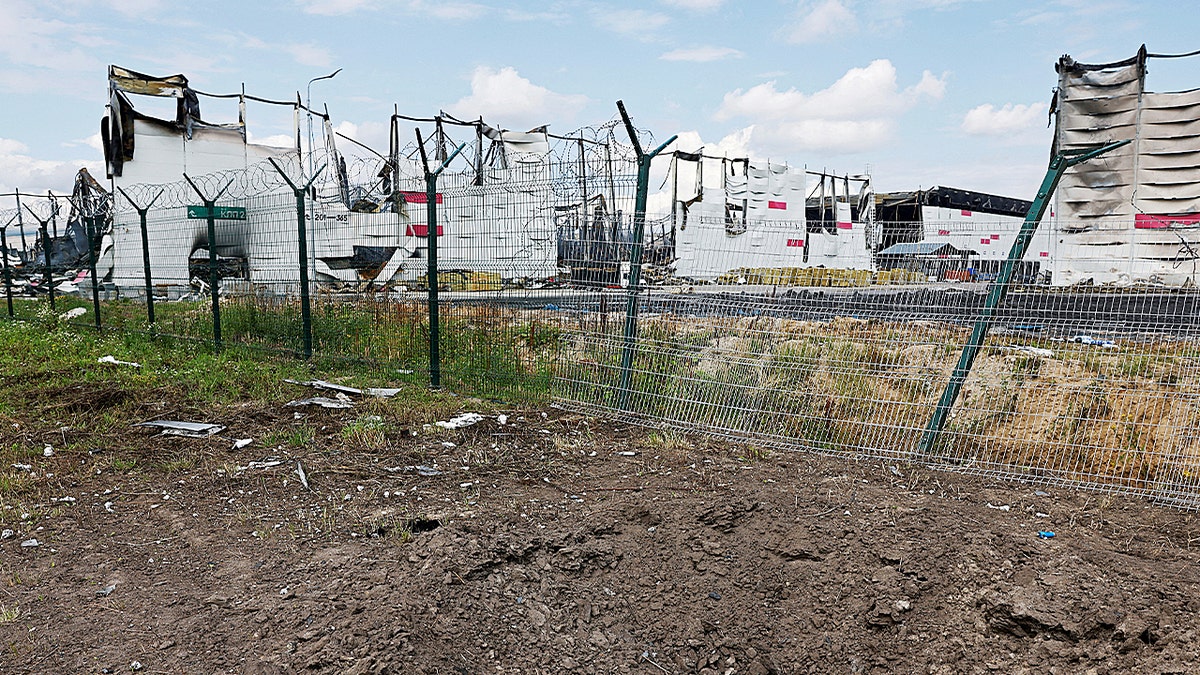
Fox News reports that Ukrainian drone strikes have repeatedly affected facilities linked to Wildberries, Russia’s largest online retailer, as part of Kyiv’s expanding campaign against Russian economic and logistics infrastructure. The article’s headline and introduction describe a deadly attack that killed one person and injured two others while starting fires at a Wildberries warehouse in Russia’s Voronezh region. The body focuses on a Thursday strike on an oil and petrochemical complex in Bashkortostan that reportedly caused a fire at a Wildberries facility. The company said the site was evacuated and that no goods were stored there at the time.
The incident follows attacks beginning July 18 on Wildberries centers in Kotovsk and Elektrostal, which reportedly killed seven people and wounded more than 60. Four days later, strikes on facilities in Krasnodar and Nevinnomyssk caused additional fires and injured 15 people. Ukrainian media estimated the cumulative losses to Wildberries and its sellers at 600 billion to 800 billion rubles, or approximately $6 billion to $8.5 billion. Analyst Kateryna Bondar said the damage is being passed to thousands of small businesses and has reportedly left roughly 27% of Wildberries’ warehouse capacity out of operation.
Bondar characterized the campaign as “kinetic sanctions enforcement,” arguing that Kyiv seeks to raise the financial and operational cost of Russia’s war economy while undermining confidence in Russian air defenses. Wildberries founder and CEO Tatyana Kim condemned the attacks as terrorism and said sellers in Russia and partner countries had suffered billions of dollars in losses. Bondar said Kyiv views the company’s warehouses as distribution nodes for dual-use materials, including drone components and protective equipment, as well as possible channels for sanctions circumvention. She also said the strikes are retaliation for Russian attacks on Ukraine’s civilian logistics networks.
Entities: Ukraine, Russia, Wildberries, Bashkortostan, Voronezh region • Tone: analytical • Sentiment: negative • Intent: inform