16-08-2026
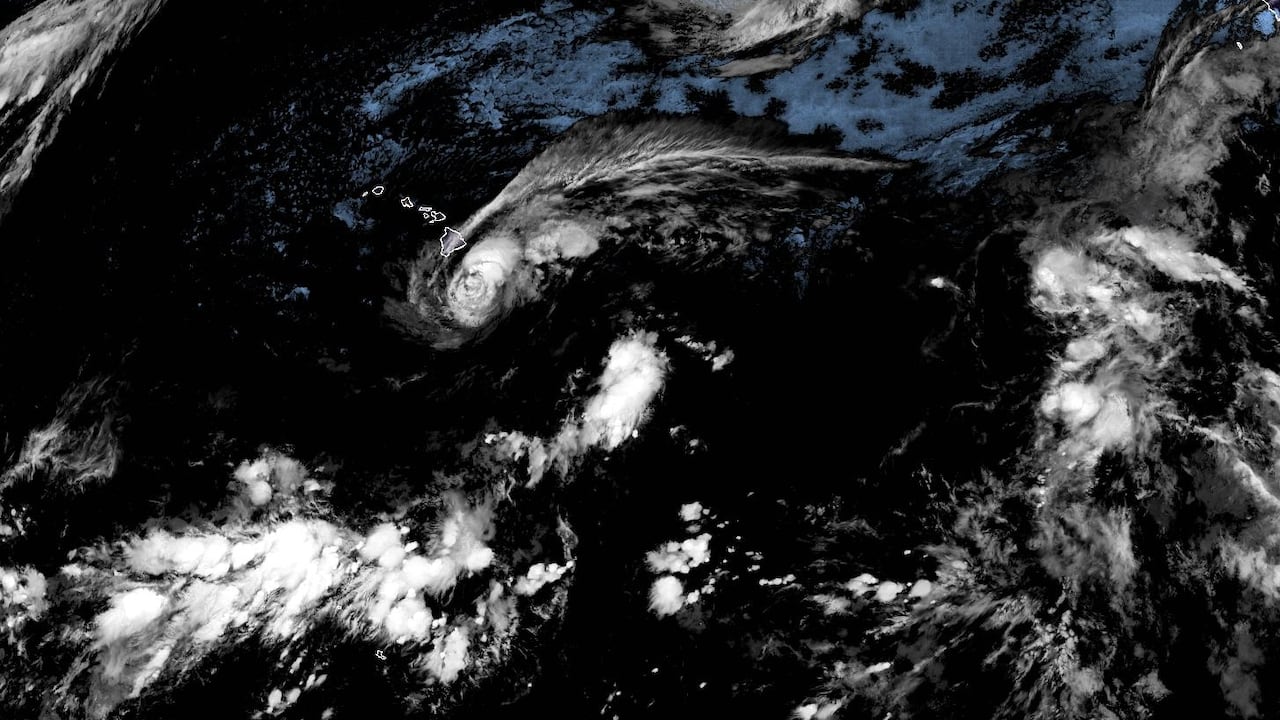
Hawaii is preparing for the possible direct impact of Hurricane Lala, which strengthened into a Category 1 storm with winds of 75 mph (120 km/h). If the storm follows its most damaging forecast, the Big Island could receive up to 25 inches (63 cm) of rain and experience a 3-foot storm surge. A hurricane warning is in effect for the Big Island, while Maui County, Oahu, Kauai and Niihau are under tropical storm warnings.
Lala is expected to make landfall or pass close to the southern tip of the Big Island on Saturday before moving west. Forecasters say it could weaken into a tropical storm as it passes south of Hawaii’s other islands. Officials have warned of life-threatening flooding, mudslides, damaging winds, dangerous surf and the possibility of evacuations and rescues.
The storm has already disrupted travel, with dozens of flights cancelled. Around 40% of flights at Ellison Onizuka Kona International Airport and 80% at Hilo International Airport were grounded. Nearly 37,000 customers had lost electricity, while landslides, fallen trees and downed power lines affected roads and communities on the eastern Big Island.
Residents have been filling sandbags and preparing shelters. Hawaii County officials said public shelters were available across the Big Island and urged people to complete their emergency preparations. The storm could become Hawaii’s first direct hurricane hit since 1992, when Category 4 Hurricane Iniki struck Kauai, killing six people and causing $3bn in damage. The article also links the storm to unusually warm ocean temperatures and developing El Niño conditions, noting that July was the hottest month on record for the world’s oceans.
Entities: Hurricane Lala, Hawaii, Big Island, Maui County, Oahu • Tone: urgent • Sentiment: negative • Intent: warn
16-08-2026
Hurricane Lala strengthened into a Category 1 storm Saturday as it approached Hawaii’s Big Island, with forecasters warning that its eyewall could pass over or very near the island’s southern tip. A direct hit would be the Big Island’s first in 155 years. The National Hurricane Center reported maximum sustained winds of 120 km/h, while officials warned that the storm could bring destructive winds, flooding, mudslides and power outages across the island chain.
Higher elevations near Mauna Kea could receive up to 63.5 centimetres of rain, creating a serious threat of life-threatening mudslides, particularly in remote areas where residents live off the grid. Lower elevations of the Big Island and Maui were expected to receive between 20.3 and 30.5 centimetres, with 10.2 to 15.2 centimetres forecast across other parts of Hawaii. About 10 per cent of Big Island electricity customers had already lost power.
A hurricane warning was issued for the Big Island, while tropical storm warnings covered Maui, Molokai, Lanai, Kahoolawe, Oahu, Kauai and Niihau. Shelters opened, events were cancelled and residents were urged to secure property and seek safer accommodation if their homes could not withstand hurricane-force winds. Authorities were particularly concerned about rural and off-grid residents, as well as farmers and ranchers still recovering from earlier flooding.
Hawaii Gov. Josh Green described Lala as an “enormous storm” and warned that strong winds could also increase wildfire risks. Officials cited the 2023 Lahaina fire, which spread during extreme winds while a hurricane passed south of Maui, as a reminder of the danger. The article also compares Lala with Hurricane Iniki, which struck Kauai as a Category 4 hurricane in 1992 and caused billions of dollars in damage and six deaths. Experts emphasized that significant destruction can occur even if Lala does not make a direct landfall.
Entities: Hurricane Lala, Hawaii's Big Island, National Hurricane Center, National Oceanic and Atmospheric Administration (NOAA), Hawaii Gov. Josh Green • Tone: urgent • Sentiment: negative • Intent: inform
16-08-2026
Hurricane Lala strengthened into a Category 1 storm as it approached Hawaii’s Big Island, creating the possibility of the island’s first direct hurricane hit in 155 years. The National Hurricane Centre reported maximum sustained winds of 120 kmph and forecast that the storm’s centre would pass over or very close to the island’s southern end. Officials warned of life-threatening flooding, mudslides and dangerous surf, particularly in steep and mountainous areas.
The Big Island, home to approximately 210,000 people, was placed under a hurricane warning, while tropical storm warnings covered several other Hawaiian islands. Heavy rainfall was already affecting parts of Hawaii, with some areas receiving approximately 5 cm per hour. Forecasts called for 25.4 to 51 cm of rain on the Big Island, with isolated totals of up to 63.5 cm at higher elevations. The storm also caused widespread power outages, affecting more than 40,000 utility customers across Hawaii, including over 31,000 on the Big Island. Fallen trees damaged transmission infrastructure, and Hawaiian Electric warned that outages could last overnight or longer.
Transportation was disrupted as Hilo International Airport, Kona International Airport and several commercial ports were closed. Winds at higher elevations were especially severe, with gusts of about 161 kmph recorded near Maunakea. Residents prepared for flooding, falling trees, prolonged power loss and possible isolation, while shelters opened and events were cancelled.
The storm’s historical significance stems from research indicating that a Category 3 hurricane struck the island in 1871. Officials emphasized that destructive impacts could occur even without a direct landfall. Authorities were also monitoring wildfire risks from strong, dry winds, particularly after the devastating 2023 Lahaina wildfire. Ranchers were advised to keep cattle in open pastures, and residents were urged to shelter in place.
Entities: Hurricane Lala, Hawaii’s Big Island (Hawaii Island), National Hurricane Centre, Hawaii Governor Josh Green, Hawaii Department of Transportation • Tone: urgent • Sentiment: negative • Intent: inform