16-10-2026
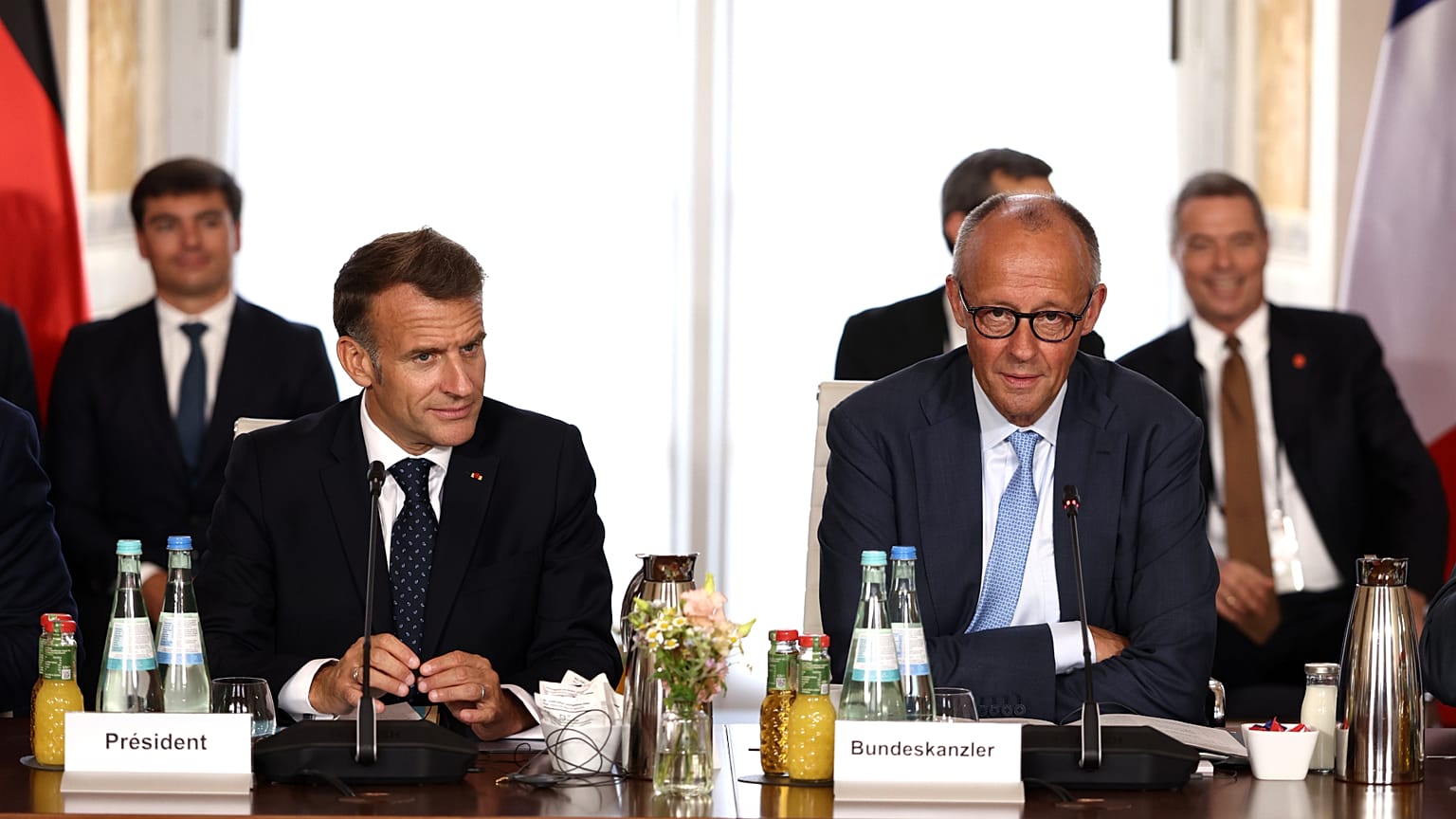
Germany and France have agreed on a plan to support Europe’s automotive industry as it transitions toward lower-emission and electric vehicles. In a joint statement, the countries said the pact is intended to reduce CO2 emissions while encouraging the development and manufacture of future cars in Europe. It also includes incentives for investment, research and production. German Chancellor Friedrich Merz and French President Emmanuel Macron welcomed the agreement, framing it as support for jobs and a signal to industry, while emphasizing that the transition should remain consistent with Europe’s climate goals.
A Handelsblatt report says the two leaders have also agreed in principle to seek a revised emissions target: automakers would have to reduce exhaust emissions from new cars by 90% from 2035, without offsetting the remaining 10%. That proposal would alter the EU’s existing plan, but it cannot become law without support from other member states and the European Parliament.
Volkswagen welcomed the bilateral agreement, calling it a strong signal and saying that meaningful flexibility could help manufacturers contribute to climate protection without undermining competitiveness. The German auto industry association VDA also described the deal as an important step, but its head, Hildegard Müller, said it does not address key industry concerns sufficiently. She called for later battery localization in Europe, improved rules for trucks, buses and light vans, and greater emphasis on renewable fuels and green materials.
The agreement comes as European carmakers face intense competition from Chinese electric-vehicle manufacturers and struggle with high costs and the shift to EVs. Volkswagen, Europe’s largest carmaker by volume, faces overcapacity at German plants, high fixed costs and reliance on China. The article presents the pact as a response to mounting pressure on the sector, while noting that its details and political approval remain consequential.
Entities: Germany, France, European Union, European automotive industry, CO2 emissions targets • Tone: analytical • Sentiment: neutral • Intent: inform
16-10-2026
France and Germany have agreed on a joint position linking a possible relaxation of the EU’s 2035 car-emissions rules to stronger “Made in Europe” requirements. Under the proposed compromise, automakers would need to reduce fleet-average CO₂ emissions by 90% by 2035, rather than the 100% reduction required under the original rules. Unlike an earlier European Commission proposal, the remaining 10% would not be eligible for offsetting. The change would create some room for technologies and fuels beyond zero-emission vehicles, but would not represent an unrestricted return to conventional combustion engines.
In return, the countries want European-content requirements: 70% of car components, excluding batteries, would have to be produced in Europe, and 10% of battery content would need to come from European sources. The proposal also treats Norway, Iceland, Switzerland and the United Kingdom as eligible for the preference, provided they reach agreements with the EU on fair access to public contracts and government funding and prevent circumvention of the rules.
The deal brings together different national priorities. Germany has sought technological flexibility for its automotive manufacturers, including the possibility of continued sales of some combustion-engine and hybrid models. France has championed stricter European-preference rules to strengthen the bloc’s industrial base and counter competition from Chinese manufacturers. Both governments cite high production costs, the costly shift to electric vehicles and external competition as pressures on the industry.
The agreement is intended to shape negotiations rather than settle EU policy. Other member states and EU lawmakers must decide whether to back it. German Chancellor Friedrich Merz may also face domestic resistance: Germany’s Social Democratic environment minister has supported a 95% emissions-reduction target, with the remainder offset using low-carbon steel. The European Parliament is scheduled to vote on the Commission’s proposal on 23 November, after which Parliament and EU governments will negotiate the final level of flexibility for new cars and vans from 2035.
Entities: France, Germany, European Union, European Commission, European Parliament • Tone: analytical • Sentiment: neutral • Intent: inform
16-10-2026
France and Germany have reached a provisional agreement to loosen proposed European Union rules on vehicle emissions and to allow Britain, under certain conditions, to qualify for the bloc’s “made in Europe” measures. The deal could influence both EU climate policy and efforts to support the region’s struggling automotive industry, but it still requires final approval from Berlin.
The two countries had previously disagreed over the direction of policy. Germany sought less stringent emissions requirements and a broad definition of “made in Europe” that could include important non-EU trading partners. France wanted to retain stronger climate ambitions and limit the relevant public procurement scheme to EU members. Under the draft agreement, Germany prevailed on emissions, while France secured a narrower approach to the industrial scheme.
The European Commission had proposed replacing the planned 2035 ban on sales of new petrol and diesel vehicles with a requirement for manufacturers to reduce new-vehicle exhaust emissions by 90 percent. The remaining emissions would have been compensated through credits, including credits linked to the use of low-carbon steel. The Franco-German deal removes that compensation requirement, allows vehicles running on renewable fuels to count as zero-emission, and makes it easier for manufacturers to meet CO2 targets. It also extends proposed “super credits” for small affordable electric cars to vehicles of any size or length.
For “made in Europe” rules, the agreement limits the scheme’s application to the EU’s 27 countries, while allowing a small number of other countries—particularly Britain and Norway—to opt in under conditions. Britain’s government welcomed the prospect, saying it could benefit the UK automotive industry, jobs and investment. The Commission’s earlier proposal could have included dozens of EU partner countries. European carmakers had specifically sought Britain’s inclusion because of the close integration of UK and EU supply chains.
Entities: France, Germany, European Union (EU), European Commission, United Kingdom • Tone: analytical • Sentiment: neutral • Intent: inform