16-10-2026
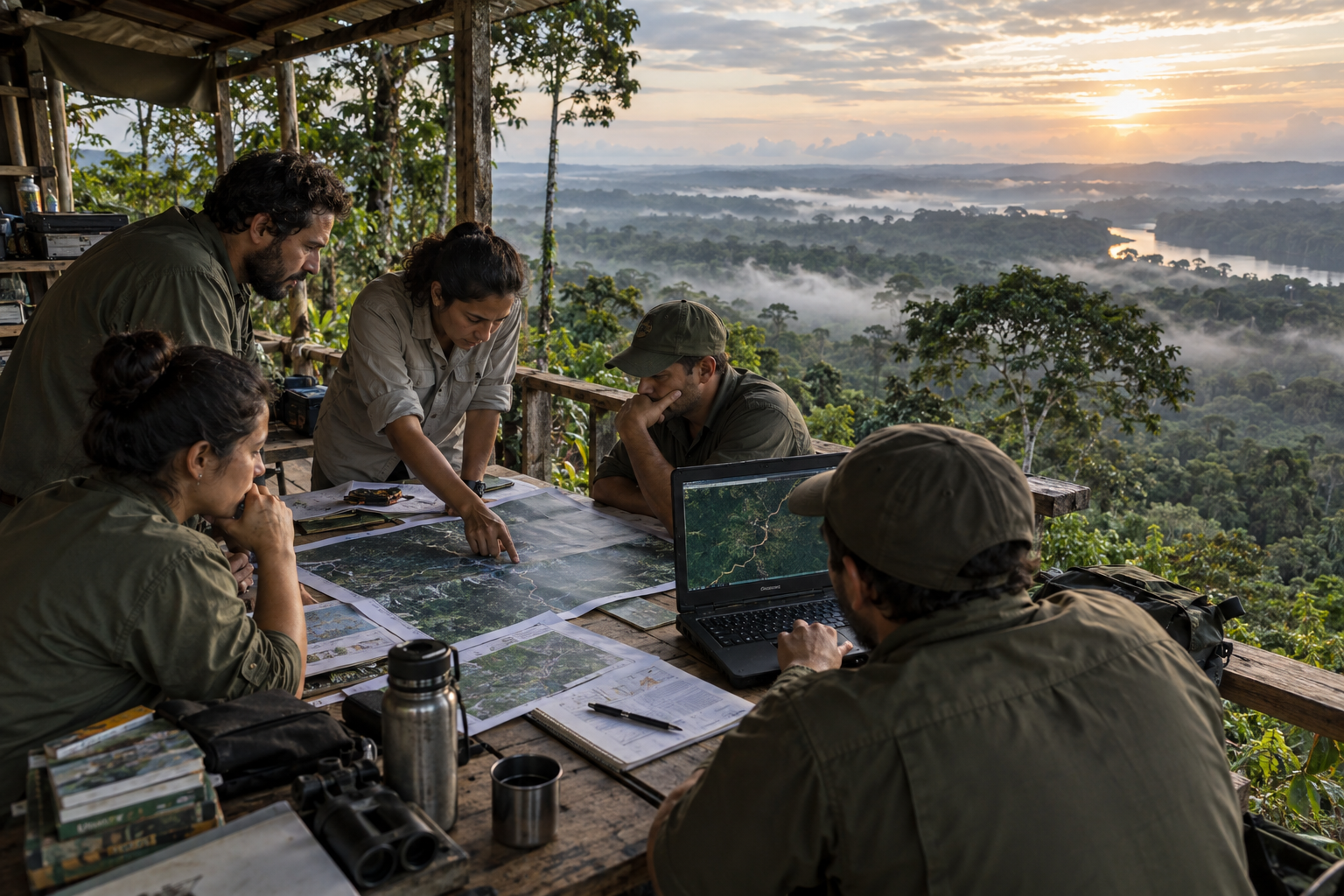
Deforestation in the Brazilian Amazon fell nearly 42% between August 2025 and July 2026, reaching 3,335 square kilometres—the lowest annual figure since records began in 1988. The figures, released on Oct 16, come shortly before Brazil’s Oct 25 presidential runoff, in which incumbent Luiz Inacio Lula da Silva is running neck-and-neck with conservative senator Flavio Bolsonaro. Lula has made ending unlawful forest clearance a pledge, and the new data has been welcomed by his government as evidence of progress.
Environment Minister Joao Paulo Capobianco called the decrease extraordinary. Lula reiterated his goal of ending illegal deforestation by 2030. Brazil contains about 60% of the world’s largest rainforest, which is important for absorbing greenhouse gases that contribute to global warming. The official rate is calculated through Prodes, a satellite monitoring system operated by Brazil’s National Institute for Space Research.
Amazon deforestation has declined steadily since 2022, with a cumulative reduction of 71.2% over the four years since Lula was elected. Authorities and observers have linked the trend to increased monitoring and tougher penalties for illegal logging. The decline contrasts with Jair Bolsonaro’s 2019–2022 presidency, during which the Amazon lost about 11,600 square kilometres of forest—almost 60% more than in the previous four years. His son Flavio has praised his father’s opposition to what he calls a “radical environmental agenda,” while also proposing to treat the environment as a strategic asset and pledging to end illegal deforestation by 2029.
Deforestation also fell in the Cerrado savanna, south of the Amazon. From August 2025 to July 2026, 5,517 square kilometres of native vegetation were destroyed there, nearly 24% less than the previous year and the lowest level since records began in 2001. The Climate Observatory, a network of more than 100 civil society groups, described the results as a historic victory. Its executive secretary, Marcio Astrini, said they showed that political will can help curb forest destruction and greenhouse gas emissions.
Entities: Brazilian Amazon, Cerrado savanna, Luiz Inacio Lula da Silva, Flavio Bolsonaro, Jair Bolsonaro • Tone: analytical • Sentiment: positive • Intent: inform
16-10-2026
Brazilian President Luiz Inacio Lula da Silva said he supports lowering the country’s minimum age of criminal responsibility from 18 to 16 for heinous crimes. He made the comments on Thursday in an interview with TV Globo’s Jornal Nacional, Brazil’s main newscast. The proposal is being debated amid a broader public-safety bill backed by the government, which would strengthen the federal government’s powers in that area. Opposition lawmakers have sought to include a reduction in the age of criminal responsibility in the bill. The legislation was scheduled for a Senate vote on Thursday, but the vote was postponed amid debate over whether to add the age-related changes. Lula argued that the issue should not be included in that bill because the proposal before Congress addresses a different matter. The article also places his remarks in the context of Brazil’s presidential election: Lula is due to face Senator Flavio Bolsonaro, son of former president Jair Bolsonaro, in a runoff on October 25. Flavio Bolsonaro unexpectedly led Lula in the first round. Opposition lawmakers, including Bolsonaro, have advocated a broader reduction, supporting a general threshold of 16 and a threshold of 14 for violent crimes. The report presents Lula’s position and the legislative dispute without offering further detail on the proposed bill or the arguments for and against changing the age of criminal responsibility.
Entities: Luiz Inacio Lula da Silva, Flavio Bolsonaro, Jair Bolsonaro, Brazil, TV Globo • Tone: analytical • Sentiment: neutral • Intent: inform
16-10-2026
Brazilian President Luiz Inácio Lula da Silva has reversed his longstanding opposition to lowering the age of criminal responsibility, saying he supports reducing it from 18 to 16 for “heinous” crimes. He announced the position in a TV Globo interview just over a week before a presidential runoff, in which he is trying to overcome a 2.2 million-vote first-round lead held by far-right senator Flávio Bolsonaro. Bolsonaro and his father, former president Jair Bolsonaro, have supported a lower age, though they favor setting it at 14.
Lula cited opinion polling showing that 80% of Brazilians support lowering the age. Brazilian law defines a broad range of offences as heinous, including murder, rape, falsifying medicines and drug trafficking. Drug trafficking is the offence for which roughly a quarter of Brazil’s 816,000 imprisoned people are serving sentences.
Human rights organisations and security experts argue that lowering the age would not address violence and could expose more young people to organised crime in overcrowded prisons. The Episcopal Conference of Brazil likewise criticised the proposal, saying it fails to address the causes of violence and that early placement in the prison system risks deepening cycles of violence and exclusion while harming rehabilitation.
Commentator Josias de Souza described Lula’s shift as a dramatic reversal on public security. The article situates the change within Lula’s broader late-campaign efforts to attract independent and undecided voters. Those efforts have included congressional approval of a shorter working week and debt relief for microentrepreneurs, as well as a promise of free weekend public transport. Bolsonaro also reversed his position on the shorter working week shortly before it appeared likely to pass.
Entities: Luiz Inácio Lula da Silva, Flávio Bolsonaro, Jair Bolsonaro, Brazil, TV Globo • Tone: analytical • Sentiment: neutral • Intent: inform
16-10-2026
New Brazilian government data show that deforestation in the Amazon fell 41.8% over the past year to 3,335 square kilometres, its lowest level since records began in 1988. Since 2022, the year before Luiz Inácio Lula da Silva took office, the rate has declined by 71.2%, a change attributed largely to stronger enforcement and investment in environmental agencies. Deforestation also reached its lowest annual level in the neighbouring Cerrado since 2001. Even the Amazon states with the most forest loss reported substantial year-on-year declines, though Roraima recorded a small increase.
The article presents these gains as vulnerable to Brazil’s 25 October presidential run-off between incumbent Lula and Flávio Bolsonaro, son of former president Jair Bolsonaro. Lula’s record includes slowing forest destruction and reducing poverty and food insecurity, but he fell behind in the first voting round. Flávio Bolsonaro has aligned himself with landowners and extractive industries, and has promised to free his father, who was convicted of attempting a coup. The article contrasts these positions with Jair Bolsonaro’s 2019–23 administration, during which Amazon deforestation increased 59.5%, amid cuts to protection agencies and weaker enforcement of environmental penalties.
The election is also framed as consequential for Brazil’s international relationships and control of natural resources. Lula describes the Amazon as a sovereign asset, vital to Indigenous peoples and global climate stability, while the Bolsonaro family has closer ties to the United States and may shift trade priorities toward it. Conservation advocates say the record-low figures demonstrate that ending deforestation is possible, but warn that the election will determine whether progress continues or the forest faces renewed destruction.
Entities: Brazilian Amazon, Cerrado, Luiz Inácio Lula da Silva, Flávio Bolsonaro, Jair Bolsonaro • Tone: analytical • Sentiment: neutral • Intent: analyze