14-09-2026
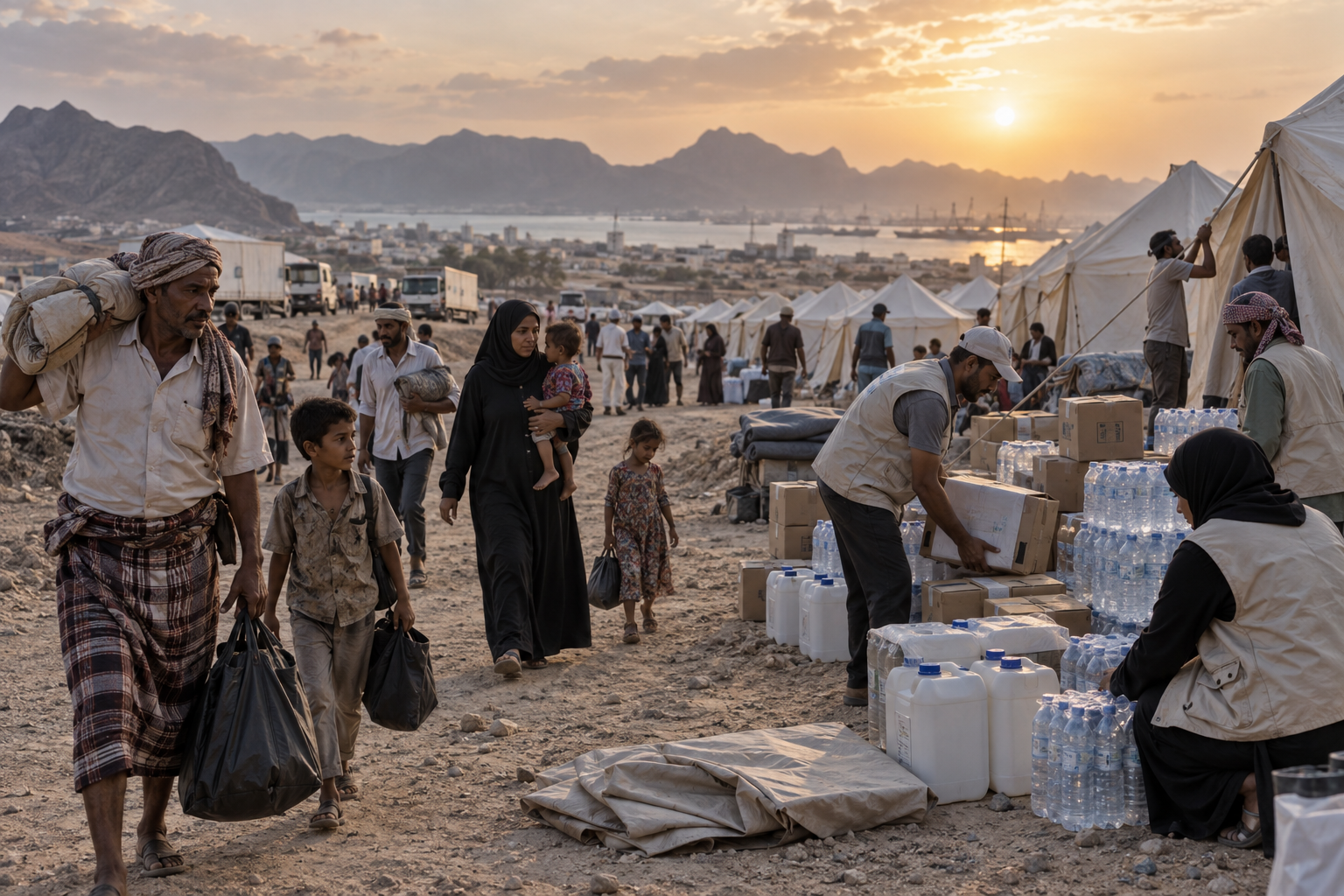
Yemen’s conflict is intensifying as Houthi forces advance against positions held by the internationally recognised government. Government forces, backed by Saudi Arabia, have launched air attacks and are reportedly counterattacking in western Taiz, but the main strategic focus is shifting toward Marib, the government’s last major stronghold in northern Yemen. More than 85,000 people have been displaced since the start of September, with over 2,000 fleeing across the Red Sea to Djibouti.
Marib is important because it contains Yemen’s largest oil and gas fields, making it a major potential source of revenue and political leverage. A Houthi takeover would severely weaken the government’s position in the north, provide the Houthis with stronger bargaining power in any future peace negotiations, and represent a major symbolic and military victory. The city has also sheltered large numbers of Yemen’s internally displaced people, more than half of whom were located in Marib according to 2023 figures cited from the International Organization for Migration.
Taiz is strategically significant because it connects the Houthi-controlled north with government-held southern Yemen and the Red Sea coast. Control of the governorate would improve the movement of weapons and supplies toward Aden and carry considerable political significance because Taiz has long been a centre of resistance to the Houthis. Its coastal areas also extend toward Mocha and the Bab al-Mandeb Strait, a vital maritime chokepoint between Yemen and Djibouti through which approximately 12 percent of global trade passed before the latest fighting. Analysts warn that Houthi gains near the strait could threaten shipping and increase Iran’s regional leverage. Together, the battles for Marib and Taiz could reshape Yemen’s military balance, political negotiations, humanitarian crisis, and control of key energy and maritime infrastructure.
Entities: Houthi movement, Yemen’s internationally recognised government forces, Marib, Taiz, Saudi Arabia • Tone: analytical • Sentiment: negative • Intent: analyze
14-09-2026
The report describes an intensification of fighting in Yemen as Houthi forces advance toward areas controlled by the Saudi-backed Yemeni government. The main locations identified are Marib, a strategically important province known for its oil and gas resources, and the city of Taiz, both of which are described as government strongholds. The reported movement of Houthi fighters places additional pressure on government-held territory and highlights the strategic importance of the current front lines.
According to the brief, Al Jazeera correspondent Yousef Mawry is reporting from Sanaa. The report does not provide detailed information about the scale of the Houthi advance, recent casualties, specific military operations, or the response of government or Saudi-backed forces. It also does not explain whether the advance involves the capture of new territory or movement toward existing front lines. Instead, it offers a concise battlefield update focused on the intensifying conflict and the potential threat to Marib and Taiz.
Marib’s oil and gas resources make it particularly significant in Yemen’s wider conflict, while Taiz is another important urban and military location. The report therefore presents the Houthi advance as a development with potentially important implications for the balance of power in Yemen. Published on September 14, 2026, the item is framed as a news update rather than an analysis of the conflict’s broader political or humanitarian consequences.
Entities: Yemen, Houthi movement, Houthi fighters, Saudi-backed Yemeni government, Marib • Tone: urgent • Sentiment: negative • Intent: inform
14-09-2026
France 24 reports that more than 86,000 people have been displaced in Yemen since July as fighting intensifies between Iran-backed Houthi forces and Yemen’s government forces. The report focuses on civilians who have been forced to leave their homes and land because of the conflict. Many displaced people have sought safety in refugee camps in Aden, a city under government control, while others have crossed the Gulf of Aden to neighbouring Djibouti. The headline, “They drove us from our land,” underscores the personal and traumatic nature of the displacement described in the video report.
The article provides limited detail beyond the displacement figures, the opposing sides in the conflict, and the destinations of those fleeing. It does not include a full transcript of the 1-minute-46-second video, nor does it identify individual interviewees or explain the specific battles that triggered the latest movements. The information is attributed to the United Nations and places the displacement within a broader escalation of Yemen’s long-running conflict. The report’s emphasis is humanitarian rather than military: it highlights the loss of homes, forced movement, refugee camps, and cross-border flight. Overall, the item presents the worsening conflict through its effect on civilians, particularly those who have been driven from their communities and are seeking shelter in government-held areas or abroad.
Entities: Yemen, Houthi movement, Yemeni government forces, United Nations (UN), Aden • Tone: urgent • Sentiment: negative • Intent: inform