14-09-2026
Yemen’s Iran-aligned Houthi rebels have seized the strategically important islands of Greater Hanish and Lesser Hanish in the southern Red Sea, according to Houthi and Yemeni government officials. The capture follows the rebels’ rapid takeover of the mainland port city of Mokha and the island of Mayun, which lies within the Bab el-Mandeb Strait, a vital maritime passage connecting the Red Sea with the Gulf of Aden.
The Houthi deployment to the Hanish islands reportedly occurred after hundreds of Saudi-backed government fighters withdrew. The advances have strengthened the Houthis’ ability to threaten shipping, particularly Saudi crude oil shipments that have been using the Red Sea as an alternative to the Strait of Hormuz amid attacks on shipping there attributed to Iran. The article says the escalation could increase pressure on global oil supplies and prices and potentially give Iran greater leverage in its conflict with the United States.
The Houthis also claimed to have launched dozens of missiles and drones at a Saudi military air base in Khamis Mushait, targeting aircraft hangars, radar systems, runways and ammunition depots. Saudi authorities issued and later lifted alerts in several southern cities. The Houthis described the attack as retaliation for Saudi air strikes on Yemen.
The rebel advances initially met little resistance, but Saudi-backed government forces began regrouping and moved toward Dhubab, north of the Bab el-Mandeb. The fighting threatens to return Yemen to a full-scale civil war after a truce that had largely held for three years. Separately, a planned Oman-hosted meeting between Iran and Gulf states on reopening the Strait of Hormuz was postponed, reportedly at Saudi Arabia’s request.
Entities: Houthi rebels, Yemen, Greater Hanish and Lesser Hanish islands, Mayun island, Bab el-Mandeb Strait • Tone: analytical • Sentiment: negative • Intent: inform
14-09-2026
More than 2,000 Yemenis who fled recent fighting involving the Iran-backed Houthi movement have arrived in Djibouti, according to the International Organization for Migration (IOM). The arrivals followed the Houthis’ capture of a key port city on Yemen’s western coast and an island in the Bab el-Mandeb strait, a strategically important waterway and alternative shipping route to the Strait of Hormuz.
The escalation has prompted tens of thousands of people to leave the affected area amid fears that Yemen’s civil war could resume on a larger scale. Djibouti, located roughly 30 kilometers across the strait, has begun receiving displaced Yemenis. Its navy, coast guard and other agencies are carrying out rescue operations and providing emergency assistance to people crossing the waterway.
Hussein Haydara, who was displaced from Hodeidah, described being forced to flee with little preparation. He said that unlike a previous displacement, his family had almost no time to plan, taking only their children and a few essential belongings as they escaped shelling and sniper fire.
The IOM estimates that nearly 86,000 people have now been displaced inside or from Yemen, including more than 82,000 since the start of September. The latest fighting has effectively ended a ceasefire established in 2022, which had largely halted Yemen’s devastating civil war. The new displacement highlights the immediate humanitarian consequences of the Houthi advance and the risks posed by renewed fighting near one of the world’s important maritime routes.
Entities: Yemen, Djibouti, Houthi rebels, International Organization for Migration (IOM), Hodeidah • Tone: urgent • Sentiment: negative • Intent: inform
14-09-2026
The supplied content does not include the substantive body of the Al Jazeera liveblog. It contains a headline, a URL, and repeated advertising or promotional text, including “Advertisement,” “20 Updates,” and a prompt encouraging readers to enable instant alerts. Because the liveblog updates themselves are absent, it is not possible to provide a factual, comprehensive summary of the reported developments without inventing information.
Based solely on the headline, the article appears to concern the Iran war and diplomatic discussions involving Oman, Iran, and Gulf states. The headline reports that Oman said talks related to the Strait of Hormuz had been postponed. It also places the story within a broader Donald Trump news context, although the supplied excerpt does not explain Trump’s role, position, or actions. The headline suggests that the liveblog may have been tracking military, diplomatic, and regional developments, but no details about the reasons for postponement, the participants, the timing, or the potential consequences are provided in the extracted content.
The available text is therefore insufficient for analysis of the article’s factual narrative, chronology, sources, or conclusions. The classifications below describe only the headline and the limited visible material. The tone is best characterized as neutral and news-oriented, the sentiment as neutral, and the likely intent as informational. A complete analysis would require the actual liveblog updates rather than the advertising-only excerpt supplied here.
Entities: Iran, Oman, Gulf states, Strait of Hormuz, Donald Trump • Tone: neutral • Sentiment: neutral • Intent: inform
14-09-2026
Iran has said a planned meeting with Gulf state officials on the management of the Strait of Hormuz was postponed because of developments in Yemen. Iranian Foreign Ministry spokesperson Esmaeil Baghaei said Oman and Iran had jointly decided to pursue a “responsible” approach to managing the strategic waterway, and that the meeting in Oman would have provided an opportunity to discuss the new policy. He emphasized that Iran would not accept being dictated to or pressured by outside powers. Baghaei also said Saudi Arabia had requested the postponement.
The Strait of Hormuz, located within the territorial waters of Iran and Oman, has reportedly been effectively blocked by Tehran amid the ongoing US-Israel war on Iran. Baghaei denied that Iran had any involvement in events in Yemen, saying Tehran had “no relations whatsoever” with the unfolding developments and did not interfere in Yemen’s affairs.
The postponement comes amid rising tensions between Saudi Arabia and Yemen’s Houthi movement. The Houthis, who control large areas of Yemen, declared a naval blockade of Saudi Arabia in July. Fighting intensified the previous week after the group seized the port of Mocha, increasing its control over the Bab al-Mandeb strait and raising concerns about shipping security.
Separately, Iran’s Islamic Revolutionary Guard Corps said it had intercepted and destroyed an advanced MQ-1 drone over the Strait of Hormuz using a new aerospace defence system. Baghaei also reported that an attack on an Iranian commercial vessel the previous day killed one person and injured two Pakistani crew members. He accused the United States and Israel of continuing to undermine security in the Gulf.
Entities: Strait of Hormuz, Iran, Oman, Yemen, Saudi Arabia • Tone: analytical • Sentiment: negative • Intent: inform
14-09-2026
A planned meeting in Salalah, Oman, between Iran, Oman, Iraq and most Gulf Cooperation Council states has been postponed, delaying efforts to establish temporary shipping routes through the Strait of Hormuz. Bahrain declined to participate, while Iran said Saudi Arabia’s objections caused the postponement. Reports indicate that Riyadh sought amendments to the proposed Iran-Oman agreement because it feared the wording could create an unacceptable new status quo in the waterway.
The delay comes amid worsening regional tensions. Saudi Arabia recently shut down its East-West oil pipeline after drone attacks originating from Iraq, which US President Donald Trump attributed to Iran’s direction. Saudi Arabia is also facing attacks from the Houthis, who have expanded their control along Yemen’s Red Sea coast. The Houthis claimed missile and drone strikes against Saudi military facilities after Saudi-led air attacks in Yemen.
Iran says it will continue pursuing its bilateral agreement with Oman. The plan would create temporary inbound and outbound corridors for commercial vessels, while Tehran emphasizes that the arrangement would not constitute a full reopening of the Strait of Hormuz. The proposed routes would pass mainly through Iranian and Omani territorial waters, potentially with voluntary tolls to support navigation, environmental protection and rescue operations.
Analysts quoted by Al Jazeera say Iran wants broader regional backing to strengthen the agreement’s legitimacy and increase pressure on the United States, while Gulf states want shipping and energy revenues restored without becoming further entangled in the conflict. However, regional approval may not persuade Washington to lift its naval blockade of Iran.
The article also links the Hormuz dispute to the Houthis’ gains around the Bab al-Mandeb and Red Sea. Although the Houthis are not simply an instrument of Iranian policy, their interests align with Tehran’s in challenging maritime access. Control or disruption of both strategic chokepoints could give Iran and its allies significant leverage over global trade and future negotiations with the United States.
Entities: Strait of Hormuz, Iran, Oman, Gulf Cooperation Council (GCC), Saudi Arabia • Tone: analytical • Sentiment: negative • Intent: analyze
14-09-2026
The article examines why oil prices have risen above $100 per barrel despite US claims that traffic through the Strait of Hormuz is being restored. The waterway carries roughly one-fifth of global oil and gas supplies and has been severely disrupted by the war involving the United States, Israel and Iran. US Energy Secretary Chris Wright says about 10 million barrels of oil per day have passed through the strait recently, representing more than two-thirds of previous flows. President Donald Trump has also claimed that the United States is in “total control” and is escorting oil tankers. Iran disputes these claims, saying it controls access and has established a restricted shipping zone.
Available tanker-tracking data presents a more limited picture. Only 14 vessels reportedly transited the strait over a recent weekend, compared with more than 100 per day before the conflict. The data is preliminary because some ships have disabled their tracking systems. Oil prices nevertheless jumped after an Iranian vessel was attacked and a Saudi pipeline was damaged in a drone strike. Brent crude rose to $107.82 per barrel and West Texas Intermediate reached $103.22. The East-West pipeline, which Saudi Arabia has used to bypass the Hormuz blockade by exporting through the Red Sea, carries about 4 percent of global oil supply.
Analysts cited by Al Jazeera say prices remain under upward pressure because shipping disruptions, attacks by Yemen’s Houthi group, depleted global inventories and higher winter fuel demand have reduced market buffers. Futures prices trading above spot prices indicate that traders expect disruption to persist. Diplomatic efforts have also weakened after a planned Oman meeting between Gulf states and Iran was postponed, while US officials expressed little confidence in a negotiated agreement. Growing Houthi control around Yemen’s Red Sea coast and the Bab al-Mandeb strait has added to shipping risks, while war-risk insurance for Hormuz transits has increased sharply.
Entities: Strait of Hormuz, United States, Iran, Donald Trump, Chris Wright • Tone: analytical • Sentiment: negative • Intent: analyze
14-09-2026
The article provides rolling updates on the regional consequences of the Iran war, focusing on energy markets, strategic waterways, military developments, and diplomacy. Oil prices rose sharply, with Brent crude reaching approximately $108 per barrel—its highest level in nearly four months—and U.S. crude exceeding $103.26, more than 20% above its price a month earlier. The increase reflects continuing disruption and uncertainty around the Strait of Hormuz, a critical route for global oil shipments.
A meeting in Muscat involving Iran, Oman, and other regional countries about future control and security arrangements for the Strait of Hormuz was postponed. Oman said the delay was intended to build consensus, while Iran said Saudi Arabia had requested the postponement. Tehran also claimed that an agreement with Oman had been finalized, although Saudi Arabia reportedly sought amendments because of concerns about its effects on other Gulf Cooperation Council states.
The security situation around the Red Sea also deteriorated. Iran-backed Houthi forces captured additional territory near the Bab el-Mandeb Strait, including the Hanish islands and the port city of Mokha, potentially increasing pressure on Saudi oil exports and shipping. Egypt rejected a Houthi proposal for direct talks on maritime traffic, arguing that engaging with the group could imply recognition of it as Yemen’s legitimate government.
A drone attack blamed by Saudi Arabia on Iranian-backed Iraqi militias damaged the East-West Pipeline, a major route intended to move Saudi oil to the Red Sea and bypass Hormuz. Regional officials told The Associated Press that repairs could take three to five weeks. Iran’s foreign minister denied involvement. Meanwhile, U.S. Energy Secretary Chris Wright said the volume of oil shipments passing through Hormuz under U.S. Navy escort was increasing.
Iran also protested the exclusion of its atomic energy chief from an International Atomic Energy Agency meeting in Vienna after Austria denied him a visa. The United States defended the decision, citing Iran’s lack of meaningful cooperation with nuclear safeguards.
Entities: Iran, Oman, Saudi Arabia, Strait of Hormuz, Bab el-Mandeb Strait • Tone: urgent • Sentiment: negative • Intent: inform
14-09-2026
The live report describes escalating conflict around the Strait of Hormuz and the Red Sea, with growing risks to commercial shipping and regional oil exports. Iranian state media reported that an Iranian commercial or cargo vessel was struck near Qeshm Island in the Strait of Hormuz. The report gives conflicting casualty figures: an initial account said one person was killed and three injured, while a later update cited one death and four wounded. Iran blamed a “terrorist enemy,” but no party immediately claimed responsibility. U.S. President Donald Trump declined to say whether the United States had carried out the strike.
The incident occurred as Iran continued to block or restrict shipping through the Strait of Hormuz and as Iran-backed Houthi forces expanded their control of Yemen’s western coast and the strategic Bab el-Mandeb Strait. The Houthis recently captured Mokha and an island near the Red Sea passage, potentially giving them greater leverage over Saudi oil exports that have been rerouted because of the disruption in Hormuz. Yemen’s internationally recognized government said its forces were regrouping, while Saudi-backed forces launched strikes on Mokha and reported destroying weapons and vehicles and killing Houthi fighters.
The Houthis also claimed to have launched drones and missiles toward a Saudi military base. Saudi authorities reported no casualties from the alleged attack but said a separate projectile injured two people and damaged a mosque and other buildings near the Yemeni border.
Diplomatic efforts continued amid the military escalation. Gulf states planned to meet Iran in Oman to discuss the Strait of Hormuz, while Iranian President Masoud Pezeshkian said Iran and the United Arab Emirates wanted to “turn the page” after their relations deteriorated during the war. Trump said he did not object to the meeting and predicted that the war would end after the U.S. midterm elections, with gasoline prices falling sharply. The U.S. Embassy in Abu Dhabi separately warned Americans to exercise caution around Jewish and Israeli-associated locations.
Entities: Strait of Hormuz, Iranian cargo vessel, Qeshm Island, Iran, Iranian Revolutionary/state authorities and IRNA • Tone: urgent • Sentiment: negative • Intent: inform
14-09-2026
The live update describes escalating conflict and disruption around two critical oil-shipping chokepoints: the Strait of Hormuz and Yemen’s Bab el-Mandeb Strait. Iranian state media reported that an Iranian commercial or cargo vessel was struck near Qeshm Island in the Strait of Hormuz. The reports said one person was killed and either three or four others were wounded, reflecting a discrepancy between early and later accounts. Iran blamed a “terrorist enemy,” while President Donald Trump declined to say whether the United States was responsible. The incident occurred amid heightened threats to shipping and the postponement of an Iranian briefing for neighboring countries about Tehran’s efforts to manage traffic through the strait.
The article also reports that Iran-backed Houthi rebels have expanded their control over the Bab el-Mandeb Strait and captured the Yemeni port city of Mokha, potentially giving them greater leverage over Saudi oil exports that have been rerouted through the Red Sea because of the Hormuz disruption. Yemen’s internationally recognized government, backed by Saudi Arabia, launched strikes against Mokha and said weapons, vehicles, and fighters were destroyed. Yemeni officials acknowledged the government’s military collapse as “painful and regrettable,” blamed poor coordination among allied forces, and promised to regroup.
The Houthis claimed to have launched drones and missiles toward Saudi Arabia, while Saudi authorities reported sirens, a projectile near the Yemen border, two injuries, and property damage. Separately, the U.S. Embassy in Abu Dhabi warned Americans to exercise caution near Jewish and Israeli community sites. Diplomatic contacts also continued: Iran and the United Arab Emirates expressed a desire to “turn the page,” and Gulf states planned talks with Tehran in Oman. Trump said he did not object to the meeting and predicted the war would end after the U.S. midterm elections, with gasoline prices falling sharply.
Entities: Strait of Hormuz, Bab el-Mandeb Strait, Iran-backed Houthi rebels, Iranian cargo vessel strike, Qeshm Island • Tone: urgent • Sentiment: negative • Intent: inform
14-09-2026
Iran’s Islamic Revolutionary Guard Corps (IRGC) says it intercepted and destroyed an advanced American MQ-1 drone over the Strait of Hormuz, adding to a series of confrontations between Tehran and Washington during a seven-month war. Iran did not provide details about the drone’s mission, while the MQ-1 is manufactured by General Atomics and has historically been operated by the U.S. Air Force and CIA.
The reported shootdown comes as tensions continue to rise. President Donald Trump said the United States could prolong its campaign against Iran and potentially take control of Iranian oil, comparing the idea with an agreement Washington reached with Venezuela earlier in the year. Trump said the conflict could end before the end of the year, possibly after the November midterm elections, and claimed Tehran had repeatedly sought peace talks—an assertion Iran has previously rejected.
Diplomatic efforts over the Strait of Hormuz have also stalled. Oman’s foreign minister said a planned meeting between Iran and Gulf countries had been postponed because the parties had not reached consensus. The meeting was expected to address shipping arrangements through the strait, a vital route for global oil and gas transportation. The waterway has faced an Iranian and subsequently U.S. naval blockade since the war began in February, while Yemen’s Houthi rebels have increased pressure on the Bab el-Mandeb strait.
The conflict has kept energy prices elevated. Oil prices moved above $100 per barrel again after Saudi Arabia shut a major East-West pipeline following damage from Iraqi drones. West Texas Intermediate rose 2.3% to $102.39 per barrel, while Brent crude increased 2.4% to $107.11.
Entities: Iran, United States, Strait of Hormuz, Islamic Revolutionary Guard Corps (IRGC), MQ-1 drone • Tone: urgent • Sentiment: negative • Intent: inform
14-09-2026
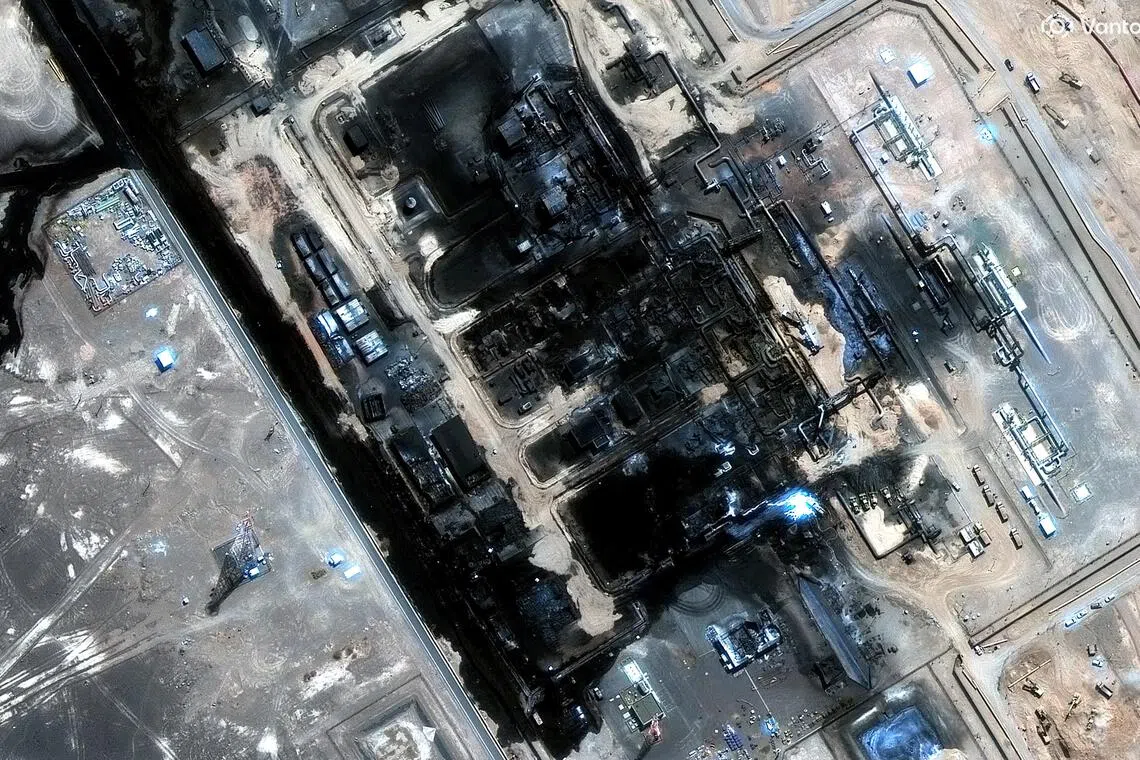
Oil prices rose sharply after Saudi Arabia shut its East-West pipeline, a major route that moves crude from the kingdom’s Persian Gulf production areas to export terminals on the Red Sea. The closure followed drone strikes launched from Iraq that damaged the pipeline on Thursday. Saudi authorities have not disclosed the extent of the damage or how long the pipeline will remain offline.
U.S. West Texas Intermediate crude gained 3.9% to $103.95 per barrel, while Brent crude rose 4.3% to $109.14. Prices had already increased roughly 9% the previous week as fighting between the United States and Iran intensified. Analysts said the initial market response was relatively limited because traders expect Saudi inventories to support exports for several days. However, prices could rise substantially if the disruption lasts longer than the estimated five-to-seven-day inventory cushion.
The pipeline can transport as much as 7 million barrels per day and has become especially important because the Strait of Hormuz is increasingly dangerous. Analysts estimate that a monthlong closure could remove approximately 120 million barrels from the market if Yanbu storage is drawn down. The precise impact depends on the pipeline’s export volumes and available inventories. One analyst said a damaged pump station might allow Saudi Arabia to restart the system at reduced capacity, while another suggested repairs could take months.
The shutdown also affected regional diplomacy. A planned meeting between Iran and Gulf Arab states in Oman about the Hormuz crisis was postponed after the attack. Maritime security remains unstable, with another tanker reportedly suffering a severe fire.
The article also describes expanding threats from Iran-aligned Houthi militants in Yemen. Houthi attacks have injured more than 70 people in Saudi Arabia, and the group reportedly seized Perim Island near the Bab el-Mandeb Strait after capturing Mokha. Their gains could provide greater leverage over another important oil shipping route, particularly after the Houthis declared a maritime embargo on Saudi Arabia.
Entities: Saudi Arabia, East-West Pipeline, Strait of Hormuz, Iraq-launched drone attacks, Crude oil prices • Tone: analytical • Sentiment: negative • Intent: inform
14-09-2026
President Donald Trump said the United States could ultimately take control of Iranian oil as part of a settlement to the seven-month war with Iran, comparing the possibility to an arrangement Washington reached with Venezuela earlier in 2026. Speaking at the Irish Open golf championship, Trump said the U.S. might either leave the conflict or “stay and keep the oil,” and claimed revenue from the Venezuela deal had more than covered the cost of that war. He predicted the Iran conflict could end before the end of the year, potentially after the November midterm elections, and said gasoline prices would fall sharply if hostilities ended. Trump also claimed Tehran had repeatedly sought peace talks, although Iran has previously rejected that characterization.
The comments came as regional diplomacy over the Strait of Hormuz stalled. Oman’s foreign minister, Badr Albusaidi, said a planned meeting between Iran and Gulf countries had been postponed because consensus was needed. The meeting was expected to address an Iran-Oman shipping route through the strait, a crucial passage for global oil and gas shipments. No direct U.S.-Iran talks were underway.
The article describes the strait as subject to Iranian and later U.S. naval blockades since the war began in February. A June agreement between Washington and Tehran reportedly collapsed over disagreements concerning the waterway, while Houthi attacks in the Bab el-Mandeb have increased pressure on another major shipping route. Rising security risks have kept energy prices elevated. After Saudi Arabia closed a key East-West energy pipeline because of damage from Iraqi drones, West Texas Intermediate rose 2.3% to $102.39 per barrel and Brent crude increased 2.4% to $107.11.
Entities: Donald Trump, Iran, United States, Venezuela, Marco Rubio • Tone: urgent • Sentiment: negative • Intent: inform
14-09-2026
The article reports that Iran-backed Houthi rebels captured Perim Island, also known as Mayun, in the Bab el-Mandeb Strait on September 11 after a month-long offensive along Yemen’s western coast. The takeover gives the Houthis a strategic position in a narrow maritime passage that connects the Red Sea with the Gulf of Aden and serves as a major global shipping route. The offensive reportedly killed more than 1,500 soldiers and forced Yemen’s government to acknowledge a significant defeat.
Morgan Murphy, a former Pentagon press secretary and retired Navy captain, described Perim as the “cork in the Red Sea bottle” because it effectively divides the approximately 18-mile-wide chokepoint. However, he argued that the island’s exposed location also makes it a “kill box” vulnerable to overwhelming U.S. military firepower. Perim is a barren volcanic island roughly 20 miles from the Horn of Africa and near Camp Lemonnier in Djibouti, a major U.S. military installation. Satellite imagery reportedly shows a 6,070-foot runway and three hangars, with regional intelligence attributing their construction to the United Arab Emirates.
The report says Saudi Crown Prince Mohammed bin Salman called President Donald Trump twice on September 10 to request U.S. strikes against Houthi positions. Trump reportedly declined direct military intervention, while the administration continued providing intelligence assistance. Trump later said the Houthis had contacted the United States and did not want a direct confrontation. Murphy nevertheless warned that the militants’ capture of Perim should not be interpreted as evidence that they could withstand a U.S. or allied attack. The supplied article ends mid-sentence during Murphy’s response, so the full conclusion is unavailable.
Entities: Houthi rebels, Perim Island (Mayun), Bab el-Mandeb Strait, Red Sea shipping chokepoint, Yemen • Tone: urgent • Sentiment: negative • Intent: warn
14-09-2026
An Iranian cargo vessel was struck early Sunday near Qeshm Island in the Strait of Hormuz, killing one person and injuring four, according to Iranian state media. Iran blamed a “terrorist enemy,” but no party immediately claimed responsibility. The United States also did not comment on whether it had carried out the attack, while President Donald Trump declined to answer directly when asked about possible US involvement.
The incident occurred amid worsening threats to commercial shipping in both the Strait of Hormuz and the Bab el-Mandeb Strait. The United Kingdom Maritime Trade Operations monitor separately reported that a vessel had been hit by a projectile while transiting Hormuz, causing a severe fire and prompting local authorities to evacuate those aboard. It was unclear whether that report referred to the Iranian vessel. Commercial traffic through Hormuz has remained low since the outbreak of war, although the United States says oil shipments continue with military assistance along Oman’s coast.
The attack also coincided with the postponement of planned talks in Oman between Iran and neighboring countries on managing shipping through the strait. Oman’s Foreign Minister Badr Albusaidi said the meeting was delayed in the interests of consensus, while an Iranian official said some regional countries had requested the postponement. Saudi Arabia reportedly sought amendments to the Iran-Oman agreement because of concerns about its long-term effect on Gulf states. Iraq had confirmed plans to attend, while Bahrain said it would not participate because it lacks diplomatic relations with Tehran.
Iran has proposed charging ships transit fees and claims that routes into the Persian Gulf pass through Iranian waters. President Masoud Pezeshkian defended Iran’s position and said he had held a constructive discussion with a senior United Arab Emirates official about improving future relations. The article places these developments against a broader regional conflict involving Iranian attacks, US military operations, and Iran-backed Houthi forces near the Bab el-Mandeb shipping route.
Entities: Iranian cargo vessel, Qeshm Island, Strait of Hormuz, Bab el-Mandeb Strait, Oman • Tone: analytical • Sentiment: negative • Intent: inform
14-09-2026
The article reports a sharp intensification of Yemen’s conflict between government forces and the Iran-backed Houthi movement. On Sunday, forces loyal to Yemen’s government launched attacks against Houthi positions along the Red Sea, while the Houthis fired into neighboring Saudi Arabia, a major supporter of the Yemeni government. The exchanges indicate that the conflict is extending beyond Yemen’s immediate battlefronts and increasing regional tensions.
Yemen’s government has pledged to deploy additional forces to the Red Sea coast. The commitment follows what one government official described as a “painful” defeat the previous week, when Houthi forces captured the port city of Mokha and an island near the Bab el-Mandeb Strait. The waterway is strategically important because it connects the Red Sea with the Gulf of Aden and serves as a crucial alternative shipping route to the Strait of Hormuz.
The report emphasizes the military and geopolitical significance of the Houthi gains. Control of territory near the Bab el-Mandeb could affect maritime traffic and give the Houthis greater leverage over regional shipping routes. Saudi Arabia’s involvement in supporting Yemen’s government also raises the risk that fighting in Yemen could further draw in neighboring states.
Although the report does not provide casualty figures or detailed information about the attacks, it portrays a rapidly worsening security situation. The government’s planned reinforcement of the Red Sea coast reflects an effort to reverse recent Houthi advances, while the attacks involving Saudi Arabia demonstrate the conflict’s broader regional dimension.
Entities: Yemen government forces, Houthi rebels, Iran, Saudi Arabia, Red Sea • Tone: urgent • Sentiment: negative • Intent: inform
14-09-2026
Diplomatic efforts to manage shipping through the Strait of Hormuz were delayed as attacks near the region’s main oil routes increased pressure on global energy markets. Oman postponed a planned Sept. 14 meeting involving Iran and Persian Gulf states, citing the need to preserve consensus. The meeting had been expected to discuss an Omani-backed agreement governing shipping through the strait, but the delay reduced hopes for a near-term diplomatic breakthrough.
The postponement followed Saudi Arabia’s decision to keep its 1,200km East-West oil pipeline closed after drone strikes damaged it on Sept. 11. The pipeline normally allows Saudi oil to bypass the Strait of Hormuz. Traders and Saudi oil buyers estimated that Saudi Arabia had only five to seven days of oil stored at the Red Sea port of Yanbu to sustain exports if the pipeline remained shut. A prolonged closure could jeopardize as much as 4 per cent of global oil supply, in addition to supplies already affected by disruptions in Strait of Hormuz traffic. Oil prices rose above US$100 a barrel, while US retail diesel prices reached a record above US$6.20 per gallon.
Shipping risks also mounted. Britain’s maritime security agency reported that a vessel was hit by a projectile in the strait, causing a fire and forcing an evacuation. Iran separately reported casualties aboard an Iranian commercial vessel struck off its coast. Iranian Foreign Minister Abbas Araghchi said Iran would not reopen the strait until the United States met its demands.
At the same time, Iran-aligned Houthi rebels intensified attacks in southern Saudi Arabia and around the Red Sea after capturing Perim Island near the Bab el-Mandeb. The escalation has placed Washington in a difficult position: it wants to protect shipping and support Saudi Arabia but is reluctant to open another military front. Saudi Crown Prince Mohammed bin Salman reportedly asked US President Donald Trump for military assistance, but Washington offered intelligence support instead. Gulf states now face growing pressure to choose between economic disruption and engagement with Iran.
Entities: Strait of Hormuz, Iran, Oman, Persian Gulf states, Saudi Arabia • Tone: urgent • Sentiment: negative • Intent: inform
14-09-2026
Oman has postponed planned talks between Iran and Gulf states, saying the conditions were not yet suitable for a constructive meeting capable of producing lasting agreements on regional security and stability. The discussions had been scheduled for Monday in Salalah, but Oman’s state news agency said they would be rescheduled at a later date. Iran said the delay followed a request from some regional countries and resulted from a joint decision by Tehran and Muscat. Neither side identified the countries that sought the postponement.
The talks were intended to address growing tensions caused by Iran’s attacks on Gulf neighbours and commercial shipping in and around the Strait of Hormuz. The waterway, a major global energy chokepoint, has experienced severe disruption since the United States and Israel launched their war on Iran in February, according to the article. Oman and Iran had previously announced a framework involving a temporary navigational corridor and mine-clearance operations, with Gulf-bordering states expected to participate in further discussions.
Disagreements over that framework appear to have contributed to the delay. Reports said Saudi Arabia objected to proposed amendments, while Bahrain had already indicated it would not join the talks. The Financial Times reported that divisions within the Gulf Co-operation Council prevented consensus on holding the meeting.
Shipping activity through the strait has fallen sharply. Ship-tracking data showed that daily commodity-vessel transits dropped to single digits over the weekend, compared with a 10-day average of 14. Only four vessels exited the Gulf and 10 entered, although the figures may exclude ships that disabled their transponders. The disruption has pushed oil prices higher and reduced commercial traffic. Iran said it remained committed to regional consultations, while Oman continued trying to use its close ties with Tehran to broker arrangements that could restore safe navigation. No new date for the talks was announced.
Entities: Iran, Oman, Gulf states, Strait of Hormuz, Salalah • Tone: analytical • Sentiment: negative • Intent: inform
14-09-2026
The National’s live-news page, updated on September 14, 2026, reports a series of developments connected to the widening Iran war and its regional repercussions. The headline development is Tehran’s announcement that planned talks in Oman have been postponed at the request of regional countries. The available text does not provide further details about the participants, the proposed agenda, or a new date for the talks.
The page also highlights rising energy-market concerns. Oil was reported to be approaching $108 a barrel after Saudi Arabia shut a pipeline amid attacks. In Saudi Arabia, the country’s Civil Defence said the immediate danger had passed in Abha and Khamis Mushait following earlier warnings, while a Houthi attack reportedly targeted the Jazan region and the Houthis claimed responsibility for an attack on a Saudi military base.
The humanitarian situation is also worsening. Displacement in Yemen reportedly exceeded 85,000 as fighting intensified along the country’s west coast, and Djibouti was said to have received about 1,400 refugees from Yemen. Other updates referenced statements by the US House Speaker about the need to be “realistic” about ending the war before the US midterm elections, as well as comments by Donald Trump and Pete Hegseth condemning Iran at a September 11 memorial. Trump was also quoted as saying he had “no regrets” about US action against Iran and that the war would end after the midterms.
Additional video headlines referred to Israeli strikes in Gaza, an Iranian attack that damaged a tanker off Iraq, US claims that five Iranian oil tankers had been destroyed, and questions about whether the Houthis are using artificial intelligence to develop and operate weapons. The supplied page contains headlines and multimedia captions but no full article body, so the details and sourcing behind these claims are not available in the provided text.
Entities: Iran war, Tehran, Oman talks, Regional countries, Saudi Arabia • Tone: urgent • Sentiment: negative • Intent: inform
14-09-2026
The article reports that Saudi Arabia has postponed a planned meeting involving Iran and the foreign ministers of Persian Gulf nations. According to Iran’s Foreign Ministry, the postponement comes as regional talks have stalled and Saudi Arabia faces pressure from Iranian-allied militias operating in Iraq and from Houthi rebels in Yemen. The proposed gathering would have represented the highest-level multilateral discussions between Tehran and Persian Gulf countries since the beginning of the U.S.-led war in February.
The report is datelined Salalah, Oman, and is attributed to journalists Rachel Chason and Suzan Haidamous. Its central development is the delay of a diplomatic meeting that could have provided an important channel for dialogue between Iran and Arab Gulf states during a period of heightened regional conflict and competing political pressures. The postponement signals difficulties in advancing negotiations and suggests that security concerns and tensions involving Iran-linked armed groups are affecting broader diplomatic efforts.
The supplied content is only a brief excerpt and ends after describing the postponement. It does not provide the new date for the meeting, Saudi Arabia’s official explanation, responses from other Gulf governments, or additional details about the talks’ agenda. It also does not elaborate on the U.S.-led war referenced in the report or describe the specific actions by the Iraqi militias and Houthi rebels that contributed to the pressure on Saudi Arabia. Based on the available text, the article’s focus is the intersection of stalled diplomacy, regional proxy conflicts, and relations between Iran and Persian Gulf states.
Entities: Iran, Saudi Arabia, Persian Gulf nations, Tehran, Iranian Foreign Ministry • Tone: analytical • Sentiment: negative • Intent: inform
14-09-2026
The article reports that the United States could eventually be compelled to intervene militarily in the Red Sea following the seizure of Yemen’s Red Sea coast by Houthi forces. Scott Uehlinger, identified as a former CIA officer, argues that pressure on Washington to take action is increasing. His assessment suggests that the current US policy of avoiding direct military strikes may become difficult to sustain if the Houthis continue to control or threaten the strategically important coastline.
The White House has so far declined requests for direct US military strikes, indicating that the administration is not currently prepared to escalate its involvement. However, Uehlinger says circumstances may force a change in policy. The report presents this possibility as a developing security and geopolitical concern rather than announcing that US intervention has already begun.
The brief item does not provide additional details about the nature of the Houthi takeover, the specific requests made to the White House, the potential targets of any US action, or a timeline for possible intervention. It also does not include a response from Houthi authorities or further comments from the White House. Its central focus is the growing pressure facing the United States and the risk that events along Yemen’s Red Sea coast could lead to direct American military involvement. The wording conveys urgency and uncertainty, emphasizing a possible escalation in an already tense regional situation.
Entities: Red Sea, United States, Scott Uehlinger, Central Intelligence Agency (CIA), White House • Tone: urgent • Sentiment: negative • Intent: inform
14-09-2026
Somalia’s business community is seeking alternative maritime routes as security concerns and fighting disrupt shipping around the Bab al-Mandeb Strait and the Strait of Hormuz. Because Somalia relies heavily on imported goods, disruptions along these waterways could have significant effects on trade, delivery times, and consumer prices.
Somali businesses have traditionally imported products from Asia through Gulf countries, including the United Arab Emirates, Oman, and Saudi Arabia. Mohamed Ali Nur, director of Mogadishu Seaport, said companies are now attempting to establish more direct routes to reduce their exposure to regional instability. He said the port contacted exporters and encouraged them to change their shipping routes.
A ship carrying sugar recently arrived in Somalia directly from Sri Lanka, avoiding the traditional routes through the Gulf. The move illustrates how importers are adapting to the changing security environment, although longer or less familiar routes could increase transportation costs and cause delays.
The instability is also creating concerns for crews operating in nearby waters. Ali Jemdi, a ship captain, said trouble related to war in the Arabian Gulf could make sea transportation and trade more difficult. While alternative routes may help maintain supplies, they may not fully shield Somalia from broader regional disruptions. If shipping costs rise or deliveries are delayed, Somali markets could eventually experience higher prices and shortages. The article highlights Somalia’s vulnerability to maritime insecurity because of its dependence on imports and the importance of international sea lanes to its economy.
Entities: Somalia, Mogadishu Seaport, Mohamed Ali Nur, Ali Jemdi, Bab al-Mandeb Strait • Tone: analytical • Sentiment: negative • Intent: inform