13-10-2026
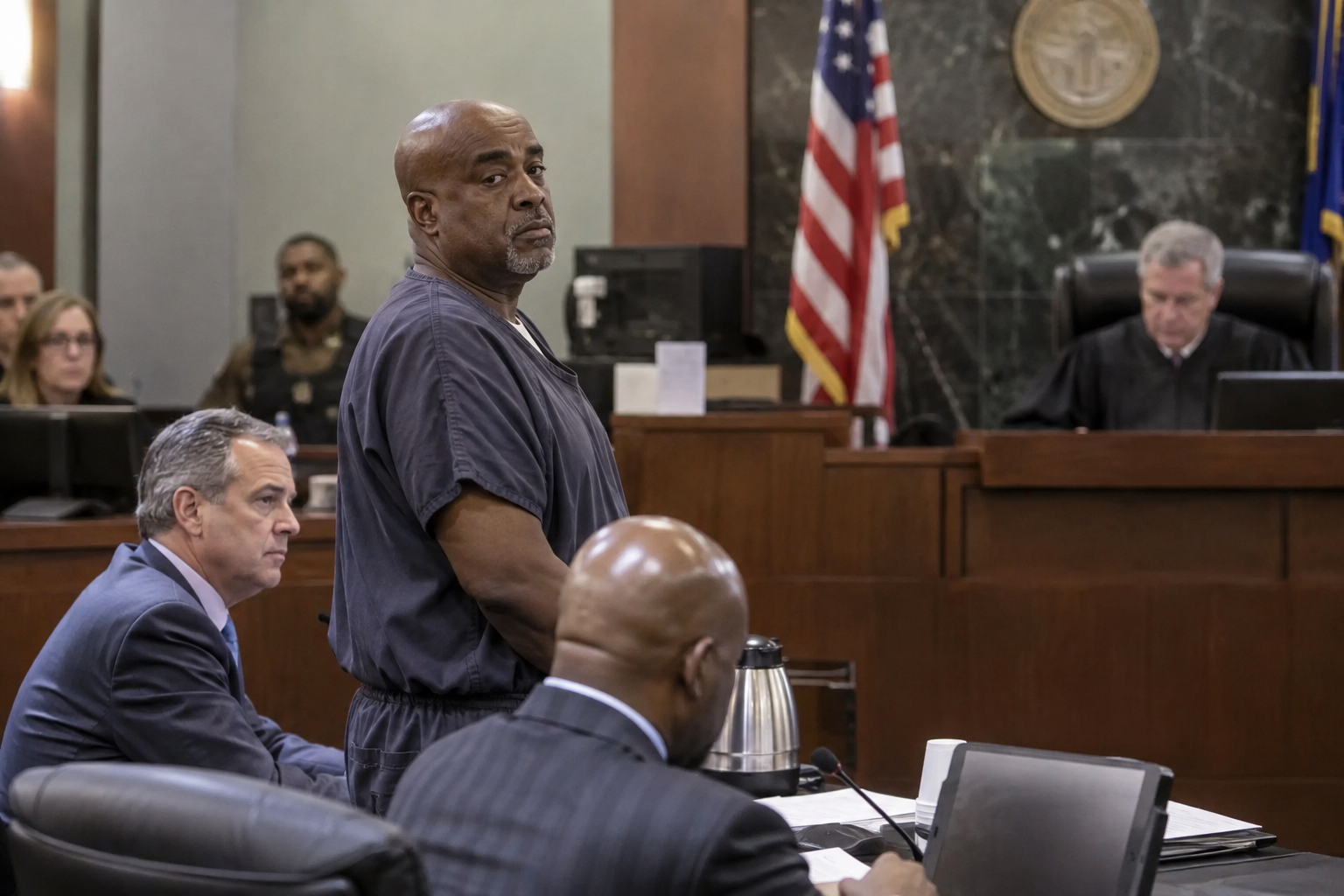
Former gang leader Duane “Keffe D” Davis has been sentenced to at least 40 years in prison for orchestrating the 1996 drive-by murder of rapper Tupac Shakur in Las Vegas. Davis, 63, was found guilty in September of murder with a deadly weapon. Although prosecutors said he did not fire the gun, they argued he led the group and supplied the weapon used by his nephew, Orlando Anderson, who allegedly opened fire. Anderson denied involvement and died in an unrelated shooting in 1998. Davis has said he will appeal.
The case was built substantially on Davis’s own statements. He acknowledged being in the white Cadillac from which the shots were fired, first discussing his involvement in a 2008 police interview and later elaborating in his 2019 memoir, *Compton Street Legend*, and media appearances. Prosecutors argued that his public claims voided an agreement that had protected him from prosecution, allowing the interview to be used at trial. Davis’s defence maintained that his statements were fabricated or exaggerated to sell books and attract attention.
At sentencing, prosecutor Marc DiGiacomo said Davis had spent years publicly boasting about his role and described the killing as having wide-ranging effects. Shakur’s sister, Sekyiwa, told the court that his death had crippled the family and asked for the maximum sentence; his brother Maurice also requested the longest possible term. Judge Carli Kierny emphasized the lasting consequences of taking Shakur’s life. Davis declined to address the court beyond saying he would appeal.
Shakur was 25 and a highly influential rap artist when he was killed. He has sold more than 75 million records. Davis’s conviction marked the first in an investigation that remained one of America’s best-known cold cases for nearly three decades and generated extensive public interest and conspiracy theories.
Entities: Duane “Keffe D” Davis, Tupac Shakur, Sekyiwa Shakur, Maurice Shakur, Marc DiGiacomo • Tone: analytical • Sentiment: negative • Intent: inform
13-10-2026
Duane “Keffe D” Davis, 63, was sentenced Tuesday to 40 years to life in prison for orchestrating the 1996 drive-by killing of Tupac Shakur near the Las Vegas Strip. Davis was convicted in August of first-degree murder with the use of a deadly weapon. With credit for time served, he is not expected to be eligible for parole until he is at least 100. His lawyer said Davis will appeal. He is the only person charged in Shakur’s death, which remained unsolved for decades and drew renewed attention after Davis discussed his alleged role in interviews and a 2019 memoir.
At sentencing, Shakur’s sister Sekyiwa and brother Mopreme described the killing’s lasting impact on the family and fans. Sekyiwa said it was painful to hear Davis recount hunting and killing her brother, and described Shakur as kind and protective. She said that, if he had survived, he might have left music to pursue activism or politics. Mopreme called the death devastating and heartbreaking.
Shakur was shot on Sept. 7, 1996, while riding in a black BMW with music mogul Marion “Suge” Knight. A white Cadillac pulled up at a red light and shots were fired. Shakur died six days later; Knight survived. Davis said he was in the Cadillac and passed a gun to someone in the back seat. He claimed the shooting was retaliation after Shakur and others beat his nephew, Orlando Anderson, earlier that day. Anderson was among the three other people alleged to have been in the Cadillac; all have since died.
Prosecutors argued Davis planned the shooting and supplied the gun, tying it to a feud between the South Side Compton Crips and Mob Piru. The defence said there was no physical evidence connecting Davis to the crime and portrayed him as someone seeking money and attention. Jurors heard nine days of testimony and reached a guilty verdict after three hours of deliberation.
Sean “Diddy” Combs was also mentioned at trial. Davis alleged that Combs offered money to kill Shakur and Knight, while Combs has repeatedly denied involvement. Clark County District Attorney Steve Wolfson said there was insufficient evidence to charge anyone else, though further charges could be considered if new evidence emerges.
Entities: Duane “Keffe D” Davis, Tupac Shakur, Sekyiwa (Set) Shakur, Maurice (Mopreme) Shakur, Marion “Suge” Knight • Tone: analytical • Sentiment: negative • Intent: inform
13-10-2026
Duane “Keffe D” Davis, 63, was sentenced by a Las Vegas court to 40 years to life in prison for his role in orchestrating the 1996 killing of rapper Tupac Shakur. Davis was convicted in August of first-degree murder with the use of a deadly weapon. Shakur was shot in a drive-by attack on September 7, 1996, and died in hospital six days later, aged 25. Judge Carli Kierny emphasized the lasting harm caused by taking Shakur’s life when delivering the sentence, saying Davis had taken away both a man and his future from his family.
The article recounts the events preceding the shooting. Shakur and members of his entourage fought with members of a rival Los Angeles street gang at the MGM Grand Casino during a boxing match. Davis’s cousin was among those beaten. Davis later said he wanted revenge. Hours after the fight, while riding around Las Vegas in a Cadillac, he spotted Shakur in the passenger seat of a BMW at a red light. According to the account, Davis handed a gun to someone in the Cadillac’s back seat and directed that person to shoot.
The identity of the person who fired the shots has never been conclusively established. Davis is the only person from the Cadillac who is still alive. The case remained unsolved for years, until Davis discussed his involvement in interviews and in a 2019 tell-all memoir. Prosecutor Marc DiGiacomo argued that Davis had sought to profit from the killing and deserved the maximum sentence. Davis’s lawyer said he plans to appeal the conviction. Shakur was an award-winning rapper, activist, and actor whose records have sold more than 75 million copies worldwide, including sales after his death.
Entities: Duane “Keffe D” Davis, Tupac Shakur, Las Vegas, Judge Carli Kierny, Marc DiGiacomo • Tone: neutral • Sentiment: neutral • Intent: inform
13-10-2026
France 24 reports that Duane Davis, a former Los Angeles gang leader who had spoken publicly about involvement in the killing of rapper Tupac Shakur, was sentenced on Tuesday to a minimum of 40 years in prison. The article says Davis had boasted about his involvement in books and interviews, but denied it when he came to trial. It does not provide further details about the sentencing, the court’s reasoning, the evidence presented, or the circumstances of the killing. The report is presented by France 24 correspondent Wassim Cornet from Los Angeles. Its central focus is the sentence and the contrast between Davis’s earlier public claims and his denial at trial. The article is brief and largely factual; it offers no extended commentary or additional perspectives. The supplied page also includes a video headline, publication date, and crime-related keywords, but the text provided does not contain a fuller account of the case. Accordingly, the summary is limited to the information stated in the article rather than adding details about the investigation or trial that are not included in the source.
Entities: Duane Davis, Tupac Shakur, Wassim Cornet, Los Angeles, France 24 • Tone: neutral • Sentiment: neutral • Intent: inform