13-10-2026
Spain's royal couple are due to visit Ceuta on 13 October, as the North African enclave continues to deal with the effects of a major migration crisis. On 30 and 31 July, more than 70,000 people crossed from Morocco into the city, whose population is about 80,000. Most returned within hours, but thousands stayed for weeks in makeshift camps and emergency shelters. A recent operation involving more than 350 police officers and soldiers cleared the last major informal settlement, El Guano, and moved its residents to reception centres.
The crisis has brought divisions in Ceuta into sharper focus. Muslims account for around 40% of the population. Some residents have called for stricter border controls, while others have condemned hostility towards migrants. In El Príncipe, a predominantly Muslim neighbourhood, residents sheltered women and children. Community representative Ahmed Enfed-Dal denounced attacks on shelters and efforts to block Red Cross food deliveries.
The royal couple are expected to meet local officials and civil society representatives in Ceuta before travelling to Melilla on Wednesday. The visit is their first to the two Spanish enclaves since 2007 and takes place ahead of Spain's 29 November general election, when migration is a major political issue. Morocco's territorial claims over the enclaves add a diplomatic dimension to the visit. The article presents the trip against a backdrop of emergency migration response, community disagreement and political and diplomatic sensitivities.
Entities: Ceuta, Melilla, King Felipe and the Spanish royal couple, Morocco, El Guano • Tone: analytical • Sentiment: neutral • Intent: inform
13-10-2026
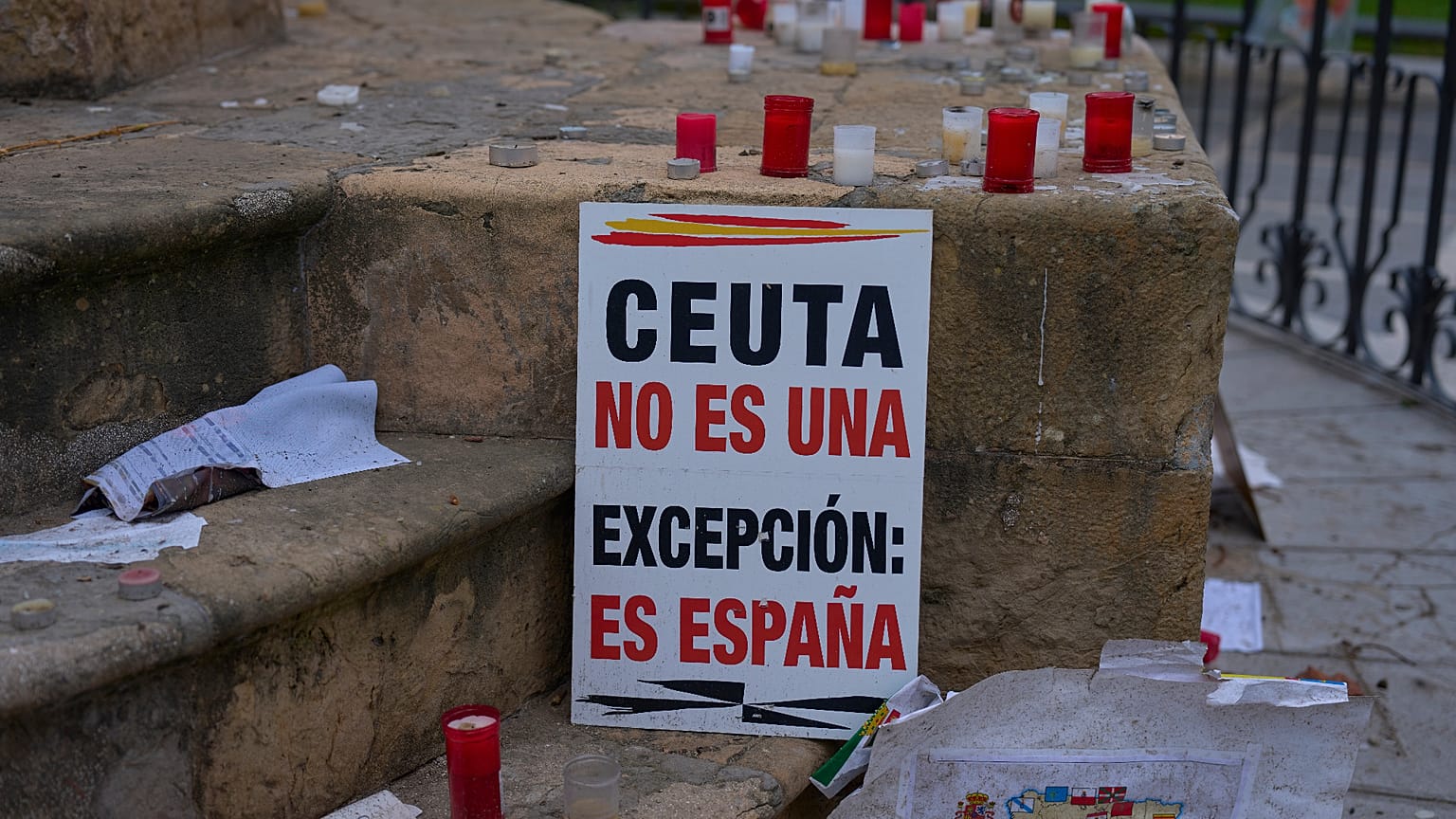
Thousands of residents in Ceuta welcomed Spain’s King and Queen during their royal visit, lining the streets with Spanish and Ceuta flags and signs greeting the monarchs. After arriving at the city’s heliport, the royal couple greeted residents on their way to City Hall. They later appeared on the balcony of the Palace of the Assembly, overlooking Plaza de África, with Ceuta president Juan Vivas. For many residents, the large turnout was a public affirmation of the city’s Spanish identity.
The visit includes two days of engagements: meetings with local officials, a school visit, a tribute at the Sidi Embarek Muslim cemetery to people who died during July’s mass sea crossings, and discussions with civil-society representatives. The couple will stay overnight in Ceuta before travelling to Melilla on Wednesday.
The trip is diplomatically sensitive because Morocco claims sovereignty over Ceuta and Melilla, Spanish cities on the North African coast. Morocco reacted sharply to the previous royal visit in 2007 and recalled its ambassador to Madrid for consultations ahead of this trip. The visit follows July’s migration crisis, in which more than 70,000 people entered Ceuta from Morocco over two days, putting severe pressure on the territory. King Mohammed VI criticised what he described as the political “instrumentalisation” of the crisis. The article presents the royal visit both as a highly visible expression of Spanish identity among Ceuta residents and as an event taking place amid strained relations with Morocco and the recent migration crisis.
Entities: Ceuta, Melilla, King of Spain, Queen of Spain, Juan Vivas • Tone: analytical • Sentiment: neutral • Intent: inform
13-10-2026
Spain’s King Felipe VI and Queen Letizia visited Ceuta on Tuesday, meeting local leaders and residents amid continuing concerns following a deadly border incident with Morocco over the summer. The visit was the first by a Spanish monarch to Ceuta or nearby Melilla since Felipe’s father, Juan Carlos I, toured the cities in 2007. Crowds welcomed the royal couple, and some residents said the visit made them feel that national authorities were finally paying attention to the city’s difficulties.
In late July, around 70,000 refugees in Morocco rushed the border fence with Spain. More than 140 people were killed in the ensuing violence. The incident focused international attention on Ceuta, a city of about 84,000 residents, and prompted calls from some right-wing European Union governments to suspend the Schengen free-movement agreement with Spain.
Most of the refugees were soon returned to Morocco. Because Ceuta is geographically remote, few moved on to mainland Europe; the article says only a group of children considered at risk did so. Local residents criticized national officials for what they saw as insufficient assistance, with at least 10,000 migrants still in the city and alleged human traffickers seeking to exploit the situation. Migrants unable to return to Morocco, meanwhile, accused Spanish police of brutality and other abuses.
The incident also aggravated diplomatic tensions between Spain and Morocco. Morocco does not recognize Spain’s claim to Ceuta, which has been under Spanish control for centuries. The article notes that the Moroccan government’s response to Felipe’s visit remained uncertain. Spanish Prime Minister Pedro Sanchez also alleged that organized groups linked to Russia and Israel had spread misinformation about supposed changes to Spain’s immigration rules.
Entities: King Felipe VI, Queen Letizia, Juan Carlos I, Ceuta, Melilla • Tone: analytical • Sentiment: negative • Intent: inform
13-10-2026
King Felipe VI and Queen Letizia are visiting Ceuta and Melilla for the first time as monarchs, in a two-day trip and the first royal visit to the Spanish autonomous cities since Juan Carlos I and Queen Sofía travelled there in 2007. The visit comes amid the unresolved aftermath of a major migration surge: Spain’s Interior Ministry says more than 70,000 people crossed from Morocco into Ceuta over 30 and 31 July, an influx into a city of just over 80,000 residents. Prime Minister Pedro Sánchez described the events as an attack on Spain’s territorial integrity, while Felipe VI later called the situation “unacceptable” and urged greater European solidarity.
In Ceuta, the royals will receive the city’s keys from president Juan Jesús Vivas, visit a school, and attend a religious tribute at the Sidi Embarek Muslim cemetery for people who died trying to swim across the border. The couple will stay overnight, unlike the royals during the 2007 visit. In Melilla, they will visit the Assembly Palace and a school, then meet civil-society representatives. The Royal Household has arranged similar schedules for both cities. Sánchez will not accompany them; a government minister, likely Ángel Víctor Torres, is expected to represent the government. Since August, 11,026 people have returned to Morocco, most voluntarily, according to Torres.
The article places the visit in historical context. Juan Carlos I’s 2007 trip followed an 80-year gap and provoked protests in Morocco, which claims sovereignty over Ceuta and Melilla. It also recalls Alfonso XIII’s 1927 visit, made six years after the Annual disaster and amid the Rif War’s aftermath. Morocco had not publicly responded to the current royal trip at the time of publication, though a protest was planned in Castillejos. King Mohammed VI recently emphasized Morocco’s sovereignty and described relations with Spain as a “sovereign choice,” without mentioning the two cities.
Entities: King Felipe VI, Queen Letizia, Juan Carlos I, Ceuta, Melilla • Tone: analytical • Sentiment: neutral • Intent: inform
13-10-2026
King Felipe VI and Queen Letizia received a large, enthusiastic welcome in Ceuta on Tuesday, 13 October, beginning their first visit to the Spanish North African territory since 2007. Thousands of residents lined the streets, waved Spanish and Ceuta flags, cheered the royal couple and held signs welcoming them “home.” After arriving by helicopter, the King and Queen greeted people on their way to City Hall, where they shook hands and spoke with residents. They later appeared on the balcony of the Palace of the Assembly with Ceuta’s president, Juan Vivas.
The two-day visit includes meetings with local officials, a school visit, and discussions with civil-society representatives. The royals are also due to pay tribute at the Sidi Embarek Muslim cemetery to people who died during July’s mass sea crossings. The trip takes place amid diplomatic sensitivities: Morocco claims sovereignty over Ceuta and neighbouring Melilla, and reacted sharply to the royal couple’s previous visit in 2007. Morocco recalled its ambassador to Madrid for consultations ahead of the current trip, while King Mohammed VI criticised what he described as the political “instrumentalisation” of the migration crisis.
That crisis saw more than 70,000 people enter Ceuta from Morocco over two days in July, putting severe pressure on the territory. Against this backdrop, the large turnout was presented as a public affirmation of Ceuta’s Spanish identity. The royal couple planned to spend the night in Ceuta before travelling to Melilla on Wednesday.
Entities: King Felipe VI, Queen Letizia, Ceuta, Melilla, Morocco • Tone: analytical • Sentiment: neutral • Intent: inform
13-10-2026
Spain’s King Felipe VI and Queen Letizia visited Ceuta on October 13, 2026, marking the first visit by the Spanish royals to the North African enclave since 2007. The visit took place amid diplomatic tensions with Morocco, whose government claims sovereignty over Ceuta, which is administered by Spain. That claim makes a royal visit politically sensitive, as it publicly underscores Spain’s presence in the territory.
The tensions follow a migration crisis in July, when more than 70,000 people crossed into Ceuta from Morocco. Most of those who crossed later returned to Morocco, while thousands remained in the enclave. The article also reports that dozens of people died during the crisis. It does not provide further details about the circumstances of the deaths, the individuals involved, or the diplomatic exchanges between Spain and Morocco.
France 24’s report, presented by Sarah Morris from Madrid, frames the royal visit against these two connected developments: the large-scale migration crossing and the unresolved dispute over Ceuta’s sovereignty. The article’s focus is the timing and diplomatic significance of the visit rather than a detailed account of the royals’ activities or an assessment of the governments’ positions. Overall, it describes a symbolic Spanish royal presence in a territory whose status remains contested, at a moment when recent migration events have heightened tensions between Spain and Morocco.
Entities: King Felipe VI, Queen Letizia, Sarah Morris, Ceuta, Spain • Tone: analytical • Sentiment: neutral • Intent: inform