13-10-2026
Leaders of India’s Cockroach Janta Party (CJP), including Ashutosh Ranka and Saurav Das, were detained on Tuesday after entering Jantar Mantar in Delhi, which authorities had recently removed from the list of designated protest sites. Videos shared by party founder Abhijeet Dipke showed the leaders climbing over barricades, chanting slogans and holding the Indian flag. They were protesting a controversial revision of electoral rolls and calling for Chief Election Commissioner Gyanesh Kumar to resign. Police had not immediately disclosed where they took the detained leaders; Ranka later appeared on a police bus livestream, saying they would not back down.
The detentions followed the federal home ministry’s announcement that protests at Jantar Mantar would no longer be permitted, with three alternative locations designated for demonstrations requiring official permission. The CJP said it had sought authorization for a peaceful protest before the site was de-notified. Security had already been tightened across Delhi: during a planned demonstration on Saturday, metro stations were closed, train services disrupted and thousands of police and paramilitary personnel deployed. Police detained and later released thousands of people, including journalists; footage appeared to show officers using force against demonstrators.
Meanwhile, opposition parties marched from Connaught Place to the Supreme Court, and the Congress challenged the voter-roll revision there. The exercise has removed tens of millions of names, prompting concerns that eligible voters could be excluded or struggle to prove eligibility. The Election Commission denies allegations that the process favors Prime Minister Narendra Modi’s party and says its decisions were unanimous.
The article places the CJP’s current campaign in the context of its earlier student-led protests over exam irregularities and education reform, which ended with the education minister’s resignation. The group began as online satire after a comment by Chief Justice Surya Kant comparing some unemployed young people to cockroaches, then developed into a pressure group addressing unemployment, exam irregularities and government accountability.
Entities: Cockroach Janta Party (CJP), Abhijeet Dipke, Ashutosh Ranka, Saurav Das, Gyanesh Kumar • Tone: neutral • Sentiment: negative • Intent: inform
13-10-2026
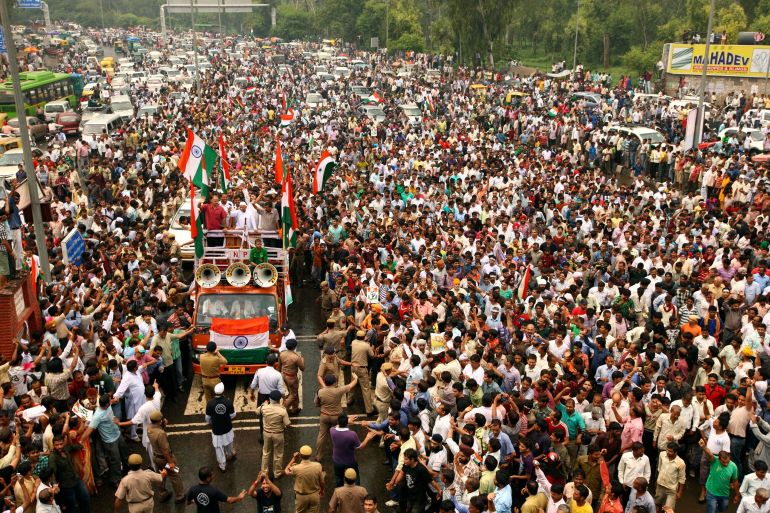
Protests over alleged voter-list irregularities and calls for Chief Election Commissioner Gyanesh Kumar to resign have intensified in India. On Monday, thousands of people joined opposition leaders, including Rahul Gandhi, in a march to the Supreme Court in New Delhi to challenge revisions made by the Election Commission. The demonstrations followed a weekend crackdown in which police detained protesters, opposition politicians, young people, YouTubers, lawyers and journalists. Authorities also barred the Cockroach Janta Party (CJP), a viral pseudo-political movement, from using Delhi’s Jantar Mantar grounds for a planned protest.
The controversy centers on the Election Commission’s special intensive revision (SIR) of voter rolls. Local media reports say 130 million names were removed. An Indian Express investigation reported discrepancies, while the commission says it is committed to ensuring eligible voters are included and launched a drive to enroll those left off the rolls. The ruling Bharatiya Janata Party says the removals reflect deaths, relocations, duplicate records and voters who could not be traced or were absent.
Prime Minister Narendra Modi defended India as a “mother of democracy,” arguing that public debate is open. Opposition figures said the crowds showed protesters would not be intimidated. The United Nations Human Rights Office expressed concern about mass detentions and urged authorities to respect peaceful assembly; India’s Ministry of External Affairs rejected the comments as unwarranted interference.
Experts told CNBC that the protests do not currently threaten India’s stability or investor behavior, but warned that forceful policing could intensify unrest and draw larger groups into demonstrations. Analysts also characterized the crackdown as unusually extensive compared with responses to earlier protests. The movement’s central demands are Kumar’s resignation and substantial changes to the SIR process, amid broader constitutional and legal questions about the voter-roll revisions.
Entities: Narendra Modi, Gyanesh Kumar, Rahul Gandhi, Abhijeet Dipke, Michael Kugelman • Tone: analytical • Sentiment: negative • Intent: inform
13-10-2026
The France 24 article reports that India’s youth-led “Cockroach” movement is escalating protests against Prime Minister Narendra Modi’s government. Three leaders of the movement were detained after they defied a ban on demonstrations at Jantar Mantar, a protest site in New Delhi. The protesters oppose a revision of voter lists, which they allege favours Modi’s party. Their campaign is taking place amid broader demonstrations over the electoral process, and the article says the protests are disrupting businesses across the capital.
The supplied article text is brief and contains no further details about the detained leaders, the specific changes to voter lists, the government’s response, or the scale and duration of the business disruption. It also does not provide direct quotations from protesters or officials. Accordingly, the report’s central focus is the movement’s defiance of the protest ban and its challenge to the voter-list revision, rather than a detailed account of the underlying electoral dispute. The article presents the allegations as the demonstrators’ claims, not as established findings. The accompanying page text lists related coverage of protests and detentions in India, but those items are not part of the article itself.
Entities: Cockroach movement, Narendra Modi, New Delhi, Jantar Mantar, India • Tone: neutral • Sentiment: neutral • Intent: inform
13-10-2026
The article places current protests in New Delhi—where students and opposition parties are demanding electoral reforms and the resignation of Chief Election Commissioner Gyanesh Kumar—within India’s long history of mass dissent. It reports that the demonstrations follow election-irregularity revelations and an earlier protest campaign that led to the education minister’s departure. The government has characterized protesters as acting against national interests, while political analyst Rasheed Kidwai says protest has been a recurring feature of India’s political story.
The article reviews several movements and their consequences. The 1965 anti-Hindi agitations, led in Tamil Nadu by the DMK, grew from fears that making Hindi the sole central official language would disadvantage non-Hindi speakers. Prime Minister Lal Bahadur Shastri assured protesters that English would remain in use, and the DMK’s 1967 state-election victory helped establish the movement as a landmark in federalism and regional identity.
The JP Movement began with student protests in Gujarat and Bihar over corruption, inflation and mismanagement, then became a national challenge to Indira Gandhi. Gandhi declared an Emergency in 1975, suspending civil liberties and censoring the press. After it ended, opposition parties defeated Congress in 1977, demonstrating the electoral force of mass dissent.
The Mandal Commission protests followed the 1990 announcement of a 27 percent reservation of central government jobs for Other Backward Classes. Opponents feared competition for jobs, while supporters argued reservations addressed caste discrimination and unequal opportunity. The Supreme Court upheld the quota in 1992, with a creamy-layer exclusion. Finally, the article describes labour protests against economic liberalisation begun in 1991, which unions feared would cost jobs and weaken worker protections. The supplied article ends during this section.
Entities: India, New Delhi, Narendra Modi, Gyanesh Kumar, Rasheed Kidwai • Tone: analytical • Sentiment: neutral • Intent: analyze