13-10-2026
The article reports a dispute between Iran and the United Kingdom over an alleged plot near RAF Fairford, a base in southern England used by US military aircraft. British Prime Minister Andy Burnham said the suspected plot was highly likely to have been coordinated in Iran and almost certainly directed by the Islamic Revolutionary Guard Corps (IRGC). The UK sanctioned two Iranian nationals over alleged hostile activity after arrests near the base on September 27. Seven men were arrested in connection with the incident, but none had been charged at the time of the article; those arrested were released on bail or later released. The precise threat and evidence remain unclear.
Iran’s Foreign Ministry rejected the UK’s attribution, called it a false-flag operation, and said Britain had not provided sufficient evidence. Tehran argued that the allegations could deflect attention from the UK’s participation in the war against Iran, which began on February 28 with US and Israeli strikes. The article notes RAF Fairford’s significance in that conflict and reports that the US withdrew about a dozen B-1 bombers from the base after the incident, amid media reports of possible drone threats.
The story places the dispute in a wider pattern of reciprocal accusations. Israeli Prime Minister Benjamin Netanyahu said Israel had warned Britain about the alleged plot, while criticizing UK measures related to Israeli settlement expansion. Iranian officials and state media have also described other incidents and international actions—including an alleged attack involving a Flydubai aircraft, an IAEA-related referral concerning Iran’s nuclear programme, and reports about Houthi advances—as efforts to blame or pressure Tehran. Meanwhile, the UK continued diplomatic and sanctions measures, and a statement endorsed by 32 countries accused Iran of conducting violent and covert activities abroad. The article presents both governments’ claims while emphasizing that public details supporting the UK’s assessment have not been disclosed.
Entities: Iran, United Kingdom, RAF Fairford, Islamic Revolutionary Guard Corps (IRGC), Andy Burnham • Tone: analytical • Sentiment: neutral • Intent: inform
13-10-2026
Canada has joined more than two dozen countries in condemning what they describe as Iran’s apparent involvement in a planned attack at RAF Fairford, a U.S.-run military air base in England. In a joint statement issued Monday, the countries condemned Iran’s alleged use of violent operations, including lethal plotting, arson, sabotage, cyberattacks and other forms of hostile activity. The statement recognized the United Kingdom’s attribution of an incident at the base on September 27 to Iran and said it reflected the Iranian Revolutionary Guard Corps’ continued use of covert networks and proxy actors beyond Iran’s borders.
British Prime Minister Andy Burnham said the suspected plot was “almost certainly” directed by the Revolutionary Guard. The countries’ statement also cited a recent campaign of attacks across Europe targeting Jewish communities, Iranian journalists and U.S. interests. Those attacks were claimed by Harakat Ashab al-Yamin al-Islamiya, which the statement describes as a pro-Iran group. The signatories include Canada, the United States, France, Germany and Australia. They warned that attempts to threaten people in their countries through proxies are unacceptable and said they would identify, investigate, disrupt and prosecute hostile activities carried out on behalf of Iran or any other state.
British police have arrested seven men in connection with the alleged RAF Fairford plot. All have been released on bail, and no one has been charged. The air base has been used by American bombers to strike Iran during the ongoing war. Iran denies involvement in the alleged plot, though it has previously said that it considers any base used to attack Iranian territory a legitimate target.
Entities: Canada, Iran, United Kingdom, RAF Fairford, Andy Burnham • Tone: analytical • Sentiment: neutral • Intent: inform
13-10-2026
MI5 Director General Ken McCallum warned that Iran and Russia are increasing threats to Britain through hostile activity that falls short of conventional warfare. In his annual speech on threats to the UK, McCallum said Iran had shown a shift in ambition toward targeting more heavily defended sites, including military locations. He also said state threats had quadrupled over the past decade, leading MI5 to devote more resources to them than it did during the Cold War.
The warning followed comments by British Prime Minister Andy Burnham, who said Tehran was “highly likely” to have been behind a suspected plot involving RAF Fairford. The base had been used by U.S. bombers in strikes on Iran, and the incident triggered a major security alert and the withdrawal of U.S. planes from the base. McCallum declined to comment on the incident because it is under investigation, but said similar cases had occurred in Britain and elsewhere.
McCallum described Russia as the leading state aggressor and said it was escalating hybrid warfare against Ukraine’s allies. He cited alleged hostile actions just below the threshold of conventional conflict, including an attempted drone attack on a cargo plane at a German airport and a cyber attack on Polish energy infrastructure. Russia denies involvement in hostile acts in Britain. McCallum linked Russian efforts to unsettle European countries to the high cost and limited progress of its military campaign in Ukraine.
He also identified the misuse of artificial intelligence as a serious concern, particularly the possibility that terrorists could use it to develop biological weapons or create novel pathogens.
Entities: Ken McCallum, Andy Burnham, Donald Trump, MI5, Iran • Tone: analytical • Sentiment: negative • Intent: inform
13-10-2026
MI5 Director General Ken McCallum warned that Iran and Russia are intensifying hostile activities aimed at Britain and other Western countries. In his annual speech on threats to the UK, McCallum said Iran had shifted toward seeking harder targets, including military sites. His comments came after Prime Minister Andy Burnham said Tehran was “highly likely” to be behind a suspected plot involving RAF Fairford, an airbase used by US bombers for strikes on Iran. The incident prompted a security alert and the withdrawal of US aircraft. Iran denies involvement in that incident and other alleged hostile activity in Britain. British authorities have previously linked Iran to plots and attempted assassinations targeting dissidents and Israeli and Jewish communities. McCallum said more than 50 arrests over the past year were linked to Iran-backed operations, while cautioning that the capabilities demonstrated in Britain remain limited by the sophistication of the criminals and proxies used. He contrasted this with the Islamic Revolutionary Guard Corps’ greater experience using conventional and hybrid methods nearer Iran. McCallum described Russia as the leading state aggressor and said it was escalating hybrid warfare against Ukraine’s allies through activities short of conventional conflict. Examples cited included an attempted drone attack on a cargo plane at a German airport and a cyberattack on Polish energy infrastructure. Russia has denied involvement in hostile acts and rejected Germany’s claims about the airport incident. McCallum said state threats have quadrupled over the past decade, requiring MI5 to devote more resources to them than during the Cold War. He also warned that artificial intelligence is intensifying the cybersecurity contest and helping terrorists improve reconnaissance and attack methods. His greatest concern about AI misuse is its potential to enable existing or new biological weapons, including the creation of pathogens. He said those risks were real and that MI5 was particularly focused on them.
Entities: Ken McCallum, MI5, Iran, Russia, United Kingdom • Tone: analytical • Sentiment: negative • Intent: inform
13-10-2026
MI5 Director General Ken McCallum warned that Iran has escalated its efforts to sabotage UK military sites, marking what he called a “major shift” toward harder targets. He said Iran-linked operations had resulted in more than 50 arrests in the UK over the past year, and that state-backed threats now exceed terrorism and extremist activity. McCallum also reported that threats from state actors, including Russia and China, had quadrupled compared with the previous year.
The warning followed suspected plots at two bases used by the US and UK. Prime Minister Andy Burnham said Tehran was “highly likely” behind a suspected plot at RAF Fairford, which had hosted US bombers conducting strikes on Iran since the conflict began in February. The incident triggered a security alert and prompted US President Donald Trump to withdraw aircraft from the base; seven people were arrested on suspicion of involvement. Two other suspects had been arrested the previous week near RAF Molesworth in Cambridgeshire, a site known to be used by US intelligence agencies.
McCallum cautioned that Iran’s capabilities could enable more aggressive and sophisticated tactics, noting the Islamic Revolutionary Guard Corps’ experience with conventional and hybrid methods in countries closer to Iran. The article also cites previous attempted attacks at UK bases in Diego Garcia and Akrotiri, Cyprus, where an Iranian-made drone crashed into an RAF hangar in July. British authorities have prosecuted people for attacks on Jewish sites and on dissidents in the UK.
McCallum identified interconnected financial systems, energy grids, supply chains and manufacturing as vulnerabilities that foreign actors could disrupt or use for coercion. EU foreign affairs minister Kaja Kallas expressed solidarity with the UK, said the EU had concluded the Revolutionary Guard was almost certainly behind the Fairford threat, and noted that the EU had designated it a terrorist organisation and sanctioned Iranian officials.
Entities: Ken McCallum, MI5, Iran, Islamic Revolutionary Guard Corps (IRGC), RAF Fairford • Tone: analytical • Sentiment: negative • Intent: inform
13-10-2026
MI5 chief Ken McCallum warned that Iran is seeking to broaden its activities in Britain to include harder targets such as military installations. In his annual assessment of threats to the UK, he described the suspected plot against RAF Fairford in September as “not unique,” saying similar incidents had occurred in Britain and elsewhere. The base in western England has been used by US bombers during the war with Iran.
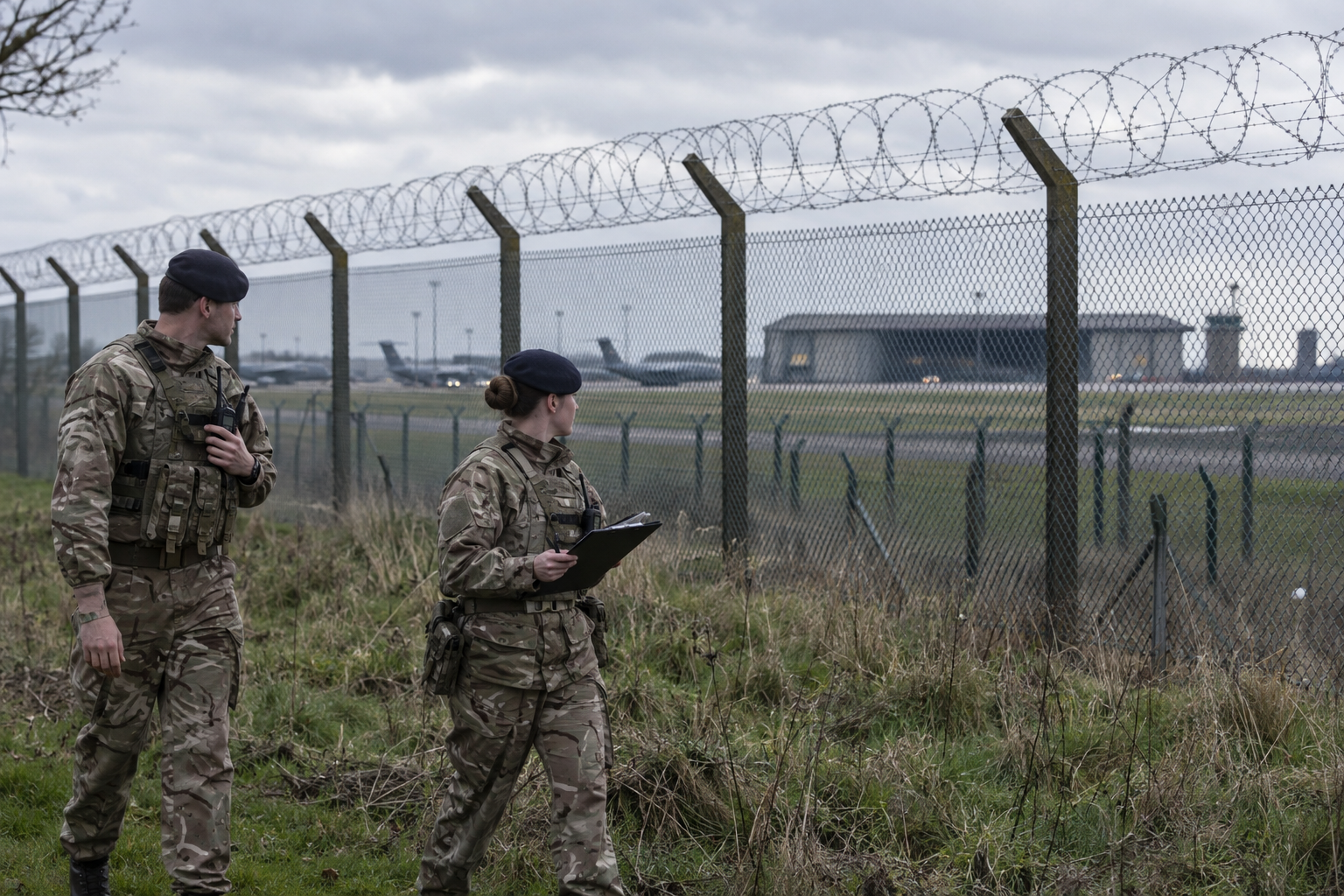
The suspected Fairford plot prompted a major security operation on September 27. Residents were evacuated while armed police and army bomb-disposal experts searched the area. Police found accelerant in three vans but no explosives. Seven men in their 20s were arrested and released on bail while the investigation continues. British authorities have linked Tehran to the incident, and Prime Minister Andy Burnham said it was almost certainly directed by Iran’s Revolutionary Guard. Iran has denied involvement, though it has previously said it considers military bases used to attack Iranian territory legitimate targets. McCallum declined to comment on the investigation but said Iranian ambitions had shifted toward military sites. He also cited arson and sabotage at Jewish sites in Britain attributed by the UK to Iranian proxies.
McCallum identified Russia as the leading state aggressor against Britain and its allies, warning of escalating hybrid warfare targeting countries supporting Ukraine. He cited an attempted drone attack on a cargo plane in Germany and a cyberattack on Polish energy infrastructure. Russia denies involvement in hostile acts in Britain. McCallum said state threats have quadrupled over the past decade, requiring MI5 to devote more resources to them than during the Cold War. He also warned that terrorists could misuse artificial intelligence to develop biological weapons or create new pathogens.
Entities: Ken McCallum, Andy Burnham, MI5, Iran, Iranian Revolutionary Guard • Tone: analytical • Sentiment: neutral • Intent: inform
13-10-2026
The excerpt reports that Britain’s domestic intelligence chief warned that Iran is changing the focus of suspected attack plots toward more difficult and heavily protected targets. The warning followed a suspected plot the previous month against a British air base used by U.S. bombers. According to the intelligence chief, that incident was not an isolated concern but part of a broader Iranian effort to target military sites, intelligence facilities, and other locations with high levels of security.
The report’s central point is the perceived shift in target selection: from plots generally to attacks aimed at institutions and installations that may be harder to access or protect. The excerpt places the warning in London and dates the intelligence chief’s remarks to Tuesday. It does not provide details about the suspected air-base plot, identify the intelligence chief, describe the evidence linking the plot to Iran, or explain what specific measures Britain may take in response. Those details cannot be established from the supplied text alone.
Overall, the passage presents a security warning about a possible expansion or evolution in Iranian-linked threat activity. Its framing emphasizes the potential risk to military and intelligence infrastructure, while attributing the assessment to Britain’s domestic intelligence chief. Because only a short opening passage is provided, the summary is limited to the claims and context explicitly included there.
Entities: Iran, Britain, London, British domestic intelligence service, British air base • Tone: urgent • Sentiment: negative • Intent: warn