13-10-2026
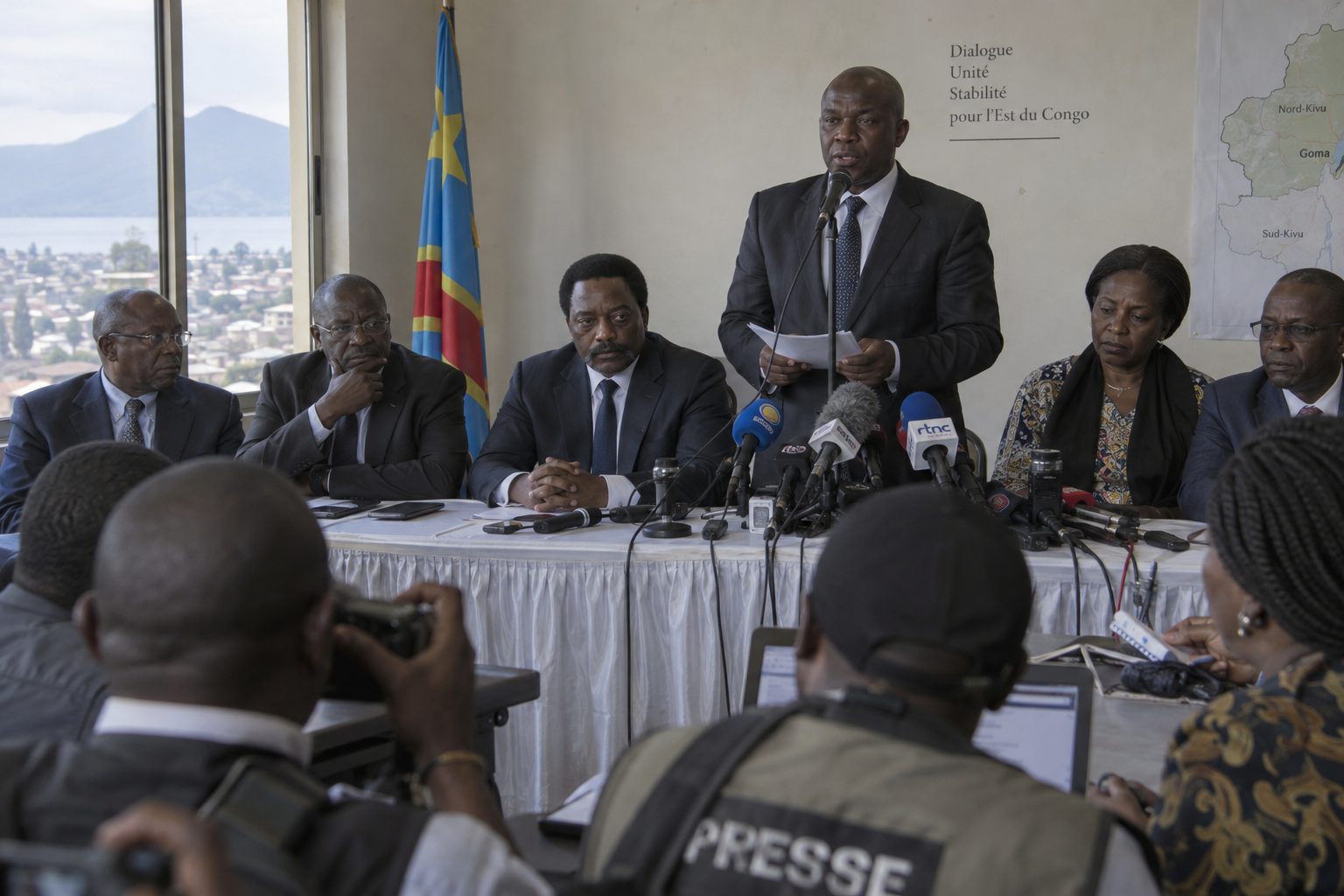
Former DR Congo President Joseph Kabila has been named leader of the Front for the Refoundation of the Nation (FRN), a newly announced coalition of rebel groups seeking to remove the government of President Félix Tshisekedi. The FRN says it intends to coordinate “resistance forces” and is prepared to pursue its aims by force. Its announcement in Goma, a city controlled by the M23 rebels, is the clearest public sign so far of Kabila's direct involvement in an armed movement. M23 leader Sultani Makenga is one of Kabila's four deputies; the others are also from the AFC-M23 alliance, which seized large areas of eastern DR Congo last year. Kabila had previously denied links to M23 and was sentenced to death in absentia for treason. The government has not commented on the coalition's announcement or Kabila's recent accusations that it has undermined constitutional rule, mishandled the economy and failed to provide security. Kabila ruled from 2001 to 2019, later fell out with Tshisekedi, went into self-imposed exile, and returned to Goma last year. His emergence comes amid long-running conflict in eastern DR Congo, where more than 100 militia groups are active amid competition over political power and valuable natural resources. The UN and Western governments accuse Rwanda of supporting M23, a charge Rwanda denies. An International Crisis Group analyst says Kabila may use his prominence to attract dissatisfied Congolese beyond M23's limited political base, recruit senior army officers and reduce the rebels' reliance on Rwanda. The announcement also comes as Tshisekedi's second term approaches its scheduled end in 2028. He has suggested elections might not take place because of the conflict and has raised the possibility of seeking a third term. Parliament has passed a bill that could lead to a referendum on removing the constitutional term limit, prompting protests. The article notes that US sanctions imposed on Kabila over alleged support for M23 complicate any attempt to emulate his father's earlier seizure of power. An analyst says recent developments suggest peace negotiations are stalled and that parties are prioritising control on the ground.
Entities: Joseph Kabila, Félix Tshisekedi, Sultani Makenga, Claude Ibalanky, Laurent Kabila • Tone: analytical • Sentiment: negative • Intent: inform
13-10-2026
Former Democratic Republic of Congo (DRC) president Joseph Kabila has announced that he will lead the Front for the Refoundation of the Nation (FRN), a new political-military movement that includes figures associated with the AFC/M23 rebellion. Announced in Goma on October 12, the coalition succeeds the Congo River Alliance and brings together former AFC leader Corneille Nangaa, M23 political leader Bertrand Bisimwa, and senior M23 military commander Sultani Makenga. The move places Kabila in more direct opposition to President Felix Tshisekedi’s government, which has accused him of backing the insurgency. Kabila denies the allegations and has called politically motivated a military court’s September 2025 decision to sentence him to death in absentia for treason, war crimes, and other offenses connected to the conflict.
The article places the development in the context of eastern DRC’s decades-long conflict, driven by armed groups, competition over territory and mineral resources, and regional tensions. M23 says the government failed to honor commitments under a 2009 peace agreement and to protect Congolese Tutsis. The DRC, the United Nations, and Western governments accuse Rwanda of supporting M23; Rwanda denies this and points to security threats from armed groups in Congo. M23’s 2025 capture of Goma and Bukavu weakened government control and worsened displacement and humanitarian conditions.
Analysts say Kabila’s role reflects continuing political ambition, though the movement’s ability to broaden its support or change its negotiating position remains uncertain. The alliance does not rule out negotiations, but could make an agreement more difficult to reach and sustain. A durable settlement, one analyst argues, would require security arrangements, restored state authority, humanitarian access, and safe returns for displaced people. The article concludes that mediators must consider whether existing peace frameworks can accommodate the political realignment, while civilians face uncertainty over whether it will advance peace or deepen the conflict.
Entities: Joseph Kabila, Felix Tshisekedi, Democratic Republic of Congo (DRC), Front for the Refoundation of the Nation (FRN), AFC/M23 • Tone: analytical • Sentiment: negative • Intent: analyze
13-10-2026
The France 24 program preview describes three topics featured in an edition of “Eye on Africa.” Its lead item reports that Joseph Kabila has been named leader of a new rebel coalition that includes M23 and that he has vowed to topple the government in the Democratic Republic of the Congo. The preview presents this as the principal development, but supplies no further details about the coalition, the circumstances of Kabila’s appointment, or the government’s response. It then notes that an offering described as Africa’s largest-ever initial public offering (IPO) has been extended; the excerpt does not identify the company or explain the extension. Finally, it says Formula 1 is expected to return to Africa in the early 2030s, after a new circuit is built in Rwanda. The supplied text is a short broadcast listing rather than a full report: it provides no supporting analysis or additional context for any of the three items. It is attributed to Clarisse Fortuné, Antonia Cimini, Emmet Livingstone, and Laurent Berstecher, and carries an issue date of 13 October 2026. The remaining text consists of website navigation, sharing and reading-time labels, an advertising heading, a related-keywords label, and a notice that the requested page is unavailable; these elements do not add substantive reporting.
Entities: Joseph Kabila, M23, Democratic Republic of the Congo, new rebel coalition, government • Tone: neutral • Sentiment: neutral • Intent: inform