13-10-2026
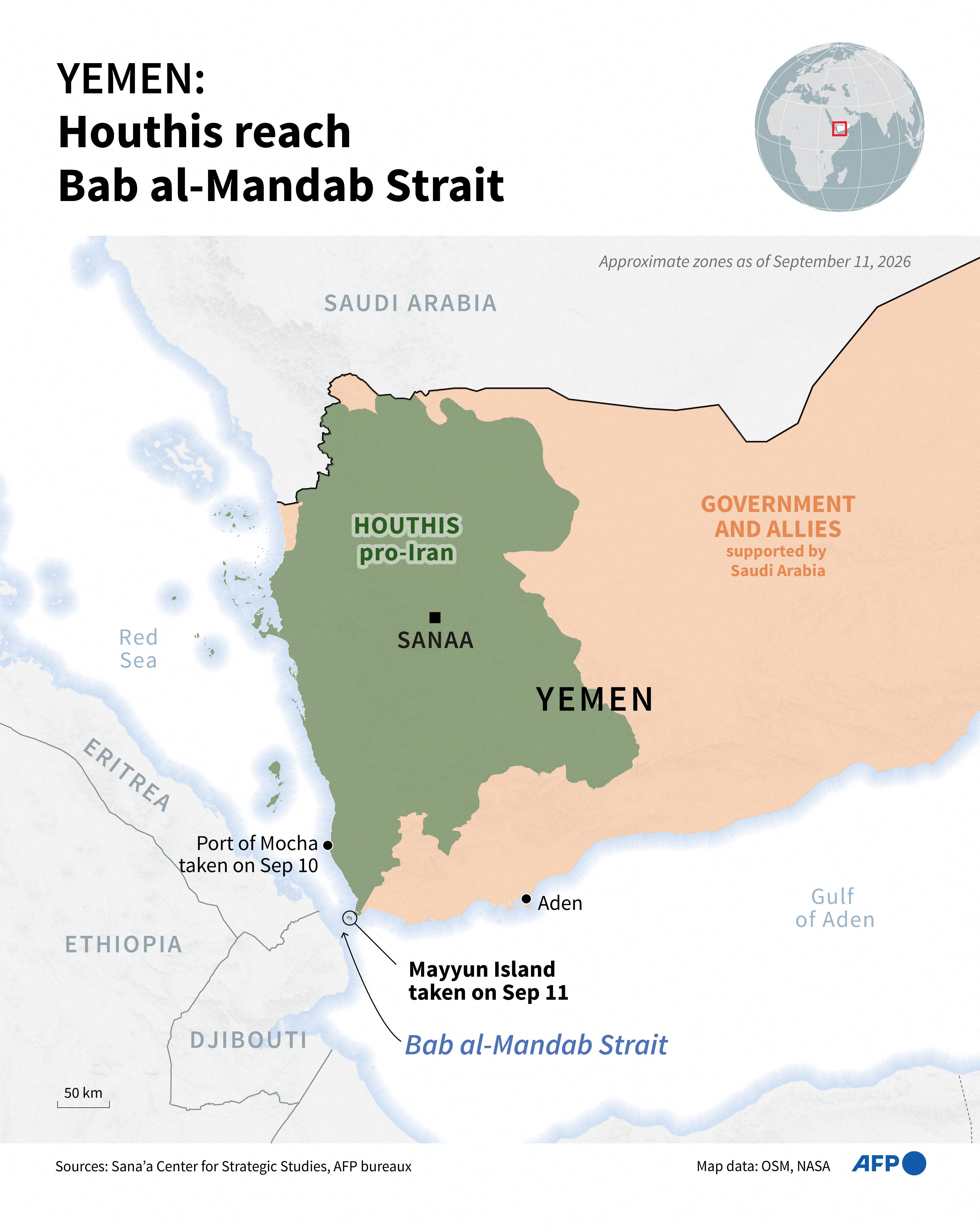
Yemeni government forces say they have made strategic gains in Marib as part of “Dawn of Yemen,” an offensive launched just over a week ago by forces backed by Saudi Arabia. The campaign follows major Houthi advances in September, when the Iran-backed group captured Mocha and areas near the Bab al-Mandeb, a vital international shipping route. Presidential Leadership Council chairman Rashad al-Alimi says the operation aims to retake all Houthi-held territory, including Sanaa, which the Houthis have controlled since 2014.
In Marib, government forces report taking high ground around Maas camp in Medghal and capturing positions north of Harib. They say air, drone, artillery and rocket attacks have struck Houthi positions and reinforcements. A government military spokesperson claimed the campaign had carried out 1,879 strikes, neutralised 950 Houthi fighters and destroyed 380 military vehicles. Houthi-affiliated media, meanwhile, reported strikes in Hodeidah and Amran governorates.
The article also describes intensified fighting in Taiz, where government troops and resistance fighters are battling Houthis across several fronts. Government sources say they captured 81 Houthi fighters in al-Dhabab, while a Southern Giants Brigades source reported a Houthi ballistic missile attack on Jabal Kahboub. No casualties were reported from that strike.
The fighting and siege of Taiz have worsened civilian hardship. Mortar shelling in a residential neighbourhood caused deaths, injuries and property damage, while shortages of fuel, medicines and medical supplies threaten health services. A rights group documented 43 alleged Houthi violations in 24 hours, reporting five civilians killed and 17 wounded, and said more than 180 projectiles had been fired at residential areas. Reported incidents include the death of a five-year-old girl, damage to homes, vehicles and a mosque, and a strike that damaged al-Safwa Hospital and injured at least one person. The rights group urged the UN and international community to act to protect civilians.
Entities: Yemen, Taiz, Marib, Sanaa, Rashad al-Alimi • Tone: analytical • Sentiment: negative • Intent: inform
13-10-2026
The Saudi Arabia-led coalition said it intercepted three missiles launched by the Houthis: one aimed at Riyadh and two at Khamis Mushait in southwestern Saudi Arabia. Residents of Riyadh reported explosions on Monday night after receiving a warning of an aerial threat. The Houthis said Riyadh’s King Khalid International Airport was their target and claimed to have sent a drone toward a military airbase near Khamis Mushait. Their spokesman warned airlines and travellers against using Saudi airports, with Mecca and Medina excepted.
The attacks follow strikes over the weekend that killed at least 14 people and injured more than 300. The airport in Riyadh remains closed, and airlines have cancelled or suspended services. The Houthis have also attacked Saudi oil facilities. The violence is part of the wider conflict in Yemen, where the Houthis are fighting forces aligned with the internationally recognised government, backed by a Saudi-led coalition. The article links the escalation to regional tensions surrounding the US-Israeli war on Iran.
Saudi Energy Minister Prince Abdulaziz bin Salman said the attacks tested the kingdom’s resilience, while insisting that investment and Crown Prince Mohammed bin Salman’s Vision 2030 economic diversification plan must continue. Saudi authorities are investigating how the weekend barrage reached the airport. Officials told the Associated Press that an initial inquiry indicated drones may have been used to clear a route for cruise and ballistic missiles. Investigators are also examining why the attack was not detected sooner, given the weapons travelled more than 1,000 kilometres.
US President Donald Trump criticised the Houthis but did not signal intervention. A Houthi official warned that US involvement would prompt retaliation and described Saudi airports and oil facilities as legitimate targets. The insecurity has disrupted aviation and put major Riyadh events under pressure. Etihad and Gulf Air cancelled flights, while Delta delayed a planned Atlanta–Riyadh service.
Entities: Houthis, Saudi Arabia-led coalition, Riyadh, King Khalid International Airport, Khamis Mushait • Tone: analytical • Sentiment: negative • Intent: inform
13-10-2026
The supplied content does not include the liveblog’s 23 updates or any substantive article text. It consists of the headline, “Iran war live: Trump says Houthis ‘misbehaving’ as Riyadh flights halted,” followed by website advertising and an alert prompt. The headline indicates that the liveblog concerns the US-Israel war on Iran and highlights two developments: Donald Trump’s comment that the Houthis were “misbehaving,” and flights being halted in Riyadh. The provided material does not explain what prompted Trump’s remark, which flights were halted, how long the disruption lasted, or whether the two events were connected. It also contains no reporting, quotes beyond the headline, or additional context from which to assess the developments. Accordingly, a fuller summary of the article and its 23 updates cannot be produced without the missing text. The available headline frames the content as a developing news story, while the body supplied here is limited to advertising and a notification prompt.
Entities: Iran war, Donald Trump, Houthis, Riyadh, Flight halt • Tone: neutral • Sentiment: neutral • Intent: inform
13-10-2026
Yemen’s internationally recognised government says it carried out nine air strikes against Houthi positions and military equipment in Taiz governorate on Tuesday: five in Dhubab district and four in al-Masrakh district. Fighting is also continuing in al-Shaqab, south of Taiz, according to a media centre affiliated with the Ministry of Defence. The Yemeni Network for Rights and Freedom alleges that Houthi shelling killed at least five civilians, including a five-year-old girl, and injured 17 others in Taiz over the preceding 24 hours. It also says at least seven homes were damaged and more than 180 projectiles were fired across the governorate.
The article places the latest clashes within Yemen’s long-running war, which began in 2014 when the Houthis seized Sanaa and the government fled. A Saudi-led coalition intervened in 2015. A UN-backed truce in 2022 halted most fighting, but tensions have since risen. The Houthis’ July declaration of a naval blockade affecting Saudi ports and shipping through the Bab al-Mandeb Strait, along with September advances on the strategic port city of Mocha and other western coastal areas, forms part of the recent escalation.
The International Committee of the Red Cross president, Mirjana Spoljaric, has warned that civilians are bearing an unacceptable cost, citing mounting deaths, displacement and damage to infrastructure. The UN reports at least 46 civilians killed and more than 130 injured in Yemen since August, while the International Organization for Migration says more than 200,000 people have been displaced since September.
The conflict is also affecting regional security and travel. Houthi missile attacks on Riyadh’s King Khalid airport reportedly killed at least 14 people over the weekend, prompting condemnation and a promise of a serious Saudi response. Qatar Airways and Emirates have cancelled flights to Saudi Arabia and neighbouring countries. German Chancellor Friedrich Merz discussed regional issues with Saudi Crown Prince Mohammed bin Salman, while Egyptian Foreign Minister Badr Abdelatty called for an end to Houthi attacks in talks with Iran’s foreign minister. The article notes that, although Iran provides the Houthis with financial and military support, some analysts believe Tehran has limited influence over the group.
Entities: Yemen, Taiz governorate, Houthis (Ansar Allah), Sanaa, Saudi Arabia • Tone: analytical • Sentiment: negative • Intent: inform
13-10-2026
The article traces how Yemen’s Houthi movement grew from a relatively small northern group into Iran’s most powerful regional proxy and a major threat to U.S. allies and international shipping. It says the Houthis have expanded their military capabilities with Iranian support, particularly since the Hamas-led attack on Israel on Oct. 7, 2023, and have learned to use layered drone and missile attacks to challenge air defenses. With Hamas and Hezbollah weakened by Israeli operations, the Houthis have become more prominent and resilient. Saudi Arabia is now facing the brunt of their attacks, including strikes that the article says killed at least 20 people at Saudi airports over the preceding week and attacks on oil infrastructure. Threats to the Bab el-Mandeb Strait, a key maritime chokepoint, are also contributing to concerns about energy prices and shipping. The article describes the movement’s origins in Yemen’s Zaydi Shiite community and its evolution from a cultural movement into an armed political force. After Yemen’s Arab Spring unrest, the Houthis built support in the north, seized Sanaa in 2014, and fought a Saudi-led coalition from 2015 to 2022. Iranian and Hezbollah advisers helped train the group and develop its capacity to manufacture weapons, though analysts say it remains reliant on Iran for advanced capabilities. Experts quoted in the article argue that the Houthis seek control of Yemen and political recognition, not merely retaliation against Saudi Arabia. The article also notes a report alleging that actors in northern Yemen used Anthropic’s Claude Code to develop guidance software for weapons, while emphasizing that there was no evidence those systems had become operational. Saudi Arabia has asked the United States to join military operations; President Trump said he was considering the request.
Entities: Houthi movement, Iran, Saudi Arabia, United States, Bab el-Mandeb Strait • Tone: analytical • Sentiment: negative • Intent: analyze
13-10-2026
The article examines Saudi Arabia’s difficulty in stopping escalating Houthi attacks on its territory and infrastructure. It reports deadly missile strikes on Riyadh’s airport, further attacks on other airports and oil facilities, and damage to the East-West oil pipeline. Saudi Arabia has responded by targeting Houthi military sites, while its energy minister has warned of consequences for energy security. Yet the Saudi-led intervention in Yemen from 2015 to 2022 failed to defeat the Houthis, and the coalition that once supported it has weakened, including the withdrawal of Emirati troops.
The Houthis control much of northern Yemen and parts of the western coast, enabling them to threaten Red Sea shipping and the Bab el-Mandeb Strait. Analysts describe the conflict as asymmetric: Saudi Arabia has advanced weapons and substantial military spending, but the Houthis can impose costs through missiles, drones and disruption without winning a conventional war. A ground campaign might be needed to defeat them, but Saudi Arabia lacks experience conducting such operations abroad. The kingdom’s more immediate priorities may be protecting infrastructure, limiting its vulnerability and preserving the stability needed for its Vision 2030 reforms.
Saudi Arabia is seeking wider support. The United Kingdom and France have offered forms of military assistance, while the United States’ position may be changing. The UAE has voiced support for stronger Gulf security cooperation. Pakistan and Turkey, both linked to Saudi Arabia through the Mecca Joint Defense Agreement, have offered or reportedly provided limited support, although reports of Pakistani airstrikes are denied by Islamabad. Turkey rules out an offensive operation but is providing air defense equipment. The effectiveness of this support remains uncertain and may depend on greater coordination among partners and Yemeni government forces. Iran has offered to mediate, but Saudi Arabia may doubt Tehran’s neutrality and its ability to influence the Houthis. The article concludes that Riyadh faces a costly conflict with no clear path to a decisive military victory.
Entities: Saudi Arabia, Houthi militia, Yemen, Riyadh International Airport, Red Sea • Tone: analytical • Sentiment: negative • Intent: analyze
13-10-2026
Cristiano Ronaldo and other footballers expressed support for Saudi Arabia after a missile alert delayed Al-Nassr’s Asian Champions League Elite match in Riyadh by an hour. The alert came about 15 minutes before kickoff, prompting players to wait in the dressing rooms while spectators remained in the stands. Saudi authorities said a Saudi-led coalition had intercepted and destroyed a ballistic missile fired toward the capital, and Civil Defence later said the danger had passed.
Al-Nassr went on to beat Uzbekistan’s Neftchi Fergana 3-1 at Al-Awwal Park. After the match, Ronaldo waved a scarf bearing the Saudi flag and joined teammates in applauding supporters; before kickoff, he had kissed the Saudi national emblem on his shirt. The club also shared a remark from a 2025 interview in which Ronaldo said, “I’m Portuguese, but I belong to Saudi Arabia.” His goal was the 981st of his career, leaving him 19 short of 1,000. The win was Al-Nassr’s first of the campaign after an opening 4-0 loss to Al-Ain.
The match took place amid deadly Houthi attacks on Riyadh’s King Khalid International Airport. Saudi authorities said attacks over the weekend killed 14 people and wounded more than 300; the airport remained closed. Saudi officials told the Associated Press that investigators were examining how missiles and drones had breached the country’s air defences. The article also describes renewed fighting in Yemen after four years of relative calm, following an offensive by forces allied to the internationally recognised government and backed by Saudi Arabia against the Iran-aligned Houthis. Al-Ahli Saudi defender Merih Demiral offered condolences, calling Saudi Arabia his second home and saying his thoughts, prayers and heart were with those affected.
Entities: Cristiano Ronaldo, Al-Nassr, Neftchi Fergana, AFC Champions League Elite, Riyadh • Tone: neutral • Sentiment: negative • Intent: inform
13-10-2026
France’s embassy in Saudi Arabia advised French citizens on Tuesday, October 13, 2026, not to travel to or transit through the airports in Riyadh, Jeddah, and Dammam, and to avoid visiting those cities unless necessary. The warning followed a series of attacks by Yemen’s Iran-backed Houthi rebels against Saudi airports and oil facilities, amid escalating fighting with the Saudi-led coalition.
The embassy specifically named King Khalid International Airport in Riyadh, King Abdulaziz Airport in Jeddah, and King Fahd Airport in Dammam. Riyadh’s airport remained closed after a deadly missile strike on Saturday that the Houthis claimed. The attacks have disrupted air travel in Saudi Arabia and are described as part of a spillover from the wider regional confrontation between the United States and Iran.
The article says Saudi Arabia has recently conducted strikes against the Houthis and is supporting a Yemeni government counteroffensive after the group seized strategic territory along Yemen’s Red Sea coast last month. On Tuesday, the Saudi-led coalition called on civilians to evacuate the Yemen Oil Company’s Sabah central station in Sanaa ahead of a planned military operation, identifying the location on a map and citing civilian safety.
Houthi military spokesperson Yahya Saree warned that strikes on Sanaa would prompt a “harsh and painful” response in Riyadh. The Houthis also told employees and civilians near Saudi Aramco oil facilities to evacuate and stay away, declaring the facilities legitimate targets. The report presents the embassy warning and the escalating military and security developments without advocating a particular position.
Entities: French embassy in Saudi Arabia, Saudi Arabia, Riyadh, Jeddah, Dammam • Tone: neutral • Sentiment: neutral • Intent: inform
13-10-2026
President Donald Trump warned the Iran-backed Houthi group against further attacks on Saudi Arabia after a deadly strike on King Khalid International Airport in Riyadh. Asked whether he might seek military assistance from Turkish President Recep Tayyip Erdoğan to attack the Houthis, Trump said, “I might do it,” and expressed confidence that Erdoğan would do as he asked. The airport attack, which took place over the weekend, killed 12 people, including one American, and injured more than 300. A Houthi spokesperson celebrated the assault and described airports as a “theatre of operations,” while blaming Saudi Arabia for failed interceptions. The Houthis subsequently launched more missile and drone attacks against the kingdom.
Trump said the United States was weighing retaliation, but has not attacked the Houthis since a May 2025 cease-fire halted their strikes on US vessels in the Red Sea. He called the Riyadh attack “terrible.” Secretary of State Marco Rubio strongly condemned the Houthis, described the attacks as showing disregard for civilian life, called for them to stop, and expressed support and condolences for Saudi Arabia and the victims’ families.
The article says the strike was the deadliest civilian attack since Operation Epic Fury began on Feb. 28. It places the renewed Houthi attacks within Yemen’s long-running civil war, which dates to 2014. Iran has backed the Shia Muslim Houthis, who control the capital, Sana’a, and much of western Yemen. Saudi Arabia, the United States, and many Western countries have supported Yemen’s internationally recognized government, which is predominantly Sunni and controls the rest of the country, including the port city of Aden.
Entities: Donald Trump, Recep Tayyip Erdoğan, Marco Rubio, Houthis, Saudi Arabia • Tone: neutral • Sentiment: negative • Intent: inform
13-10-2026
The Saudi-led coalition called on civilians to evacuate the Yemen Oil Company’s Sabah central station in Sanaa on Oct 13, ahead of a planned military operation. Its joint forces command identified the facility on a map and said people should leave for their safety. The warning came amid escalating exchanges between the coalition and Yemen’s Iran-aligned Houthi movement.
Houthi military spokesman Yahya Saree warned that strikes on Sanaa would prompt a “harsh and painful” response in Riyadh. The Houthis also told employees and civilians near Saudi Aramco oil facilities to evacuate, describing those sites as legitimate targets.
The article links the escalation to a wider regional conflict involving the United States and Iran. It says the Houthis have attacked Saudi airports and oil facilities since the previous week, while Saudi Arabia has recently carried out strikes against the Houthis and supported a Yemeni government counter-offensive. That offensive followed the Houthis’ seizure of strategic territory along the Red Sea coast in September.
The fighting has disrupted air travel in Saudi Arabia. Riyadh airport remained closed after a deadly missile strike on Saturday that the Houthis claimed. The coalition’s evacuation order and the Houthis’ reciprocal warnings reflect the risk to civilians and facilities as the conflict intensifies.
Entities: Saudi-led coalition, Yemen Oil Company, Sabah central station, Sanaa, Yahya Saree • Tone: neutral • Sentiment: negative • Intent: inform
13-10-2026
The National’s editorial argues that escalating attacks by Iran-backed Houthis on Saudi Arabia demonstrate the need for stronger collective security and cooperation among Gulf and Arab states. It cites diplomatic adviser Dr Anwar Gargash’s call for stronger Gulf defence and says the attacks on Riyadh’s King Khalid International Airport impose human costs while threatening the region’s wider prosperity. Because Gulf economies depend on shared transport links, energy infrastructure, shipping routes and investor confidence, disruption in one country can affect airlines, businesses, investors and neighbouring economies. Aviation is especially exposed: the Gulf’s role as a hub connecting Europe, Asia and Africa relies on dependable routes, and attacks can force rerouting, raise costs and undermine tourism, trade and international connections. The editorial also stresses environmental risks. Damage to oil facilities, tankers or other energy infrastructure could cause pollution that crosses borders, with particularly grave consequences in the already pressured marine environment and the confined Strait of Hormuz. It proposes joint environmental response arrangements and plans to protect critical infrastructure as practical ways to improve resilience. Such cooperation, the article cautions, need not require Gulf countries to abandon national priorities or settle every disagreement. Rather, it should build on longstanding social ties and acknowledge that economic interdependence creates both shared prosperity and a need for common responses to threats. The editorial concludes that ideological actors’ attacks may ultimately encourage Arab neighbours to align their approaches to regional challenges.
Entities: Dr Anwar Gargash, Sheikh Mohamed, The National, Iran, Iran-backed Houthis • Tone: analytical • Sentiment: neutral • Intent: persuade
13-10-2026
The supplied page is a live-news headline listing dated October 13, 2026, rather than a full article: it contains no detailed reports, quotations beyond one headline attribution, or supporting context. Its lead headline says Yemen’s Houthis threatened a “painful” response to any attack on Sanaa following a coalition warning. Other listed updates say the Houthis warned employees and civilians near Saudi Aramco facilities to evacuate, and that Saudi Arabia intercepted three drones heading toward Riyadh. The headlines also mention Turkish President Recep Tayyip Erdogan telling the Saudi Crown Prince that the Houthi challenge would be overcome, and Qatar’s Emir saying the country would defend its sovereignty without being drawn into war.
The page’s other headlines broaden the picture to regional and international security concerns. They include an accusation that Iran is waging a “systematic campaign” against the UK; Etihad extending cancellations of Riyadh flights until October 19; and reports about a possible US role in Saudi strikes following an attack on Riyadh airport. Video titles refer to missile-strike footage, comments by Saudi officials and US President Donald Trump, missing Indian seafarers after a drone attack in the Gulf of Oman, and a US military action against a cargo ship said to have breached an Iran blockade. An IMF-related video headline warns of economic risks if Gulf recovery depends on the Strait of Hormuz.
Taken together, the listed items portray a tense regional situation involving drone and missile threats, possible military escalation, travel disruption, and economic uncertainty. However, because the provided content consists almost entirely of headlines and video titles, it does not establish the underlying facts, sequence of events, or the parties’ fuller positions. The summary therefore reflects only what the page’s supplied headlines state.
Entities: Houthis, Sanaa, Saudi Arabia, Riyadh, Saudi Aramco • Tone: urgent • Sentiment: negative • Intent: inform
13-10-2026
This page is presented as a live Middle East news update dated October 13, 2026. Its main headline reports that a Saudi-led coalition says it intercepted two ballistic missiles aimed at a southern city. The accompanying headline list also says the Houthis claimed a ballistic missile strike on Riyadh airport, Etihad extended cancellations of Riyadh flights through October 19, and a tanker was attacked in the Strait of Hormuz, according to the UK maritime agency. Other listed developments include a condemnation of Iran by the United States, Britain, France and 26 other countries over alleged attacks, and an IMF reduction to its 2026 growth forecasts for Gulf economies.
The page includes additional video and update teasers concerning victims of Houthi attacks on Riyadh, footage of a missile strike at Riyadh airport, remarks by a Saudi minister, missing Indian seafarers after a drone attack in the Gulf of Oman, and US military action against a cargo ship said to have breached an Iran blockade. Further teasers refer to President Donald Trump considering participation in Saudi strikes, comments about Iran, Israel’s military line in Syria, aircraft moved from a UK base, and Yemeni forces’ claim to control the Bab Al Mandeb strait.
The supplied page text contains no full article paragraphs or detailed reporting behind these headlines. It therefore establishes the range of reported regional security, diplomatic, aviation and economic developments, but does not provide enough information to verify details, explain the events, or describe responses beyond the wording of the teasers.
Entities: Saudi-led coalition, Houthis, Saudi Arabia, Riyadh airport, Etihad • Tone: neutral • Sentiment: neutral • Intent: inform
13-10-2026
Riyadh’s daily activity has continued despite deadly Houthi attacks on the city’s airport, but the strikes have significantly disrupted air travel and prompted schools to move online. King Khalid International Airport is closed until midnight on October 17 after attacks on Saturday and Sunday killed 14 people in total and injured more than 300. The closure is one of the most serious disruptions to Saudi aviation in years, amid wider regional conflict and rising fuel costs.
Residents told The National that traffic remains heavy and many offices are open, although some employers have offered remote work and people near the airport heard explosions. Several public events are still expected to proceed, and a Saudi Clasico football match drew about 22,800 spectators. The Misk Global Forum, however, has been cancelled because of organisational and logistical challenges.
Schools in Riyadh have been directed to use remote learning for a week, the second such move in less than a month. The Houthis have warned of further attacks, and both sides have reported missile activity near the capital. Saudi Arabia has vowed to respond, while US President Donald Trump condemned the attacks and said Washington is considering joining Saudi strikes against the militants.
The airport closure has forced travellers to improvise: one resident drove to Dammam, flew to Jeddah and continued to Paris. Another resident raised concerns about a gap in public warning messages, saying alerts had resumed only on Monday after he had received none since September 19. Authorities later urged residents to update their phone operating systems to ensure they receive warnings. The article describes a city balancing outward normality with disruption and uncertainty as the threat of further attacks—and a broader conflict involving the US—remains.
Entities: Riyadh, King Khalid International Airport, King Abdulaziz International Airport, Houthi attacks, Saudi Arabia • Tone: analytical • Sentiment: negative • Intent: inform
13-10-2026
According to a report by Israeli newspaper Haaretz, Prime Minister Benjamin Netanyahu is seeking Saudi Arabia’s approval for Israel to join a military campaign against Yemen’s Iran-backed Houthi rebels. The United States is reportedly mediating between Israel and Saudi Arabia. A diplomatic source cited by Haaretz said Saudi Crown Prince Mohammed bin Salman opposes Israeli participation, concerned that it could provoke a public backlash in the kingdom. Another source said Netanyahu’s proposal may also be intended to improve relations with Riyadh and prepare the ground for a future normalisation agreement.
The diplomatic effort faces longstanding obstacles. US President Donald Trump has advocated normalising Saudi-Israeli relations under the Abraham Accords, and a deal appeared close in 2023. That prospect was derailed by Hamas’s October 7 attack and the ensuing war in Gaza. Saudi Arabia has said it will not normalise relations without substantial progress toward establishing a Palestinian state, while Netanyahu opposes Palestinian statehood.
The reported initiative comes amid an escalation in Houthi attacks on Saudi Arabia, including strikes on Riyadh’s King Khalid International Airport. The article reports that a ballistic missile strike on Saturday killed at least 12 people and injured 309; an attack on Sunday killed one person and wounded another. Netanyahu condemned Saturday’s airport attack as a “horrific terrorist attack” and expressed condolences to the victims’ families on Israel’s behalf.
Houthi attacks have also targeted Saudi airports and oil installations. The conflict has heightened concerns about regional security and the safety of important shipping routes, particularly the Bab el-Mandeb Strait, through which a significant share of global trade passes. The article concludes that Israeli involvement could complicate Riyadh’s position, given domestic opposition to closer ties with Israel and the unresolved Palestinian issue. Saudi approval remains a major obstacle to Netanyahu’s reported effort.
Entities: Benjamin Netanyahu, Mohammed bin Salman, Donald Trump, Saudi Arabia, Israel • Tone: analytical • Sentiment: neutral • Intent: inform
13-10-2026
The supplied text is only a headline, byline, and opening sentence, not the full article, so a comprehensive 200–400-word summary cannot be produced without inventing information. The headline frames Saudi Arabia as facing the costs of a U.S. war on Iran after Houthi strikes on Riyadh, and poses a strategic question: should Saudi Arabia fight the Houthis to secure a win or pursue peace? The opening says that, for weeks, Saudi Arabia has promoted the attendance of prominent business leaders—including JPMorgan Chase CEO Jamie Dimon and BlackRock’s Larry Fink—at lavish investment conferences in Riyadh. Those events are presented as a showcase for the country’s economic potential despite regional war. The excerpt therefore juxtaposes Saudi Arabia’s efforts to attract investment and project economic confidence with a worsening regional conflict and difficult security choices. It does not provide the article’s reporting, evidence, or answer to the question in the headline.
Entities: Houthis, Riyadh, Saudi Arabia, United States, Iran • Tone: analytical • Sentiment: neutral • Intent: analyze