13-08-2026
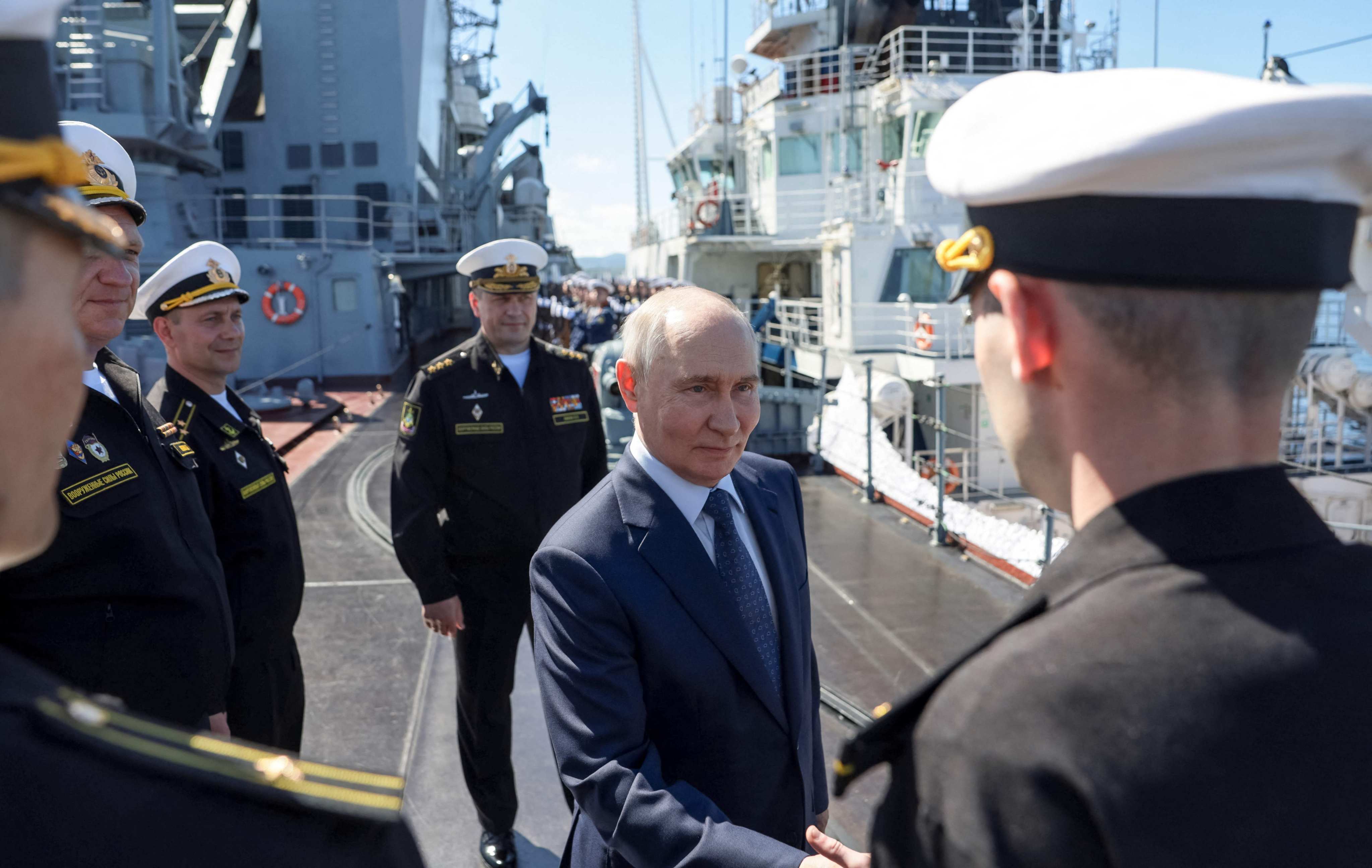
Japan has formally protested Russian President Vladimir Putin’s visit to Iturup, one of the four southern Kuril islands claimed by both Russia and Japan. The visit, reported by Russian state media, was Putin’s first trip to the disputed island chain. Japan refers to Iturup as Etorofu and regards the four southernmost islands as the Northern Territories, saying they are inherently Japanese territory under both historical claims and international law. Russia administers the islands.
The territorial dispute dates back to the end of World War Two, when the Soviet Union annexed the Kuril chain and deported approximately 17,000 Japanese residents. The disagreement has continued for decades and is the principal reason Russia and Japan have never signed a formal peace treaty to conclude their wartime relationship. Diplomatic efforts to settle the dispute have achieved little progress, while relations have deteriorated further since Japan imposed sanctions on Russia following its 2022 invasion of Ukraine.
During his visit, Putin reportedly sampled fish roe and spoke with local residents. Japan has previously condemned visits to the islands by senior Russian officials, including Prime Minister Mikhail Mishustin and former Prime Minister Dmitry Medvedev.
The islands also have substantial strategic importance for Russia. Moscow has expanded its military presence there over the past decade, and Iturup hosts Russia’s primary military air base in the region. Russian military exercises near the islands have repeatedly drawn criticism from Japan. In addition, Chinese and Russian naval vessels passed through a Kuril strait during a joint patrol the previous month, highlighting the broader security significance of the area, which lies between Japan’s northern island of Hokkaido and Russia’s Kamchatka Peninsula.
Entities: Vladimir Putin, Toshimitsu Motegi, Mikhail Mishustin, Dmitry Medvedev, Japan • Tone: analytical • Sentiment: negative • Intent: inform
13-08-2026
Russian President Vladimir Putin has visited the Kuril Islands for the first time, prompting a strong protest from Japan and highlighting a decades-old territorial dispute. State media reported that Putin traveled to Iturup, known as Etorofu in Japan, one of four islands claimed by Tokyo and referred to in Japan as the Northern Territories. During the visit, he toured a fish-processing plant and was reportedly given caviar.
The Soviet Union seized the four islands near the end of World War II in 1945 and deported approximately 17,000 Japanese residents. Around 20,000 Russian citizens now live on the islands. Japan maintains that the territories are historically and legally part of its territory, while Russia administers them. The dispute has prevented Moscow and Tokyo from signing a formal peace treaty to fully conclude World War II.
Japanese Foreign Minister Toshimitsu Motegi said the government was “greatly displeased” and strongly protested the visit, arguing that the Northern Territories are an inherent part of Japan under both history and international law. Russia and Japan’s relations have deteriorated further since Russia launched its full-scale invasion of Ukraine in 2022.
The Kuril Islands form a volcanic chain stretching from Russia’s Kamchatka Peninsula to Japan’s northern island of Hokkaido. Their strategic position made them important to the Soviet Union during the Cold War, when Moscow maintained a substantial military presence there amid tensions with the United States and Japan. Putin’s visit followed a trip to nearby Sakhalin, where Russia’s Pacific Fleet was conducting military exercises. Russian leaders have rarely visited the disputed islands; Dmitry Medvedev became the first president to do so in 2010 and returned in 2015 as prime minister. Negotiations over the territorial dispute, conducted since the Soviet Union’s collapse in 1991, have produced no resolution.
Entities: Vladimir Putin, Japan, Russia, Kuril Islands, Iturup/Etorofu • Tone: analytical • Sentiment: negative • Intent: inform
13-08-2026
Russian President Vladimir Putin visited the disputed Kuril Islands on August 13, 2026, prompting a strong protest from Japan. The islands, known in Japan as the Northern Territories, are claimed by both countries and have been under Russian control since the Soviet Union seized them in the final days of World War II in 1945. Tokyo maintains that the four islands—Kunashir, Habomai, Shikotan and Iturup—are historically and legally part of Japanese territory.
The Kremlin released video of Putin’s visit, while Russian media reported that he toured a fish-processing plant and was presented with caviar. The trip followed Putin’s visit to Sakhalin, where Russian naval exercises were taking place. He also chaired a meeting on safeguarding Russia’s eastern borders, underscoring the strategic and security significance of the region.
Japanese Foreign Minister Toshimitsu Motegi said the government strongly opposed the visit, arguing that the Northern Territories belong to Japan under both history and international law. Relations between Tokyo and Moscow have deteriorated further since Russia’s full-scale invasion of Ukraine in 2022, while Russia has strengthened ties with China and North Korea.
The four islands form part of the volcanic Kuril chain, which stretches from Russia’s Kamchatka Peninsula toward Japan’s northern island of Hokkaido. Around 20,000 Russian citizens live there in a harsh climate, and the area contains valuable fishing grounds and mineral deposits such as gold and silver. Moscow deported approximately 17,000 Japanese residents after occupying the islands in 1945 and has maintained a military presence there since the Soviet era.
Negotiations over the territorial dispute have repeatedly stalled. Although diplomatic relations were established in 1956 and Soviet leader Nikita Khrushchev suggested that two islands might be returned under a peace treaty, no agreement has been reached. Putin’s visit follows earlier trips by Dmitry Medvedev, who became the first Russian president to visit the disputed territory in 2010.
Entities: Vladimir Putin, Japan, Russia, Kuril Islands / Northern Territories, Hokkaido • Tone: analytical • Sentiment: negative • Intent: inform
13-08-2026
Russian President Vladimir Putin made his first reported visit to the Kuril Islands, a disputed archipelago administered by Russia but also claimed by Japan, prompting a strong diplomatic protest from Tokyo. The islands are known in Japan as the Northern Territories and have been a longstanding source of tension between the two countries. The Soviet Union seized them in 1945, and the territorial dispute has contributed to strained Russian-Japanese relations for decades.
The Kremlin released video showing Putin in the Kurils. Russian media reported that he visited a fish-processing plant, where he was presented with caviar. His trip followed a visit to Sakhalin, a nearby Russian island where the Russian navy was conducting military drills. During his time in Sakhalin, Putin chaired a meeting focused on ensuring the security of Russia’s eastern borders, according to RIA Novosti.
The visit comes amid a broader deterioration in relations between Moscow and Tokyo following Russia’s full-scale invasion of Ukraine in 2022. Japan has joined international criticism and sanctions against Russia, while Moscow’s relations with China and North Korea have grown closer. Against this geopolitical backdrop, Putin’s presence in the disputed islands carries both symbolic and strategic significance, reinforcing Russia’s claim to the territory and highlighting the security importance Moscow attaches to its Pacific and eastern regions.
The article does not provide details of Japan’s specific diplomatic response beyond describing it as a strong objection. It also does not report any negotiations or changes to the territorial dispute. Instead, it presents the visit as a notable development in the continuing dispute and as part of Putin’s broader inspection of Russia’s eastern military and economic infrastructure.
Entities: Vladimir Putin, Kuril Islands, Japan, Northern Territories, Soviet Union • Tone: analytical • Sentiment: negative • Intent: inform
13-08-2026
Russian President Vladimir Putin visited Iturup, one of the Kuril Islands claimed by both Russia and Japan, according to Russian media. The visit marked what state news agency TASS described as Putin’s first in-person trip to the island chain. Iturup lies near Japan’s Hokkaido and is known in Japan as Etorofu, part of the Northern Territories.
The disputed islands have prevented Russia and Japan from signing a formal peace treaty to conclude World War II. Japan maintains that the northern territories are inherently Japanese, while Russia administers the islands. Japan’s Foreign Minister Toshimitsu Motegi protested the visit on social media, saying the territories belonged to Japan historically and under international law.
During his visit, Putin toured the Yasny fish-processing plant, where he observed tuna and halibut and discussed fishing and fish migration with local officials. He also sampled local fish roe and spoke informally with residents, remarking on the island’s pleasant weather and comparing it to a resort.
The trip followed Putin’s supervision of naval drills in Russia’s Far East. It also came a day after North Korea, a Russian ally, launched a ballistic missile toward waters off the eastern Korean Peninsula. The missile firing occurred shortly before major joint military exercises planned by South Korea and the United States, exercises that Pyongyang has repeatedly condemned.
The visit combines a symbolic assertion of Russian control over the disputed territory with broader regional military activity, highlighting continuing tensions involving Russia, Japan, North Korea, South Korea and the United States.
Entities: Vladimir Putin, Russia, Japan, Iturup (Etorofu), Kuril Islands • Tone: analytical • Sentiment: neutral • Intent: inform
13-08-2026
Russian President Vladimir Putin has made his first personal visit to the disputed Kuril Islands, travelling to Iturup as relations between Russia and Japan deteriorate over the war in Ukraine. The visit followed Putin’s inspection of Pacific Fleet exercises in Russia’s Far East and came shortly after North Korea, a close Russian partner, launched a ballistic missile toward waters off the Korean Peninsula.
Iturup is one of four southern Kuril Islands claimed by Japan, which calls them the Northern Territories and considers them Japanese territory under history and international law. During the visit, Putin toured a fish-processing plant, observed fishing operations, sampled fish roe and met local residents. Russia’s state media described the trip as his first visit to the Kuril island chain, although he had previously travelled to Sakhalin.
The territorial dispute began when Soviet forces seized the islands in the final days of World War II. Russia has retained control and maintains a military presence there, while Japan says about 17,000 Japanese residents were displaced after the 1945 occupation. The islands are strategically located between the Russian Far East and northern Japan and contain valuable fishing grounds and mineral deposits.
Japan’s Foreign Minister Toshimitsu Motegi strongly protested Putin’s visit. The dispute has prevented Moscow and Tokyo from signing a formal peace treaty ending their World War II conflict. Attempts at resolution, including a 1956 proposal to return two islands, have produced no settlement.
Relations worsened after Japan joined Western sanctions against Russia following the 2022 invasion of Ukraine. Moscow suspended peace treaty negotiations and related economic cooperation, while Putin accused Japan of abandoning previously constructive relations. His visit occurred amid expanded Russian military activity in the Asia-Pacific, North Korean missile activity and continuing fighting in Ukraine, including Ukrainian claims of territorial gains and attacks on Russian infrastructure.
Entities: Vladimir Putin, Russia-Japan territorial dispute, Kuril Islands/Northern Territories, Iturup, Kunashir, Shikotan and Habomai Islands • Tone: analytical • Sentiment: negative • Intent: analyze