13-08-2026
Polls have opened in Zambia’s presidential election, with incumbent President Hakainde Hichilema seeking a second five-year term. Voting began at 6am local time and is scheduled to continue for 12 hours, with 8.7 million registered voters eligible to participate. The election is largely focused on economic conditions and whether Hichilema’s reforms have improved everyday life.
Although inflation fell to 6.8 percent in April and Zambia’s kwacha strengthened, food and energy prices remain high. More than 70 percent of the country’s 22 million people live on less than $3 a day, according to World Bank data, while unemployment is approximately 10 percent. Hichilema is campaigning on job creation and an ambitious infrastructure program, but his government has faced criticism over the limited space for dissent and concerns about democratic freedoms.
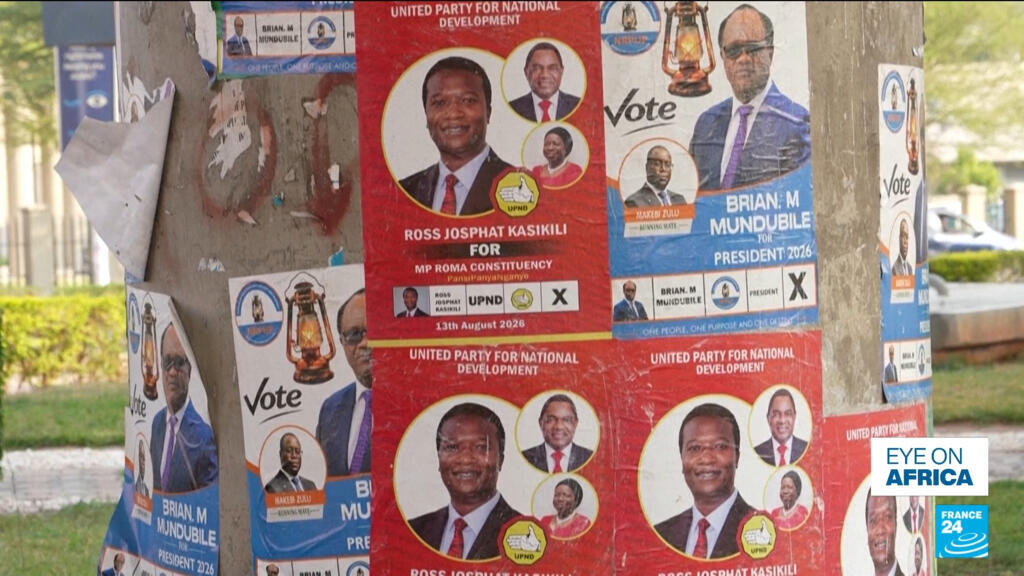
Hichilema, a 64-year-old businessman, won the 2021 election on his sixth attempt. His main challenger is Brian Mundubile, a former minister in the Patriotic Front government that ruled Zambia from 2011 to 2021. Mundubile entered the race in May and is running under the newly formed NRPUP, backed by an alliance of opposition parties with political roots in the former governing party.
Mundubile has accused the government of restricting his party’s campaign and said he does not consider the election free and fair. He has promised a “national reset” and reconciliation, arguing that political divisions are obstructing development.
Voters are also choosing members of parliament for 226 seats, an increase from the previous 156. Electoral support has traditionally followed regional patterns, with Hichilema’s party strongest in southern and western Zambia, while the Patriotic Front retains support in the north and Copperbelt. Presidential results are expected by August 17, and a candidate must win more than 50 percent of the vote to avoid a runoff.
Entities: Zambia, Hakainde Hichilema, Brian Mundubile, Brian Muntayalwa Mundubile, NRPUP party • Tone: analytical • Sentiment: neutral • Intent: inform
13-08-2026
Zambians are scheduled to vote in a general election on Thursday, with President Hakainde Hichilema widely expected to win a second term. Hichilema, who has led the southern African copper-producing country since 2021, is campaigning on his administration’s economic record. His government helped steer Zambia through debt restructuring and an economic recovery after the country defaulted on its sovereign debt in 2020. Inflation has also fallen to its lowest level in years.
Despite these improvements, many voters say they have not experienced meaningful benefits in their daily lives. The rising cost of living remains a major concern, and investors are focused on whether Hichilema could convert the country’s macroeconomic recovery into job-creating growth during a second term.
Hichilema’s principal challenger is Brian Mundubile, an experienced parliamentarian and first-time presidential candidate. Mundubile leads an opposition alliance supported by followers of Hichilema’s predecessor, the late Edgar Lungu. However, analysts say the opposition is weakened by internal divisions. Candidates from Mundubile’s party and those of his running mate are reportedly competing against one another in some constituencies, reducing the alliance’s ability to challenge the ruling United Party for National Development (UPND).
Presidential, parliamentary and local elections will take place simultaneously. A candidate must secure more than 50 percent of the presidential vote to win outright; otherwise, the top two candidates will compete in a runoff. Opposition parties retain support in Lusaka and Copperbelt Province, but analysts believe a united opposition could have made the race much more competitive.
The election has also been preceded by allegations of political repression, which the government denies. Freedom House rates Zambia as “partly free,” citing obstacles facing opposition parties. Polls are scheduled to open from 6 a.m. to 6 p.m., with results expected on Monday. Any runoff must take place within 37 days of the initial vote.
Entities: Zambia, Hakainde Hichilema, Brian Mundubile, Edgar Lungu, United Party for National Development (UPND) • Tone: analytical • Sentiment: neutral • Intent: inform
13-08-2026
Zambia’s election campaign is being shaped by the unresolved political conflict between incumbent President Hakainde Hichilema and the late former president Edgar Lungu. Hichilema defeated Lungu decisively in 2021 and is seeking a second term, but tensions between their families and supporters have continued since Lungu died in South Africa in June 2025. A legal dispute over Lungu’s burial, including the government’s attempt to prevent his family from managing the funeral without Hichilema’s involvement, has kept the rivalry central to national politics. South Africa’s supreme court of appeal ultimately ruled in favor of Lungu’s family.
The opposition Tonse Alliance, led by former Lungu government chief whip Brian Mundubile, has promised to return Lungu’s body to Zambia for a dignified burial. Mundubile’s running mate, Makebi Zulu, represented the Lungu family during the burial dispute. Analysts say the controversy has damaged Hichilema’s public image because respect for the dead is culturally important in Zambia.
The opposition has also accused Hichilema’s government of authoritarian behavior, including raids on opposition offices, arrests, and interference with rallies. The ruling United Party for National Development rejects the allegations and contrasts the current campaign with what it describes as Lungu’s repression of Hichilema and the opposition before the 2021 election. However, monitors and activists have reported police disruptions of opposition events and the closure of peaceful demonstrations during Hichilema’s term.
Hichilema remains the clear electoral favorite. His government has stabilized the economy after Zambia’s 2020 debt default, reduced inflation, introduced free primary and secondary education, attracted investment into the copper sector, and increased student allowances. Yet many voters say they have not felt the benefits because prices have nearly doubled since 2021, leaving the cost of living as a major vulnerability for the president. Nearly 8.8 million registered voters are also choosing members of parliament and local councillors.
Entities: Zambia, Hakainde Hichilema, Edgar Lungu, Brian Mundubile, Makebi Zulu • Tone: analytical • Sentiment: neutral • Intent: analyze