13-08-2026
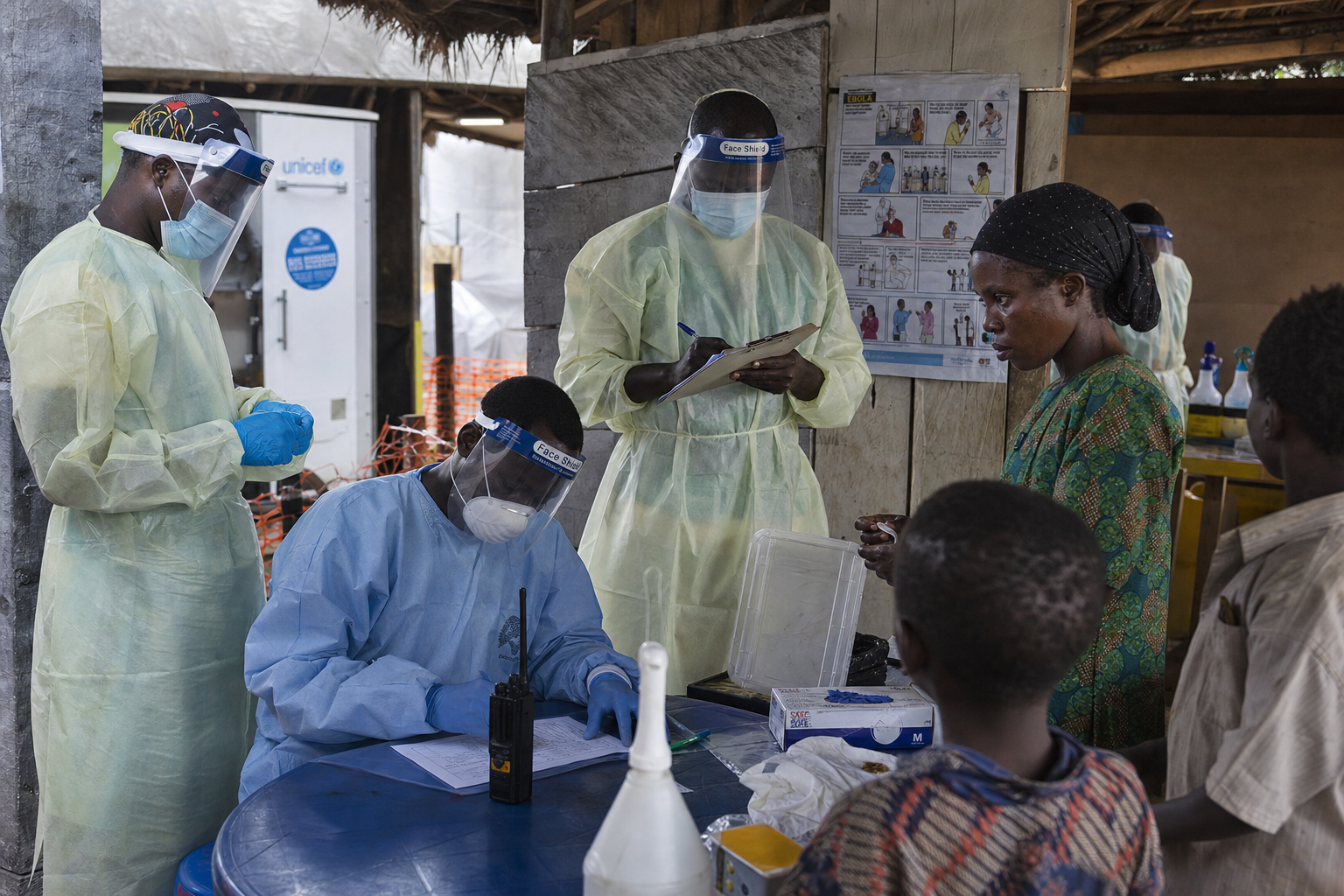
The Democratic Republic of Congo’s current Ebola outbreak is progressing toward becoming the deadliest recorded outbreak of the disease, according to World Health Organization Director-General Tedros Adhanom Ghebreyesus. He said the outbreak, at its current pace, could surpass the 2014–2016 Ebola epidemic, which killed at least 11,000 people. The current outbreak, officially declared on 15 May, has produced at least 4,300 cases and more than 2,000 deaths. Health officials believe transmission began several months earlier, possibly in February, when cases were reportedly misdiagnosed as malaria or typhoid.
The WHO hopes to bring transmission under control within three months, but emphasizes that this would not necessarily mean the outbreak had ended. Dr Mohamed Janabi, the WHO’s Africa director, said responders are struggling to keep up with the virus and are reaching only about 30% of cases. Conflict and regional instability in eastern DR Congo have made surveillance, treatment and containment more difficult.
The outbreak is caused by the rare Bundibugyo species of Ebola. Only two previous outbreaks of this species are known, and there are currently no approved vaccines or recognized therapeutic drugs specifically available for it. Ebola symptoms can appear two to 21 days after infection and may initially resemble flu or malaria, before progressing to vomiting, diarrhoea and potentially organ failure. Transmission occurs through contact with infected bodily fluids.
There is some progress on medical countermeasures. The UK Medicines and Healthcare products Regulatory Agency has authorized human trials of a Bundibugyo vaccine developed by the University of Oxford using technology from the Oxford-AstraZeneca Covid vaccine. Three other vaccine candidates are in development, while the WHO is sponsoring a clinical trial in DR Congo to assess whether two existing antiviral treatments improve survival.
Entities: Democratic Republic of Congo, Ebola virus, 2026 Ebola outbreak, World Health Organization (WHO), Tedros Adhanom Ghebreyesus • Tone: urgent • Sentiment: negative • Intent: inform
13-08-2026
The Ebola outbreak in the Democratic Republic of Congo has caused at least 2,011 deaths among 4,381 confirmed cases, according to newly released government data. The outbreak, declared on May 15, has become the fastest-spreading Ebola outbreak on record: deaths increased from 1,000 to more than 2,000 in only about three weeks, compared with roughly nine weeks for the first 1,000 fatalities.
The outbreak is already the second-largest in history, surpassed only by the 2014–2016 West Africa outbreak, which caused more than 28,000 cases and over 11,000 deaths. The World Health Organization has classified the crisis as a public health emergency of international concern after cases spread into neighboring Uganda. Responders are struggling to keep pace across five affected provinces, particularly in remote areas where rebel conflict, poor roads and work stoppages by unpaid health workers have delayed assistance.
Most new infections are being detected in people who were not among monitored contacts, making containment more difficult. The outbreak is also unusual because it is caused by the relatively rare Bundibugyo virus, for which no vaccines or treatments have been approved. Clinical trials for potential interventions have begun in Ituri, the outbreak’s epicenter.
The WHO said the outbreak likely began in February, months before officials identified it in a remote and vulnerable region. Some early cases were misdiagnosed as malaria or typhoid, while initial testing focused on a more common Ebola strain. Dr. Mohamed Yakub Janabi, the WHO’s regional director for Africa, summarized the challenge by saying that responders are “chasing the virus” because it is ahead of them. The outbreak is Congo’s 17th and largest Ebola outbreak since the virus was first identified near the Ebola River in 1976.
Entities: Ebola outbreak, Democratic Republic of Congo, Bunia, Ituri province, Uganda • Tone: urgent • Sentiment: negative • Intent: inform
13-08-2026
The World Health Organisation (WHO) has warned that an Ebola outbreak in eastern Democratic Republic of Congo could become the deadliest in history if it continues at its current rate. WHO Director-General Tedros Adhanom Ghebreyesus said the outbreak is on course to surpass the 2014–2016 West African epidemic, which caused more than 11,000 deaths among at least 28,000 cases and took approximately eight months to reach 1,000 deaths.
The Congo outbreak has already killed more than 2,000 people out of over 4,300 reported cases, making it the fastest-growing Ebola outbreak yet, according to the article. Although it was officially declared on 15 May, genetic sequencing indicates that it began months earlier, in February. The outbreak is concentrated in a remote, conflict-affected region near South Sudan, Uganda and Rwanda, where weak infrastructure, poorly equipped health centres and strikes by unpaid health workers are hindering the response.
Health authorities say the outbreak is spreading faster than it can be tracked or contained. Misinformation and distrust of outsiders are also discouraging some residents from seeking treatment. WHO officials estimate that the outbreak could peak within six months under a moderate scenario, but say it could last nine to 12 months if conditions worsen.
The outbreak is caused by the rare Bundibugyo virus, for which there are currently no approved vaccines or treatments. Clinical trials of two potential treatments began in Ituri province, the most affected of the five provinces reporting cases. Two vaccines specifically designed for the virus are also being tested in humans for the first time, while WHO plans to assess whether an existing Ebola vaccine may offer protection.
A study in Nature Medicine suggests the outbreak began when the virus spread from an infected animal to a person, rather than re-emerging from an earlier outbreak. Researchers found that the virus is genetically distinct from versions identified in 2007 and 2012.
Entities: Democratic Republic of Congo, Eastern Congo, Ituri province, Bunia, Tedros Adhanom Ghebreyesus • Tone: urgent • Sentiment: negative • Intent: inform
13-08-2026
The article reports that at least 2,011 people have died among 4,381 confirmed Ebola cases in the Democratic Republic of the Congo, making the current outbreak the fastest-growing Ebola outbreak on record. The death toll reached 1,000 in approximately nine weeks and then doubled in only about three weeks, nearly three times faster than during the 2014–2016 West Africa outbreak, which was the deadliest Ebola epidemic recorded.
Although the outbreak was officially declared on May 15, genetic sequencing indicates that it began months earlier, in February. It is centered in eastern Congo’s Ituri province and has spread across five eastern provinces near South Sudan, Uganda and Rwanda. Conflict involving rebel groups, poor roads, disrupted communications, payment-related work stoppages and population movements linked to trade, mining and displacement are hampering containment efforts.
The outbreak is caused by the rare Bundibugyo virus, for which there are no approved vaccines or treatments. Clinical trials have begun in Ituri. The case-fatality rate is 45.9 per cent, higher than the 39.6 per cent rate in the 2014–2016 outbreak. Experts say many patients seek care too late or fail to report symptoms, while some early cases were mistakenly diagnosed as malaria or typhoid. Testing initially focused on a more common Ebola strain, further delaying the response.
Authorities have restricted public gatherings and closed Ituri’s main airport, but continued movement of people has made the outbreak difficult to control. The death of Jeannine Katusabe, who initially sought traditional treatment before entering an Ebola treatment center, illustrates the challenges of delayed diagnosis. Experts and the World Health Organization warn that health officials are struggling to keep pace with the virus.
Entities: Democratic Republic of the Congo (Congo/DRC), Ebola outbreak, Bundibugyo virus, Ituri province, Jeannine Katusabe • Tone: urgent • Sentiment: negative • Intent: inform