13-08-2026
A major crude-oil spill from the tanker Caroline Bezengi has reached Oman’s mainland, contaminating beaches along the central coast, according to Oman’s Environment Authority. The tanker ran aground near Oman in June after its crew reported a suspected explosion and has continued leaking since then. Oil has reached beaches near Ras Madrakah, affecting as much as 40km of coastline, while authorities expect it to reach the southern coast of Masirah Island within hours and contaminate another 10–20km of shoreline.
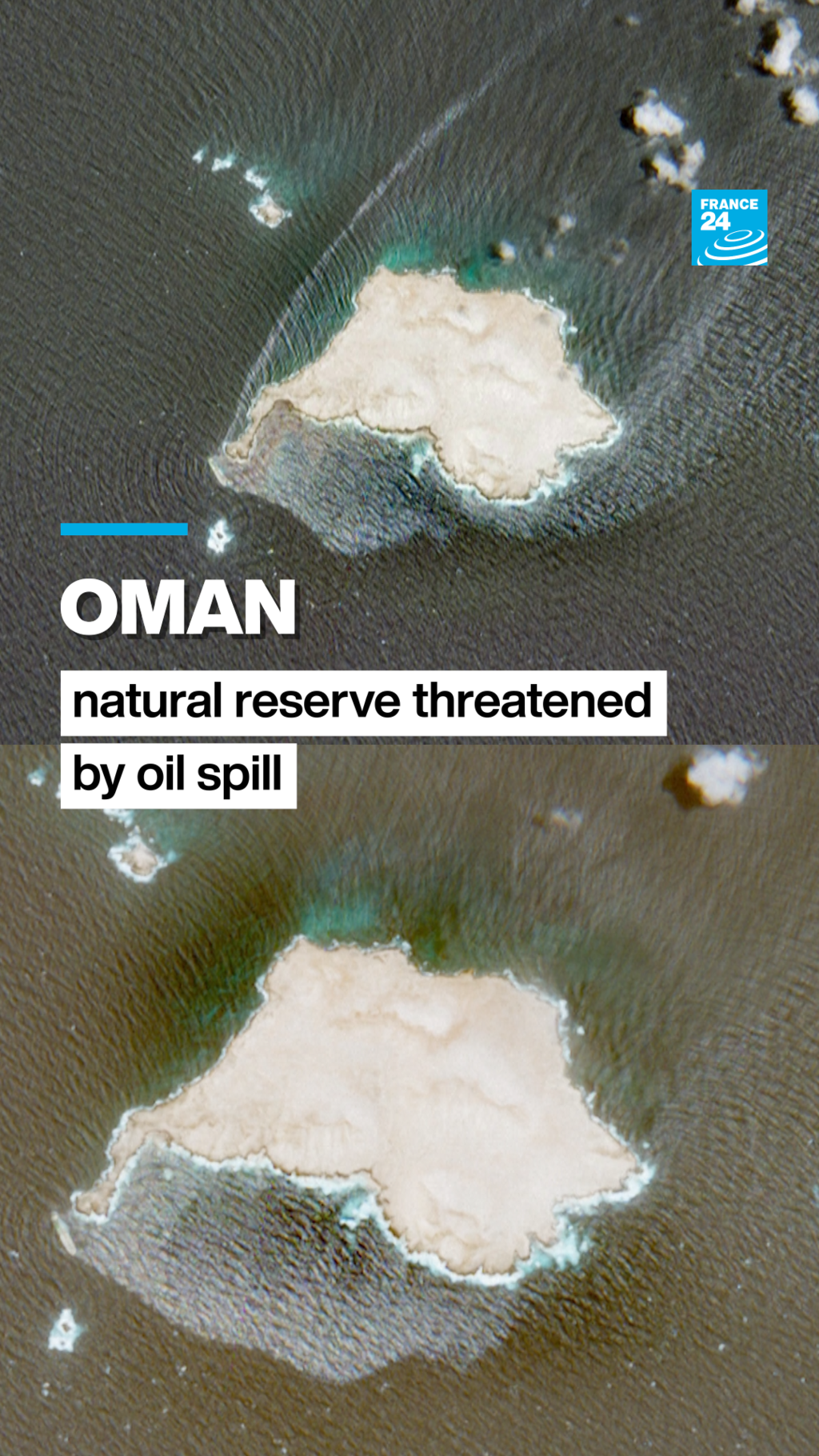
The spill has been concentrated around the Hallaniyat archipelago, an environmentally sensitive area that includes a marine reserve established to protect sea turtles and other aquatic life. Omani officials have estimated the slick covers nearly 400 square kilometres, but environmental organizations, including Greenpeace, say the true size may be substantially larger. Greenpeace has warned that the incident could become an “unprecedented oil disaster” unless urgent containment efforts are undertaken.
Oman says specialized teams are monitoring the pollution and conducting response operations intended to limit its spread and reduce impacts on sensitive ecosystems. However, the scale of the spill and uncertainty about responsibility have raised wider concerns. Christopher D’Elia, an oil-spill specialist and emeritus professor at Louisiana State University, said the tanker’s estimated cargo of 800,000 barrels of crude would constitute a fairly large spill.
The Caroline Bezengi most recently sailed under Cameroon’s flag and has been identified by Western governments as part of Russia’s sanctioned shadow fleet, which transports Russian oil. The vessel, built in 2001, is sanctioned by the European Union, the United Kingdom, Switzerland, Canada and Ukraine. Chinese companies Rentoor Shipmanagement and Villar Shipmanagement are listed as its owner and operator. D’Elia said vessels in such fleets may not comply with the “polluter pays” principle, potentially leaving no clearly responsible party to finance cleanup efforts.
Entities: Oman, Caroline Bezengi, Oman Environment Authority, Ras Madrakah, Masirah Island • Tone: urgent • Sentiment: negative • Intent: inform
13-08-2026
An oil spill from the tanker Caroline Bezengi has reached Oman’s mainland coastline after the vessel grounded and became partially submerged off Qabiliyah Island. Oman’s Environment Authority said beaches at Ras Madrakah, approximately 200 kilometres north of Qabiliyah Island, have been contaminated, while the southern shores of Masirah Island, more than 300 kilometres north of the tanker, could be affected soon.
The tanker was carrying almost 1 million barrels of crude oil when it reported an explosion in June. No group has claimed responsibility, and the cause of the explosion remains unknown. Environmental experts said the leak has spread rapidly in recent weeks, threatening a marine protected area near Qabiliyah Island. Satellite imagery indicates that the oil has covered more than 600 square kilometres, with strong monsoon winds and currents contributing to its movement.
The 247-metre Caroline Bezengi is believed to be part of Russia’s so-called “shadow fleet,” a group of vessels used to transport sanctioned Russian oil. The ship has been sanctioned by the United Kingdom and the European Union. Its owners are thought to be based in Shanghai, and tracking data from SynMax Maritime indicates that it departed from the Russian Black Sea port of Novorossiysk in May.
The spill poses a growing threat to Oman’s marine ecosystems and coastal areas. Authorities are monitoring the leak and warning of further contamination as the oil continues to spread. The incident comes amid heightened maritime tensions in the region, including recent attacks and military activity involving oil tankers near Oman and the Strait of Hormuz.
Entities: Caroline Bezengi tanker, Oman Environment Authority, Oman, Qabiliyah Island, Ras Madrakah • Tone: urgent • Sentiment: negative • Intent: inform
13-08-2026
An oil spill from the tanker Caroline Bezengi, which grounded and became partially submerged off Oman’s coast, has reached the country’s mainland beaches, according to Oman’s Environment Authority. The tanker began leaking crude after reporting an explosion in June while carrying nearly 1 million barrels of oil. The cause of the explosion remains unknown, and no party has claimed responsibility.
The spill initially threatened Qabiliyah Island and a nearby marine protected area. Environmental experts said the contamination had spread rapidly in recent weeks, driven by strong winds and monsoon currents. The Environment Authority reported that oil had reached the beaches of Ras Madrakah, approximately 200 kilometres north of Qabiliyah Island. Authorities also warned that the southern coastline of Masirah Island, more than 300 kilometres north of the tanker, could be affected within hours.
The 247-metre Caroline Bezengi is believed to belong to Russia’s so-called “shadow fleet,” a group of vessels accused of transporting Russian oil despite international sanctions. The ship has been sanctioned by the United Kingdom and the European Union and reportedly departed from Russia’s Black Sea port of Novorossiysk in May. Its owners are believed to be based in Shanghai.
Recent satellite imagery indicated that the spill had spread across more than 600 square kilometres, with the area expanding quickly because of seasonal winds and currents. The contamination poses a serious risk to marine habitats and protected areas along Oman’s coast and nearby islands. The incident adds to environmental concerns surrounding sanctioned oil transport, while the lack of clarity over the explosion leaves the cause of the spill unresolved.
Entities: Oman, Oman’s Environment Authority, Caroline Bezengi tanker, Qabiliyah Island, Ras Madrakah beaches • Tone: urgent • Sentiment: negative • Intent: inform
13-08-2026
The National’s “Trending Middle East” podcast presents a concise roundup of regional developments on August 13, 2026. The leading story concerns an oil slick off Oman that is moving toward the coastline and has begun contaminating beaches. The slick originated from the Russia-linked tanker Caroline Bezengi, which was under sanctions and disabled by an explosion in June. Environmentalists warn that the incident could have lasting consequences, adding to wider concerns about pollution caused by the Iran war and its effects on land, sea, and air.
The roundup also reports that Iraq and the United States have reached a final agreement for the withdrawal of the international coalition established to fight ISIS. The decision comes as Baghdad attempts to disarm militia groups and redefine its relationship with Washington around economic and security co-operation rather than the coalition’s existing military mission.
In Lebanon, parliament has approved a controversial amnesty law intended partly to reduce severe overcrowding in the country’s prisons. Critics argue that the law could benefit prisoners convicted of attacking or killing Lebanese army members, potentially allowing them to avoid the full consequences of their sentences.
Syria has protested to the United Nations after Colombia recognised Israeli sovereignty over the occupied Golan Heights. The announcement was made by newly sworn-in Colombian President Abelardo de la Espriella, described as a strong supporter of Israel.
The final item shifts to a lighter subject: stargazers in the UAE travelled into the desert early Thursday to observe the Perseid meteor shower. The article is an AI-assisted podcast briefing based on original National reporting and edited by humans.
Entities: Oman and Omani beaches, Caroline Bezengi tanker, Oil-slick contamination, Iran war pollution, Iraq–US agreement • Tone: neutral • Sentiment: neutral • Intent: inform