13-08-2026
Japan has lodged a strong diplomatic protest after Russian President Vladimir Putin visited Iturup, one of four southern Kuril islands claimed by both Russia and Japan. The visit was reportedly Putin’s first to the disputed island chain. Japan’s Foreign Minister Toshimitsu Motegi said the islands were inherently Japanese territory under both historical claims and international law, and formally objected to Putin’s presence there.
The territorial dispute dates back to the end of World War Two, when the Soviet Union annexed the Kuril islands and deported approximately 17,000 Japanese residents. Japan refers to the four southernmost islands as the Northern Territories, while Russia administers them. The unresolved dispute is the principal reason the two countries never signed a formal peace treaty after the war.
During his visit, Putin sampled fish roe and spoke with local residents, according to Russian state media. Previous efforts to settle the dispute have made little progress, and relations between Moscow and Tokyo have remained strained, particularly since Japan imposed sanctions on Russia following its 2022 invasion of Ukraine.
The islands also have significant strategic and military importance for Russia. Moscow has expanded its military presence there over the past decade, and Iturup hosts Russia’s primary military air base in the region. Japan has previously protested visits by senior Russian officials, including Prime Minister Mikhail Mishustin and former Prime Minister Dmitry Medvedev, as well as Russian military exercises near the islands.
The tensions have also acquired a wider regional dimension. In the previous month, Chinese and Russian naval vessels conducted a joint patrol through a strait in the Kuril chain. The patrol and Russia’s continuing military activity have prompted further condemnation from Japan, underscoring the persistent diplomatic and security tensions in Northeast Asia.
Entities: Vladimir Putin, Toshimitsu Motegi, Mikhail Mishustin, Dmitry Medvedev, Japan • Tone: analytical • Sentiment: negative • Intent: inform
13-08-2026
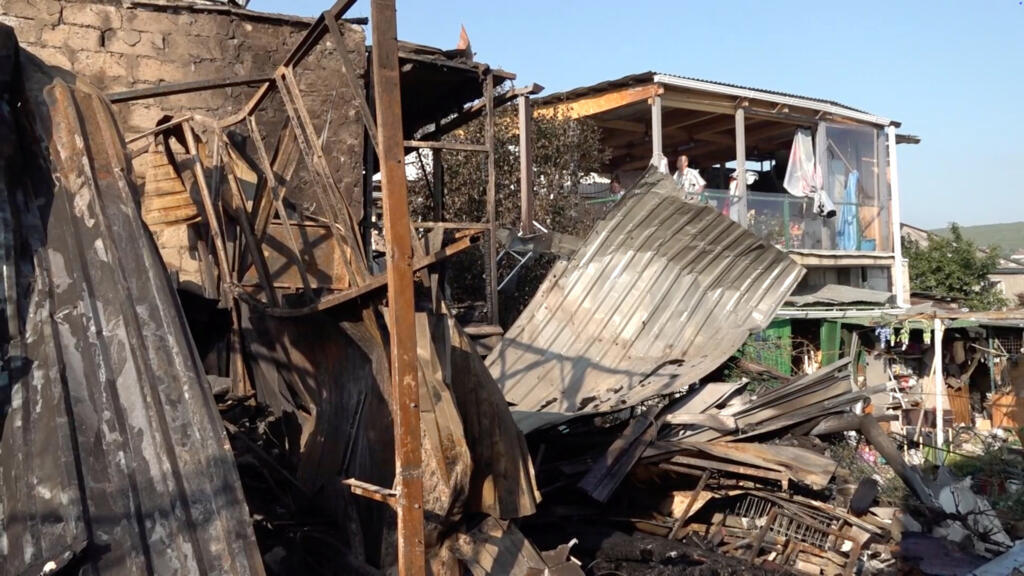
A large Ukrainian drone and missile attack on Novorossiysk, Russia’s principal remaining Black Sea naval base and a major commercial port, reportedly damaged two grain-export terminals and naval infrastructure. Russian officials said three people, including an eight-year-old child, were killed and 24 injured. Ukraine’s President Volodymyr Zelensky said the operation involved rockets, aircraft and naval drones and targeted the Russian naval base. Ukraine’s military claimed that four Russian warships, including two frigates, were hit, although Russia has not publicly commented on the alleged naval damage.
The attack also disrupted port operations and damaged pipelines, leading authorities to declare an emergency in Novorossiysk. Russia’s agriculture ministry said it was redirecting cargo to ports in the Baltic and Caspian seas and to land routes, citing logistical constraints. The strikes come amid a renewed escalation of attacks in and around the Black Sea after a period of relative calm. Ukraine has increasingly used long-range weapons against Russian territory and maritime targets, while Russia has continued attacks on Ukrainian ports and shipping.
The disruption could affect global grain markets. Russia is the world’s largest wheat exporter, and an analytics firm based in Moscow estimated that Russian exports in August could fall by more than half compared with the average for the same month over the previous five years. Ukraine’s agricultural exports have also declined, with the Ukrainian Agribusiness Club reporting a 23% fall in July. Both countries are major suppliers to North Africa, the Middle East and parts of Asia.
The article places the attack within the wider war’s impact on food security and maritime trade. Russia’s 2022 agreement to allow Ukrainian agricultural exports through Black Sea corridors collapsed after Moscow resumed attacks on shipping and ports near Odesa. Russian officials accused Ukraine of striking agricultural infrastructure and worsening food shortages, while also vowing to continue attacks on facilities it says threaten navigation in the Black and Azov seas.
Entities: Novorossiysk, Black Sea Fleet, Russia, Ukraine, Volodymyr Zelensky • Tone: analytical • Sentiment: negative • Intent: inform
13-08-2026
Russian President Vladimir Putin has made his first reported visit to the Kuril Islands, traveling to Iturup, known as Etorofu in Japan, and visiting a fish-processing plant where he was reportedly presented with caviar. The visit has angered Japan, which claims sovereignty over four southern Kuril Islands, including Iturup. Japan refers to these islands as the Northern Territories and considers them part of its territory under both historical claims and international law.
The Soviet Union seized the islands in the final stages of World War II in 1945 and deported approximately 17,000 Japanese residents. Around 20,000 Russian citizens now live there. The dispute has prevented Moscow and Tokyo from signing a formal peace treaty officially ending World War II hostilities between them. Relations have deteriorated further since Russia launched its full-scale invasion of Ukraine in 2022.
Japan’s Foreign Minister Toshimitsu Motegi issued a strong protest, describing the Northern Territories as inherently Japanese. The Kuril archipelago stretches in an arc from Russia’s Kamchatka Peninsula toward Hokkaido, Japan’s northernmost main island. The islands are strategically important because of their location and their role in Russia’s military posture in the Pacific. Putin’s visit followed a trip to Sakhalin, where he observed exercises involving Russia’s Pacific Fleet.
Russian leaders have rarely visited the disputed islands. Dmitry Medvedev became the first Russian president to do so in 2010 and returned in 2015 as prime minister. Negotiations over the territorial dispute, which have continued since the Soviet Union’s collapse in 1991, have produced no agreement.
Entities: Vladimir Putin, Toshimitsu Motegi, Dmitry Medvedev, Russia, Japan • Tone: analytical • Sentiment: negative • Intent: inform
13-08-2026
The article describes a major Ukrainian drone and missile attack on Novorossiysk, a strategically important Russian Black Sea port that handles grain exports and hosts naval forces relocated from Crimea. Citing Russian industry sources and Reuters, it reports that two major grain terminals were put out of operation, raising concerns about disruptions to Russian agricultural exports. Ukrainian President Volodymyr Zelenskyy claimed responsibility, saying the operation used Palianytsia jet-powered drones, Neptune missiles and unmanned naval systems against the Russian naval base, air defenses, piers and port infrastructure. He characterized Novorossiysk as the Russian Black Sea Fleet’s “last major stronghold.”
The attack reportedly killed at least two people, including an 8-year-old child, and damaged residential buildings, businesses and educational facilities. The city’s water supply was also suspended. Chicago wheat futures rose approximately 3% amid concerns about the impact on grain shipments.
The article places the Novorossiysk attack alongside Russian military activity in the Pacific. President Vladimir Putin observed large-scale exercises from the missile cruiser Varyag near Sakhalin and warned that Russia would retaliate if European countries seized Russian merchant vessels or attempted to sell Russian property. Moscow described such actions as “piracy,” while European governments have expanded sanctions and maritime checks targeting Russia’s so-called shadow fleet, which is accused of helping evade sanctions.
The Pacific exercises involved more than 13,000 personnel, approximately 60 ships, submarines and support vessels, and around 30 aircraft, helicopters and unmanned systems. Russian forces conducted simulated anti-ship missile strikes using Bastion coastal systems, Oniks cruise missiles and a Uran missile. Putin also accused NATO of expanding its presence in the Asia-Pacific and Arctic regions. Overall, the article presents the developments as evidence that the Russia-Ukraine war is increasingly affecting naval power, strategic ports, grain exports and international shipping routes beyond the main battlefronts.
Entities: Ukraine, Russia, Novorossiysk, Black Sea Fleet, Volodymyr Zelenskyy • Tone: analytical • Sentiment: negative • Intent: inform
13-08-2026
Russian President Vladimir Putin visited the disputed Kuril Islands on August 13, 2026, making his first trip to the far-eastern territory near Japan’s Hokkaido island. The visit prompted a strong formal protest from Tokyo, which calls the four southern islands the Northern Territories and considers them an inherent part of Japan under history and international law.
The islands—Kunashir, Habomai, Shikotan and Iturup—were seized by the Soviet Union in the final days of World War II and have remained under Russian control. Putin traveled there after visiting Sakhalin, where the Russian Navy was conducting exercises. He held a meeting on the security of Russia’s eastern borders and reportedly visited a fish-processing plant, where he was presented with caviar.
Japan’s Foreign Minister Toshimitsu Motegi said the government strongly objected to the visit. Tokyo-Russian relations have deteriorated further since Russia’s full-scale invasion of Ukraine in 2022, while Moscow has strengthened ties with China and North Korea.
The four islands form part of the volcanic Kuril archipelago, which stretches from Russia’s Kamchatka Peninsula to Hokkaido. Around 20,000 Russian citizens live there, despite the harsh climate. The islands are strategically important because of their military position, mineral resources and rich fishing grounds. Moscow expelled approximately 17,000 Japanese residents after occupying the territory in 1945.
The dispute has continued for decades despite periods of negotiations. In 1956, Soviet leader Nikita Khrushchev suggested that two islands might be returned as part of a peace treaty, but no agreement was reached. Talks resumed after the Soviet Union collapsed in 1991, yet the territorial dispute remains unresolved. Putin’s visit follows an earlier trip by then-President Dmitry Medvedev in 2010, the first by a Russian leader to the contested territory.
Entities: Vladimir Putin, Japan, Russia, Kuril Islands, Northern Territories • Tone: analytical • Sentiment: negative • Intent: inform
13-08-2026
Russian President Vladimir Putin made his first visit to the Kuril Islands, a disputed archipelago claimed by both Russia and Japan, prompting a strong diplomatic protest from Tokyo. The islands are known in Japan as the Northern Territories and have been a longstanding source of tension between the two countries. The Soviet Union seized them in 1945, and the territorial dispute has continued to complicate Russian-Japanese relations.
The Kremlin released video showing Putin in the Kuril Islands. Russian media reported that he visited a fish-processing plant, where he was reportedly presented with caviar. His trip followed a visit to Sakhalin, a nearby Russian island, where the Russian navy was conducting military drills. During his time there, Putin held a meeting focused on ensuring the security of Russia’s eastern borders, according to the Russian state news agency RIA Novosti.
Japan objected strongly to Putin’s visit, reflecting the broader deterioration in bilateral relations. Tokyo’s ties with Moscow have worsened substantially since Russia launched its full-scale invasion of Ukraine in 2022. At the same time, Russia’s relations with China and North Korea have become closer, further altering the regional strategic environment.
The visit combines a symbolic assertion of Russian control over the disputed territory with a demonstration of military and administrative activity in Russia’s Far East. Japan’s reaction underscores that the territorial disagreement remains unresolved and continues to affect diplomatic relations in East Asia.
Entities: Vladimir Putin, Kuril Islands, Japan, Russia, Northern Territories • Tone: analytical • Sentiment: negative • Intent: inform
13-08-2026
Russian President Vladimir Putin visited Iturup, an island in the Kuril chain that Japan claims as part of its Northern Territories, according to Russian media. The Aug 13 visit was described by Russia’s state news agency TASS as Putin’s first in-person visit to the disputed island chain. It followed his oversight of naval drills in Russia’s Far East and came one day after North Korea, a Russian ally, fired a ballistic missile toward waters off the Korean Peninsula.
The territorial dispute over the Kuril Islands has prevented Russia and Japan from signing a formal peace treaty to officially end World War Two hostilities between them. Japan refers to the disputed islands as the Northern Territories, while Russia administers them. During the visit, Putin toured the Yasny fish-processing plant on Iturup, viewed tuna and halibut, discussed fishing and fish migration with local officials, and sampled local fish roe. He also exchanged light-hearted remarks with residents about the island’s weather and resort-like setting.
Japan responded with a formal diplomatic protest. Foreign Minister Toshimitsu Motegi said that the northern territories, including Etorofu—the Japanese name for Iturup—are Japan’s inherent territory under both historical claims and international law. He said Tokyo “strongly protests” Putin’s visit.
The trip occurred amid heightened regional military tensions. North Korea’s missile launch came days before major joint military exercises involving South Korea and the United States, drills that Pyongyang has repeatedly condemned. The article presents Putin’s visit as both a symbolic assertion of Russian control over the disputed islands and an event taking place against a backdrop of broader security tensions in Northeast Asia.
Entities: Vladimir Putin, Russia, Japan, Iturup/Etorofu, Kuril Islands • Tone: analytical • Sentiment: negative • Intent: inform
13-08-2026
Russian President Vladimir Putin has made his first personal visit to the disputed Kuril Islands, travelling to Iturup as relations between Russia and Japan reach a new low. The visit took place during Putin’s trip to Russia’s Far East, where he oversaw Pacific Fleet military exercises and inspected the missile cruiser Varyag. It also followed a North Korean ballistic missile launch, underscoring the broader military tensions in the Asia-Pacific region.
Iturup is one of four southern Kuril Islands claimed by Japan, which calls them the Northern Territories. The dispute began at the end of World War II, when Soviet forces seized the islands after declaring war on Japan in 1945. Russia has retained control and maintains a military presence there, while Japan argues that the islands are historically and legally Japanese territory. The islands are strategically located, contain valuable fishing grounds and mineral deposits, and are home to about 20,000 people under Russian administration.
Japan’s Foreign Minister Toshimitsu Motegi strongly protested Putin’s visit, saying the islands are Japan’s inherent territory. The dispute has prevented the two countries from signing a formal peace treaty ending their World War II conflict. Earlier efforts at a settlement, including a 1956 proposal involving the possible return of two islands, failed to produce an agreement.
Relations deteriorated further after Japan joined Western sanctions against Russia following its full-scale invasion of Ukraine in 2022. Moscow suspended peace treaty negotiations and related economic cooperation, while Putin accused Tokyo of adopting a hostile stance. His visit also reflects growing Russian military activity in the Far East, amid concerns about NATO, North Korea, regional weapons deployments and rising tensions in the Arctic and Asia-Pacific. The article additionally places the trip against the backdrop of continuing battlefield developments and long-range strikes in the Russia-Ukraine war.
Entities: Vladimir Putin, Russia, Japan, Kuril Islands, Iturup • Tone: analytical • Sentiment: negative • Intent: analyze
13-08-2026
Three of Russia’s largest grain terminals at the Black Sea port of Novorossiysk have halted operations following a major overnight Ukrainian drone attack, according to people familiar with the damage. The strikes reportedly made grain shipments from the port impossible because of extensive damage to terminal infrastructure.
At United Grain’s Novorossiysk Grain Plant, a loading gallery collapsed and several silos were damaged. Demetra’s terminal sustained damage to a gallery and a truck-unloading facility, while the KSK terminal was also hit. The sources spoke anonymously because they were discussing confidential information.
The reported damage comes as Russia and Ukraine have intensified attacks on Black Sea ports and commercial shipping. The escalation has raised concerns about global agricultural supplies because the two countries together account for more than a quarter of worldwide wheat exports. The attacks are also occurring during this year’s harvest, increasing the potential consequences for grain availability and international prices.
Wheat futures in Chicago rose by as much as 4 per cent on Wednesday, marking their largest intraday increase in three weeks. Russia said Ukrainian attacks on grain and agricultural infrastructure were contributing to higher global food prices and worsening grain shortages. Foreign Ministry spokeswoman Maria Zakharova accused Kyiv of pursuing a campaign intended to create disorder in global food markets and claimed that it benefited certain Western countries.
The article presents the terminal damage, market reaction and Russian government response, while attributing the infrastructure reports to unnamed sources and the political allegations to Zakharova. It highlights the risk that continued attacks on Black Sea agricultural infrastructure could disrupt exports and intensify pressure on global food markets.
Entities: Russia, Ukraine, Novorossiysk, Black Sea, United Grain’s Novorossiysk Grain Plant • Tone: urgent • Sentiment: negative • Intent: inform