13-08-2026
A powerful earthquake that struck Colombia on 10 August has devastated communities across Valle del Cauca, leaving at least 27 people dead in municipalities outside Cali and damaging more than 1,000 homes. The full scale of the destruction remains unclear as assessments and search-and-rescue operations continue.
In Zarzal, approximately 700 homes were damaged, with some reduced to rubble. At least one person died, while emergency teams carried out door-to-door inspections to identify residents who needed shelter and supplies. Debris blocked streets, and authorities warned that some severely damaged buildings could need to be demolished.
Roldanillo also suffered major damage, with at least two deaths reported, including councillor Juan Carlos García Castañeda, who was killed when part of a gym collapsed. Hundreds of homes and businesses were damaged, leading authorities to declare a state of public calamity and impose a night-time curfew. Power and running water were cut, forcing many families to sleep outdoors or in temporary shelters. Business owners searched through rubble for goods they might salvage as they confronted potentially devastating economic losses.
In El Cairo, a town of about 7,000 people near the earthquake’s epicentre, officials estimated that roughly 80% of homes and public buildings were damaged or destroyed. Landslides, blocked roads and continuing aftershocks pushed residents into makeshift shelters and complicated relief efforts.
Regional leaders said rebuilding homes, restoring essential services and reviving local livelihoods could take months or even years. The affected communities face a prolonged recovery, while emergency personnel continue assessing damage and assisting residents in the worst-hit areas.
Entities: Valle del Cauca, Colombia, Cali, Zarzal, Roldanillo • Tone: urgent • Sentiment: negative • Intent: inform
13-08-2026
Search and rescue operations in Colombia have entered what officials describe as the “final phase,” as the death toll from Monday’s magnitude 7.4 earthquake reached 265. More than 3,500 people have been injured, nearly 500 remain missing, and approximately 9,550 homes have been destroyed. The earthquake is described as the strongest to hit Colombia this century, with the cities of Pereira and Cali among the hardest hit, reporting 83 and 74 deaths respectively.
The approaching 72-hour mark is significant because survivors are considered most likely to be found during that period. Cali Mayor Alejandro Eder said the chances of finding survivors would decline afterward, although he stressed that rescues could still occur. In Pereira, rescuers used vibration-detection equipment at a collapsed bakery and reported possible signs of life from street vendor Pablo Loaiza. Relatives said he appeared to respond to rescuers’ requests by knocking from beneath the rubble.
Emergency crews in Cali continued working through the night with cranes, sniffer dogs and their bare hands. Volunteers, soldiers and city employees formed bucket brigades to remove debris, while authorities restricted access to rescue sites to reduce noise and vibrations, allowing sensors to detect possible movement more effectively. Across affected communities, Colombians provided food, water and other supplies, and residents lined up to donate blood.
President Abelardo de La Espriella promised an emergency fund to rebuild hospitals, schools, homes and infrastructure, and declared an economic emergency. The disaster represents an early test for the newly inaugurated president, whose campaign had focused on reducing public spending, including cuts to the state risk-management unit now leading the response. Analysts said the earthquake would test both the government’s emergency capabilities and its political priorities.
Entities: Colombia earthquake, Magnitude 7.4 earthquake, Cali, Pereira, Abelardo de La Espriella • Tone: urgent • Sentiment: negative • Intent: inform
13-08-2026
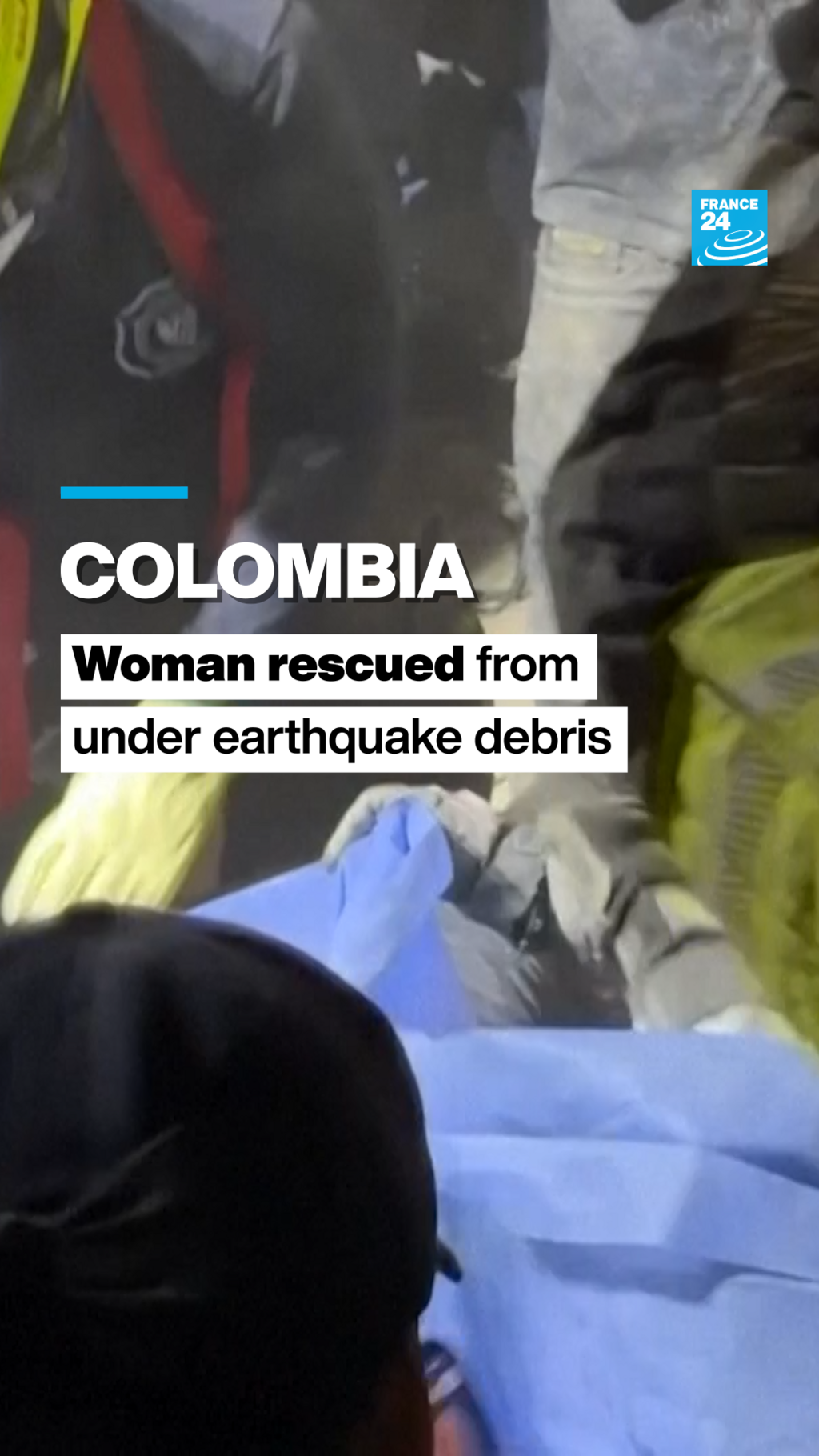
A 32-year-old woman, Daniela Largo, was rescued alive after spending 36 hours trapped beneath the rubble of a collapsed building in Pereira, Colombia. Firefighters and other emergency responders worked for 10 hours, using two tunnels to reach her beneath four heavy concrete slabs. A local resident first heard Largo calling for help, and rescuers located her with a small camera. Oxygen was supplied through one tunnel dug from above, while a second tunnel dug from below allowed the team to free her. Largo was carried to an ambulance wrapped in a blue sheet. Her rescue was welcomed by Colombian President Abelardo de la Espriella, who described it as news that offered hope. Largo’s mother said her daughter’s 12-year-old son was waiting for her at home.
The rescue followed a 7.4-magnitude earthquake that struck western Colombia at 07:34 local time on Monday. The epicentre was near San José del Palmar in Chocó province, and shaking lasted between 90 seconds and two minutes in areas closest to the epicentre. More than 100 aftershocks have since been recorded.
At least 265 people have died and 496 remain missing, according to President de la Espriella. Pereira, in Colombia’s coffee-growing region, has recorded 79 deaths and the collapse of at least 92 buildings. Fifteen people are known to remain trapped there, while another 37 are missing. Cali has suffered the highest reported death toll, with 95 fatalities, and more than 200 people were still trapped there at the time of reporting. Eighty-seven people had been rescued in Cali. The city imposed a night-time curfew so rescue operations could continue safely, while soldiers patrolled the worst-hit areas. Despite the scale of the destruction, officials and families continued to hope that more survivors could be found.
Entities: Daniela Largo, Abelardo de la Espriella, Pereira, Cali, San José del Palmar • Tone: urgent • Sentiment: negative • Intent: inform
13-08-2026
A baby was rescued alive from the rubble of a destroyed building in Cali, Colombia, after a 7.4-magnitude earthquake struck the country on Monday. Videos posted on social media by Brian Osorio Zuluaga show rescuers searching through concrete debris and communicating with a survivor trapped beneath the structure. The man told them he was with a baby, and rescuers soon heard the child crying. Using their bare hands, five men carefully removed debris and freed the infant from the survivor’s arms. The baby was then handed to a paramedic as the rescuers cheered, while others continued working to free the injured man, whose lower body remained trapped. The condition of the baby and the adult was not immediately known.
Zuluaga, who said he was among the first people at the site, described the rescue effort as a reminder that ordinary people were unprepared for such a disaster but could make a life-saving difference by helping one another. His posts emphasized solidarity during the emergency, saying that differences did not matter in the face of the need to save lives.
The rescue occurred as search teams and volunteers across Colombia raced to locate survivors beneath collapsed buildings. Reported casualty figures continued to rise. President Abelardo de la Espriella initially said at least 181 people had died and 2,595 had been injured, while authorities in Cali later reported 216 deaths. Civilian-run databases estimated that nearly 4,000 people remained unaccounted for.
International assistance was also being organized. The United States offered more than $15 million in aid, Mexico said it was prepared to send search and medical personnel and supplies, and El Salvador announced plans to send two planes carrying 100 tons of aid. The Associated Press contributed to the report.
Entities: Colombia, Cali, 7.4-magnitude earthquake, Earthquake search-and-rescue operations, Brian Osorio Zuluaga • Tone: urgent • Sentiment: negative • Intent: inform
13-08-2026
A powerful 7.4-magnitude earthquake struck western Colombia on Monday, killing at least 265 people and affecting more than 25,800 families, according to President Abelardo de la Espriella. Nearly 500 people were officially reported missing, although civilian-run databases estimated that more than 4,100 people could be unaccounted for. Rescue teams continued searching collapsed buildings in Cali, Pereira, Manizales and Quibdo, where damaged roads, crushed vehicles and extensive structural destruction complicated the response.
Authorities and aid agencies emphasized that the first 48 to 72 hours after an earthquake are critical for finding survivors. Rescue workers reported continued signs of life, including the rescue of a baby in Cali and the dramatic recovery of 32-year-old Daniela Largo in Pereira after she spent 12 hours trapped beneath rubble. Volunteers, firefighters, soldiers, specialized equipment and search dogs worked amid rubble while crowds were repeatedly asked to remain silent so rescuers could detect faint sounds.
The disaster displaced thousands of people, many of whom were sleeping in parks or shelters converted from schools, sports arenas and other public buildings. Residents also feared additional collapses and aftershocks; Colombia’s geological service recorded 130 aftershocks. Experts said another earthquake of similar magnitude in the same location was unlikely but warned that Colombia’s active fault lines posed a continuing risk.
The hardest-hit Choco region already faced severe poverty, armed conflict, displacement and limited communications. Its remote communities, many accessible only by river, made the full extent of the damage difficult to assess. International assistance expanded quickly, with U.S. disaster teams and more than $15 million in aid, Mexican aircraft and personnel, an offer of aid from El Salvador, support from the United Nations and other humanitarian organizations, and a planned benefit concert in Miami. Despite moments of hope, the article portrays an increasingly desperate search for survivors and a humanitarian emergency compounded by existing crises.
Entities: Colombia earthquake, 7.4-magnitude earthquake, Cali, Pereira, Manizales • Tone: urgent • Sentiment: negative • Intent: inform
13-08-2026
Rescue workers and volunteers in Colombia are searching through collapsed buildings for survivors after a magnitude 7.4 earthquake struck the country’s western region shortly after 7:30 a.m. Monday. President Abelardo de la Espriella said at least 181 people had died, 1,595 were injured and 195 were officially reported missing. Civilian databases indicated that the number of missing people could be as high as 3,900, prompting families to share information online while awaiting news about relatives.
More than 1,100 homes were destroyed and over 8,300 damaged. Pereira, a city of more than half a million people, suffered severe power outages, and many residents spent the night outdoors because of damaged homes and fears of aftershocks. Volunteers searched by hand through the ruins of a six-story commercial building where two girls were believed to be trapped. In Cali and other affected areas, rescuers formed human chains, used basic tools and listened for sounds from beneath the rubble. One team rescued a man and a baby after hearing a whistle, though another family member remained trapped.
The government declared a state of emergency, mobilized military and police forces, placed hospitals in five cities on red alert and imposed a nighttime curfew in Cali. Residents described scenes of darkness, panic and desperate searches for missing loved ones.
International assistance followed. The United States announced $15.5 million in emergency relief, while the European Union activated its Copernicus satellite service to support rescue operations. Israel, Mexico, Ecuador and France also offered help. Pope Leo XIV expressed condolences and prayed for the deceased and injured. Humanitarian organizations in the United States, including groups in South Florida, began preparing aid shipments, while officials awaited further information about Colombia’s most urgent needs.
Entities: Colombia, Pereira, Cali, El Cairo, San Jose Del Palmar • Tone: urgent • Sentiment: negative • Intent: inform
13-08-2026
A magnitude-7.4 earthquake struck western Colombia at approximately 8:34 a.m. ET on Monday, August 10, 2026, killing at least 111 people, injuring at least 87 and causing extensive damage across more than 20 municipalities. The U.S. Geological Survey and Colombian authorities placed the epicenter near San José del Palmar in the rural Chocó province, about 250 miles west of Bogotá. A magnitude-5.0 aftershock followed less than an hour later. Officials said it was the strongest earthquake recorded in Colombia since record-keeping began in the early 1920s.
The highest death tolls were reported in neighboring provinces, including at least 40 deaths in Risaralda, 27 in Valle del Cauca, 12 in Chocó, four in Caldas and one in Antioquia. Pereira was particularly hard hit, with reports of deaths and people trapped beneath collapsed buildings. In Cali, 30 structures collapsed, while Manizales reported 17 collapsed buildings and 19 partially collapsed buildings. A tower of Manizales’ neo-Gothic cathedral also fell onto the nave. Hundreds of buildings were damaged, and rescue workers and residents searched through rubble for survivors.
The earthquake was felt across a broad area, from Bogotá and the Caribbean-coast city of Barranquilla to Ecuador. About 10.5 million people experienced strong to very strong shaking, according to the USGS. The disaster prompted evacuations, airport closures and structural-safety concerns in several cities, although Bogotá reported no structural damage.
Colombian officials urged residents to remain calm and report damage. President Abelardo de la Espriella pledged government support, while U.S. Secretary of State Marco Rubio said the United States was monitoring the situation and ready to help. Humanitarian groups in South Florida also began preparing aid. The quake struck Colombia’s coffee region, which was devastated by a deadly earthquake in 1999, and occurred in a country located along the seismically active Pacific Ring of Fire.
Entities: 7.4-magnitude Colombia earthquake, San José del Palmar, Chocó province, Cali, Pereira • Tone: urgent • Sentiment: negative • Intent: inform
13-08-2026
A devastating 7.4-magnitude earthquake struck Colombia on Monday, Aug. 10, 2026, leaving more than 3,000 people reported missing and prompting an extensive search-and-rescue operation. Videos and photographs showed first responders, volunteers, and residents searching through collapsed buildings and debris for survivors. Local officials in Cali, Pereira, Chocó, and Manizales reported at least 179 deaths, while Colombia’s federal government had separately estimated at least 111 fatalities based on figures released shortly after the earthquake. The differing death tolls reflect the rapidly evolving nature of the disaster response.
Approximately 1,600 buildings across the country were reported damaged or destroyed. The U.S. Geological Survey identified the epicenter near San José del Palmar in the western Chocó region, which borders the Pacific Ocean. President Abelardo De la Espriella, who had taken office only days earlier, visited Quibdó, the capital of Chocó, and ordered the mobilization of military and police forces, engineers, rescue personnel, and search dogs. He pledged that the region would no longer be neglected and said the national government stood with Chocó’s residents.
The Trump administration announced $15.5 million in emergency assistance for shelter, food, protection, and earthquake assessments. The State Department expressed solidarity with the Colombian people and said the aid would support the government’s assessment of needs. Colombian authorities said immediate economic resources and humanitarian assistance had been allocated for more than 1,400 affected families and individuals. Injured people and those needing urgent medical care were being transferred to Medellín, where hospital capacity was being made available. The Associated Press contributed to the report.
Entities: Colombia, 7.4-magnitude earthquake, Chocó region, Cali, Pereira • Tone: urgent • Sentiment: negative • Intent: inform
13-08-2026
Colombia’s earthquake rescue operation entered what officials described as its “final phase” on Wednesday, as crews raced to find survivors before the crucial first 72 hours after the disaster elapsed. The magnitude 7.4 earthquake—the strongest recorded in Colombia this century—killed 265 people, injured more than 3,500 and left nearly 500 missing, according to local authorities.
In Pereira, rescuers concentrated on a collapsed bakery where a street vendor, Pablo Loaiza, was believed to be trapped. Vibration-detection equipment reportedly detected possible signs of life, and relatives said Loaiza appeared to respond to rescuers’ requests by knocking from beneath the rubble. The search continued with cranes, sniffer dogs and manual labor, while teams periodically silenced the area to listen for survivors. Officials stressed that people could still be rescued after 72 hours, although the chances would diminish.
The earthquake caused extensive damage across several Colombian communities. More than 11,000 homes were destroyed, leaving thousands of families homeless. Residents in towns including El Cairo and Roldanillo faced power outages, damaged buildings, fear of aftershocks and the loss of businesses. Many people spent multiple nights outdoors because their homes were unsafe or they were afraid to return.
The newly installed president declared an economic emergency and three days of national mourning, pledging that the government would do whatever was necessary to help the country recover. Meanwhile, citizens organized relief efforts by delivering water, food and other supplies, and by donating blood. Despite the ongoing rescue efforts and community solidarity, the disaster left widespread shock, grief and uncertainty among survivors.
Entities: Colombia, Pereira, Cali, El Cairo, Roldanillo • Tone: urgent • Sentiment: negative • Intent: inform
13-08-2026
China has offered assistance to Colombia following a magnitude 7.4 earthquake that struck the country’s western region on Monday and killed more than 200 people. Beijing’s pledge comes as Colombia’s newly elected president, Abelardo de la Espriella, is reportedly pivoting toward closer relations with the United States, leaving China waiting for clearer engagement from the new administration.
Chinese Foreign Ministry spokesman Guo Jiakun said Beijing would provide help “in suitable ways” and in accordance with Colombia’s requests. He added that no Chinese citizens had been reported killed or injured, while the Chinese embassy in Bogotá was working to verify the safety of nationals in affected areas and warning them about secondary hazards caused by aftershocks.
President Xi Jinping sent condolences to President de la Espriella on Tuesday, expressing sympathy to the victims’ families and those injured. Xi also said the Colombian people would unite to recover and rebuild under the new government. Separately, the China International Development Cooperation Agency said it was closely monitoring the disaster and would provide assistance based on Colombia’s needs and requests, within China’s capacity.
The response reflects China’s willingness to provide humanitarian support while its broader relationship with Colombia remains uncertain. The article indicates that Beijing’s ambassador has requested the appointment of a coordinator to facilitate engagement, but the request has not yet received an answer. This diplomatic delay is linked to the new Colombian government’s apparent shift toward Washington. Thus, the earthquake relief offer serves both an immediate humanitarian purpose and a potential test of China-Colombia relations during a period of political realignment.
Entities: China, Colombia, Bogotá, United States, Xi Jinping • Tone: analytical • Sentiment: neutral • Intent: analyze
13-08-2026
A powerful 7.4-magnitude earthquake struck western Colombia on Monday, killing at least 265 people and leaving hundreds or potentially thousands missing. By Wednesday, regional partners had begun sending tonnes of aid as emergency crews searched through collapsed buildings, damaged roads and crushed vehicles for survivors. Officials warned that the first 48 to 72 hours after the earthquake would be critical for rescuing people trapped beneath the rubble.
President Abelardo de la Espriella said nearly 500 people had been reported missing and that more than 25,800 families were affected. However, civilian-run databases placed the number of missing people considerably higher, at more than 4,100. The discrepancy underscored the scale of the disaster and the difficulty of establishing reliable casualty figures while rescue operations were still under way.
The earthquake has placed significant pressure on de la Espriella’s new administration, which is coordinating the national response while civil society groups work to deliver aid to the hardest-hit communities. The president said government efforts were focused on locating the missing.
Rescue teams continued searching in the worst-affected cities of Cali, Pereira, Manizales and Quibdo. As time passed, the chances of finding victims alive diminished, intensifying the urgency of the operation. The disaster has caused widespread destruction across western Colombia and prompted a large-scale humanitarian response involving government agencies, local communities and regional partners.
Entities: Colombia, Abelardo de la Espriella, Associated Press, San Carlos Palace, Bogota • Tone: urgent • Sentiment: negative • Intent: inform
13-08-2026
Rescue teams in Pereira, Colombia, pulled 32-year-old Daniela Largo Sánchez alive from the ruins of a collapsed building on Tuesday, August 11, after she had spent approximately 36 hours trapped beneath the rubble. The rescue followed the magnitude 7.4 earthquake that struck western Colombia on August 10 and damaged buildings across the region.
Largo Sánchez was brought out beneath a blue sheet to protect her privacy and was then transferred to an ambulance. Video from the scene showed rescuers applauding as she emerged. Bogota firefighters said teams had located her roughly 10 hours before the extraction, but she was buried too deeply to be removed immediately. Rescuers proceeded cautiously, clearing debris and working to prevent additional parts of the building from collapsing.
Emergency teams continued search-and-rescue operations in damaged structures throughout western Colombia. Firefighters reported that at least one other person remained trapped in the same Pereira building while efforts to reach them continued. The successful rescue represented a moment of hope amid the wider earthquake response, which was focused on locating survivors and assessing damage in affected communities.
Entities: Daniela Largo Sánchez, Pereira, Colombia, Bogota firefighters, Colombia earthquake rescue teams, magnitude 7.4 earthquake • Tone: neutral • Sentiment: positive • Intent: inform