05-09-2026
At least four civilians were killed and nine others injured in a Houthi missile strike on a crowded road in southwestern Yemen, according to Yemen’s state-run Saba news agency, which cited local and medical sources. The attack targeted civilians gathered along the strategic Heijah al-Abd road south of Taiz as fighting intensifies across the Taiz and Hodeidah governorates.
The escalation follows claims by Yemen’s Saudi-backed government forces that they recaptured several strategic positions on the Haifan front south of Taiz. Government troops reportedly seized heights overlooking the al-Khazja market and disrupted Houthi supply routes toward southern Taiz and northwestern Lahj. However, Houthi forces have also made advances, including the capture of a strategic military base in western Taiz.
Al Jazeera reported that the Houthis may be seeking to advance toward Bab al-Mandeb and the Red Sea port of al-Makha, also known as Mocha. Control of the coastline is considered strategically important because of the maritime route linking the Red Sea and Gulf of Aden. The Houthis controlled al-Makha before being expelled by government forces and the Saudi-led coalition in 2017.
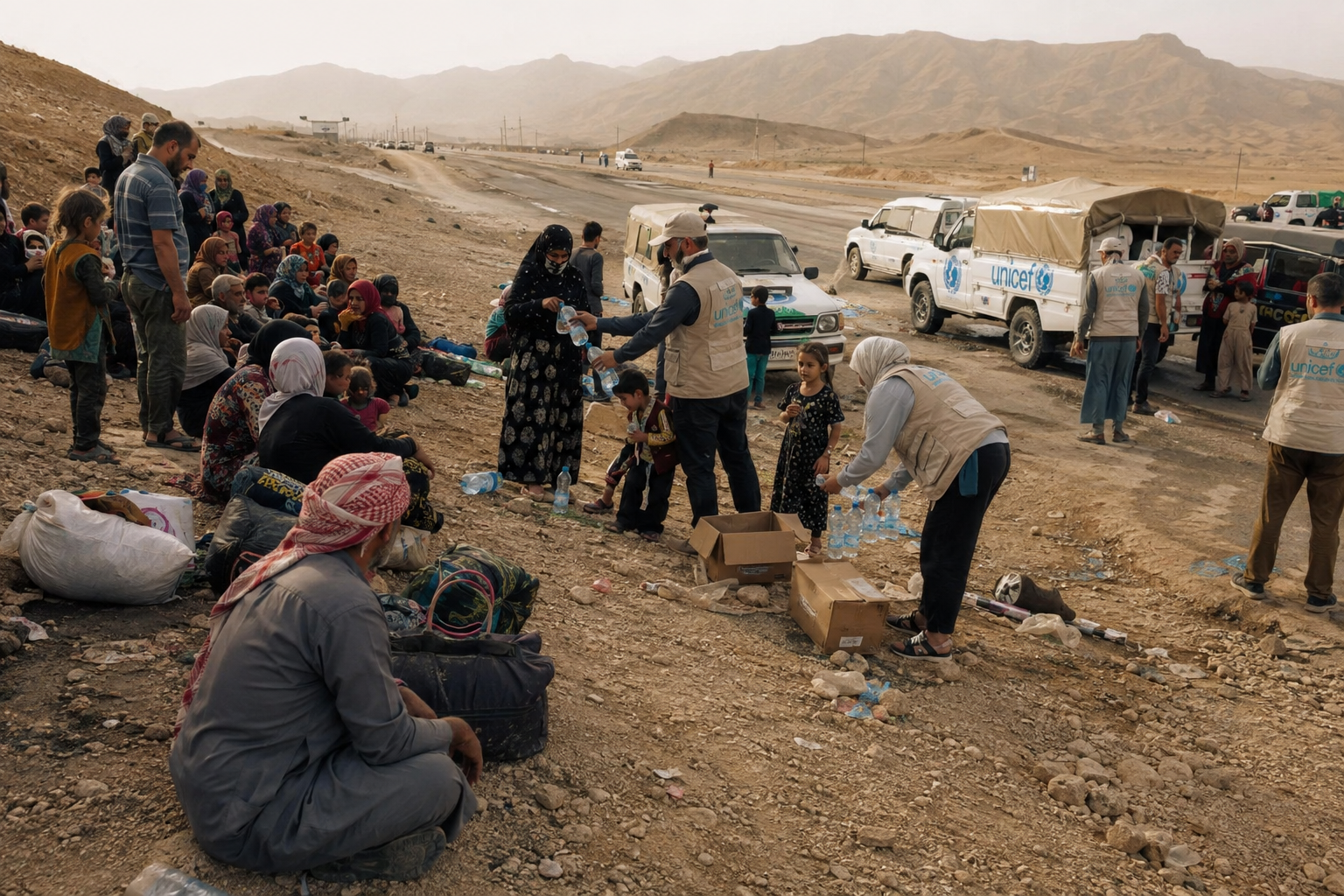
The renewed fighting has produced a worsening humanitarian emergency. The UN Office for the Coordination of Humanitarian Affairs said nearly 1,800 families were displaced in less than 48 hours. Shelling emptied several displacement camps in Taiz’s Maqbanah and Jabal Habashi districts, while some families remain trapped near front lines. Aid groups said displaced people arrived with little food, shelter or other basic supplies, while communications outages and depleted emergency stocks have severely limited relief operations.
Entities: Houthis, Yemen’s Saudi-backed government forces, Taiz governorate, Hodeidah governorate, Heijah al-Abd road • Tone: urgent • Sentiment: negative • Intent: inform
05-09-2026
Yemen’s internationally recognised government has significantly intensified its military campaign against the Iran-backed Houthi movement, conducting at least 15 air strikes on Friday, September 4, 2026, in the western provinces of Taiz and Hodeidah. The attacks targeted Houthi positions, gatherings and vehicles and supported government forces attempting to repel a major Houthi offensive toward the Red Sea coast, the port of al-Makha and the strategically vital Bab al-Mandeb Strait.
The latest fighting began when Houthi forces used ballistic missiles, drones and artillery to advance along front lines west of Taiz and south of Hodeidah. The group reportedly captured a strategic military base and surrounding high ground, while more than 120 fighters have been killed since the offensive began. Civilians have also been killed and wounded in missile strikes, including attacks near al-Makha and along the Heijah al-Abd Road.
The government’s air campaign marks a major development because Saudi-led coalition aircraft previously provided most of the aerial support for anti-Houthi forces. Yemen’s own air force was severely weakened after the Houthis seized Sanaa in 2014 and Saudi Arabia intervened in 2015, targeting Yemeni airbases, aircraft and air-defence systems. The government had carried out smaller air operations in July, including strikes on missile and drone sites in Marib and al-Jawf and an attack on Sanaa International Airport intended to prevent an Iranian aircraft from landing.
The renewed escalation follows the collapse of a fragile post-2022 ceasefire arrangement. Although large-scale fighting remained limited after the truce expired, no comprehensive peace agreement was reached. The conflict now intersects with wider regional tensions, including Houthi threats to maritime traffic and disruption around the Strait of Hormuz. Expanded Houthi control near Bab al-Mandeb could therefore threaten government supply routes and affect international shipping through the Red Sea. The article also recalls the extensive civilian toll of earlier Saudi-led coalition air operations and subsequent US and UK strikes on Houthi targets.
Entities: Yemen’s internationally recognised government, Houthi movement, Taiz, Hodeidah, Bab al-Mandeb Strait • Tone: analytical • Sentiment: negative • Intent: analyze
05-09-2026
At least four civilians were killed and nine injured in a Houthi ballistic missile attack on the Haijat Al Abd highway in Yemen on Saturday, according to the state news agency Saba. The highway connects Taiz with southern Yemen. No casualties among Yemeni government forces were immediately reported.
The attack came amid a wider escalation in fighting between Houthi rebels and pro-government forces in Taiz and Hodeidah. Government forces said that 14 ballistic missiles, accompanied by drone attacks, struck areas along the Red Sea coast on Wednesday. Wadah Dobish, spokesman for pro-government forces on Yemen’s western coast, announced a counter-attack in the Al Garrahi district of southern Hodeidah, where clashes remained intense.
Yemen’s Ministry of Social Affairs and Labour said that thousands of civilians had been displaced by the renewed violence. The ministry said attacks on residential areas and displacement camps had worsened conditions for already vulnerable communities, especially children, women and older people. It called for immediate humanitarian assistance from civil society groups, volunteer teams, businesses, philanthropists and humanitarian organisations.
The renewed violence is unfolding amid an already severe humanitarian crisis. More than 22 million people in Yemen require humanitarian assistance, while 18.3 million were acutely food-insecure and 5.2 million were internally displaced even before the latest escalation, according to UN data from March. Humanitarian organisations and the UN have reduced operations in Houthi-controlled areas because of security threats, including raids and kidnappings.
The Houthis have also intensified attacks on government positions and Saudi infrastructure in recent months, raising fears that Yemen could return to full-scale war. Fighting had largely subsided after a fragile UN-mediated truce in 2022, although the agreement expired only months after it was reached.
Entities: Yemen, Houthi movement, Taiz, Hodeidah, Haijat Al Abd highway • Tone: urgent • Sentiment: negative • Intent: inform