05-09-2026
The article reports that US President Donald Trump has publicly minimised the scale and continuing significance of the conflict with Iran, calling it “small potatoes” and describing it as a military conflict rather than a major war. Trump agreed with Vice-President J.D. Vance, who had said that major combat operations ended months earlier and that he would not characterise the current hostilities as a war.
Trump said the United States was conducting only intermittent strikes and suggested that active fighting had largely stopped. He compared the 18 US service members killed in the conflict with the much higher American death tolls from the Vietnam and Afghanistan wars. Although he acknowledged the loss of “18 great souls” and said that even one death was too many, he also highlighted what he described as major US achievements, claiming that the United States had effectively taken over Venezuela and Iran.
The comments come amid growing domestic criticism of the administration’s handling of the conflict. Polls reportedly show that Americans disapprove of Trump’s performance, while the war’s impact on energy prices has increased political risks for Republicans ahead of the November midterm elections. Republicans could lose control of Congress if public dissatisfaction continues to grow.
The article also describes backlash against administration officials who have sought to minimise the conflict’s effects. Commerce Secretary Howard Lutnick acknowledged that he had misspoken after incorrectly stating that no American service members had died in Iran. The report places Trump’s remarks within a wider political effort by his administration to reduce attention on the conflict and limit its potential electoral consequences.
Entities: Donald Trump, J.D. Vance, Howard Lutnick, United States, Iran • Tone: analytical • Sentiment: negative • Intent: inform
05-09-2026
As the US-Israel conflict with Iran enters its seventh month, President Donald Trump is seeking to minimize the scale and political impact of the fighting. On September 4, Trump described the conflict as “small potatoes” and “not a big thing,” despite the deaths of 18 US service members, continuing attacks across the Middle East and a significant increase in global energy prices. He compared the campaign with a US operation in Venezuela and said that the United States was conducting only “intermittent strikes,” while claiming control of the Strait of Hormuz and Iranian oil production.
Trump’s comments echoed Vice President JD Vance, who had said the previous day that he would not call the situation a war because major combat operations had lasted only six weeks. Although Vance acknowledged that fighting had flared up, Trump endorsed much of his characterization and has repeatedly used terms such as “little skirmish,” “little detour” and “excursion” instead of “war.” Experts believe this language is intended to reduce political and legal pressure on the administration, which launched strikes without seeking congressional authorization. Congress passed a largely symbolic war powers resolution in June calling on Trump to end the campaign or obtain approval.
The conflict remains unpopular in the United States, with a Reuters-Ipsos poll finding that nearly six in 10 adults disapproved of the strikes. With November’s midterm elections approaching and peace talks stalled, Trump’s rhetoric may be aimed at limiting public concern over the war’s economic and political consequences. US gasoline prices have risen to an average of $4.15 per gallon, while the administration has expanded sanctions and threatened further attacks, including a possible strike on Iran’s Pickaxe Mountain near Natanz. Recent exchanges have involved Iranian attacks on US bases and allegations that a US strike killed civilians at a wedding in Sirik. Despite the uncertainty, Trump said he considered the campaign a success.
Entities: Donald Trump, JD Vance, United States, Iran, Israel • Tone: analytical • Sentiment: negative • Intent: analyze
05-09-2026
The live update covers the continuing military and diplomatic fallout from the U.S.-Israeli war against Iran, along with its effects on regional security and U.S. energy prices. President Donald Trump described the conflict as “small potatoes” for the United States and called it a “military conflict,” while Vice President JD Vance questioned whether it should still be characterized as a war because major combat operations had ended and there was no active shooting in some areas. However, Trump has continued to refer to the conflict as a war publicly, and an Air Force email reportedly showed that Pentagon personnel were still being instructed about how to describe the operations.
Trump also threatened to strike Iran’s alleged underground Pickaxe Mountain nuclear site “very soon,” saying the United States was monitoring activity there and would attack if necessary. Separately, the United States, Britain, France and Germany drafted a resolution seeking to refer Iran to the U.N. Security Council for failing to meet its nuclear nonproliferation obligations. The measure could lead to binding sanctions or asset freezes, although Russia and China could block punitive action with their Security Council vetoes. The draft remained under negotiation ahead of a vote at the International Atomic Energy Agency’s Board of Governors meeting.
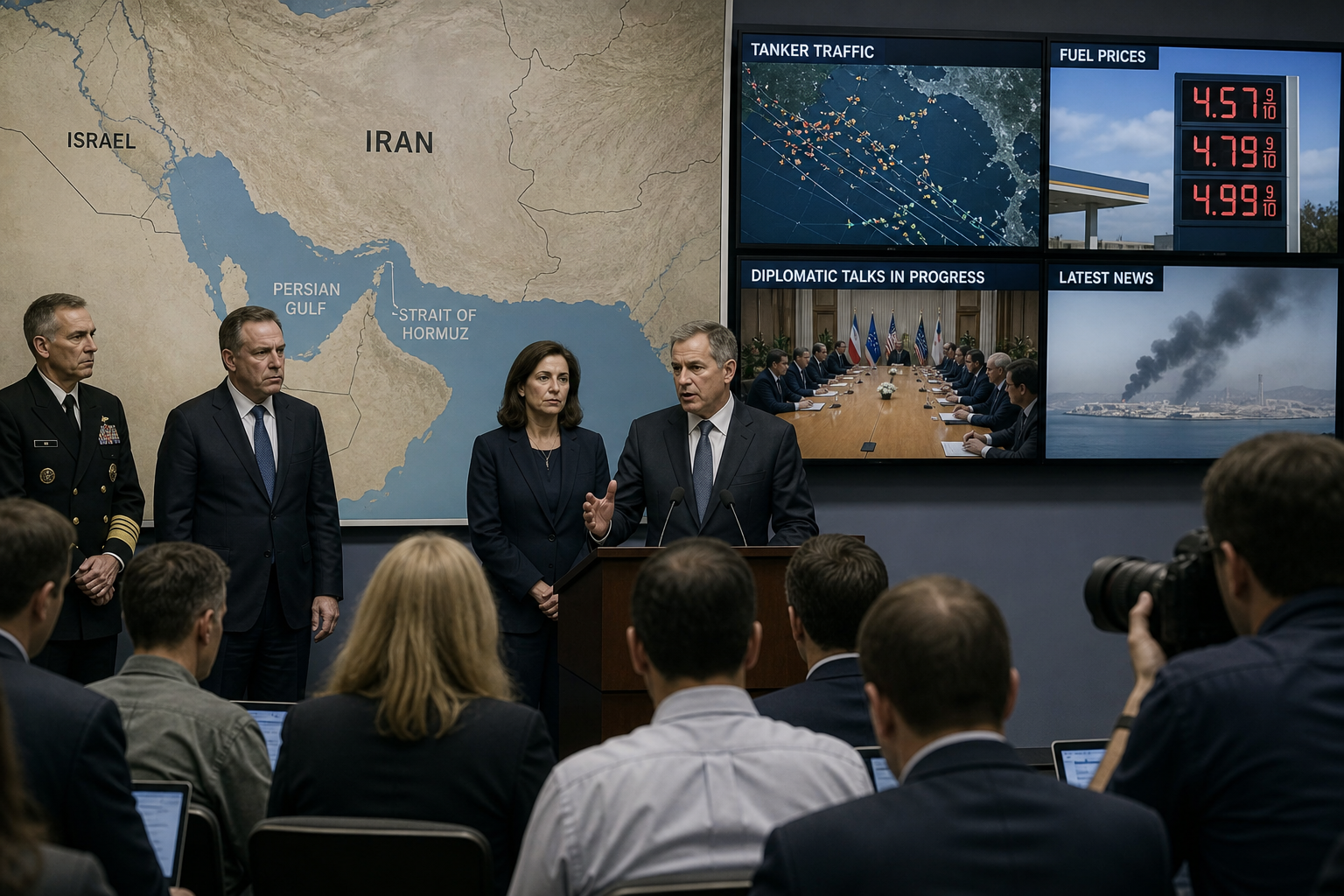
The conflict has also affected energy markets and regional military planning. Diesel prices reached a record $5.85 per gallon before the Labor Day weekend, while shipping through the Strait of Hormuz remained below prewar levels. The United States approved a proposed $5 billion arms sale to Saudi Arabia, which has faced Iranian and Houthi attacks, although Congress must still approve it. In Lebanon, an Israeli strike killed two people despite a truce with Hezbollah, amid widespread destruction and insecurity. The U.S. Embassy in Beirut said Israel’s release of Lebanese prisoners was a positive step toward implementing a U.S.-brokered peace arrangement, but the supplied article ends before that update is completed.
Entities: Donald Trump, JD Vance, United States, Iran, Israel • Tone: analytical • Sentiment: negative • Intent: inform