05-09-2026
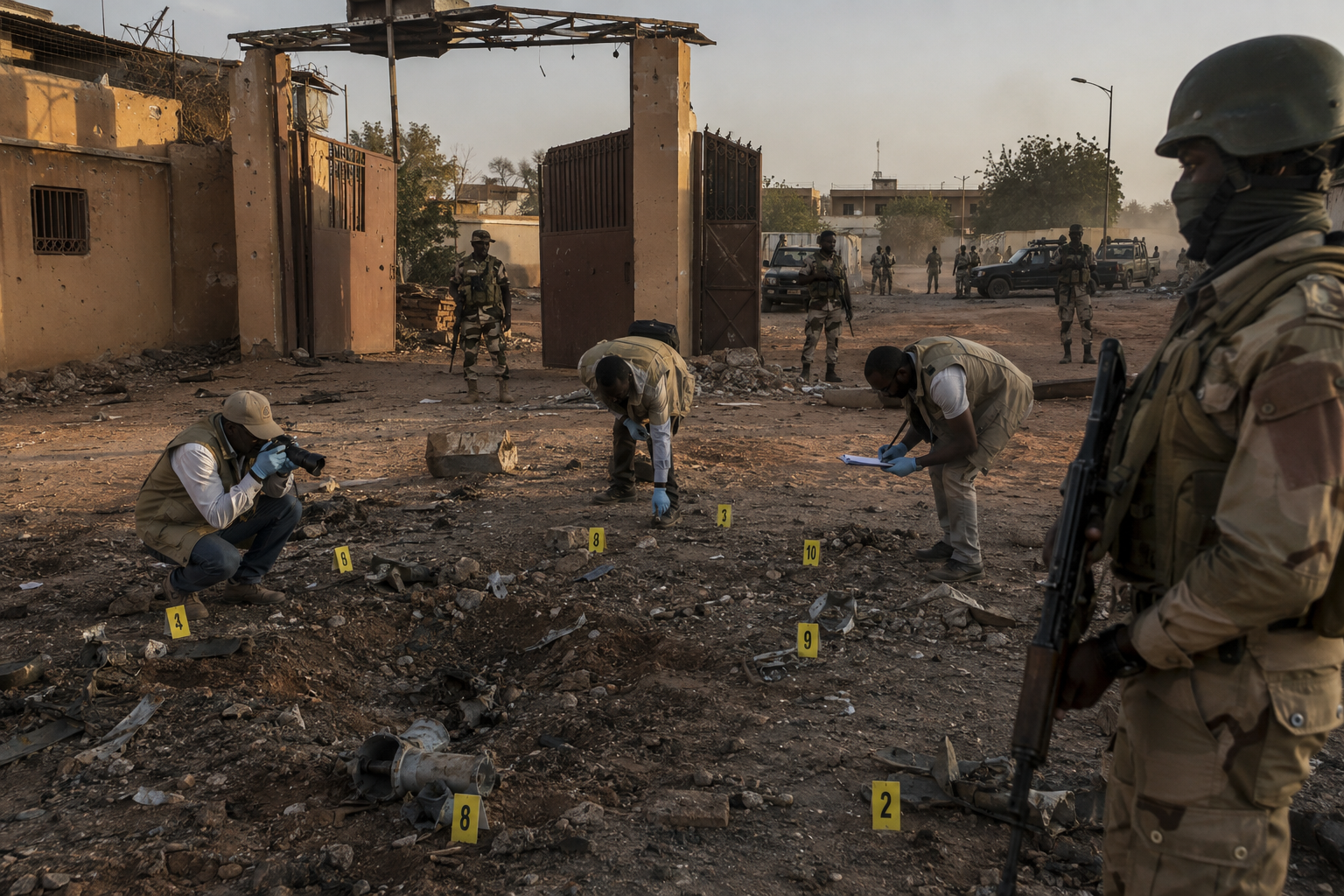
Niger’s government has accused France of orchestrating a failed military mutiny in the capital, Niamey, and says it has gathered evidence that could support legal action against those responsible. The accusation concerns an August 29 attack in which disgruntled soldiers targeted a strategic army base and fired shots near the presidential palace. The mutiny was eventually suppressed by Nigerien forces, assisted by Russian paramilitary allies.
The unrest resulted in the deaths of three members of Niger’s presidential guard, according to the country’s Foreign Affairs Ministry. AFP reported a higher total of five fatalities, including civilians. In a statement read on television, Niger’s Council of Ministers said the attack had been encouraged by a broad network of accomplices allegedly led by France, Niger’s former colonial ruler. The government said it reserved the right to take the matter to international courts.
France rejected the accusation. French Foreign Minister Jean-Noël Barrot described Niger’s claims as “pure fantasies” and said Paris was being wrongly blamed for an attack in which it had no involvement. The report also notes that a Nigerien military official had previously accused France, Ivory Coast and Benin of supporting the mutiny.
The dispute reflects the broader deterioration in relations between Niger and France since the 2023 coup that brought General Abdourahamane Tiani to power. Like neighboring junta-led Burkina Faso and Mali, Niger has moved closer to Russia while distancing itself from Paris. The three countries are seeking Russian support as they confront a persistent jihadist conflict across the Sahel.
Entities: Niger, France, Niamey, Niger’s Council of Ministers, Niger’s Foreign Affairs Ministry • Tone: neutral • Sentiment: negative • Intent: inform
05-09-2026
France has rejected Niger’s accusation that Paris helped organize and sustain a failed military mutiny in the capital, Niamey. French Foreign Minister Jean-Noel Barrot described the allegation as “pure fantasy,” saying France had neither the intention nor the capability to mobilize such an operation. His response followed a statement by Niger’s military government, read on state television, accusing President Emmanuel Macron’s administration of leading an international network of collusion behind the August 29 assault.
The mutiny began at Base 101, a military facility located within Niamey’s international airport, where soldiers turned against their commanders and opened fire at several locations. Fighting later reached the presidential palace, while the state broadcaster was taken off air for several hours. Niger’s army, supported by Russian paramilitary personnel from Africa Corps, regained control of the base the following day. State media reported that hundreds of soldiers participated and that dozens were killed or arrested.
Niger’s government has expanded its accusations to include unnamed African states. A state television video featured an air force captain alleging that Benin, Chad, Ivory Coast and the regional bloc ECOWAS supported the attack. Benin has rejected the allegation. The government also acknowledged for the first time that civilians died during the violence.
The dispute reflects the sharp deterioration in relations between Niger and France since General Abdourahamane Tchiani seized power in a 2023 coup and sought military support from Russia, replacing France as Niger’s principal foreign security partner. Analysts cited in the article believe the mutiny was more likely driven by soldiers’ frustration over heavy losses and continuing attacks by groups linked to al-Qaeda and ISIL, despite the shift to Russian backing. Niger’s tensions with France have also deepened over the seizure of uranium assets from French nuclear company Orano.
Entities: France, Niger, Niamey, French Foreign Minister Jean-Noel Barrot, Emmanuel Macron • Tone: analytical • Sentiment: negative • Intent: inform
05-09-2026
Niger has accused France of orchestrating an attack by mutinous soldiers on sensitive military and government sites in the capital, Niamey. The accusation was made in a government statement broadcast on television on Sept. 4, following an assault on Aug. 29 involving the airport, the presidency and a military airbase.
The mutineers’ attack represented the latest challenge to the authority of Abdourahamane Tiani, who came to power after a 2023 coup. Explosions and gunfire were reported at the military airbase, but Niger’s army, supported by Russian paramilitary forces, retook control the following day. The government said the attack was encouraged by a large network of accomplices led by France, although the report does not provide independent confirmation of the allegation.
Niger said it had assembled substantial evidence and reserved the right to take the case to international courts. The accusations come amid strained relations between Niger and France following the 2023 coup and the subsequent deterioration of ties between France and several Sahel governments led by military rulers. Tiani had also previously blamed France and other West African countries for unrest in Niamey earlier in the year without presenting evidence.
The mutiny underscores divisions within Niger’s armed forces. The military has faced repeated battlefield setbacks while attempting to contain a persistent jihadist insurgency. The report therefore presents the attack not only as a political and security crisis but also as a sign of internal pressure within the military establishment. Reuters reported the government’s claims and the sequence of events.
Entities: Niger, France, Abdourahamane Tiani, Niamey, Mutinous soldiers’ attack on Aug. 29 • Tone: analytical • Sentiment: negative • Intent: inform