05-09-2026
European Union enlargement chief Marta Kos has cancelled a planned visit to Serbia after condemning what she described as the “glorification” of Ratko Mladic, the former Bosnian Serb military commander convicted of genocide, crimes against humanity and war crimes. Kos said the public celebration surrounding Mladic’s death was incompatible with the values underpinning Serbia’s path toward EU membership.
Mladic, known as the “Butcher of Bosnia,” died on August 27 at the age of 84 while serving a life sentence in The Hague. His body was flown to Belgrade and received with a guard of honour before his planned burial. Although a United Nations court convicted him in 2017, sections of Serbia’s public and political establishment continue to regard him as a hero. Supporters reportedly cheered as his body was transported through the capital.
Serbian authorities have said Mladic will be buried with state and military honours. President Aleksandar Vucic said the government would provide logistical and transport assistance and predicted that tens of thousands of people could attend the funeral. He dismissed Kos’s explanation for cancelling her visit as “very short but stupid.”
The dispute highlights the continuing tension between Serbia’s EU accession ambitions and the country’s handling of its wartime past. Serbia has negotiated membership since 2014, but the process has stalled in recent years under Vucic. Mladic’s legacy remains particularly sensitive because of his role in the Bosnian War, which killed more than 100,000 people, and the 1995 Srebrenica genocide, in which forces under his command killed more than 8,000 Bosniak Muslim men and boys.
Entities: Marta Kos, Ratko Mladic, Aleksandar Vucic, European Union, Serbia • Tone: analytical • Sentiment: negative • Intent: inform
05-09-2026
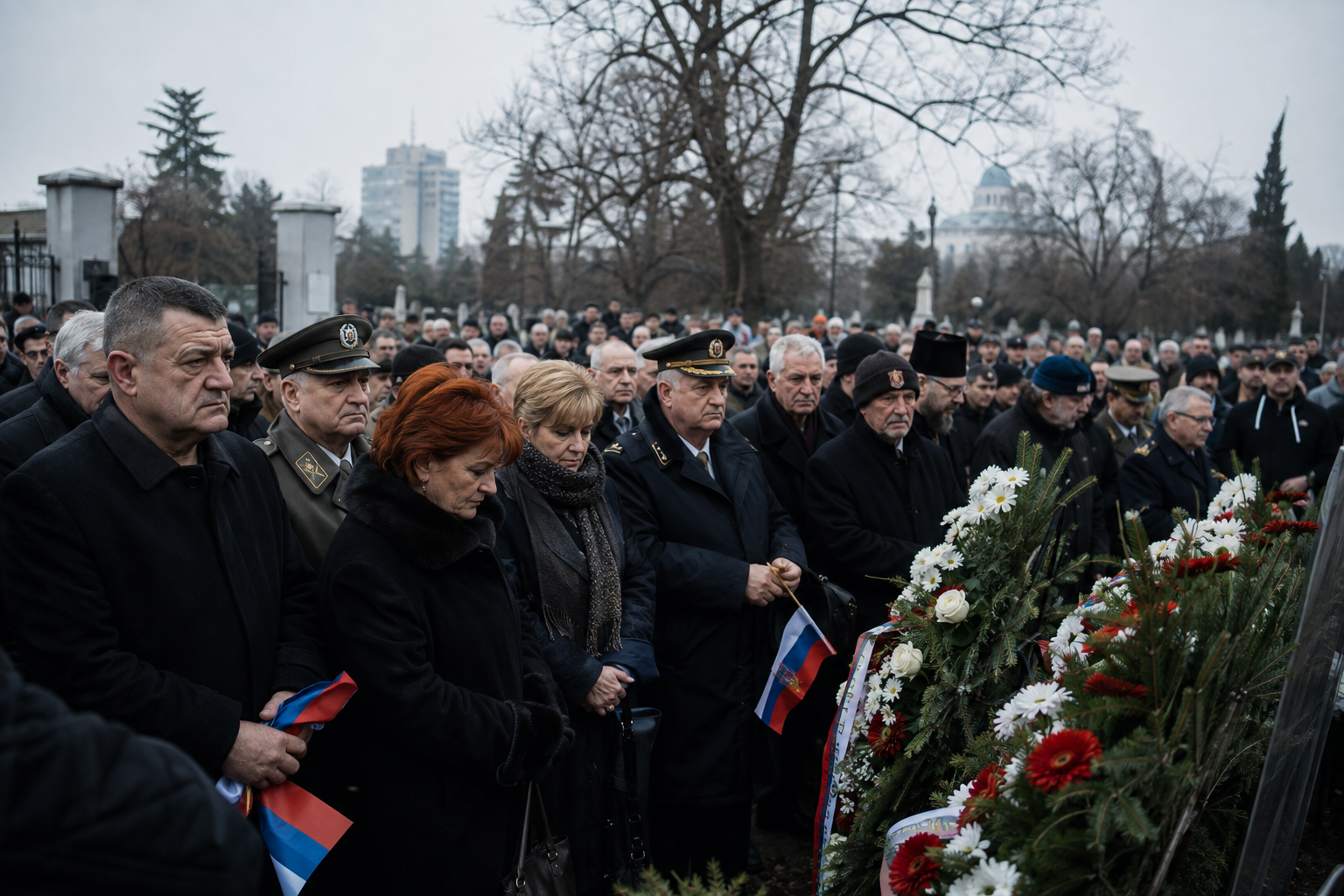
A commemoration for Ratko Mladić, the former Bosnian Serb army commander convicted of genocide, war crimes and crimes against humanity, took place at the House of the Serbian Army in Belgrade. Although Serbian Justice Minister Nenad Vujić initially said Mladić would receive full military and state honours, the government later clarified that the event was organized by retired generals rather than the state. Mladić’s burial, scheduled for Monday, will take place without serving officials, artillery salutes, ceremonial military units or placement in one of Belgrade’s designated prominent cemeteries. President Aleksandar Vučić, the prime minister and the parliamentary speaker are not expected to attend. Thousands, possibly tens of thousands, of Mladić supporters are nevertheless expected at the funeral, prompting extensive security preparations.
Mladić died while serving a life sentence imposed by the International Criminal Tribunal for the former Yugoslavia. He was convicted of orchestrating the 1995 Srebrenica massacre, in which more than 8,000 Bosniak men and boys were executed, and of crimes committed during the nearly four-year siege of Sarajevo. The Bosnian war resulted in more than 100,000 deaths and displaced over two million people.
The planned commemoration has intensified tensions between Serbia and European institutions. EU Enlargement Commissioner Marta Kos cancelled a visit to Serbia, saying glorification of Mladić was incompatible with the values underlying Serbia’s EU membership path. Council of Europe Human Rights Commissioner Michael O’Flaherty and several European foreign ministers also urged authorities to oppose the glorification of convicted war criminals. Vučić rejected the criticism, accusing Kos of making an unacceptable argument about restricting attendance at the funeral. The article also notes Serbia’s past support for Mladić and his family, as well as growing calls for European political groups to sever ties with Serbia’s ruling party.
Entities: Ratko Mladić, Belgrade, Serbia, Bosnia and Herzegovina, Aleksandar Vučić, Marta Kos • Tone: analytical • Sentiment: negative • Intent: inform
05-09-2026
A commemoration was held in Belgrade on Saturday for Ratko Mladic, the former Bosnian Serb military commander who died the previous week while serving a life sentence in The Hague for war crimes committed during the 1990s conflict in Bosnia. The ceremony took place two days before his planned burial and was attended by approximately 300 people, including former and current Serbian military personnel, relatives, officials and supporters.
The event was organised by an association representing retired and active Serbian army generals at a military facility in the Serbian capital. Mladic’s son, Darko, and other family members attended, alongside Serbian Justice Minister Nenad Vujic and officials from Republika Srpska, the Bosnian Serb entity, including its president, Sinisa Karan. A photograph from the event showed a mourner wearing a shirt bearing Mladic’s image.
Mladic’s body was transported to Serbia on a government aircraft on Thursday. His coffin was covered with flags and received with military honours, reflecting the continued support he retains among some Serbs despite his conviction and international condemnation. He is scheduled to be buried at a Belgrade cemetery on Monday, in a ceremony expected to attract thousands of mourners.
Mladic, often referred to by critics as the “Butcher of Bosnia,” was convicted of crimes committed during the Bosnian war and sentenced to life imprisonment. The article presents the commemoration and preparations for his burial while noting the sharply divided response to his legacy: supporters and some Serbian officials have honoured him, whereas international opinion continues to condemn him as a war criminal.
Entities: Ratko Mladic, Darko Mladic, Nenad Vujic, Sinisa Karan, Belgrade • Tone: analytical • Sentiment: negative • Intent: inform