04-11-2026
Montenegro is the leading candidate to join the European Union, and the European Commission says accession negotiations could be completed by the end of the year. If that happens, an accession treaty could be signed in June 2027, then ratified by all 27 EU member states, potentially enabling Montenegro to join in 2028. The Commission described Montenegro’s progress as the result of sustained efforts but said the country still needs reforms, particularly on fundamental rights and financial services. Montenegro has a population of about 630,000. Croatia, which joined in 2013, was the EU’s most recent new member.
The Commission also reported progress by Albania, Moldova and Ukraine. Albania is about a year behind Montenegro and must continue judicial reforms and efforts against organized crime and corruption to complete negotiations by the end of 2027. Moldova’s goal of completing necessary reforms by early 2028 was called ambitious but achievable if its current pace continues. Ukraine has made progress despite Russia’s invasion, but the Commission said it must speed up reforms to strengthen the rule of law and democratic institutions.
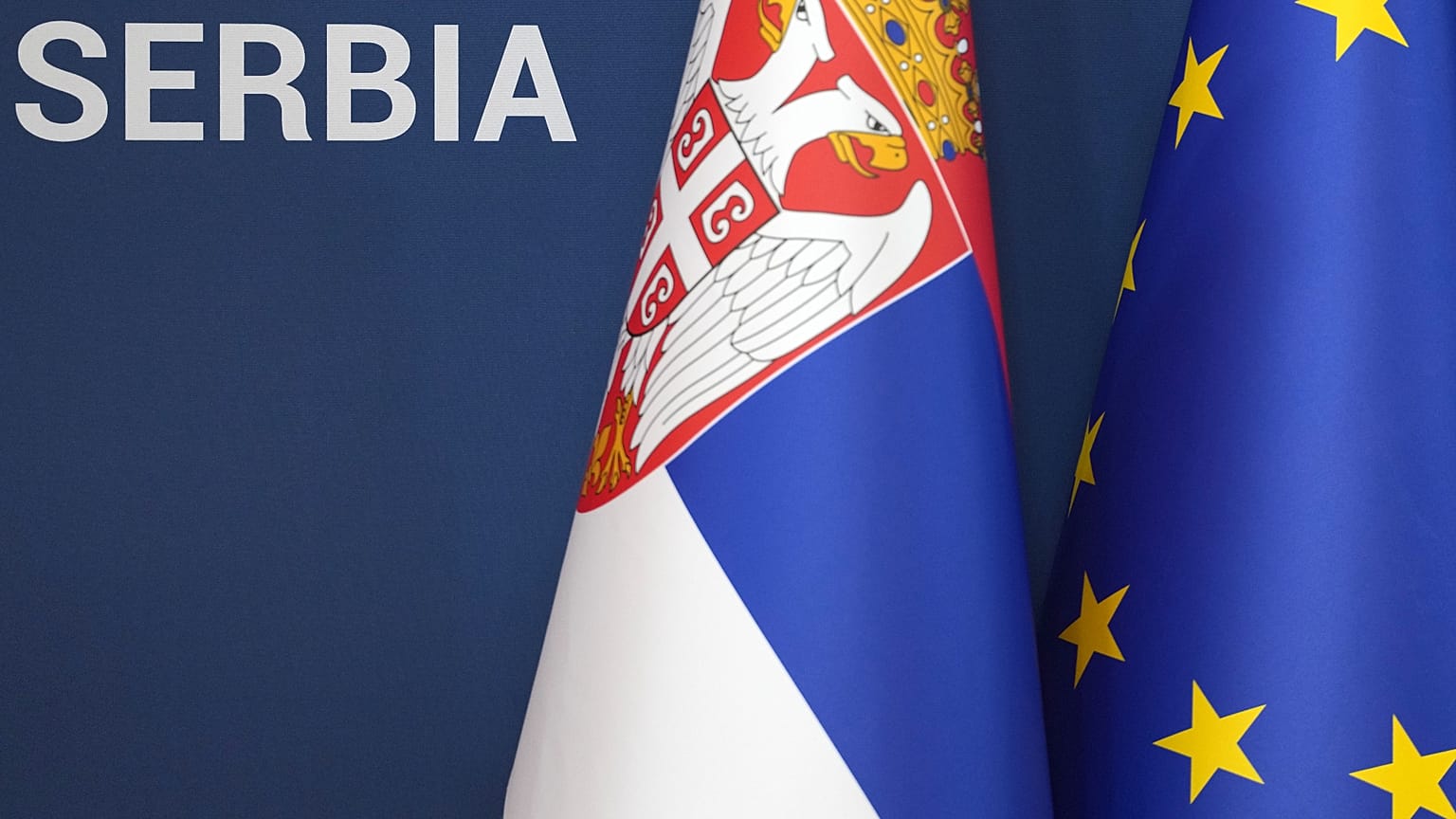
Progress has been slower for North Macedonia, Bosnia-Herzegovina and Serbia. Serbia’s accession talks could gain momentum if the student movement that defeated longtime populist President Aleksandar Vucic forms a government committed to strengthening democracy. Enlargement Commissioner Marta Kos said a new Serbian government could provide a fresh start and advance democratic institutions, fundamental rights and accession efforts. Kosovo wants to join the EU but has not received candidate status. Georgia and Turkey are considered the furthest from membership because of democratic backsliding. Overall, the report presents enlargement as a possibility but makes clear that timelines depend on reforms and, ultimately, unanimous ratification by EU members.
Entities: Montenegro, European Union (EU), European Commission, Ursula von der Leyen, Marta Kos • Tone: analytical • Sentiment: neutral • Intent: inform
04-11-2026
The European Commission is giving greater weight to foreign-policy and democratic alignment in the EU accession process, as it develops a plan for gradual integration that would offer candidates limited access to EU benefits before membership. The policy is framed as a response to security challenges, including Russia’s war against Ukraine and hybrid attacks affecting EU countries. Cooperation on defence, border management, cybersecurity and critical infrastructure is gaining importance, while alignment with sanctions on Russia is a key measure of candidates’ foreign-policy positions.
Serbia, Georgia and Turkey are identified as the candidates with the weakest alignment and signs of democratic backsliding. Serbia’s alignment with EU foreign policy is 63%; the Commission cites its ties with China and Russia and its refusal to join sanctions on Russia, Belarus and Iran. Its record on rule of law and fundamental rights is also a concern, although a recent election victory by the anti-corruption Student List has raised hopes for reform. Normalising relations with Kosovo remains another major obstacle.
Georgia has made no progress on the nine steps tied to its candidate status, and its government has said it will not pursue accession talks until 2028. EU officials cite restrictions on rights and democratic backsliding, while Prime Minister Irakli Kobakhidze has accused the Commission of double standards and defended controversial legislation. The EU says Georgia’s course must change for progress to resume.
Turkey is rated the only candidate with “very low” foreign-policy alignment and is also described as backsliding democratically. Nevertheless, cooperation continues where interests overlap, including trade, migration, regional security and connectivity. EU concerns include the circumvention of Russia sanctions and the occupation of Northern Cyprus.
The Commission plans to open a dialogue early next year on tailored gradual-integration measures, potentially including access to the internal market, Erasmus+, the end of roaming charges and participation in SEPA. These benefits would be conditional, merit-based and reversible, and would require candidates to align progressively with EU rules and strategic priorities.
Entities: European Commission, EU enlargement, Serbia, Georgia, Turkey • Tone: analytical • Sentiment: negative • Intent: analyze
04-11-2026
At the Euronews Enlargement Summit in Brussels on 3 November 2026, Euronews chairman Pedro Vargas David advocated faster European Union enlargement and urged EU leaders to reconsider how candidate countries could be brought closer to membership. Addressing candidates including Albania, Georgia, Serbia and Ukraine, he quoted their appeal: “Let us in as fast as you can, we will show you once inside, we are worthy members of the EU.” The article reports uneven public support for accession: 92% in Albania, compared with 46% in Turkey and 31% in Serbia. David also praised the European aspirations of Armenia and Georgia, pointing to their cultural and traditional ties to Europe, while asking whether EU representatives do enough to counter opponents’ narratives and communicate the Union’s benefits.
For the Western Balkans, David proposed debating a “Gibraltar model” that could provide swift access to the Schengen area alongside a fast-tracked membership status. Such an arrangement might involve changes to member states’ rights and obligations, including limits on vetoes, voting powers or access to certain programmes. He cited recent elections in Bosnia and Herzegovina and Serbia as evidence that democratic progress, though imperfect, could support moving forward. He warned that the EU faces a historic opportunity and that other powers would act if Europe fails to do so.
The article says nearly 53% of EU citizens support enlargement, but opinion varies widely, from 79% in Sweden to 35% in France. David argued that public support could grow through better information, noting that more than two-thirds of Europeans say they know too little about enlargement. He assigned responsibility to political leaders and the media, including Euronews. He also called for the United Kingdom to rejoin the EU, saying both Britain and Europe are weaker apart, and cited a reported 60% of British people in favour of rejoining.
Entities: Pedro Vargas David, Euronews, EU Enlargement Summit, European Union enlargement, Western Balkans • Tone: analytical • Sentiment: positive • Intent: persuade
04-11-2026
At the Euronews Enlargement Summit in Brussels, European lawmakers Riho Terras of the European People’s Party (EPP) and Pasquale Tridico of The Left discussed the prospects and difficulties of expanding the European Union. Their debate took place as the European Commission released its latest progress report on countries seeking EU membership. The article presents enlargement as more plausible than at any point in the past decade, while emphasizing that political obstacles could still prevent or delay it.
The discussion covered candidate countries across several regions, including Ukraine and Georgia in Europe’s east, Montenegro in the Western Balkans, and Armenia in the Southern Caucasus. Each faces a distinct combination of political sensitivities, demanding reforms and diplomatic challenges. The article notes that progress toward membership can be swift, but setbacks can also be dramatic, underscoring the uncertain nature of the process.
The debate was featured in Euronews’ programme The Ring, hosted by Stefan Grobe. The article frames enlargement as both a major political project and a question of the EU’s readiness to admit new members. It does not provide the MEPs’ specific arguments or describe the Commission report’s findings; instead, it introduces the summit discussion and directs readers to watch the episode in the video player. The production credits name Luis Albertos and Amaia Echevarria as producers and Vassilis Glynos as editor.
Entities: Stefan Grobe, Riho Terras, Pasquale Tridico, Luis Albertos, Amaia Echevarria • Tone: analytical • Sentiment: neutral • Intent: analyze
04-11-2026
The European Commission says Ukraine must accelerate reforms if it is to achieve its stated goal of completing European Union accession negotiations by the end of 2028. In its enlargement policy report, the Commission said it supports the “ambitious objective” but believes a faster pace of reform is necessary. Ukrainian President Volodymyr Zelenskiy has made EU membership a central foreign policy goal, describing it as important to long-term prosperity and security for Ukraine and Europe amid Russia’s aggression.
The article explains that joining the EU is typically a lengthy process involving detailed negotiations and legal changes to bring a candidate country into line with EU standards. Accession also requires ratification by every existing EU member state. The Commission said Ukraine had remained committed to its EU integration reform agenda despite the hardships caused by Russia’s ongoing war. It identified rule-of-law standards, an action plan on national minorities, justice reform and progress in combating corruption as areas requiring attention.
The report also compares Ukraine’s progress with that of Moldova, which received candidate status alongside Ukraine in June 2022. The Commission indicated that Moldova is advancing more quickly. Moldova has set a goal of provisionally closing accession negotiations by early 2028. The Commission described that target as ambitious but achievable if Moldova maintains its current pace of reforms. Overall, the report presents Ukraine’s accession timetable as dependent on faster implementation of reforms, while noting that Moldova is currently moving ahead more rapidly.
Entities: Ukraine, European Union (EU), European Commission, Volodymyr Zelenskiy, Moldova • Tone: analytical • Sentiment: neutral • Intent: inform