04-10-2026
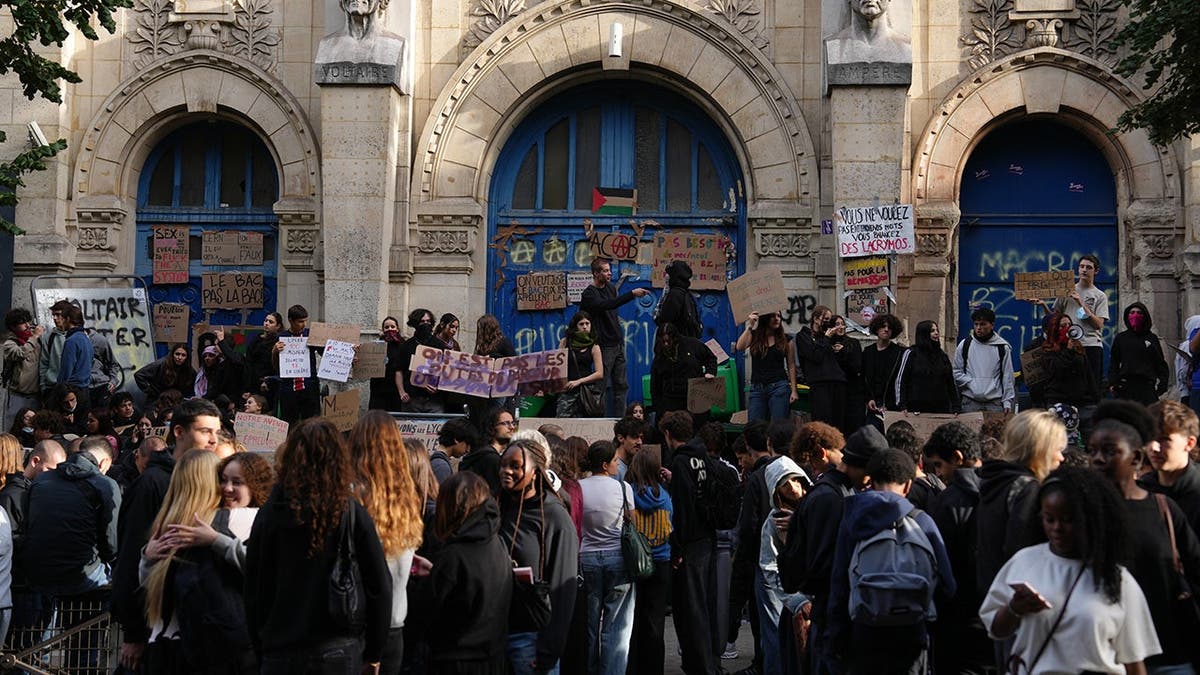
France’s education ministry expects 400 to 500 secondary schools to be fully or partly closed on Monday as student protests continue, with another nationwide mobilisation planned for Tuesday. The demonstrations began two weeks ago at Saint-Exupéry secondary school in Créteil, where pupils supported teachers striking over staffing and resources, and have since spread to major cities. Students cite unsafe and unsanitary buildings, overcrowded classes, difficult timetables, staff shortages and uncovered teacher absences; some also oppose the school mobile-phone ban. Education Minister Édouard Geffray said classes were suspended in 400 to 500 schools on Friday and a similar number would likely be affected Monday, although some classes would resume gradually. Of 735 schools affected by protests, 24 were reportedly set on fire or ransacked, and 78 education staff have been injured since the movement began. The Interior Ministry reported nearly 5,000 arrests since Monday. Police have used tear gas, rubber bullets, defensive ball launchers and batons to disperse some demonstrators. Interior Minister Laurent Nuñez defended the response as proportionate, saying police protect peaceful protesters and act firmly against violence and damage. He rejected claims that officers specifically target young people of racialised backgrounds from working-class neighbourhoods. Pupils said a meeting with Geffray produced no concrete measures and called for protests to continue. Teachers’ unions announced they would join Tuesday’s action, backing the pupils’ demands while condemning injuries and threats and criticising what they see as a government response focused on policing. The article also describes serious incidents: a young man in Tours lost sight in one eye, a teacher in La Ciotat was doused in petrol and beaten, and a police officer in Belfort was chased and assaulted. The government reportedly plans to accelerate consideration of a bill requiring people involved in violent gatherings to contribute to repair costs, even if they did not directly cause the damage. The Senate is due to examine the bill at the end of October.
Entities: Édouard Geffray, Laurent Nuñez, Nina Borowski, Alexander Kazakevich, French Ministry of Education • Tone: analytical • Sentiment: negative • Intent: inform
04-10-2026
Up to 500 high schools across France may be totally or partly closed on Monday as student protests continue over teacher shortages, long school days, overcrowded classrooms and deteriorating school buildings. Education Minister Edouard Geffray said lessons would be suspended at 400 to 500 schools because security conditions had not been met. He said 24 schools had been burned or ransacked since protests began, and anticipated a number of affected schools similar to Friday’s. He also promised a “partial, progressive return to lessons.”
The protests began at a school in Paris on September 17 and spread nationwide the following week. Demonstrations have sometimes turned violent, with clashes between teenagers and security forces, including police use of tear gas and batons. Geffray accused far-left activists of infiltrating and hijacking the student movement, and said 78 education staff had been wounded and deliberately targeted. These claims were attributed to the minister.
Organisers have called for protests to continue on Tuesday, saying the government has not announced concrete measures. More than 5,000 people have been arrested since the movement began, 85 percent of them minors. Critics have accused police of using excessive force. Separately, a 16-year-old was detained over an assault on a teacher during a protest in La Ciotat. The 59-year-old teacher was reportedly doused with gasoline and struck. The article describes a video circulating on social media that appears to show a masked person splashing liquid on the teacher while a tree burns nearby.
Entities: Edouard Geffray, France, Paris, La Ciotat, French Ministry of Education • Tone: neutral • Sentiment: negative • Intent: inform
04-10-2026
France is preparing for another wave of student demonstrations after a weekend lull, with the education minister saying that as many as 500 high schools will be wholly or partly closed on Monday. Education Minister Edouard Geffray said lessons would be suspended at roughly 400 to 500 schools because security conditions had not been met. He characterized the closures primarily as a precaution ahead of large-scale protests that movement leaders have called for Tuesday.
The protests have shaken the country and have included damage to school property: Geffray said 24 schools had been burned or ransacked since the movement began. The demonstrations are being driven by grievances among teenagers attending French high schools, known as lycees. Students say their education is being undermined by frequent teacher absences, excessively long school days and deteriorating facilities, among other complaints.
The article reports the expected scale and timing of the closures and demonstrations, the minister’s explanation for the security measures, and the students’ stated concerns. It does not describe the protests’ organizers in detail or specify what additional measures authorities might take. The immediate focus is on Monday’s disrupted lessons and the possibility of a larger protest turnout on Tuesday.
Entities: France, Edouard Geffray, Agence France-Presse, French high schools (lycees), student protests • Tone: analytical • Sentiment: negative • Intent: inform
04-10-2026
Up to 500 French high schools are expected to be partly or fully closed on October 5 as student protests over school conditions continue, Education Minister Edouard Geffray said. The demonstrations began at a Paris school on September 17 and expanded nationwide. Students say high teacher absences, long school days and dilapidated facilities are disrupting their education. Geffray said security conditions were not adequate for normal lessons at around 400 to 500 schools, and that 24 schools had been burned or ransacked. He said the number of affected schools would be comparable to that on October 2, while promising a partial, gradual return to classes.
The movement has also been marked by clashes and violence involving teenagers and security forces, who have sometimes used tear gas and batons. Geffray claimed that far-left activists had infiltrated and hijacked the student movement, and said 78 education staff members had been wounded. He alleged that staff were deliberately targeted because they worked in the national education system. Organisers have called for protests to continue on October 6, arguing that the government has not announced concrete measures.
More than 5,000 people—85 per cent of them minors—have been arrested since the protests began. Police have faced criticism for allegedly heavy-handed tactics. In a separate incident connected to a protest, a 16-year-old was detained on October 4 over an attack on a 59-year-old teacher in La Ciotat. The teacher was doused with gasoline and struck on October 2. A social-media video reportedly shows a masked person in black splashing liquid on the teacher as a tree burns nearby. The article presents the minister’s claims and the wider unrest, alongside student grievances, arrests and concerns about police conduct.
Entities: Edouard Geffray, France, Paris, Place de la Nation, La Ciotat • Tone: analytical • Sentiment: negative • Intent: inform
04-10-2026
French high school students have been protesting teacher shortages, poor classroom conditions, overloaded timetables and school days that can run from 8 a.m. to 6 p.m. Many students, especially those from low-income neighbourhoods, feel they are receiving an inferior education. The protests began on Sept 17 at Saint-Exupery high school in Creteil, a suburb of Paris, where students rallied in support of teachers striking over insufficient staff and resources. The movement spread nationwide, even though authorities later agreed to send additional staff to the school where it began.
Social media has helped propel the demonstrations, with students and online channels sharing and editing videos of events such as burning rubbish bins and police using tear gas. Sociologist Valerie Becquet said these platforms let students present a narrative distinct from traditional media. The unrest also highlights broader inequalities in France’s education system: although all students can attend lycees, schools range from vocational institutions to elite establishments that remain largely attended by affluent, white students.
The protests have become politically contentious ahead of presidential elections. The government has accused the hard-left France Unbowed (LFI) of driving the movement; LFI official Manuel Bompard rejected that charge, while Jean-Luc Melenchon has backed the protests and called for non-violent action. Authorities reported more than 5,000 arrests since Sept 28 and said 735 educational establishments were affected on Oct 2. A further protest day was planned for Oct 6.
Demonstrators have blockaded schools, set fires and thrown projectiles, while police have used tear gas, rubber bullets and batons to disperse some crowds. A young man injured in clashes in Tours lost the use of his right eye, according to the city’s prosecutor. Videos have also circulated alleging police brutality, while police officers have themselves been attacked. The government accepts that students may have legitimate grievances but condemns violence; critics accuse some officers of using excessive force against protesters who are legally children.
Entities: French high school protests, Lycees, Saint-Exupery high school, Creteil, Paris • Tone: analytical • Sentiment: neutral • Intent: inform
04-10-2026
The article reports on violent student protests across France and presents them as a warning for the United States about immigration and social policy. Fox News quotes “The Big Weekend Show” co-host Tomi Lahren calling the unrest a “cautionary tale.” Lahren links the violence to open-border policies and argues that residents may grow angry when newcomers rely on public services, although the article does not provide evidence establishing immigration as a cause of the protests.
The demonstrations began in Paris’s poorer suburbs late last month, with students protesting overcrowded classrooms, teacher shortages, long school days and deteriorating school facilities. The protests spread to Paris and cities including Marseille, Strasbourg, Tours, Nantes, Toulouse and Lille, and became increasingly violent. The article says the government’s proposed 2027 budget, which would increase education spending by 1.7%—less than inflation and excluding teacher pensions—also fueled anger.
Reported violence included arson, vandalism, objects thrown at police and assaults; police responded with tear gas and rubber bullets. Citing Reuters, the article says more than 5,000 protesters were arrested during the week and over 400 schools remained closed as of Friday. Euronews reported injuries to at least 65 school staff and roughly 170 students; more than 100 high schools sustained what Education Minister Édouard Geffray called “severe damage.”
The article also describes a dispute over the protests’ political origins. French intelligence agencies reportedly told a government crisis meeting that politicians from the hard-left France Unbowed Party (LFI) had initiated the movement. LFI denied this and accused President Emmanuel Macron’s government of politicizing the unrest ahead of the 2027 presidential election. Simone Rodan-Benzaquen of the Foundation for Defense of Democracies said the students’ original complaints were legitimate but that extreme violence had transformed the movement into a broader confrontation with the government.
Entities: Tomi Lahren, France, United States, Paris, Marseille • Tone: analytical • Sentiment: negative • Intent: warn