04-10-2026
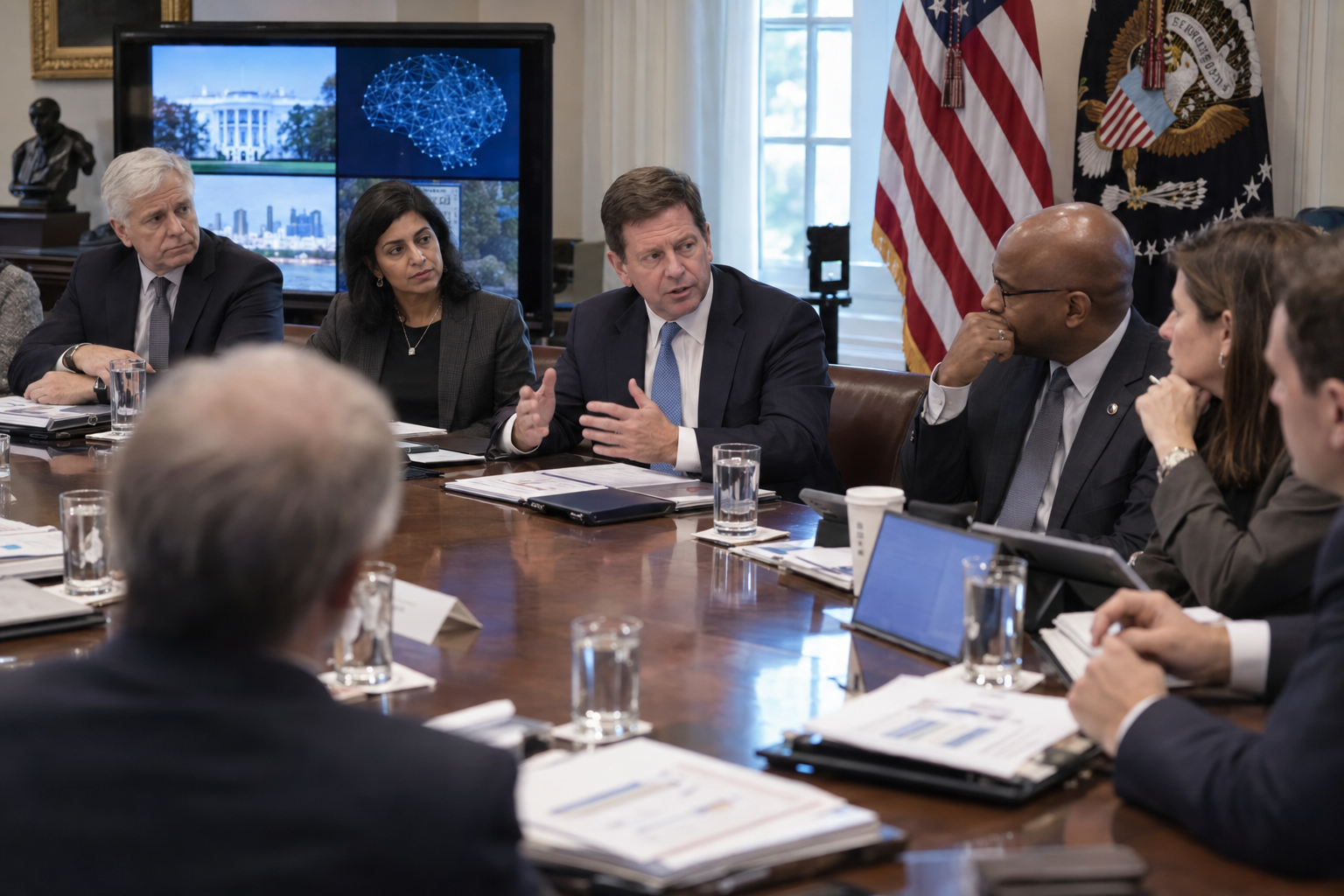
President Donald Trump has selected Director of National Intelligence Jay Clayton to serve as the administration’s AI czar. Clayton will lead a new White House task force called the “Super Intelligence Force,” reflecting Trump’s preference for the term “SI” over “AI.” The group has 120 days to examine artificial intelligence’s risks and opportunities and recommend what role the federal government should play in overseeing the technology. It will report to Trump and Chief of Staff Susie Wiles.
The task force will also include Federal Trade Commission Chairman Andrew Ferguson, Defense Department Under Secretary of War for Research and Engineering and Chief Technology Officer Emil Michael, and Office of Personnel Management Director Scott Kupor. The Wall Street Journal first reported Clayton’s appointment.
The move follows Trump’s September announcement of an “AI Force” intended to facilitate industry growth and identify bad actors. Trump has said the government should not hinder the sector, while also describing the group’s role as helping and overseeing the industry. The task force is being formed amid increased concern about AI risks, including high-profile hacks involving rogue AI agents and warnings about the speed of technological progress.
AI leaders have recently met with Trump and House Speaker Mike Johnson at the White House and agreed to voluntary safety standards, which Trump called “morally binding.” Prominent AI executives, including Anthropic CEO Dario Amodei and OpenAI CEO Sam Altman, have called for federal guardrails on advanced AI models. Trump, however, has opposed regulation and previously characterized fears about AI as a hoax.
Clayton previously chaired the Securities and Exchange Commission and served as U.S. attorney for the Southern District of New York. The Senate confirmed him as director of national intelligence in July, placing him in charge of 18 U.S. intelligence agencies. The article also notes that venture capitalist David Sacks previously served as Trump’s AI and crypto czar and now co-chairs the President’s Council of Advisors on Science and Technology.
Entities: Jay Clayton, Donald Trump, Susie Wiles, Andrew Ferguson, Emil Michael • Tone: analytical • Sentiment: neutral • Intent: inform
04-10-2026
U.S. President Donald Trump announced that the White House will establish a task force to coordinate the administration’s response to artificial intelligence. The group is called the “Super Intelligence Force,” abbreviated SI, reflecting Trump’s preference for the term “super intelligence” over “AI.” According to Trump’s Sunday post on Truth Social, the task force will coordinate the federal government’s engagement with consumers, public interest groups, religious organizations, providers of critical infrastructure, and companies working on super intelligence.
The article identifies four officials who will lead the group: Director of National Intelligence Jay Clayton, Federal Trade Commission Chairman Andrew Ferguson, Pentagon Chief Technology Officer Emil Michael, and Office of Personnel Management Director Scott Kupor. The headline describes Clayton as the administration’s “AI czar,” while the article says the task force will be led by all four officials.
The report provides no further details about the task force’s powers, membership beyond its leaders, timetable, or specific policy plans. It is presented as breaking news and notes that the story may be updated. The article therefore reports the announcement and its stated coordination role without assessing how the new body may affect AI policy or development.
Entities: Donald Trump, Jay Clayton, Andrew Ferguson, Emil Michael, Scott Kupor • Tone: neutral • Sentiment: neutral • Intent: inform
04-10-2026
A new White House task force will examine the risks posed by artificial intelligence and consider what role the US federal government should play, according to a Wall Street Journal report. The group will be led by Director of National Intelligence Jay Clayton, who confirmed his appointment to the newspaper. A senior White House official described the position as effectively making Clayton the Trump administration’s AI czar. The task force, called the “Super Intelligence Force”—a name preferred by President Donald Trump—has 120 days to prepare its report. Clayton said its purpose is to ensure the United States remains a leader in superintelligence while putting the interests of Americans first.
The initiative comes amid increasing concern about AI-related security risks. However, Trump has rejected calls for new regulations and has emphasized preserving the US technological lead over China. His administration instead supports a voluntary approach that includes external safety audits and stronger internal controls. Speaking at a meeting with industry executives, Trump described the country’s lead as substantial and said it should be maintained.
Treasury Secretary Scott Bessent separately criticized warnings from prominent AI figures about existential risks, calling them alarmist and unhelpful. In an interview with Axios, he argued that AI companies should regulate themselves and develop solutions. Bessent said responsibility rests with people working at AI laboratories and suggested that the labs have begun to accept that responsibility. The article thus presents a policy debate between assessing AI’s potential risks and responsibilities, and the administration’s preference for voluntary industry safeguards rather than new government regulations, with international competition with China a central consideration.
Entities: Jay Clayton, Donald Trump, Scott Bessent, United States, White House • Tone: analytical • Sentiment: neutral • Intent: inform