04-10-2026
Ukrainian President Volodymyr Zelenskyy says Ukraine will intensify attacks on Russian oil refineries in response to what he describes as Moscow’s new doctrine of strikes against a broader range of civilian targets. Ukraine’s intelligence services have obtained documents that Zelenskyy says show Russia intends to attack infrastructure, logistics, roads, schools and hospitals to pressure residents to leave Kyiv and other cities before winter. Russia says its strikes are retaliatory, while both sides deny deliberately targeting civilians.
Zelenskyy linked the shift in Russian tactics to President Vladimir Putin’s desire to project strength while Russian forces are losing ground in a key frontline region and suffering high casualties. He said Ukraine would answer Russian attacks on its energy system by striking Russian energy assets, particularly oil refineries that help finance the war, but would not deliberately target civilian objects.
He also reported that Ukraine’s ongoing counteroffensive, code-named “Vivaldi”, had recaptured about 140 square kilometres in the eastern Donbas region. Russia insists that control of all Donbas is necessary for a peace deal. Meanwhile, Russian drone and missile attacks have continued to hit Kyiv’s energy and telecommunications assets, transport infrastructure and, for the first time, bridges over the Dnipro River. Ukrainian officials warn that Russia has stockpiled hundreds of ballistic missiles for winter attacks on electricity and water infrastructure.
Zelenskyy said he had seen no sign Putin was interested in peace talks or an energy-infrastructure ceasefire. He welcomed the possibility of meeting Putin at the December G20 summit in Miami, but urged the United States not to normalise relations with Russia before hostilities end. The Trump administration has encouraged renewed negotiations and previously urged Ukraine not to attack Russian oil installations, citing rising diesel prices. Zelenskyy said peace must take precedence over economic ties. Proposed US-backed trilateral talks in the UAE had not yet been assigned a date or location.
Entities: Volodymyr Zelenskyy, Vladimir Putin, Donald Trump, Ukraine, Russia • Tone: analytical • Sentiment: negative • Intent: inform
04-10-2026
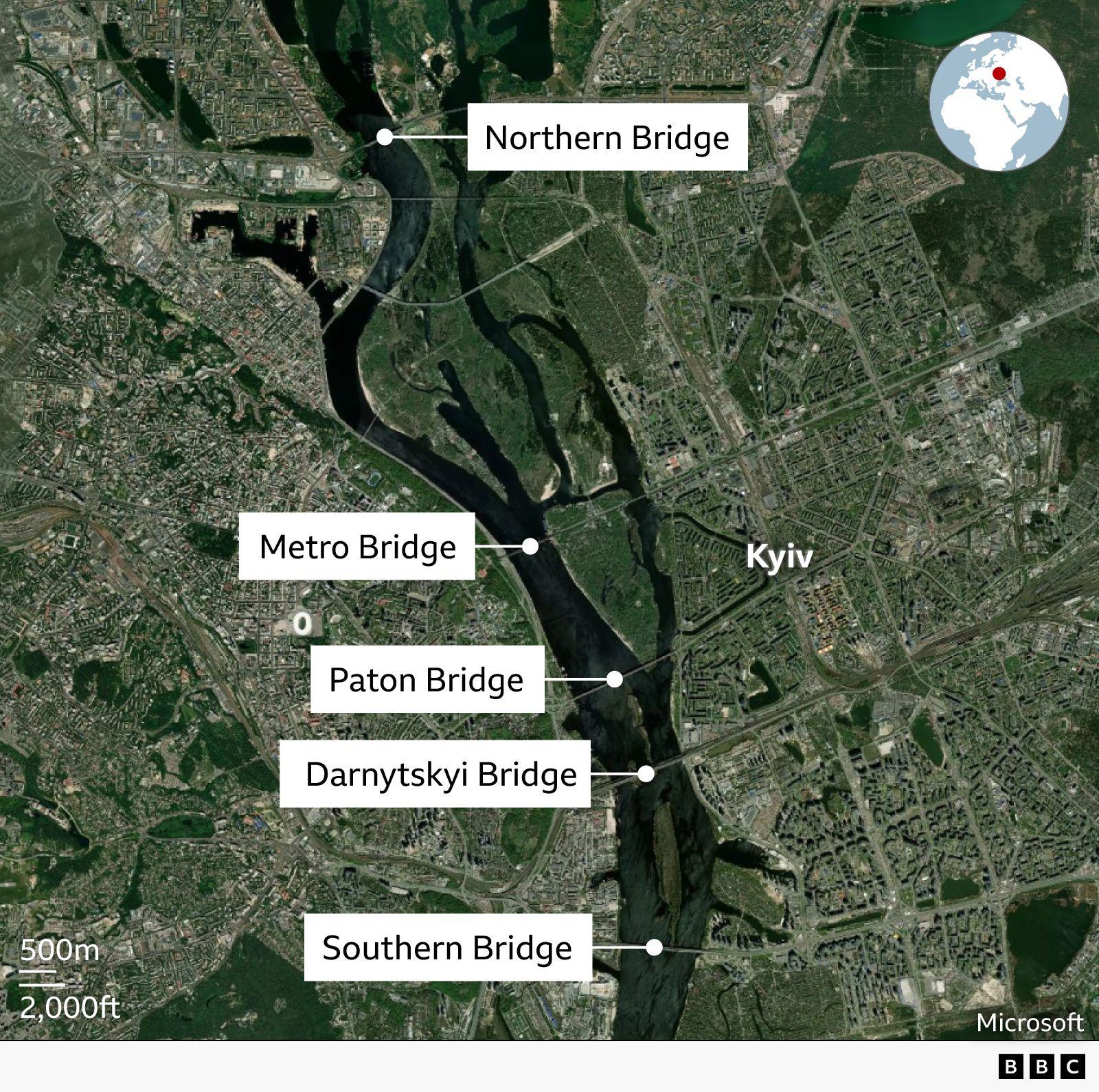
Russia struck Kyiv’s Northern Bridge over the Dnipro River on Sunday, October 4, damaging the road and disrupting hot-water supplies, according to Kyiv Mayor Vitali Klitschko. The strike occurred as German Chancellor Friedrich Merz made an unannounced visit to the Ukrainian capital to meet President Volodymyr Zelenskyy. Air-raid sirens and explosions were heard during the visit, which was intended to demonstrate Germany’s support as Russian attacks on Ukrainian cities intensify. It was the second bridge in Kyiv hit over the weekend.
Merz said he had traveled to Kyiv because Ukraine needed support in the coming weeks, warning that if Russia were not stopped, its war machine could eventually threaten Germany and other countries. Zelenskyy described the effect of the attacks on Kyiv residents as “terrible nights and days.” The leaders met at the National Academy of Sciences, which had itself been struck by a Russian drone on September 28.
Merz was accompanied by Germany’s economy minister and executives from major companies, including Siemens Energy and Diehl Defence. Ukraine and Germany were expected to finalize an agreement to jointly produce drones and other weapons capable of traveling more than 600 miles (965.6km), potentially enabling strikes farther inside Russia. The article also reports that Germany, one of Ukraine’s strongest supporters, had signed a military pact worth more than $4bn with Ukraine in April. A further package announced on Sunday was expected to include $1.1bn in military aid and $394m for repairs to Ukraine’s energy sector.
The visit followed a Russian warning that foreign diplomats and nationals should leave Kyiv. Russia’s Ministry of Defence also promised to intensify attacks after Zelenskyy said Ukraine was increasing strikes on Russian oil refineries, following civilian deaths and injuries over the weekend. The article places the events within the wider war, now in its fifth year, as both sides increase drone and missile attacks on infrastructure, logistics, and military targets.
Entities: Friedrich Merz, Volodymyr Zelenskyy, Vitali Klitschko, Kyiv, Ukraine • Tone: neutral • Sentiment: negative • Intent: inform
04-10-2026
Russian drone attacks have struck major bridges in Kyiv for four consecutive days, damaging both the Pivnichnyi (Northern) and Pivdennyi (Southern) bridges. Two people were injured in Sunday's strike on the Northern Bridge, which was hit for the second day in a row. The bridges remain standing, but damage and traffic restrictions have caused severe congestion and disrupted travel for residents who depend on crossings over the Dnipro River. Repair crews are at work, and officials are considering temporary pontoon bridges, ferries and a tunnel to maintain connections between the two sides of the city. A separate drone strike damaged a heating main, threatening a temporary hot-water outage in a northeastern district.
The attacks coincided with German Chancellor Friedrich Merz's surprise visit to Kyiv, where he met President Volodymyr Zelensky and reaffirmed Germany's support. The leaders visited a damaged National Academy of Sciences building and commemorated Ukrainian soldiers killed in the war. Zelensky said Germany had agreed to a new aid package worth more than €1.3bn, including weapons and energy-sector support ahead of winter. Merz described the coming weeks as decisive and said Germany's own security depended on the war's outcome.
Ukraine reported that Russia launched 135 drones overnight, 125 of which were intercepted. Zelensky also reported deaths and injuries from strikes elsewhere in Ukraine. Russia's military said it would intensify attacks in response to Ukrainian threats to strike Russian oil refineries; President Vladimir Putin has also described Russian attacks as retaliation for Ukrainian strikes on Russian energy facilities. Kyiv officials and analysts warned that repeated attacks could force bridge closures and weaken their structures, even if drones are unlikely to destroy them outright. European diplomats rejected a Russian warning that foreign citizens should leave Kyiv, pledging to remain and continue supporting Ukraine.
Entities: Kyiv, Pivnichnyi (Northern) Bridge, Pivdennyi (Southern) Bridge, Dnipro River, Friedrich Merz • Tone: analytical • Sentiment: negative • Intent: inform
04-10-2026
Russia’s Defence Ministry said Sunday that Russian forces would intensify strikes on targets in Kyiv and other parts of Ukraine following recent remarks by Ukrainian President Volodymyr Zelenskyy. The ministry said the attacks would focus on military facilities, defence-industry sites and related infrastructure. The announcement comes as Zelenskyy told Reuters that Ukraine would double down on strikes against Russian oil refineries in response to Moscow’s new policy of airstrikes, which he said was intended to force people to leave Kyiv and other cities. Zelenskyy said Ukraine would not target civilians.
The article also reports a drone-related incident in Russia’s Krasnodar region. Regional authorities said falling drone debris sparked a fire at an industrial site in the Temryuk district on Sunday. Three people were injured and were receiving medical treatment, while emergency services worked at the scene.
The report presents statements from both sides and a separate account of the incident in Russia. It does not provide further details about the locations or scale of the planned intensified strikes, the damage at the industrial site, or the identities and condition of those injured. A photograph caption identifies Zelenskyy, German Chancellor Friedrich Merz and German Energy Minister Katherina Reiche at a site in Kyiv where an administrative building of Ukraine’s National Academy of Sciences had been hit during recent Russian drone strikes. The article’s central focus is the stated escalation in Russian attacks and Ukraine’s announced response against Russian refinery targets, alongside the reported injuries in Krasnodar.
Entities: Volodymyr Zelenskyy, Russian Defence Ministry, Russia, Ukraine, Kyiv • Tone: neutral • Sentiment: negative • Intent: inform
04-10-2026
German Chancellor Friedrich Merz arrived in Kyiv by train on Sunday morning, accompanied by Economy Minister Katherina Reiche and a delegation of prominent German business figures. The visit comes as Ukraine continues to defend itself against Russia’s invasion. German media reports say Merz is expected to announce additional support, including a further €1 billion in military aid and €350 million (about $395 million) for repairs to Ukraine’s energy sector. He is also expected to present plans for the joint production of interceptor drones and long-range missiles in both Ukraine and Germany. Speaking on arrival, Merz warned that Russia’s war could eventually threaten other countries if it is not stopped: “If Russia is not stopped, it will turn its war machine against us sooner or later.” The report presents the visit and anticipated measures as a further pledge of German support, while noting that the details were expected to be announced. It does not provide further information about the timing, terms, or implementation of the proposed aid and co-production plans.
Entities: Friedrich Merz, Katherina Reiche, Kyiv, Ukraine, Germany • Tone: neutral • Sentiment: neutral • Intent: inform
04-10-2026
German Chancellor Friedrich Merz visited Kyiv on Sunday as Russian attacks intensified, including a drone strike on a bridge during his visit. Accompanied by Economy Minister Katherina Reiche and German business leaders, Merz met Ukrainian President Volodymyr Zelenskyy and paid tribute to fallen Ukrainian soldiers. At a damaged Academy of Sciences building, Merz urged Russian President Vladimir Putin to stop attacks on civilians and end what he called a “senseless war.” He warned that if Russia is not stopped, its war machine could eventually threaten Germany and said Ukraine would need continued support as a fifth winter of war approached.
Merz pledged additional military and energy assistance. Zelenskyy announced a German package worth more than €1.3 billion, including €1 billion in military aid and €350 million for energy repairs ahead of winter. The leaders also reported 15 agreements worth more than €8.5 billion, covering defense cooperation, procurement, production, and joint projects. Plans include developing and supplying thousands of interceptor drones and expanding production of long-range weapons. Merz said the cooperation would strengthen security in both countries.
The visit took place amid air raid sirens and Russian strikes on Kyiv’s infrastructure. Mayor Vitali Klitschko reported damage to the Northern Bridge, while recent attacks had also targeted bridges over the Dnipro River and energy facilities. Russia had warned foreign visitors to avoid Kyiv, asserting that its strikes responded to Ukrainian attacks; the German delegation proceeded despite the warning.
The article situates the visit within political debate in Germany. It was Merz’s second trip to Kyiv as chancellor and the fourth visit by a German chancellor since Russia’s full-scale invasion in 2022. Merz has argued that German and European resolve is essential to Ukraine’s ability to withstand the war. However, recent state elections saw gains by the AfD and Left Party, both critical of spending on Ukraine. Merz criticized the AfD and its Russian backers and pledged that Germany would not be divided in its support.
Entities: Friedrich Merz, Volodymyr Zelenskyy, Vladimir Putin, Kyiv, Germany • Tone: analytical • Sentiment: negative • Intent: inform
04-10-2026
German Chancellor Friedrich Merz made an unannounced visit to Kyiv, arriving by train with Economy Minister Katherina Reiche and representatives of German defence and energy companies. The visit is intended to signal continued German support for Ukraine and advance cooperation between the countries. German government sources say Ukraine will receive thousands of interceptor drones in the coming months to counter fast Russian drones. Germany also plans to expand joint production of long-range weapons, drawing on about €1 billion in previously approved funds, and provide €350 million to repair and rebuild damaged Ukrainian power plants.
Merz said Ukraine needs support in the weeks ahead, especially as it approaches a fifth winter of war and faces Russian attacks on cities and energy infrastructure. He met President Volodymyr Zelenskyy, with discussions expected to cover military assistance, energy supplies and broader cooperation. The trip took place amid security warnings from Russia and a reported drone strike on a road crossing Kyiv’s northern bridge over the Dnipro. Merz called on Vladimir Putin to stop attacks on civilians, while arguing that Russia responds only to strength.
The visit also focused on closer defence-industry ties, including potential joint development and production of drones. Merz described Ukraine as facing decisive weeks and said Germany could be relied upon. It was his second trip to Ukraine as chancellor.
The article places the aid announcement against a difficult domestic political backdrop for Merz. An INSA poll put the CDU/CSU at 18%, its lowest result in that poll, while the AfD reached 30%. Only 15% of respondents were satisfied with Merz’s performance, and 79% were dissatisfied. A separate ARD-Deutschlandtrend survey found growing scepticism about aid to Ukraine: more than four in ten respondents said German support had gone too far, the highest share since Russia’s full-scale invasion began. The article notes that scepticism is particularly pronounced in eastern Germany, though it is increasing nationwide.
Entities: Friedrich Merz, Volodymyr Zelenskyy, Katherina Reiche, Vladimir Putin, Kyiv • Tone: analytical • Sentiment: neutral • Intent: inform
04-10-2026
The article reports that Russia struck a bridge in Kyiv while German Chancellor Friedrich Merz was visiting the Ukrainian capital. The visit was unplanned, and Merz said it was intended to demonstrate Germany’s support for Ukraine. The report describes the strike as another Russian bombing of one of Kyiv’s bridges, placing the attack in the context of the continuing war and the risks faced by the city even during a high-profile diplomatic visit.
France 24 correspondent Gulliver Cragg, reporting from Kyiv, said traffic had resumed on the affected bridge, although movement was slow. Video accompanying the report showed a large hole in the roadway, indicating visible damage to the structure. The article also relays experts’ assessment that the bridges are extremely solid and difficult to destroy, even with ballistic missiles. It does not provide further details about casualties, the exact weapon used in this strike, or the extent of the damage beyond the roadway hole and disrupted traffic.
The report’s central focus is the juxtaposition of the strike with Merz’s presence in Kyiv and the symbolic purpose he gave to his visit: showing German support for Ukraine. It presents the immediate effects on the bridge and traffic, along with the challenge of damaging such robust infrastructure, without offering broader analysis or attributing additional statements to Ukrainian or Russian officials.
Entities: Russia, Kyiv, Ukraine, Friedrich Merz, Germany • Tone: neutral • Sentiment: negative • Intent: inform
04-10-2026
German Chancellor Friedrich Merz visited Kyiv on Sunday as Russian strikes continued across the Ukrainian capital. During the visit, Merz pledged further support for Ukraine and called on Russian President Vladimir Putin to end the war and stop attacks on civilians. German officials said Merz would announce €1 billion in military aid and €350 million for repairs to Ukraine’s energy sector. Germany and Ukraine are also expected to finalize an agreement for joint production of drones and other weapons.
Merz and Ukrainian President Volodymyr Zelensky visited the damaged National Academy of Sciences building, which was hit in a drone strike the previous week, killing at least two people. On Sunday, air-raid alerts and explosions were reported across Kyiv. A Russian strike damaged the Northern Bridge over the Dnipro River, injuring two people and damaging a hot-water supply system, according to Kyiv Mayor Vitali Klitschko. Russia has also targeted bridges in an effort to disrupt transport and logistics links.
Merz’s delegation included Germany’s economy minister and executives from defense and energy companies. Alongside military cooperation, Merz is expected to press Ukraine to advance reforms sought by EU partners, including anti-corruption measures. The prospective defense agreement includes rapid production of anti-jet drones and joint development of weapons with ranges exceeding 1,000 kilometers. The article also notes that Russia says its strikes are retaliation for Ukrainian attacks, while Zelensky has vowed to intensify attacks on Russian oil refineries in response to Moscow’s escalation against civilian infrastructure.
Entities: Friedrich Merz, Volodymyr Zelensky, Vitali Klitschko, Kyiv, Ukraine • Tone: analytical • Sentiment: negative • Intent: inform
04-10-2026
Russian forces struck Kyiv’s Northern Bridge on Sunday, damaging its road surface, shortly after German Chancellor Friedrich Merz arrived in the Ukrainian capital on a surprise visit intended to demonstrate European support. The attack came amid an increase in Russian strikes and warnings that attack drones were approaching the city. Air-raid sirens sounded soon after Merz’s arrival, and residents were urged to take shelter while he was traveling under tight security. Kyiv Mayor Vitali Klitschko confirmed the damage to the bridge, which is one of several crossings over the Dnipro River linking the eastern and western parts of the city. The article also reports that other bridges in Kyiv had been struck in recent days. Images circulating on messaging channels appeared to show a missile hitting the structure and producing a fireball, though the article does not provide further details about casualties or the extent of disruption. Merz was due to meet Ukrainian President Volodymyr Zelensky. The visit coincided with Germany and Ukraine nearing an agreement on a new military-support package worth more than US$1 billion. The report presents the bridge strike and the planned meeting and aid deal as events unfolding together, underscoring the security risks surrounding the visit and Germany’s effort to signal support for Ukraine. It does not state that the strike interrupted Merz’s itinerary or that the proposed aid package had been finalized.
Entities: Friedrich Merz, Vitali Klitschko, Volodymyr Zelensky, Kyiv, Ukraine • Tone: neutral • Sentiment: negative • Intent: inform
04-10-2026
German Chancellor Friedrich Merz arrived in Kyiv on October 4, 2026, accompanied by German economic affairs minister Katherina Reiche and executives from defence and technology companies. The visit is intended to demonstrate support for Ukrainian President Volodymyr Zelenskiy as Russian attacks on Ukrainian cities and infrastructure intensify. German officials said Merz would announce €1 billion in military aid and €350 million for repairs to Ukraine’s energy sector, and the visit is expected to finalize an agreement for joint production of drones and other weapons.
The planned cooperation includes developing anti-jet drones, missiles and related software. Quantum Systems, a German defence-technology company, has tested anti-jet drones, and it established a joint venture with Ukrainian manufacturer WIY Drones in April to produce the Strila interceptor drone and other air-defence technologies. The broader deal also covers weapons with a range exceeding 1,000 kilometres, which Ukraine could use to strike targets deep inside Russia. German officials say the partnership would also bring money and technology to Germany and help strengthen defences against drones threatening its critical infrastructure.
Merz said Ukraine could continue to count on German support and warned that, if Russia is not stopped, its war machine could eventually threaten Germany and other countries. Alongside military and economic cooperation, he is expected to urge Kyiv to advance reforms sought by EU partners, particularly anti-corruption efforts.
The article places the visit amid escalating attacks and reciprocal threats. Russia’s Foreign Ministry said Moscow would continue strikes it characterized as retaliation for Ukrainian attacks, and warned foreign nationals and diplomats against travelling to or remaining in Ukraine. Zelenskiy said Ukraine would intensify attacks on Russian oil refineries in response to Russia’s increased strikes on civilian infrastructure, which he said were intended to force residents of Kyiv and other cities to flee.
Entities: Friedrich Merz, Volodymyr Zelenskiy, Katherina Reiche, Kyiv, Germany • Tone: analytical • Sentiment: neutral • Intent: inform
04-10-2026
Russia struck Kyiv’s Northern Bridge on Oct 4, shortly after German Chancellor Friedrich Merz arrived on a surprise visit intended to demonstrate European support for Ukraine. Air raid sirens sounded as Merz met President Volodymyr Zelensky, who described the relentless attacks as causing “terrible nights and days.” Merz condemned attacks on civilians as war crimes and warned that, if Russia is not stopped, its war machine could eventually threaten other countries.
Kyiv Mayor Vitali Klitschko said the strike damaged the bridge’s road surface. The bridge is one of several crossing the Dnipro River that have been hit in recent days. Kyiv has faced a wider wave of attacks on residential areas and infrastructure, including schools, petrol stations, railways and communications systems. The city, which has been relatively far from the front lines, has been urged to prepare for a more serious wartime footing.
During the visit, Zelensky and Merz were expected to agree on more than US$1 billion in German military support. The package would include combat drones and satellite technology to help Ukraine target Russian launch sites, as well as cooperation on anti-jet drones. Germany was also expected to provide about €350 million for generators, transformer stations and repairs to the electricity grid. Ukraine has sought advanced interceptors to counter Russia’s fast-moving, jet-powered drones, and a source described the proposed assistance as addressing a major gap in Ukraine’s air defences.
The visit came amid escalating military and political tensions. Russia’s defence ministry said it would increase strikes on military and related infrastructure, following Zelensky’s pledge to intensify Ukrainian attacks on Russian oil facilities. Moscow had warned foreign nationals and diplomats to leave Kyiv, but EU ambassador Katarina Mathernova said the delegation would stay. With winter approaching, residents fear a repeat of earlier attacks that left people without power and heating in freezing temperatures. Ukrainian authorities have advised vulnerable and disabled people to consider leaving.
Entities: Kyiv, Russia, Ukraine, Friedrich Merz, Volodymyr Zelensky • Tone: urgent • Sentiment: negative • Intent: inform
04-10-2026
Russia’s Defence Ministry said on Sunday that Russian forces would intensify strikes on Kyiv and other parts of Ukraine. The announcement followed an interview with Ukrainian President Volodymyr Zelenskiy, published by Reuters on Saturday, in which he said Ukraine would step up attacks on Russian oil refineries in response to Moscow’s airstrike campaign. Zelenskiy said Ukraine would not target civilians.
The Russian ministry said its forces would increase attacks on military facilities, defence-industry sites and related infrastructure. It described recent Russian strikes on Kyiv and other Ukrainian regions as a response to what it characterized as Ukrainian attacks on civilian targets inside Russia. Both countries deny targeting civilians.
The article reports that Russia has recently escalated strikes on infrastructure in the Ukrainian capital, including bridges over the Dnipro River. The campaign has seriously disrupted life for Kyiv’s three million residents as the city faces the approaching winter months. Zelenskiy said Moscow’s airstrikes were intended to force people to leave Kyiv and other cities, while Russia’s stated justification for its strikes was retaliation for attacks inside Russia.
The report presents the competing claims and announced military actions without independently resolving the parties’ allegations. It describes a cycle of threatened and actual strikes involving Ukrainian attacks on Russian refineries and Russian attacks on Ukrainian military and infrastructure sites, with significant disruption to civilian life in Kyiv.
Entities: Russia, Ukraine, Kyiv, Volodymyr Zelenskiy, Russian Defence Ministry • Tone: neutral • Sentiment: negative • Intent: inform
04-10-2026
Russia said it would continue targeted retaliatory strikes on Kyiv and other Ukrainian cities, while warning foreign nationals and diplomatic staff to leave Ukraine. Its foreign ministry described the strikes as a response to what it called Ukrainian attacks on Russian civilians and infrastructure, and said Russia was targeting military facilities. It warned that those who ignored its advice would bear responsibility for any adverse consequences.
Ukrainian President Volodymyr Zelensky said Ukraine would respond to Moscow’s expanded air campaign by intensifying attacks on Russian oil refineries, while avoiding civilian targets. Zelensky also said Ukrainian intelligence had obtained documents indicating that Vladimir Putin issued a “new doctrine” authorizing attacks on a wider range of civilian targets ahead of winter. Russia has recently struck infrastructure in Kyiv, including a bridge over the Dnipro River. The campaign has disrupted life for the capital’s roughly three million residents as winter approaches. Putin said Ukraine was paying the price for its own attacks on Russia.
The article also reports on possible ceasefire proposals. Ukrainian Foreign Minister Andrii Sybiha said Kyiv had received proposals from India, Türkiye, Egypt and the United States. He described India’s proposal as the broadest and said Ukraine was prepared to consider a truce covering energy infrastructure and the Black Sea, provided those elements were combined. His comments followed Putin’s statement that Indian Prime Minister Narendra Modi had “very good ideas” for finding a mutually acceptable settlement to the conflict.
Entities: Vladimir Putin, Volodymyr Zelensky, Andrii Sybiha, Narendra Modi, Kyiv • Tone: analytical • Sentiment: negative • Intent: inform