02-11-2026
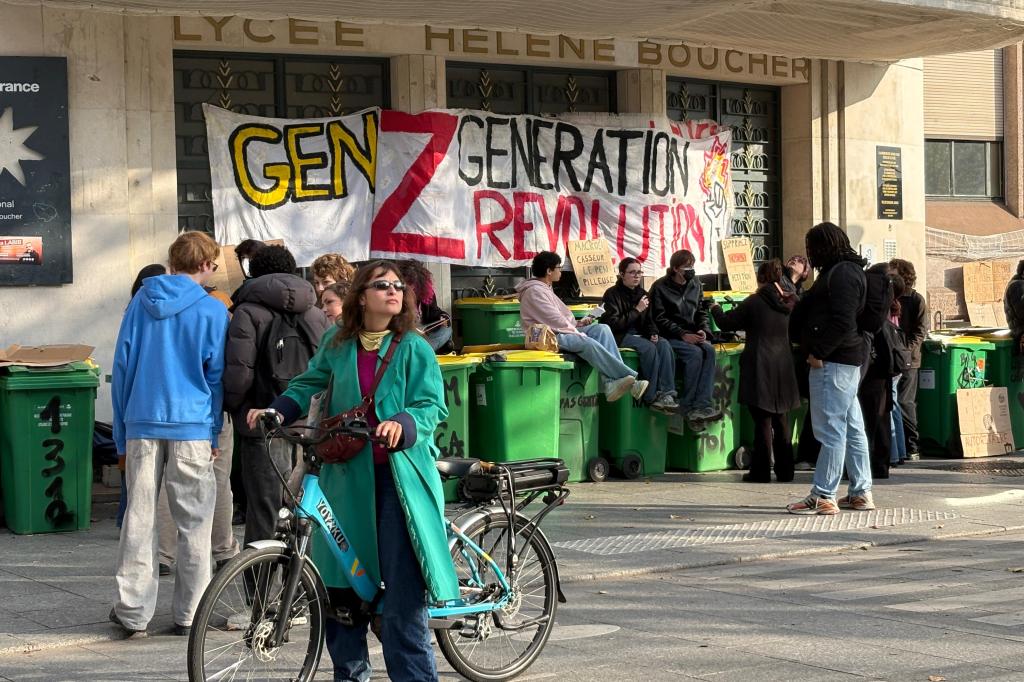
French high school students have resumed protests after a two-week holiday break, but blockades have so far been limited compared with the large-scale actions in the weeks before the break. France’s Education Ministry reported that 41 high schools were blockaded on Monday—about one percent of the country’s 3,700 schools. Attempts to block schools were reported in Paris, Marseille and Rennes. Education Minister Edouard Geffray described the activity as marginal, while warning that preventing access to schools was illegal and could jeopardize the school year for hundreds of thousands of pupils.
The protests began in the Paris suburbs in September and spread nationwide. Although students initially focused on education, last month demonstrations broadened to include anger over the cost of living and cuts to public services. Some protests escalated into clashes with police and riots, including looting, creating a political test for President Emmanuel Macron’s minority government.
Students are calling for ageing schools to be renovated, more teachers and university places, and reform of the Parcoursup admissions system, which they consider socially unfair. The government has announced a gradual replacement of Parcoursup by 2028, cancelled planned education job cuts, promised 500 additional posts and capped first-year high-school classes at 28 pupils. It has also pledged €4 billion for school renovations and 15,000 additional higher-education places.
Student representatives say the measures are insufficient and plan further action. Pierre Sourzat, president of Les Lyceens!, backed renewed blockades. The Union Syndicale Lyceenne and Student Union called for blockades on Tuesday and Thursday, while UNEF described Tuesday as a “black day” for universities and called for blockades across the country.
Entities: France, Paris, Marseille, Rennes, Edouard Geffray • Tone: analytical • Sentiment: neutral • Intent: inform
02-11-2026
French high school student protests resumed on Monday, November 2, 2026, after pupils returned from a two-week autumn break. The demonstrations were reported to be on a much smaller scale than those seen in the preceding weeks. Students attempted to blockade a few high schools in Paris, Marseille, and Rennes. The article provides no further details about the causes of the protests, the number of schools or students involved, or any response from authorities. Its report is presented as a short France 24 video item.
Entities: France, France 24, Paris, Marseille, Rennes • Tone: neutral • Sentiment: neutral • Intent: inform
02-11-2026
France 24’s Perspective report examines whether protests in France are losing momentum. It notes that most French high schools have reopened despite calls for fresh blockades, while attendance at weekend demonstrations has declined for the third consecutive week. These developments prompt the question of whether the protests are beginning to fade.
Political expert Renaud Foucart, a senior lecturer in the Department of Economics at Lancaster University, believes the protests will die out. As presented in the article, his reasoning is that it is difficult to identify a clear target for public anger when the government has no majority in parliament. The report does not describe the protests as having ended, but frames their declining participation and the reopening of schools as possible signs of waning activity.
Foucart also cautions that the scale of the demonstrations over the preceding month carries a broader message: it reflects how disappointing France’s political debate has become. The article therefore presents two related observations—a potentially diminishing protest movement and continuing public frustration with the political situation. The report is a brief account of Foucart’s views, rather than a detailed examination of the protests’ causes, participants, or political outcomes.
Entities: France, France 24, Perspective, Renaud Foucart, Lancaster University • Tone: analytical • Sentiment: neutral • Intent: analyze
02-11-2026
French high school students resumed protests on Monday after a two-week break, but attempts to blockade schools were far fewer than in the weeks before the holiday. The French Education Ministry reported that by 8:30 GMT, 41 high schools—about 1% of the national total—were blockaded. Previously, hundreds of schools had been affected. The latest attempts were reported in Paris, Marseille and Rennes.
The protests began in the Paris suburbs in September and have spread across France. Their focus has widened from education concerns to include the cost of living, drawing support from trade unionists and activists. Some demonstrations have turned violent: last month, protests in several cities escalated into clashes with police and riots, including looting, creating a challenge for President Emmanuel Macron’s minority government. Similar youth-led demonstrations have taken place in Germany, Italy, Belgium and Albania, with grievances including living costs, under-resourced schools and perceived corruption.
Education Minister Edouard Geffray described the current school blockades, or attempted blockades, as marginal. He said protests are permitted, but blocking access to schools is illegal. Students are calling for school renovations, more teachers and university places, and an end to an admissions system they regard as socially unfair.
Geffray outlined proposals last week that included capping class sizes at 28, spending €4 billion on school renovations, adding 15,000 higher-education places and introducing a new admissions system by 2028. Student representatives said the measures were insufficient and vowed to continue protesting.
Entities: French high school student protests, France, Paris, Marseille, Rennes • Tone: neutral • Sentiment: neutral • Intent: inform