02-11-2026
Spanish officials say a Canadian was among the 69 people killed in an Oct. 28 collision between two high-speed trains near Urda, in central Spain. The Tribunal Superior de Justicia de Castilla-La Mancha released information about the victims after they were identified by Spain’s Center for Integrated Data. Fifty-four of the dead were Spanish citizens; the others included citizens of Canada, France, the United States, Japan, Argentina, Mexico, Tunisia, Portugal and the Czech Republic.
Before the Canadian’s death was confirmed, Global Affairs Canada had told CBC it knew of six Canadians injured in the crash and one person who was unaccounted for. The department did not provide further details, citing privacy, and had not immediately responded to a request for updated information.
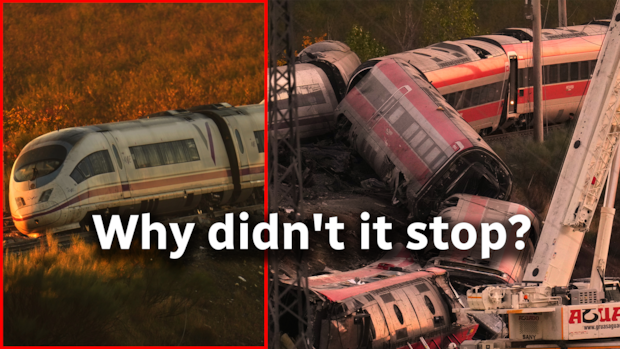
The collision affected 526 passengers and 12 crew members travelling on the two trains. According to Transport Minister Óscar Puente, automatic signalling failed and several trains stopped. Madrid’s central control centre then took over, and a state-owned Renfe train was cleared to proceed despite a stationary train operated by Iryo ahead. The article also describes the crash as the second major fatal accident that year involving the same rail companies on the same line. A January crash killed 46, renewing debate about safety and maintenance on Spain’s extensive high-speed rail network.
Prime Minister Pedro Sánchez visited the crash site and pledged an investigation and improvements to prevent another tragedy. The accident has also unfolded during an election campaign, with Sánchez and his Socialists seeking to remain in power ahead of a Nov. 29 vote. The government was already facing public discontent over housing costs and rents, corruption allegations, and criticism of its migration policies. The article notes that Puente has resisted opposition calls to resign.
Entities: Canadian victims, Toledo, Spain, Urda, Spain, Tribunal Superior de Justicia de Castilla-La Mancha, Global Affairs Canada • Tone: analytical • Sentiment: negative • Intent: inform
02-11-2026
Four U.S. citizens were among at least 69 people killed when a high-speed train struck the rear of another train in Urda, in Spain’s Toledo province, on October 28. Spain’s Center for Integrated Data, responsible for identifying victims in mass-casualty events, said the dead also included citizens of several other countries. The agency had identified all but three victims; some families were expected to travel to Spain to complete in-person identifications. Two Australians and one Japanese citizen were still reported missing. Fifty-eight people were injured in the crash, which involved two trains carrying more than 540 passengers from Madrid toward Seville. The collision derailed two cars. Transport Minister Óscar Puente attributed much of the accident to a traffic controller’s poor judgment. Railway unions disputed that emphasis, pointing to worsening working conditions and too few controllers to manage growing workloads safely. Initial findings by independent investigators indicated that the state-owned RENFE train was traveling between 100 and 125 miles per hour when it hit the privately owned IRYO train. The crash was the second major fatal collision on the Madrid–Seville route this year. A January derailment farther south killed 46 people and remains under investigation. Spain’s high-speed rail system, the world’s second-largest after China’s, had been widely regarded as a success and had recorded no fatal crashes in its more than three decades of operation before the deadly crashes this year.
Entities: Urda, Spain, Toledo province, Madrid–Seville rail line, Center for Integrated Data, Óscar Puente • Tone: neutral • Sentiment: negative • Intent: inform
02-11-2026
Authorities said four Americans and one Canadian were among the 69 people killed in a high-speed train collision in Spain. By late Sunday, 66 victims had been identified; 54 were Spanish nationals. The identified foreign victims also included people from France, Japan, Argentina, Mexico, Portugal, Tunisia and the Czech Republic. Three bodies remained unidentified, while three people—two Australians and one Japanese citizen—were reported missing.
The collision occurred the previous Wednesday in Toledo province, when a high-speed train struck another train that had stopped on the tracks. It came nine months after a separate collision farther south on the Madrid-Seville line killed 46 people. Together, the crashes have shaken confidence in Spain’s rail network, long regarded as fast and safe.
Prime Minister Pedro Sánchez pledged an investigation and improvements intended to restore public trust. The network carried about 45 million travelers in the previous year, including millions of tourists. The latest crash also has political implications: it occurred a month before the Nov. 29 general election, in which Sánchez is seeking to extend his eight-year premiership. He is facing questions about railway safety and his governments’ investment in Spanish infrastructure.
Entities: Pedro Sánchez, Spain, Toledo province, Madrid-Seville line, Spanish rail network • Tone: neutral • Sentiment: negative • Intent: inform