02-11-2026
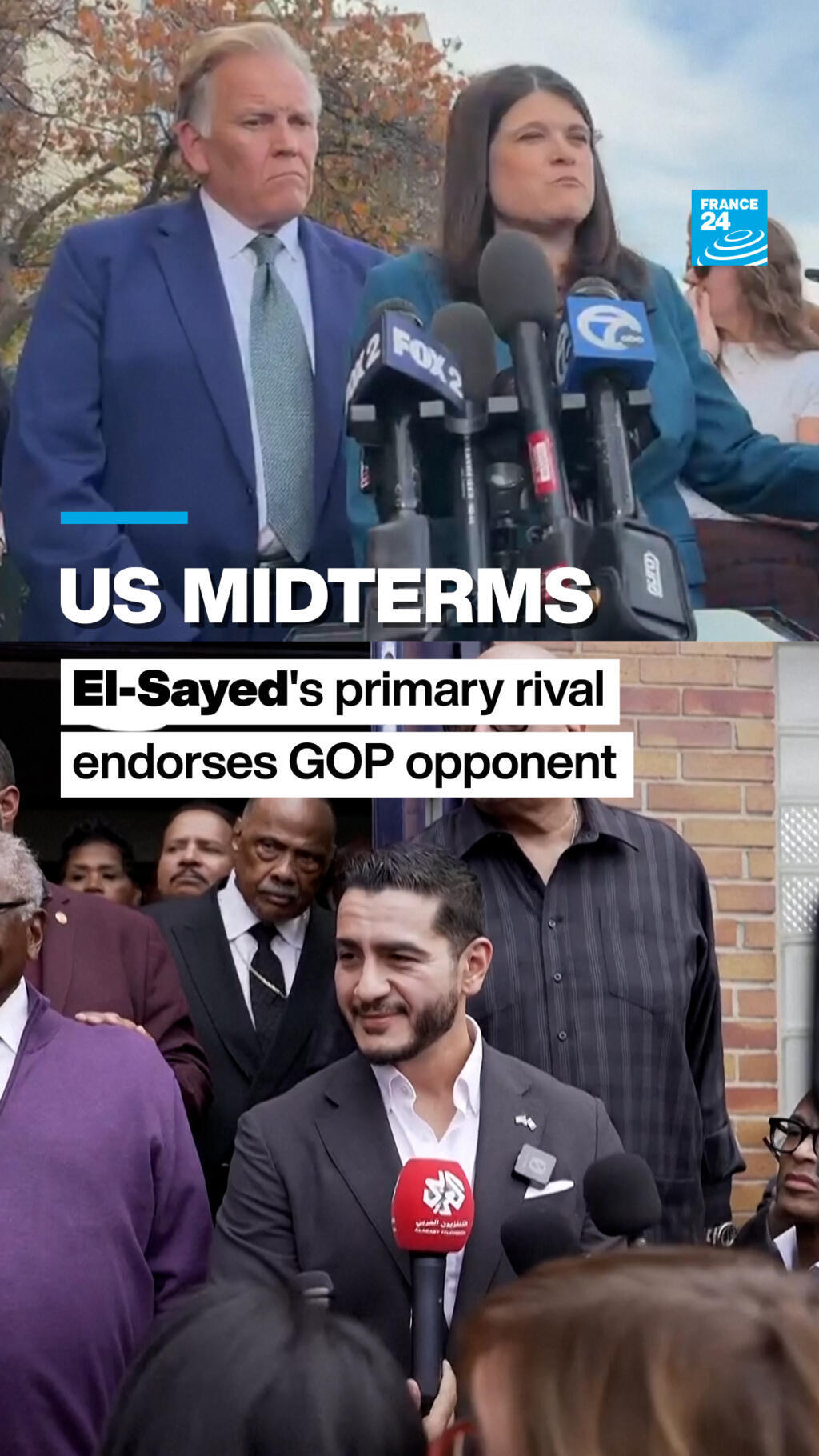
The article reports that US President Donald Trump praised Michigan Democrat Haley Stevens after she endorsed Republican Mike Rogers over fellow Democrat Abdul El-Sayed. Trump also invited Stevens to join the Republican Party, although the article says the two had never met. The report presents the invitation as a response to Stevens’s endorsement and highlights the political contrast between her party affiliation and her support for Rogers. It does not provide further detail about the circumstances of the endorsement, Stevens’s response to Trump’s invitation, or whether she intends to change parties. The item is a brief news report, published on November 2, 2026, and offers no additional quotes or background beyond the stated events. Its central point is Trump’s praise and invitation following Stevens’s choice to support a Republican candidate over a fellow Democrat. The article therefore describes a political endorsement and a public overture about party affiliation, without indicating that Stevens accepted the invitation or changed her political affiliation.
Entities: Donald Trump, Haley Stevens, Mike Rogers, Abdul El-Sayed, Michigan • Tone: neutral • Sentiment: neutral • Intent: inform
02-11-2026
In the final days before the November 3, 2026, US midterm elections, President Donald Trump used campaign rallies in Iowa and Kansas to repeat Islamophobic rhetoric and unsupported conspiracy claims about Democratic candidates, according to Al Jazeera. He called Michigan Senate candidate Abdul El-Sayed a “jihadist,” joked that the Senate would need a special metal detector for him, and repeated an unfounded claim that El-Sayed belongs to the Muslim Brotherhood. Trump also attacked Minnesota Representative Ilhan Omar with an unsubstantiated allegation about her marriage and family. In Kansas, he criticized Democratic Senate candidate Adam Hamilton, a pastor, over his support for trans rights and mocked his sermons. Trump invited Representative Haley Stevens, who lost the Democratic primary to El-Sayed, to join the Republican Party, despite her endorsement of Republican candidate Mike Rogers.
The rallies, abruptly rescheduled after being cancelled the previous week, were Trump’s last campaign travel events before Election Day. He repeatedly urged supporters to vote, telling them to “pretend I’m on the ballot,” as polling suggested Republicans could face significant losses. Both speeches were interrupted several times by hecklers. Trump also discussed the US-Israel war on Iran, the cost of living, immigration, perceived media bias, and former President Joe Biden’s administration.
The article highlights competitive races in both states, which are generally represented by Republicans. Kansas has one Senate seat and all four of its House seats up for election; it has not elected a Democratic senator since 1932. In Iowa, the Senate contest was described as too close to call, while polling indicated that two state House seats could lean Democratic. The elections will determine control of Congress during the final two years of Trump’s presidency.
Entities: Donald Trump, Abdul El-Sayed, Haley Stevens, Mike Rogers, Ilhan Omar • Tone: analytical • Sentiment: negative • Intent: inform
02-11-2026
Michigan Democratic Congresswoman Haley Stevens has endorsed Republican Mike Rogers in the state’s closely contested US Senate race, two days before the midterm election. Stevens, who lost the Democratic nomination to Abdul El-Sayed, appeared with Rogers at a church service on Sunday and said she did not belong in El-Sayed’s campaign. She accused the Democratic nominee of representing views that did not reflect Michigan, while El-Sayed said he was focused on the issues facing voters and dismissed the significance of her decision.
The endorsement followed a public dispute between the centrist Stevens and the left-wing El-Sayed. Stevens had urged him to denounce an advert by an outside liberal group that connected US support for Israel with high prices. El-Sayed criticized the advert and said he was not responsible for it. Stevens was due to join him at a unity event, but said he had made clear she was unwelcome.
The announcement drew sharp criticism from Democrats. Some of Stevens’ staff reportedly resigned, Michigan Democratic Party chair Curtis Hertel said she had abandoned her stated principles, and Senate Democratic leader Chuck Schumer called the endorsement a “despicable betrayal.” President Donald Trump praised Stevens as brave and said he would welcome her into the Republican Party. Rogers also welcomed her support, though some voters interviewed by the BBC doubted it would affect the result.
The Michigan contest is among the tightest Senate races and could help determine control of the chamber. Democrats currently hold the seat, which is being vacated by a retiring senator; a Republican has not won it since 1994. Democrats need a net gain of four seats to take control, and losing Michigan would make that task still harder. The clash also reflects wider Democratic divisions over the party’s direction ahead of the 2028 presidential election, including disagreements over US ties to Israel and the appeal of grassroots political campaigns.
Entities: Haley Stevens, Abdul El-Sayed, Mike Rogers, Donald Trump, Chuck Schumer • Tone: analytical • Sentiment: neutral • Intent: inform
02-11-2026
US President Donald Trump made his final midterm campaign appearances in Dubuque, Iowa, and Salina, Kansas, urging voters to elect “America first” Republicans. The rallies capped a campaign that began in October and included more than two dozen events across 19 states. Trump spoke for about two hours in Iowa and nearly 90 minutes in Kansas; hundreds of attendees reportedly left the Kansas rally before it ended. The article describes the elections as a referendum on Trump’s second term, with more than 54 million votes already cast. It cites his declining approval rating and public discontent over domestic policy, tariffs and the war in Iran. All 435 House seats and 35 Senate seats are on the ballot. Republicans hold narrow majorities in both chambers, while polls suggest Democrats are favored to retake the House and have a viable chance of winning the Senate. A Democratic House majority could give the party control of the federal budget, greater power to block legislation and authority to investigate the administration. The article also focuses on divisions among Michigan Democrats. Congresswoman Haley Stevens, after losing the Democratic Senate primary to Abdul El-Sayed, endorsed Republican candidate Mike Rogers. Stevens said El-Sayed had made clear she was unwelcome in his campaign. Trump praised her endorsement and continued attacking El-Sayed, using Islamophobic language and calling him a “jihadist.” El-Sayed, a critic of the US alliance with Israel who has called for an end to US arms sales to the country, said he was focused on voters rather than Stevens. The article presents the campaign’s closing events, the balance of power at stake in Congress and a potentially consequential intraparty dispute in Michigan.
Entities: Donald Trump, Haley Stevens, Abdul El-Sayed, Mike Rogers, Iowa • Tone: analytical • Sentiment: neutral • Intent: inform
02-11-2026
France 24 reports that a prominent Michigan Democrat endorsed Republican Senate candidate Mike Rogers on the Sunday before the 2026 US midterm elections. The endorsement is described as an unexpected boost for Republicans aligned with President Donald Trump, arriving just two days before voters go to the polls. The outcome of the midterms will determine which party controls Congress, making the Michigan contest politically significant. The headline says the endorsement has “ruffled” the race, suggesting it has unsettled or complicated an already closely watched contest. However, the available article text does not identify the Democrat, explain the reasons for the endorsement, provide reactions from either campaign, or describe polling and the candidates’ positions. The France 24 page presents the story as a short video report, credited to Juliette Montilly, with Reuters, AP and France 24 credited on the cover image. Accordingly, the report’s central point is the timing and potential political impact of a prominent Democrat’s support for Rogers, rather than a detailed account of the race or the endorsement’s consequences. The article frames the development within the broader national stakes of the midterms: control of Congress. It does not establish how much the endorsement might influence Michigan voters or whether it will change the race’s outcome.
Entities: Michigan, Mike Rogers, Donald Trump, Juliette Montilly, France 24 • Tone: analytical • Sentiment: neutral • Intent: inform
02-11-2026
France 24’s video report, presented by Fraser Jackson, examines the political landscape one day before crucial U.S. midterm elections. The report says Democrats and Republicans are making their final appeals to voters, while focusing in particular on a disruptive development in Michigan’s Senate race. Michigan Democrat Haley Stevens has endorsed Republican Mike Rogers, breaking with her party and backing him over Democratic nominee Abdul El-Sayed. The endorsement is significant because Stevens had herself competed against El-Sayed in the Michigan Democratic Senate primary and lost. That primary is described as bitterly contested, and Stevens’s decision has prompted some people to accuse her of acting out of “sour grapes” over the result. The headline frames the move as a source of shock among Democrats, while the article description emphasizes its potential impact on a closely watched Senate contest. The supplied page provides a short description of the video rather than a transcript, so it does not explain Stevens’s stated reasons for the endorsement, include responses from Rogers or El-Sayed, or detail how the move may affect voters or the election outcome. Its focus is therefore on the political surprise and party tensions surrounding Stevens’s break with the Democratic candidate, set against the broader final-day campaign push ahead of the midterms.
Entities: Haley Stevens, Fraser Jackson, Mike Rogers, Abdul El-Sayed, France 24 • Tone: analytical • Sentiment: neutral • Intent: inform
02-11-2026
The France 24 video report concerns a dispute within the Democratic Party in Michigan during the final stretch of the 2026 US midterm campaign. On Monday, November 2, Democrats sought to contain a rift in the state’s US Senate race after Michigan Democrat Haley Stevens crossed party lines to endorse the Republican candidate. The endorsement created a challenge for Democrats as both parties made their final appeals to voters ahead of the midterm elections, which would determine control of Congress. The report is presented by France 24 International Affairs Editor Philip Turle. The supplied page text does not identify the Republican candidate or provide further details about Stevens’s reasons for the endorsement, the responses from other political figures, or the potential electoral consequences. It describes the event as a development in a critical Senate race and situates it within the broader national contest for congressional control. The item is a short video report rather than a full written article; the available text provides only its central premise and context.
Entities: Haley Stevens, Philip Turle, Michigan, France 24, Democratic Party • Tone: analytical • Sentiment: neutral • Intent: inform
02-11-2026
The France 24 video report examines whether enthusiasm among Gen Z voters can help Democrats win a crucial U.S. Senate race in Michigan. The article says the seat is a must-win for the Democratic Party as it seeks to take control of the Senate, the upper chamber of Congress. It highlights growing energy behind progressive candidate Abdul El-Sayed, particularly among younger voters, and poses the central question of whether that enthusiasm will translate into ballots on Election Day.
The report frames youth engagement as a potentially important factor in a closely watched contest, but the available article text does not provide polling, campaign details, voter interviews, or a conclusion about whether young voters are likely to turn out in sufficient numbers. Because the page supplies only a short description of the video and not its transcript, the specific evidence and perspectives presented in the report cannot be determined from the provided content. The video is credited to Sarah Andersen and Jessica Le Masurier and was issued on November 2, 2026. Overall, the item introduces the stakes of the Michigan Senate race and the question of whether a surge of progressive energy among young people could affect the balance of power in the Senate.
Entities: Michigan, Abdul El-Sayed, Gen Z, younger voters, Democratic Party • Tone: analytical • Sentiment: neutral • Intent: inform
02-11-2026
With the US midterm elections one day away, both parties made final appeals to voters as disputes in two closely watched Senate races drew attention. In Michigan, Democratic Representative Haley Stevens, who lost the party’s Senate primary to Abdul El-Sayed, endorsed Republican Mike Rogers and appeared with him at a Detroit church. Her move disrupted a planned unity appearance with El-Sayed and exposed divisions among Democrats. Stevens objected to an outside-group advertisement that she said blamed Israel for high grocery prices, and said she did not belong in El-Sayed’s campaign. Rogers used the endorsement to criticize what he called hateful rhetoric. El-Sayed, an Egyptian-American Muslim, has faced attacks from President Donald Trump and other Republicans, including baseless claims that he sympathizes with terrorists and questions about his loyalty. His campaign said it raised $1.2 million in the four hours after Stevens’s endorsement. A New York Times/Siena poll showed El-Sayed leading Rogers 53% to 42%. Some of Stevens’s staff reportedly resigned, while a voter called her a traitor.
The article also reports a setback for the Trump administration’s efforts to intervene in Alaska’s Senate race. A federal judge dismissed the Justice Department’s lawsuit seeking to prevent certification of results if Republican Senator Dan Sullivan narrowly loses. The department argued voters could be confused by a same-named challenger, Daniel J. Sullivan Jr., on the ballot. Reports that Democrat Mary Peltola’s campaign helped recruit the challenger had intensified the dispute; Peltola and Sullivan Jr. denied coordination. Senator Sullivan said he would accept Tuesday’s results, while the administration pursued a criminal investigation. A Peltola voter welcomed the dismissal and criticized what she described as efforts by Trump to suppress voters. Together, the Michigan endorsement and Alaska lawsuit illustrate the contentious, high-stakes political atmosphere surrounding the midterms and the contest for control of Congress.
Entities: Haley Stevens, Abdul El-Sayed, Mike Rogers, Donald Trump, Dan S. Sullivan • Tone: analytical • Sentiment: neutral • Intent: inform
02-11-2026
Michigan Democratic Congresswoman Haley Stevens has endorsed Republican Senate candidate Mike Rogers, rather than her party’s nominee, Abdul El-Sayed, prompting sharp criticism from Democratic leaders and turmoil among her staff. Stevens, who lost to El-Sayed in the August Democratic primary, announced her decision after a planned joint campaign appearance with him was cancelled. She said El-Sayed had told her she was no longer welcome in his campaign and argued that his actions made her endorsement of Rogers appropriate. Senate Minority Leader Chuck Schumer called the move a “despicable betrayal,” while Michigan Democratic Party chair Curtis Hertel accused Stevens of abandoning her professed values. El-Sayed played down the endorsement and said he was focused on voters’ concerns, including the cost of living.
The article describes a growing rift between Stevens and El-Sayed over the party’s direction and US support for Israel. Stevens, a centrist and strong Israel supporter, had objected to an independent left-wing group’s advertisement connecting US support for Israel with high grocery prices. El-Sayed criticized the ad and said it was not produced by his campaign. Stevens later urged him to stop blaming Israel for Michigan residents’ economic difficulties; he accused her of trying to revive a primary contest that had already ended.
Stevens’ endorsement also prompted internal departures from her office, including the resignation of her longtime chief of staff. President Donald Trump praised her decision, and House Speaker Mike Johnson said he had encouraged her to keep speaking out. Rogers welcomed her support.
The race matters nationally because Michigan’s Senate seat, held by retiring Democrat Gary Peters, is a closely watched contest. Republicans have not won the seat since 1994, and Democrats need a net gain of four seats to take control of the Senate. Michigan’s recent presidential voting has shifted between Joe Biden in 2020 and Trump in 2024. More than 1.8 million people had voted early by the Friday before Election Day.
Entities: Haley Stevens, Abdul El-Sayed, Mike Rogers, Chuck Schumer, Curtis Hertel • Tone: analytical • Sentiment: neutral • Intent: inform
02-11-2026
The supplied page text reports that El-Sayed criticized or dismissed Haley Stevens’ support for a Republican rival in a Senate race. The headline describes Stevens as backing a Republican Senate candidate, while the accompanying teaser says El-Sayed “calls out” Stevens for backing that rival. The page identifies the item as an Al Jazeera Newsfeed video published on 2 November 2026 and says El-Sayed’s response was made on social media.
The provided content does not include a video transcript, quotes beyond the headline and teaser, or further reporting. It therefore does not establish which Republican candidate Stevens supported, what El-Sayed said in full, the candidates’ identities beyond the names given, or the circumstances and consequences of the endorsement. No additional details about the Senate race or the individuals’ political positions can be reliably summarized from this text alone.
In brief, the item appears to cover a political disagreement over Stevens’ backing of a Republican Senate candidate and El-Sayed’s public response. The available copy is too limited to assess the substance of that disagreement or the broader context, so this summary is restricted to the information explicitly present in the supplied material.
Entities: El-Sayed, Haley Stevens, Republican Senate candidate, Republican rival, U.S. Senate race • Tone: neutral • Sentiment: neutral • Intent: inform
02-11-2026
The supplied material does not contain the article’s substantive reporting or liveblog updates. It includes a headline identifying the topic as the 2026 US midterm elections, with former President Donald Trump and Democrats making a final campaign push, and a reported political rift in Michigan. The page label says “US Midterm Elections 2026” and “8 Updates,” suggesting the original page was a liveblog with eight entries, but none of those entries is present in the supplied content. The remaining text consists of advertisements, including a prompt to enable instant alerts and updates.
Because the actual article body is missing, it is not possible to reliably summarize what Trump or Democratic candidates did, explain the nature or significance of the Michigan rift, identify other people or organizations involved, or describe the election developments reported in the live updates. Any detailed account of those matters would go beyond the provided source. The entities and classifications below are therefore limited to what can be reasonably inferred from the headline and page label. The headline frames the story as election news and signals a political disagreement in Michigan, but it does not establish the causes, consequences, or viewpoints involved. For a comprehensive article summary and a cleaned version preserving the reporting, the article’s actual text or liveblog entries would be needed.
Entities: 2026 US midterm elections, Donald Trump, Democrats, Michigan, final campaign push • Tone: neutral • Sentiment: neutral • Intent: inform
02-11-2026
NPR’s Up First briefing covers political divisions among Michigan Democrats, tensions surrounding a possible renewed U.S. attack on Iran, and a Supreme Court dispute over religious freedom and Colorado’s pre-K program. Less than 48 hours before Election Day, Democratic Rep. Haley Stevens endorsed Republican Senate candidate Mike Rogers, citing Democratic nominee Abdul El-Sayed’s association with political streamer Hasan Piker and concerns about the controversy over Piker’s remarks on Jewish people and Israel. The endorsement intensified an already bitter party dispute. Some Democrats rallied behind El-Sayed, while Stevens’ staff departures and the state party chair’s announcement that she was no longer a party member underscored deeper disagreements about Israel and the party’s future. The briefing also notes that voter dissatisfaction has made the midterm outlook more challenging for President Trump and Republicans, despite their efforts to frame the election as a choice between “common sense and crazy.”
The newsletter reports that Gulf states are preparing for possible U.S. military action against Iran after the midterms. Qatar has led negotiations intended to prevent further fighting. Iran says a two-day plan could halt attacks on ships in the Strait of Hormuz and restart talks with the United States, depending on Washington’s response. Gulf states fear that renewed attacks could destabilize the region and disrupt global energy supplies.
The Supreme Court is set to hear a case involving Catholic schools and Colorado’s taxpayer-funded pre-K initiative. The central question is whether religious schools participating in the program may refuse children whose parents are gay or transgender, despite state nondiscrimination requirements. The case reflects the court’s changing emphasis on religious-freedom protections and raises questions about how those protections interact with the state’s inclusive education policy.
A “Your Turn” section addresses midlife burnout and anhedonia, described by psychiatrist Judith Joseph as a reduced ability to experience pleasure. It discusses research on high-functioning depression, notes that it is not a formal DSM-5 diagnosis, and introduces Joseph’s Five V’s framework: Validation, Venting, Values, Vision and Vitals.
Entities: Haley Stevens, Mike Rogers, Abdul El-Sayed, Hasan Piker, Michigan Democratic Party • Tone: analytical • Sentiment: neutral • Intent: inform