02-11-2026
Russia and Ukraine reported cyberattacks affecting their emergency alert systems within hours of each other, shortly after a localized ceasefire ended in the Russian-occupied part of Ukraine’s Kherson region. Russia’s Emergencies Ministry said its warnings app had suffered a “massive cyberattack” that caused false information to circulate. The app alerts users to incoming drone attacks, but the ministry did not identify who was responsible.
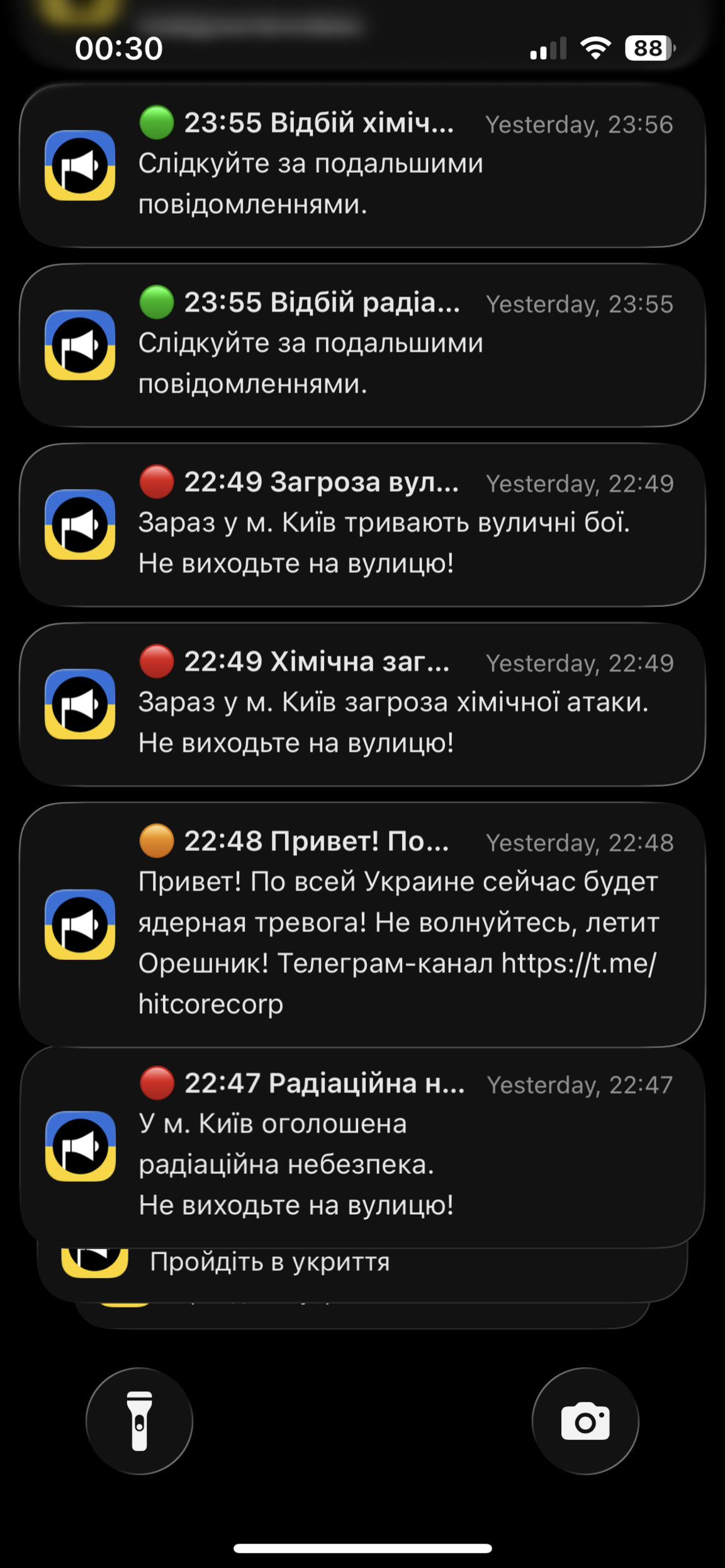
Earlier on Sunday evening, Ukraine’s Air Force said users of the national air raid alert app had received false warnings of nuclear and chemical threats around Kyiv, possible street combat, and the deployment of Russia’s hypersonic Oreshnik missile. The Air Force said the app appeared to have been subjected to enemy influence, denied that there was a radiation threat, and urged people to remain calm and follow official updates. Ukraine’s Centre for Strategic Communications, known as SPRAVDI, directly blamed Russia for the hack in a post on X.
Ukraine’s national app is used to warn people in real time of incoming Russian air attacks. Authorities in Kyiv said a separate alert app designed specifically for the capital was functioning normally.
The reports came as a local ceasefire in part of the Russian-occupied Kherson region ended on Sunday. The truce began on Tuesday and was described as the longest of the war so far. The article reports the competing claims about the attacks but does not establish who carried them out.
Entities: Russia, Ukraine, Kyiv, Kherson region, Russian Emergencies Ministry • Tone: neutral • Sentiment: negative • Intent: inform
02-11-2026
Ukraine’s Air Alert app was apparently compromised on Sunday, sending false warnings of radiation, chemical, and street-fighting threats in Kyiv, as well as red-level air-raid alerts in other regions. The Ukrainian Air Force said there was no radiation threat and urged people to remain calm. The Central Intelligence Agency also described an app failure and advised the public to check other sources for information about air strikes. False alerts began at about 22:47 local time and were followed by messages in Ukrainian and Russian, including a claim that a nuclear alert would occur across Ukraine. At 23:53, users received all-clear messages linked to the individual Kyiv warnings. The incident reportedly triggered a radiation warning over loudspeakers in the Lviv region, although officials said there was no radiation danger.
Regional officials confirmed that the app appeared to have been hacked. Ivano-Frankivsk governor Svitlana Onyshchuk said the situation in her region was calm, while Vinnytsia regional head Natalya Zabolotna warned residents not to click a link in a message because it could be a phishing attempt. Ukraine’s Centre for Countering Disinformation advised people to enable smartphone notifications, heed sirens, and rely only on official sources. The Ministry of Digital Transformation, which supports the app, temporarily disabled it for maintenance and recommended enabling state emergency notifications.
A few hours later, Russia’s Ministry of Emergency Situations said its own app had suffered a “massive cyberattack” that distributed false information. Ukrainian outlet UNN reported that the Russian app had sent fake nuclear-threat alerts. Atesh, a Ukrainian partisan group operating in Russian-held territory, claimed responsibility for hacking it. A screenshot Atesh shared, which the BBC said it could not verify, urged users to stock supplies and shelter in basements.
The alerts occurred shortly before a local ceasefire in Ukraine’s Kherson region ended. The ceasefire had been intended to allow civilians to evacuate Oleshky, though fighting continued elsewhere. Russia began its full-scale invasion of Ukraine in February 2022.
Entities: Ukraine, Kyiv, Ukrainian Air Force, Ukrainian Central Intelligence Agency, Air Alert app • Tone: analytical • Sentiment: negative • Intent: inform
02-11-2026
Ukraine officials said the country’s official air-raid alert app was likely hacked after it sent false warnings on Sunday about radiation and a chemical attack in Kyiv. The messages told residents not to go outside, and the public air-alert map reportedly showed Kyiv and other areas under a nuclear alert. The app also carried false warnings about Russia’s Oreshnik hypersonic missile and alleged street fighting in the capital. Loudspeakers in the streets broadcast a recorded message urging people to take precautions.
Ukraine’s Air Force said the app appeared to have been subjected to “enemy influence” and stressed that there was no radiation threat. It urged the public to stay calm and follow updates through its official channel. Ukraine’s Center for Strategic Communications blamed Russia, though no group had publicly claimed responsibility for the incident.
The report also notes a separate cyberattack in Russia. Russia’s Emergencies Ministry said early Monday that a “massive cyberattack” on its mobile app enabled attackers to send false information to the public. The article does not establish who carried out either attack or whether the incidents were connected. It also references a joint FBI and CISA public service announcement about cyber actors associated with Russian intelligence targeting commercial messaging apps, but does not say that activity was linked to the Kyiv alert incident.
Entities: Ukraine, Kyiv, Ukrainian Air Force, Ukraine’s Center for Strategic Communications, Russia • Tone: neutral • Sentiment: negative • Intent: inform
02-11-2026
Russia and Ukraine accused each other of cyberattacks on emergency alert applications as a limited ceasefire in Ukraine’s Kherson region ended. Ukraine said its Air Alarm app had been compromised after it displayed false radiation-threat alerts; the air force confirmed a hack and said there was no radiation threat. Hours later, Russia’s emergencies ministry reported a “massive cyberattack” on its public-warning app, where attackers were able to post false information. Moscow did not identify who was responsible, while Ukraine’s Centre for Strategic Communications SPRAVDI blamed Russia for the attack on Ukraine’s system.
The Kherson truce ran from October 27 to November 1. Kyiv said Russia declined to extend it. Brokered by US First Lady Melania Trump, the pause enabled a humanitarian mission to Russian-occupied Oleshky. Ukraine’s human rights commissioner called it an important step in joint humanitarian efforts. With the ceasefire over, regional governor Oleksandr Prokudin urged residents to heed warnings, and a Ukrainian military officer warned that fighting could become “worse than before,” alleging Russian forces had used the lull to reinforce troops, move ammunition and conduct surveillance.
The article also describes wider military and diplomatic developments. US-mediated talks are expected to resume this month after being frozen since US-Israeli strikes on Iran in February. President Volodymyr Zelensky said Ukraine could stop striking Russian oil refineries if the United States supplied Patriot interceptor missiles, or if Russia stopped attacking Ukraine’s energy infrastructure. Russia and Ukraine exchanged strikes on Sunday, including a reported drone strike on an industrial enterprise east of Moscow and a Ukrainian attack on the Kstovo refinery. Ukrainian authorities also reported new power outages following Russian attacks. The article presents the app hacks and renewed fighting as part of a broader conflict marked by civilian danger, infrastructure attacks and uncertain prospects for dialogue.
Entities: Russia, Ukraine, Kherson region, Oleshky, Dnipro River • Tone: analytical • Sentiment: negative • Intent: inform