02-11-2026
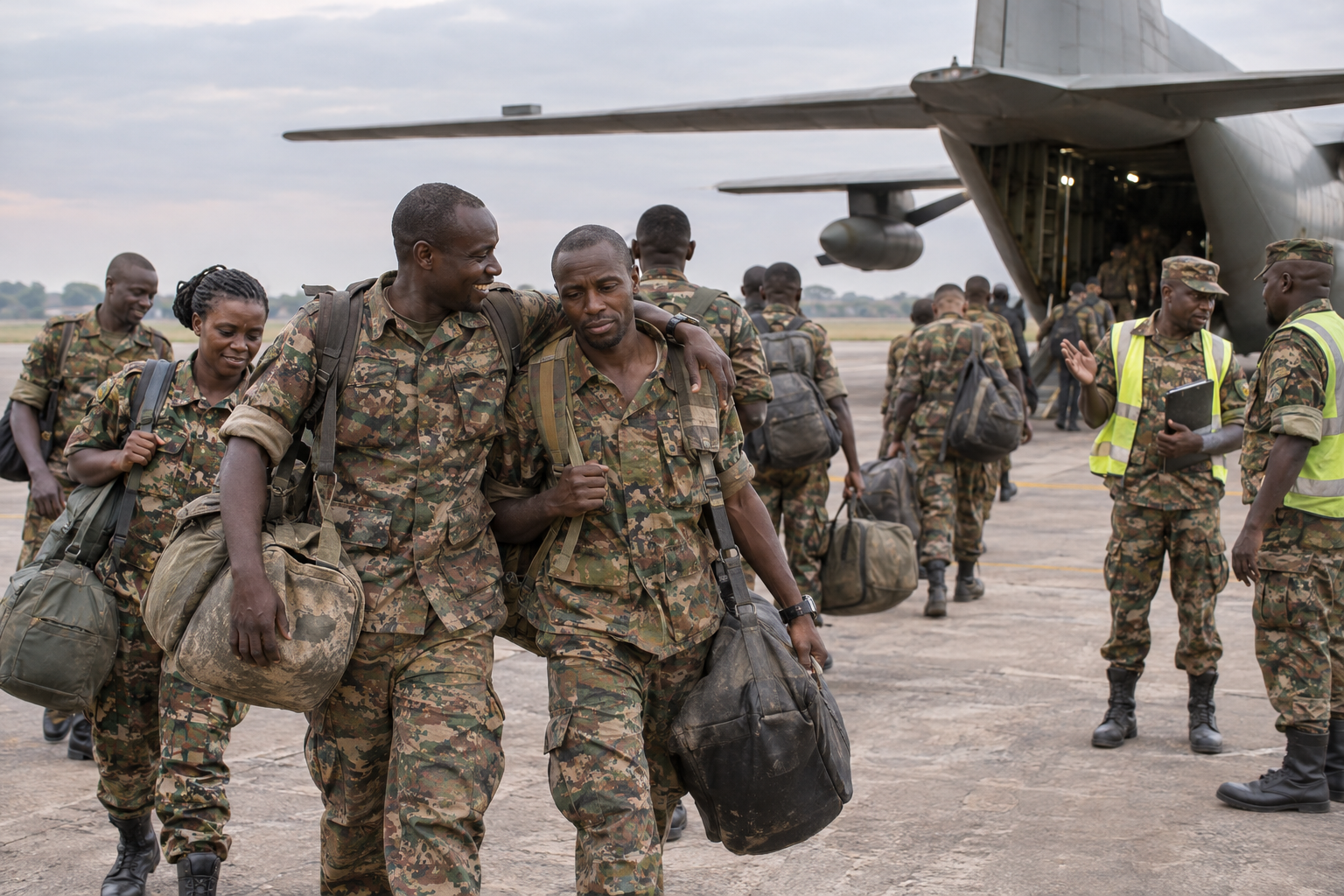
Uganda has started withdrawing troops from Somalia after nearly two decades of military involvement, with the first group of soldiers already back in Uganda and further departures expected in the coming days. Acting army spokesperson Chris Magezi said the phased withdrawal would include forces serving under the African Union mission and be completed by the end of 2027. Uganda was the first African country to contribute troops to the African Union Mission in Somalia (Amisom), established in 2007 to protect Somalia’s transitional government from Islamist militant attacks. A contingent of 109 Ugandan troops reportedly left Mogadishu on Friday after army chief Gen Muhoozi Kainerugaba announced the withdrawal and said security responsibilities would be handed to Somali forces. Uganda’s President Yoweri Museveni and Somali President Sheikh Mohamud met in Kampala last week to discuss security, trade and economic ties. Mohamud reportedly sought an extension of Uganda’s military presence, but the outcome was not made public. Museveni urged Somali leaders and citizens to unite against al-Shabab, an al-Qaeda-linked group that has led a prolonged insurgency. Uganda’s forces helped push al-Shabab out of Mogadishu and other major towns, and fought alongside the Somali National Army to recapture strategic areas and protect government installations. The withdrawal comes as Somalia is expected to assume full responsibility for its security. The African Union Support and Stabilisation Mission in Somalia (Aussom), which replaced Atmis in 2025, is intended to strengthen Somali security institutions and prepare national forces to take over. However, Aussom’s future funding is uncertain amid plans to wind down US and UN support. A 12-month transition plan is due to begin in January, allowing Somalia and the African Union time to seek alternative funding.
Entities: Uganda, Somalia, Chris Magezi, Gen Muhoozi Kainerugaba, Yoweri Museveni • Tone: analytical • Sentiment: neutral • Intent: inform
02-11-2026
Uganda has begun a phased withdrawal of its troops from Somalia, ending a military presence that has lasted nearly 20 years. The Ugandan military said the first group of returning soldiers had arrived home. Uganda was the first country to contribute troops to the African Union peacekeeping force established in 2007 to support Somalia’s government against Al-Shabab. It currently has about 4,500 troops in Somalia under the African Union Support and Stabilization Mission in Somalia (AUSSOM), and around 2,000 more serving under bilateral arrangements. Uganda says it will withdraw all forces, including those under AUSSOM, by the end of 2027. It says the departure will allow Somali forces to take full responsibility for national security; local media reported that an initial group of 109 soldiers left Mogadishu on Friday.
The future of AUSSOM is uncertain after the United States decided to end funding for a UN logistics office on which the mission relies. The US, the coalition’s largest donor, has criticized the lack of progress against Al-Shabab, which still controls significant parts of central Somalia. Washington has also accused Somalia’s government of failing to unify the country and carry out political reforms.
The withdrawal announcement came as the UN closed its political mission in Somalia, transferring responsibilities to the Somali government and UN agencies. Somalia is expected to hold elections next May, but insecurity and disputes with opposition groups could disrupt the process. Al-Shabab’s insurgency has persisted for more than two decades. Ugandan forces helped drive the group from Mogadishu and other major towns, but the militants have regained territory in recent years and now control significant areas in central and southern Somalia.
Entities: Uganda, Somalia, Mogadishu, Al-Shabab, African Union • Tone: analytical • Sentiment: neutral • Intent: inform
02-11-2026
Uganda has begun withdrawing troops from Somalia, starting with forces deployed under a bilateral arrangement with Somalia’s Federal Government. Uganda People’s Defence Forces spokesperson Chris Magezi said the first group had already returned home and that the drawdown took effect immediately. Uganda plans to withdraw all its forces, including troops serving under the African Union Support and Stabilization Mission in Somalia (AUSSOM), by the end of 2027.
State media reports that Uganda has about 4,500 troops in Somalia under AUSSOM. The number of Ugandan forces deployed through the separate bilateral arrangement is unclear. The withdrawal will end an almost two-decade Ugandan military presence supporting Mogadishu’s fight against al Shabaab, an al Qaeda-linked insurgent group that has sought to overthrow Somalia’s government and impose its strict interpretation of Islamic law.
The planned drawdown has raised concerns about security in areas where Ugandan troops operate. In an October 31 letter to the UN Support Office in Somalia, AUSSOM warned that the withdrawal could leave parts of the Lower Shabelle region vulnerable to al Shabaab attacks. Somali state minister for foreign affairs Ali Omar said the situation was not currently dire, but cautioned that a sudden departure of troops could create problems. Al Shabaab continues to conduct bombings and gun attacks against both military and civilian targets.
Entities: Uganda, Somalia, Kampala, Mogadishu, Uganda People's Defence Forces (UPDF) • Tone: analytical • Sentiment: neutral • Intent: inform