01-09-2026
Norway’s newly crowned King Haakon VIII formally assumed his constitutional responsibilities by swearing an oath of allegiance to the country’s laws and constitution in parliament in Oslo. The ceremony took place after the death of his father, King Harald V, who died at the age of 89 following a prolonged period of ill health. Haakon, 53, traveled from the royal palace to the Storting, where Speaker Masud Gharahkhani announced Harald’s death and Haakon’s succession before the new monarch delivered the oath.
The ceremony proceeded without Queen Mette-Marit, who was unable to attend because of complications related to a lung transplant she underwent in June. According to pulmonologist Are Holm of Oslo University Hospital, such complications are not uncommon, and the Queen had experienced them several times, including on the day of the ceremony. She was kept under medical observation throughout the day. Mette-Marit had appeared publicly the previous day during the procession carrying Harald’s coffin.
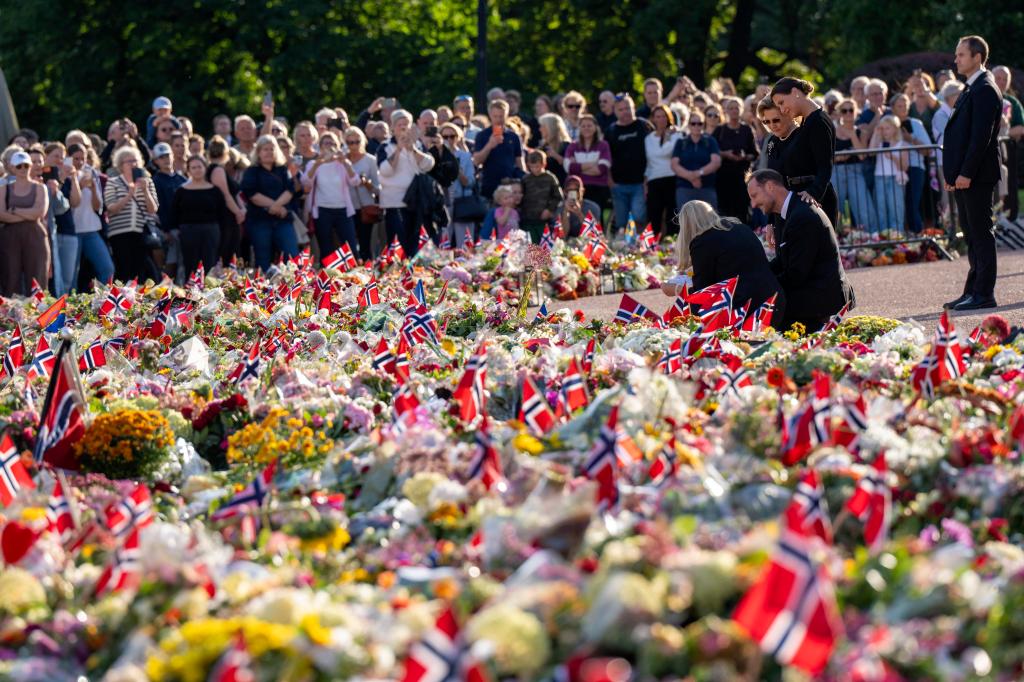
Harald’s coffin was placed in the royal palace chapel, where members of the public could pay their respects before the funeral scheduled for September 9. People had also gathered at the palace over the weekend to leave flowers and other tributes.
The article places the succession in the context of Norway’s largely symbolic constitutional monarchy. The royal family traces its history to the ninth century, while the modern monarchy was reaffirmed after Norway regained independence from Sweden in 1905. Although elected politicians hold most governing power, the royal family retains a largely ceremonial and diplomatic role, including promoting Norway internationally.
Entities: King Haakon VIII, King Harald V, Queen Mette-Marit, Masud Gharahkhani, Are Holm • Tone: neutral • Sentiment: neutral • Intent: inform
01-09-2026
King Haakon VIII of Norway formally pledged allegiance to the country’s constitution and laws during a ceremony in the Storting, Norway’s parliament, on Tuesday, marking an important symbolic step in his succession. Haakon, 53, became monarch after his father, King Harald V, died on Friday at age 89 following a 35-year reign. He traveled from the royal palace to parliament in an open car, where Speaker Masud Gharahkhani announced Harald’s death and Haakon’s accession before the new king took the oath: “I promise and swear that I will govern the kingdom of Norway in accordance with its constitution and laws; so help me God, the almighty and omniscient.” Haakon has adopted the motto “All for Norway,” previously used by his great-grandfather.
The article places the succession in the context of Norway’s long royal history, which traditionally traces its origins to King Harald Fairhair in the ninth century. After Norway regained independence from Sweden in 1905, a national plebiscite approved retaining the monarchy. Although the institution now has largely symbolic responsibilities, the royal family continues to represent and promote Norway internationally while political power remains with the elected government and parliament.
The country is also preparing to mourn Harald. His coffin was moved to the Palace Chapel in Oslo, where it will remain until his funeral on September 9. Members of the public may visit the chapel from September 1 through September 8 to pay their respects, although photography, filming, and leaving flowers or other objects are prohibited.
Queen Mette-Marit participated in the coffin procession on Monday, her first official appearance since undergoing a lung transplant in June. However, complications from the transplant required her to remain under observation, preventing her from attending Haakon’s swearing-in ceremony. The royal family, including Crown Princess Ingrid Alexandra, Queen Sonja, and Princess Märtha Louise, appeared at public mourning events in Oslo.
Entities: King Haakon VIII, King Harald V, Queen Mette-Marit, Crown Princess Ingrid Alexandra, Queen Sonja • Tone: neutral • Sentiment: neutral • Intent: inform
01-09-2026
Norway’s newly installed King Haakon VIII has taken a formal oath before parliament, marking the first major institutional ceremony of his reign. The 53-year-old monarch succeeded his father, King Harald V, who died on Friday morning at the age of 89. During the ceremony in parliament’s main chamber, Haakon wore a ceremonial uniform and pledged to govern Norway in accordance with the country’s constitution and laws, ending the oath with an invocation of God.
The ceremony underscored the largely symbolic constitutional role of Norway’s monarchy. Although the king is formally the head of state, Norway’s constitution and political system place day-to-day governing authority with elected institutions. Haakon’s oath therefore represented a constitutional and ceremonial affirmation of his responsibilities rather than a transfer of executive political power.
Queen Mette-Marit, Haakon’s wife, was absent from the event while recovering from a lung transplant performed on June 17. According to Dr. Are Holm, head of the Pulmonary Department at Oslo University Hospital, the queen has experienced complications several times since the operation, including on the day of the oath. Holm said such complications are not uncommon after a transplant.
The queen’s continued recovery added a somber element to an otherwise historic royal occasion. Her absence was publicly explained through a statement issued by the palace, emphasizing that the royal family’s transition following Harald V’s death is taking place alongside significant health concerns. The article reports the succession, the king’s constitutional pledge, and the medical circumstances preventing the queen from attending, without suggesting any change to Norway’s political system or royal duties.
Entities: King Haakon VIII, Queen Mette-Marit, King Harald V, Norway, Norwegian parliament • Tone: neutral • Sentiment: negative • Intent: inform