01-09-2026
John Ternus becomes Apple’s chief executive on September 1, 2026, succeeding Tim Cook after Cook’s 15-year tenure. Ternus, 51, joined Apple in 2001 and rose to become senior vice president of hardware engineering, overseeing the teams responsible for the company’s entire product range, including the iPhone. His appointment places an engineer and product specialist at the helm of a company that remains dominant in smartphones but is widely viewed as behind competitors in artificial intelligence.
Ternus will face immediate pressure to define Apple’s AI strategy while preserving the hardware strengths that have driven its success. Analysts say his expertise makes hardware innovation the likely initial focus, although some had favored software chief Craig Federighi because of Apple’s AI shortcomings. Ternus has been credited with improving product durability, reliability and environmental performance, but his abilities as a corporate and geopolitical leader remain untested.
A major challenge will be managing Apple’s dependence on China. The company’s manufacturing network remains heavily concentrated there, despite gradual expansion of iPhone assembly in India and other production in Vietnam. Ternus will also inherit tensions with US President Donald Trump, who has pressed Apple to manufacture iPhones domestically and threatened tariffs on overseas production. Cook managed these pressures through direct engagement with Trump, investment commitments and continued relations with Beijing.
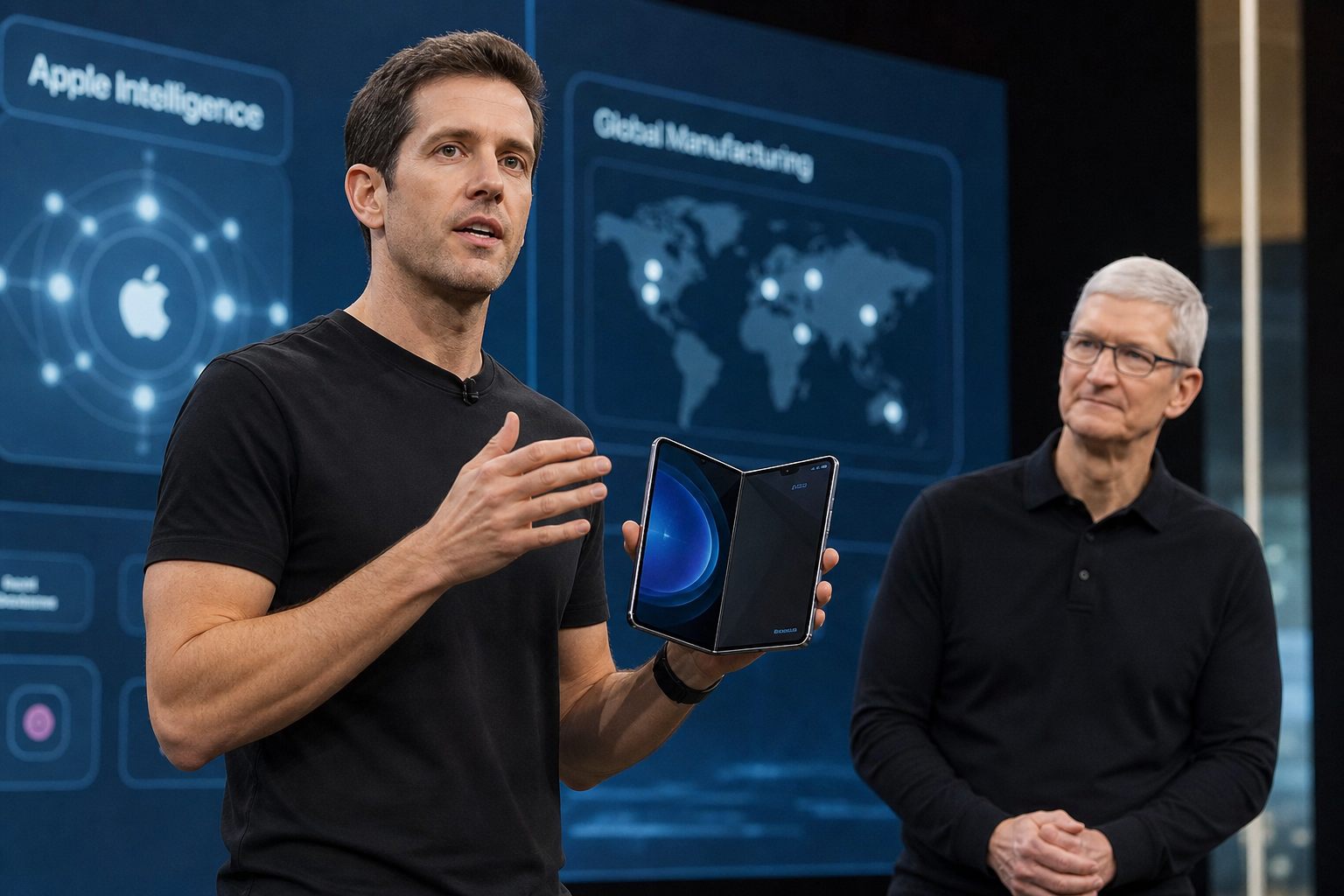
Cook will become Apple’s executive chairman, allowing him to continue handling relationships with policymakers while Ternus learns the broader responsibilities of the CEO role. Ternus’s first major public test will come on September 9 at Apple’s annual iPhone event, where the company is expected to introduce its first foldable iPhone. The product launch could serve as an early signal of how Ternus intends to lead Apple into its next phase.
Entities: John Ternus, Tim Cook, Apple, Artificial intelligence, Apple iPhone • Tone: analytical • Sentiment: neutral • Intent: analyze
01-09-2026
John Ternus is set to become Apple’s CEO on September 1, succeeding Tim Cook and becoming only the third person to hold the role since 1997. His appointment follows a highly successful period under Cook, during which Apple’s share price rose by more than 2,000% and the company sold over 3.1 billion iPhones. Ternus, a senior hardware engineer who worked on products including the Apple Watch, AirPods, and Apple’s in-house chips, will nevertheless inherit significant challenges—most notably Apple’s perceived weakness in artificial intelligence.
Ternus will make his public debut at Apple’s September 9 product launch, where he is expected to introduce a foldable iPhone and an AI-powered version of Siri. However, analyst Francisco Jeronimo of IDC says these initiatives were developed under Cook and will not necessarily reveal Ternus’ strategic direction. A clearer indication may not emerge until 2027.
The article argues that AI will be central to Ternus’ tenure because Apple increasingly depends on other companies for critical AI capabilities. Apple integrated ChatGPT through a 2024 agreement with OpenAI, later sued OpenAI over alleged trade-secret theft, and announced that Google’s Gemini models would support its AI systems and next-generation Siri. This reliance contrasts with Apple’s traditional strength in controlling both the hardware and software behind its products.
Jeronimo warns that Apple could lose relevance if firms such as OpenAI and Anthropic lead the development of AI services or devices. At the same time, Apple retains major advantages, including its enormous user base, strong brand, and culture of innovation. Ternus’ engineering background and role in Apple’s move toward proprietary chips could help him pursue greater independence in AI. The article concludes that he may need to combine Steve Jobs’ innovation with Tim Cook’s execution as he determines whether Apple can remain a technology leader.
Entities: John Ternus, Apple, Tim Cook, Steve Jobs, OpenAI • Tone: analytical • Sentiment: neutral • Intent: analyze
01-09-2026
Apple has appointed John Ternus as its new chief executive, ending Tim Cook’s 15-year tenure at the technology company. During Cook’s leadership, Apple’s market value rose to approximately US$4.6 trillion, driven largely by the continuing popularity of the iPhone. Cook is expected to become executive chairman and remain involved in helping Apple manage important external relationships.
Ternus assumes leadership at a critical moment for Apple and the broader technology industry. The rapid development of artificial intelligence has created the biggest disruption in the sector since Steve Jobs introduced the first iPhone in 2007. Apple has struggled to match some competitors in AI, particularly after delays and setbacks involving features it had promised nearly two years earlier.
The company unveiled additional AI developments earlier this year, including improvements to its Siri voice assistant. Apple has emphasized privacy and practical, everyday applications as it attempts to close the gap with rivals. However, Ternus will face pressure to make the company more competitive in AI, an area outside his traditional focus on hardware engineering.
In addition to technology challenges, Ternus must address supply-chain issues and maintain relationships with influential political figures, including US President Donald Trump. Cook developed ties with Trump while dealing with the administration’s trade and tariff policies, which affected countries in Asia where Apple relies heavily on manufacturing. Although Cook is stepping down as CEO, he is widely expected to help preserve Apple’s relationship with Trump in his new executive chairman role.
Entities: John Ternus, Tim Cook, Apple, Donald Trump, Steve Jobs • Tone: analytical • Sentiment: neutral • Intent: inform
01-09-2026
Tim Cook retired as Apple’s chief executive on Aug 31 after nearly three decades with the company, including 15 years as CEO. In his final memo to employees, Cook praised Apple’s staff and paid tribute to co-founder Steve Jobs, who hired him in 1998. Cook became CEO in 2011, only weeks before Jobs died of pancreatic cancer, and credited employees for the company’s achievements, saying they had helped leave their “dent in the universe,” a phrase associated with Jobs.
Cook will remain at Apple as executive chairman. John Ternus, a long-serving hardware engineer who joined Apple in 2001 and most recently served as senior vice-president of hardware engineering, succeeds him on Sept 1. Ternus becomes only the second CEO to lead Apple after Jobs. His appointment comes immediately before Apple’s annual iPhone event on Sept 9, where the company is expected to unveil its first foldable handset.
During Cook’s tenure, Apple became one of the world’s most valuable companies, with its market value surpassing US$4.5 trillion on Aug 31. The company employs approximately 166,000 people globally. Cook’s background in supply-chain management, which he developed after becoming chief operating officer in 2005, was central to his leadership of Apple.
The leadership transition occurs as Apple faces several challenges. These include supply-chain pressure caused by strong demand for advanced computing chips, the need to strengthen its position in artificial intelligence, and political pressures in Washington. Despite these difficulties, Apple is preparing for major product launches, including a foldable iPhone and a glass-focused 20th-anniversary iPhone expected in 2027.
Entities: Tim Cook, Steve Jobs, John Ternus, Apple, San Francisco • Tone: analytical • Sentiment: neutral • Intent: inform